

Antique Italian Wall Lights
Antique italian wall lights bring warmth and ornamental depth to a room through carved timber, gilt surfaces, and expressive multi-arm forms.
Antique Italian Wall Lights
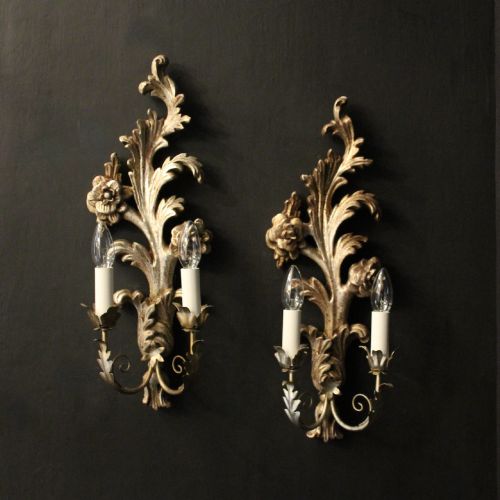
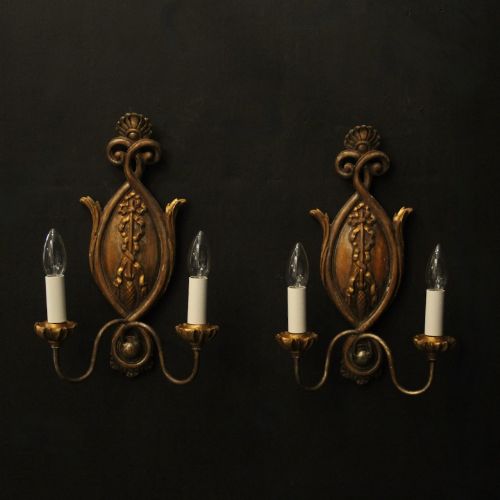
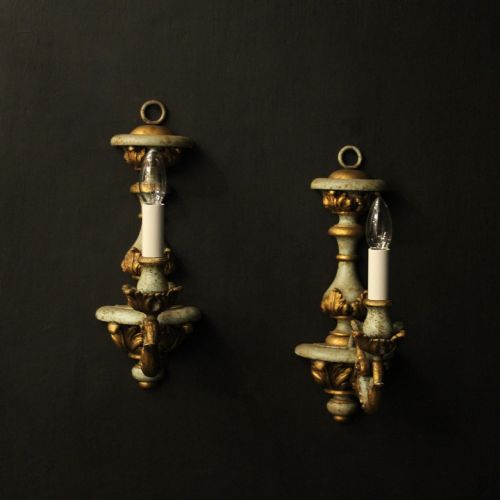
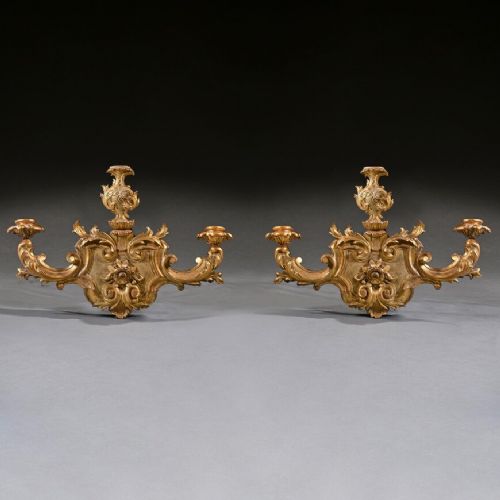
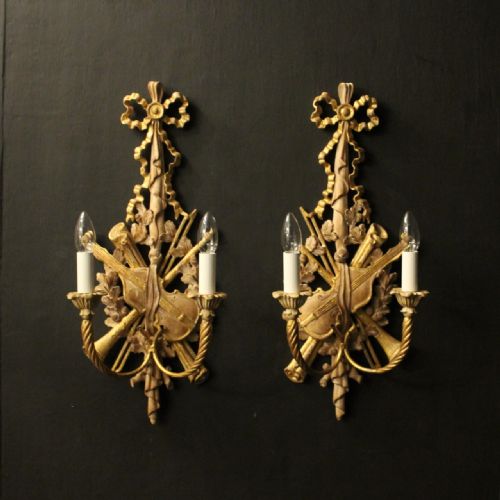
When you search for antique italian wall lights, you encounter fixtures originating primarily from the nineteenth and early twentieth centuries, alongside occasional eighteenth-century survivals. The most common examples on this page are Florentine giltwood twin-arm fixtures, often dated to the 1920s and 1930s.
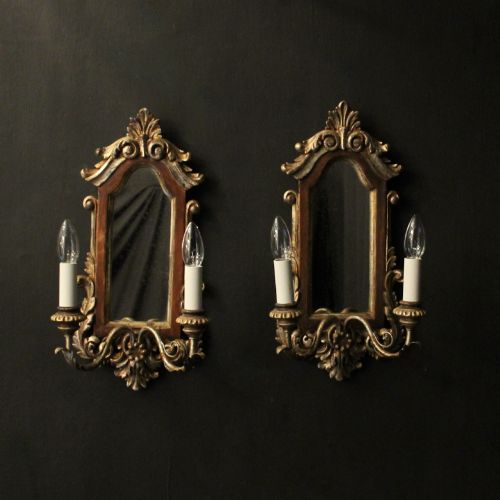
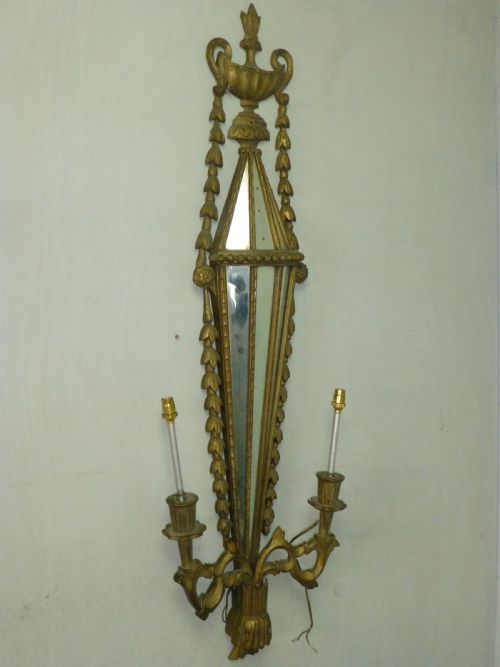
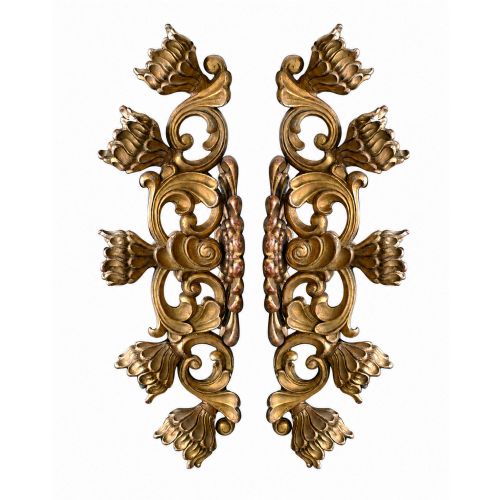
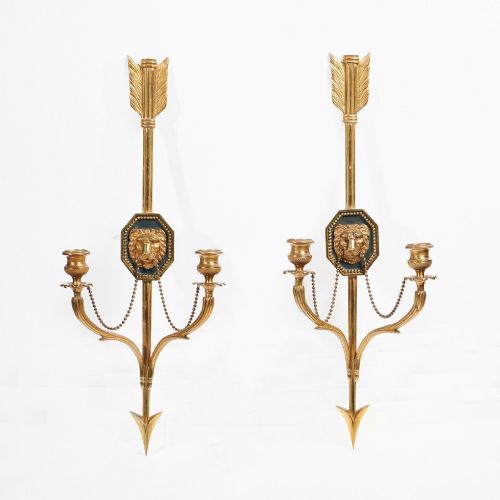
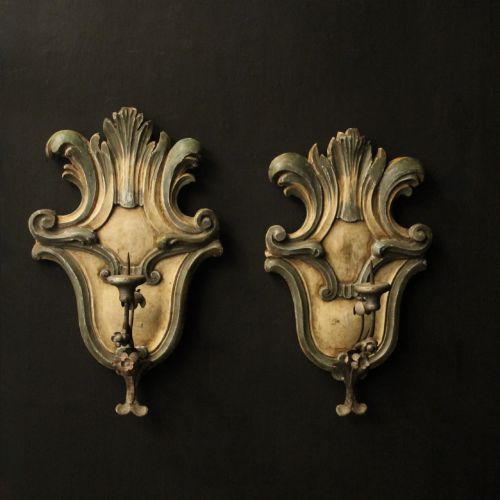
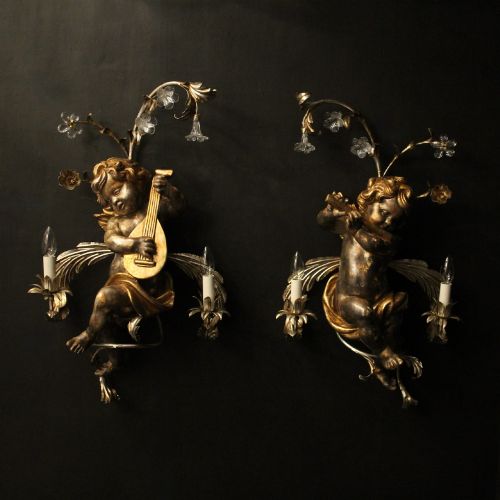
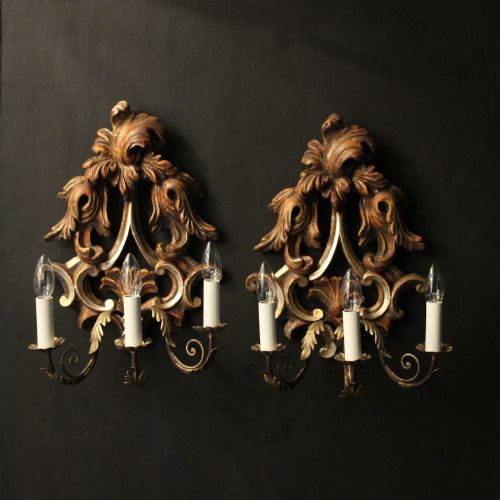
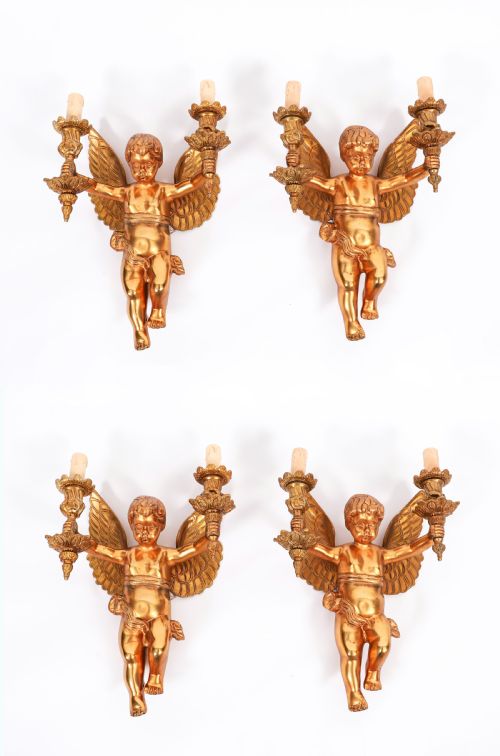
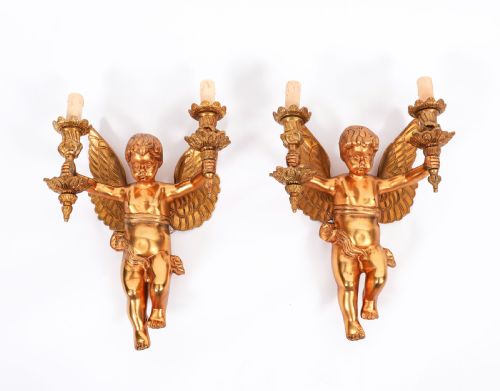
Forms extend beyond standard twin-arm brackets to incorporate girandoles, pricket candle sconces, and multi-light ormolu configurations featuring cherubs. Styles range from restrained neoclassical designs to elaborate rococo and baroque expressions, frequently displaying carved leaf motifs or polychrome paintwork alongside traditional gilding.
Materials and construction methods
Makers shaped these fixtures predominantly from wood, applying gesso to create smooth surfaces for the subsequent application of gold leaf or silver leaf. Carved wooden elements often combine with cast metal components such as brass, ormolu, and toleware to construct the supporting arms and backplates.
Antique Italian Wall Lights Retail Price Guide 2026
Typical asking prices for italian wall lights among the pieces listed under this phrase on Sellingantiques today, from the lower quarter to the upper quarter. They describe what is for sale here now, not the wider market.
Several wooden pairs feature hand-carved cherubs keeping permanent watch over the flickering bulbs.
Assessing craftsmanship and design
Quality reveals itself in the depth and precision of the carving, particularly within floral and leaf motifs where hand-tooling creates sharp relief. Cast metal elements show distinction through the crispness of chased details on ormolu cherubs and brass mounts.
The sophistication of the surface finish distinguishes finer examples, where gold leaf or silver leaf has been skillfully applied and gently aged over gesso grounds. Structural integrity in the arm attachments and the weight of the timber foundation also indicate superior workshop production.
The Antique Italian Wall Lights Glossary
- Giltwood
- Wood covered with a thin layer of gold leaf. This technique provides a luminous surface finish characteristic of Florentine pieces.
- Girandole
- An ornamental wall-mounted bracket fitted with candle holders or lights. Many incorporate a mirror plate behind the arms to reflect illumination.
- Ormolu
- Gilded bronze or brass used for decorative mounts and fittings. It gained popularity in neoclassical and baroque revival lighting.
- Toleware
- Painted sheet metal used for decorative components. It appears frequently alongside carved wood in early twentieth-century designs.
- Polychrome
- Painted in several colours. This finish often appears on wooden Italian wall lights alongside partial gilding.
Antique Italian Wall Lights: Frequently Asked Questions
How were these wall lights originally used?
These fixtures were mounted in pairs or sets along reception room and hallway walls to provide ambient illumination by candlelight before the widespread adoption of electricity.
Over subsequent decades, many examples were adapted for electrical wiring while retaining their decorative candle tubes and brass fittings.
Where should I position wall sconces?
They suit flanking mirrors, fireplaces, or architectural doorways where symmetrical placement enhances the proportions of the interior.
Placing them at eye level ensures the decorative backplates and arm configurations remain focal points within the room.
How do I distinguish Florentine styles?
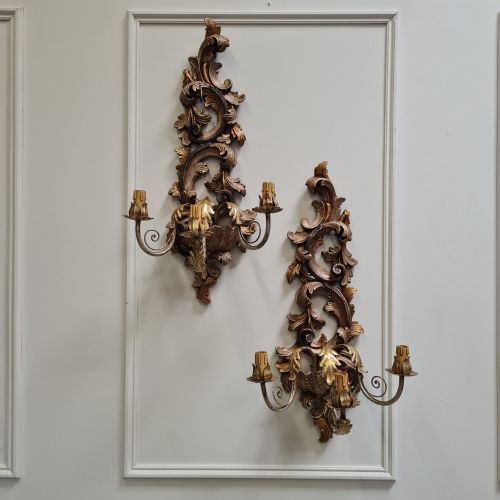
Florentine pieces frequently utilise carved giltwood featuring abundant leaf scrolls and multi-arm branching.
They often date from the early twentieth-century revival period and display refined surface gilding over a gesso base.
What maintenance do giltwood surfaces need?
Dusting gently with a soft, dry brush preserves the delicate gold leaf and gesso layers without causing abrasion.
Avoid moisture and chemical cleaners entirely to protect the historic finishes on both wooden and metallic components.