
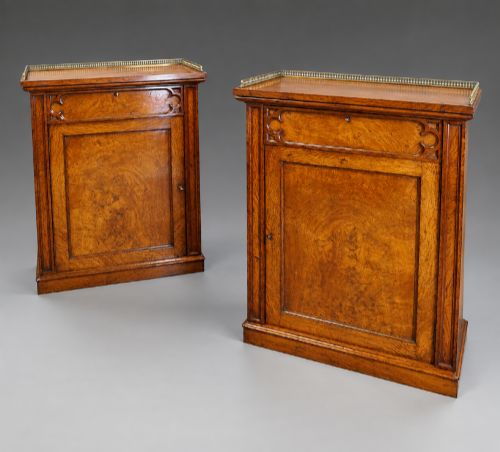

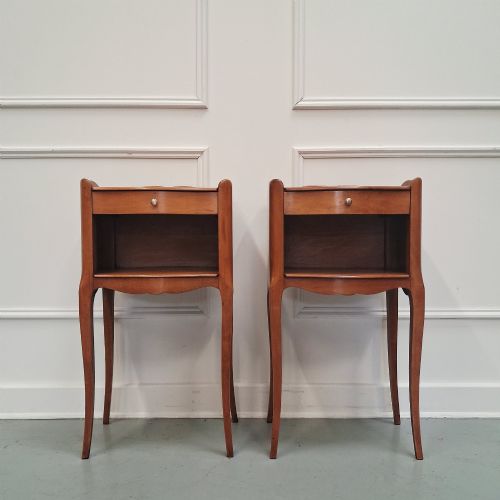
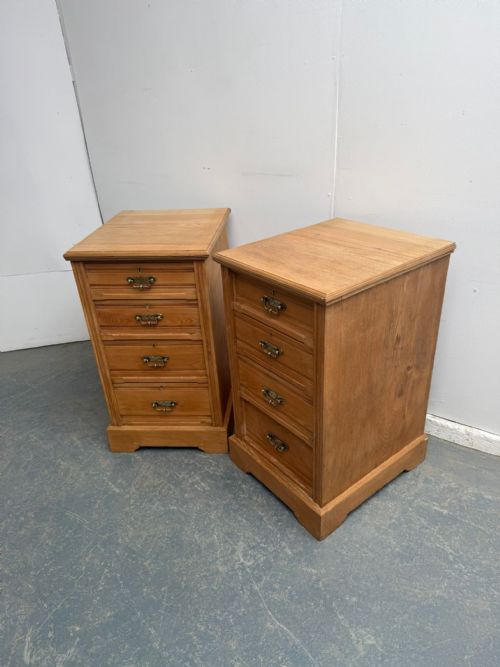
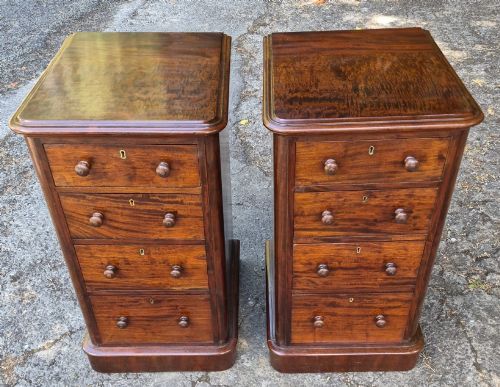
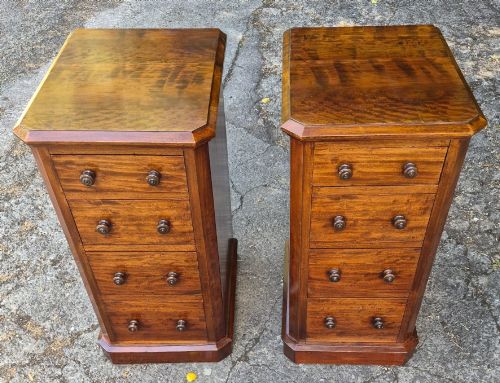
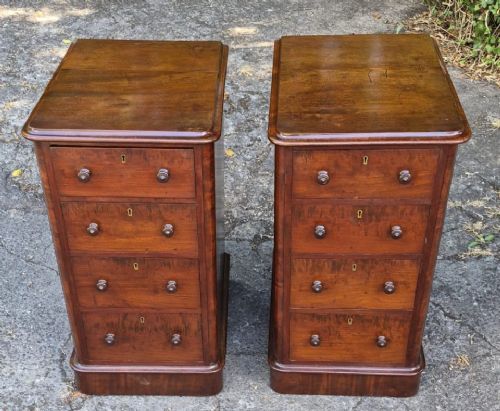
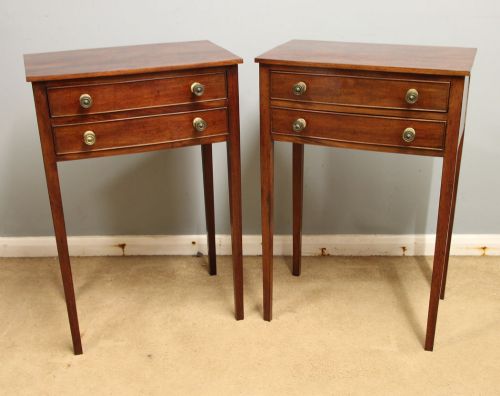
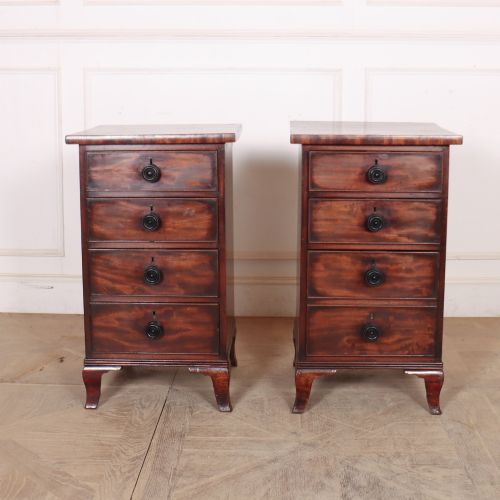
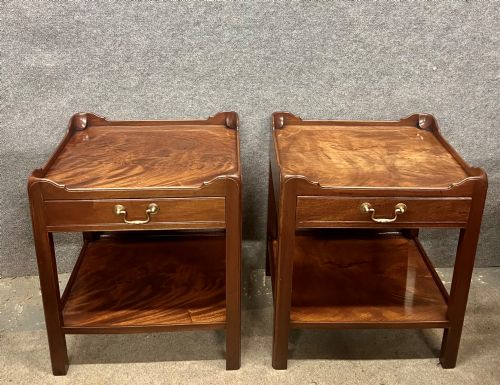
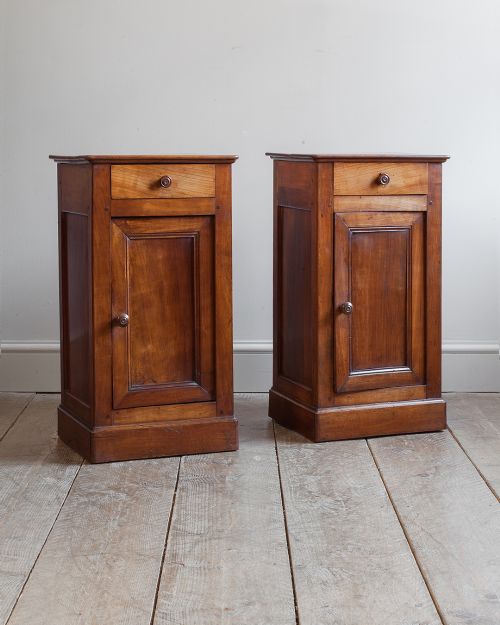
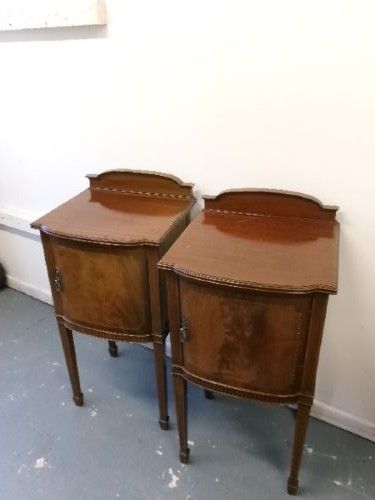
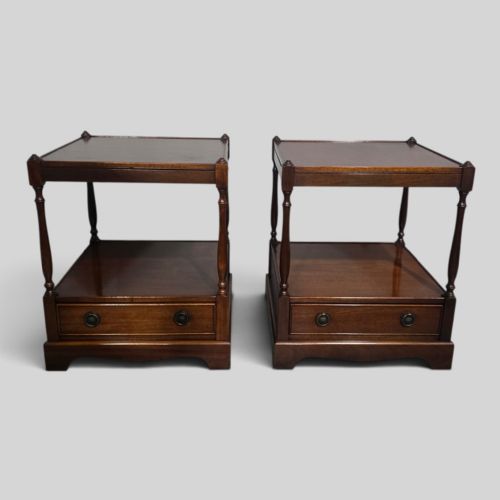
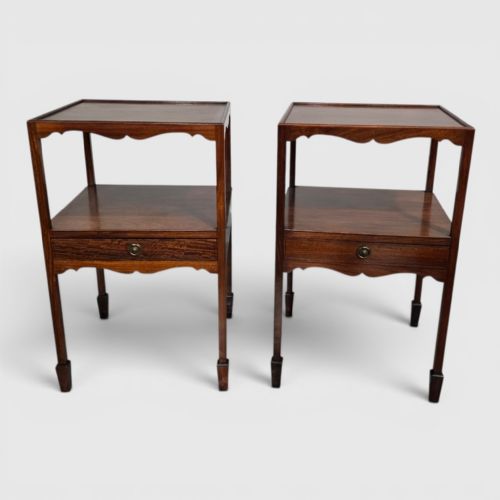

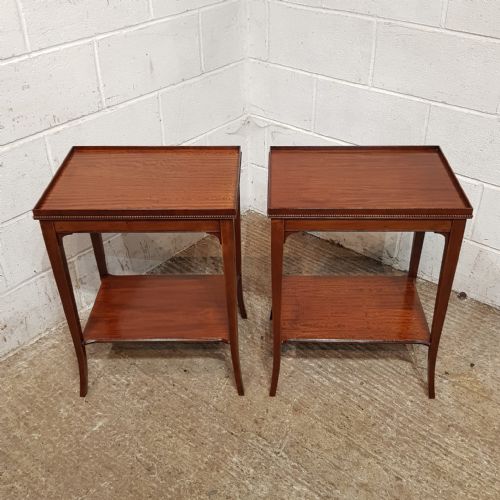
Pair Wooden Bedside Cabinets
These pair wooden bedside cabinets bring period timber, marble and brass into the bedroom through decades ranging from the Victorian era to the nineteen-thirties.
Pair Wooden Bedside Cabinets
Pair wooden bedside cabinets encompass bedside tables, chests of drawers, cupboards and pedestal cabinets designed to stand beside a bed for storage. The selection spans the nineteenth century through the Edwardian period and the nineteen-thirties, covering forms from simple cupboards to multi-drawer chests.
Victorian and Edwardian examples sit alongside French styles such as Louis XV and Art Deco designs. Buyers encounter woods ranging from mahogany and walnut to ash, oak, cherrywood and kingwood, often matched in pairs across English, French and Irish origins.
The objects function as practical bedside storage while displaying the cabinet-making styles of their respective periods, from Georgian revival pieces to rustic pine and bleached oak.
Materials and construction
Makers utilised solid timbers and veneers including mahogany, walnut, ash, oak and kingwood, frequently incorporating marble tops and brass fittings. Inlaid marquetry and satinwood details appear on Edwardian and French pieces, adding decorative contrast to the primary wood.
Construction techniques include waxed finishes on ash and pine, alongside polished mahogany and burr walnut surfaces. Marble tops provide durable, smooth surfaces on specific French and period cabinets, while brass handles and hinges secure doors and drawer fronts.
Periods represented on the site range from the eighteenth-century Georgian style revivals through Victorian, Edwardian and nineteen-thirties designs.
Judging quality in pair wooden bedside cabinets
Quality rests on the selection of timber, such as figured walnut, dense mahogany or well-chosen kingwood veneers, combined with crisp inlay and marquetry work. The integrity of the structure and the matching of the pair determine the standard of the piece.
Refined detailing like serpentine fronts, carved mouldings, fitted marble tops and original brass hardware elevate certain cabinets above plain utility cupboards. The balance between proportion, matching grain patterns and period-appropriate joinery separates standard manufacturing from superior craftsmanship.
Holland & Sons·Gillows
The Pair Wooden Bedside Cabinets Glossary
- Marquetry
- Decorative patterns formed by inserting small pieces of wood, veneer or shell into a wooden surface. This technique creates complex pictorial or geometric designs on cabinet doors and tabletops.
- Pedestal cabinet
- A freestanding vertical cabinet featuring a single door or cupboard space. These pieces often stand on a plinth or short legs beside a bed.
- Serpentine
- A curved shape consisting of a convex centre flanked by concave sides. Cabinet fronts and tabletops styled this way offer a gentle undulating profile.
- Satinwood
- A durable, lustrous timber with a golden-yellow sheen used for inlay and banding. Cabinet-makers utilised it to create contrasting borders on darker woods like mahogany.
Pair Wooden Bedside Cabinets: Frequently Asked Questions
What periods do these cabinets represent?
The listings include pieces from the nineteenth century, Victorian, Edwardian, and nineteen-thirties eras. Styles also draw on earlier Georgian and Regency designs.
Craftsmanship reflects the prevailing aesthetic of each decade, from heavily carved Victorian mahogany to lighter inlaid Edwardian satinwood and later Art Deco forms.
How were these cabinets used originally?
They served primarily to hold night-time essentials such as chamber pots, books, and lighting next to the bed. Cupboard spaces and drawers kept personal items out of sight.
Over time, many adapted into general lamp tables or small side chests while retaining their compact bedside proportions.
Are marble tops common on these pieces?
Marble tops appear frequently on continental European examples, particularly French kingwood and marquetry tables. They provided a clean, heat-resistant surface for jugs and candlesticks.
English cabinets more commonly feature solid wood tops, though variations in stone and wood occur across different regional workshops.
How do I identify Edwardian examples?
Edwardian cabinets often display lighter mahogany timbers combined with delicate satinwood inlay and marquetry. They tend to follow revived Georgian forms with slender proportions.
Construction from around nineteen hundred to nineteen-ten frequently incorporates subtle stringing and polished brass handles characteristic of the period.