

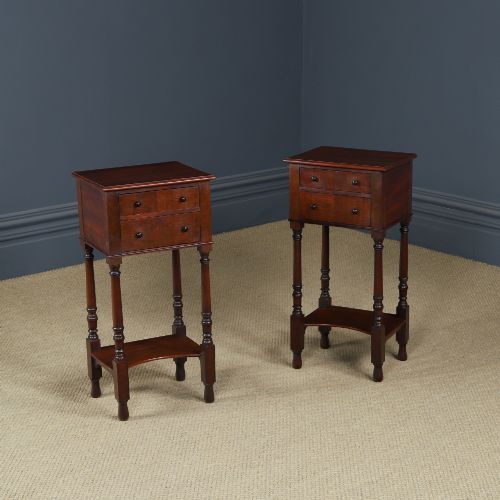
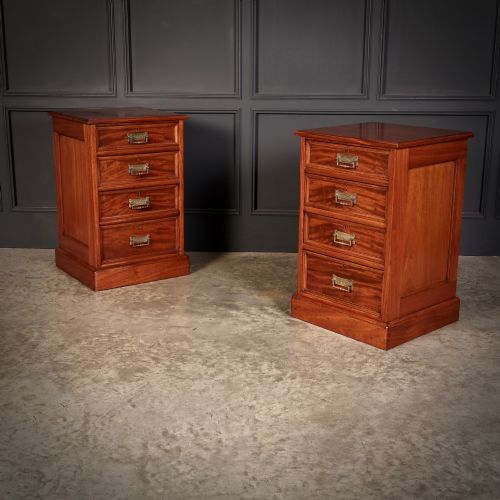
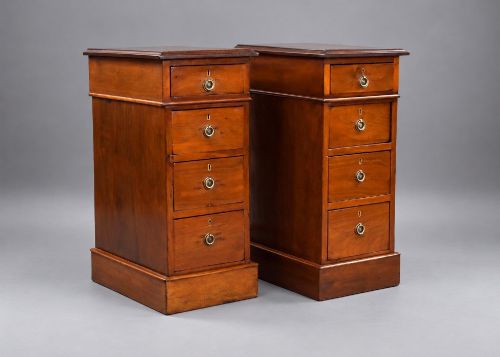
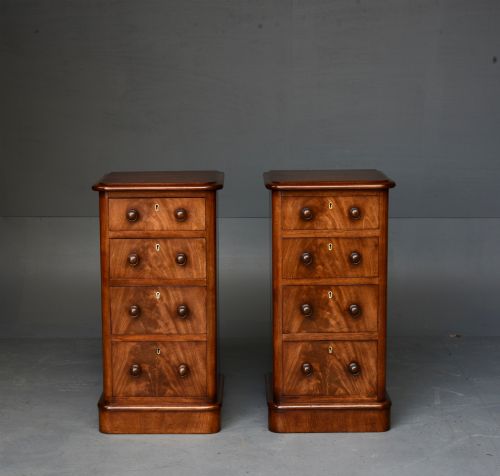
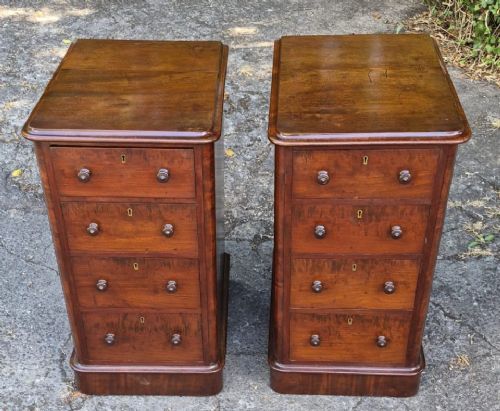
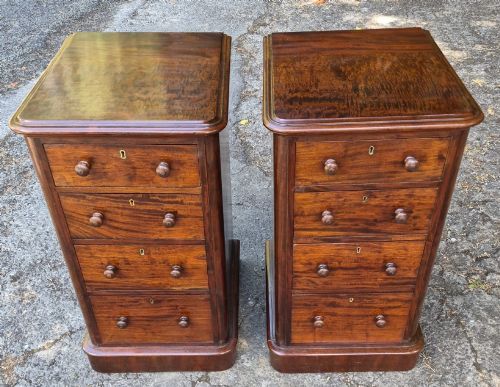
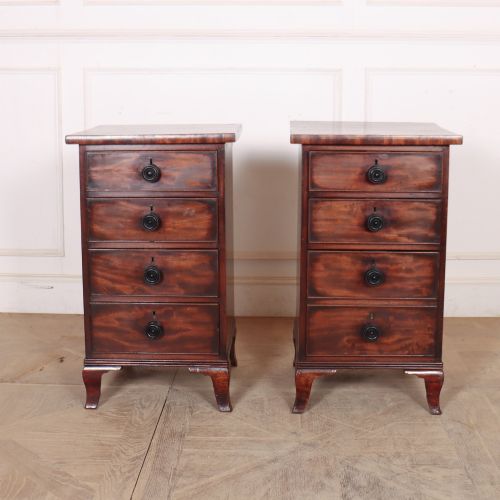
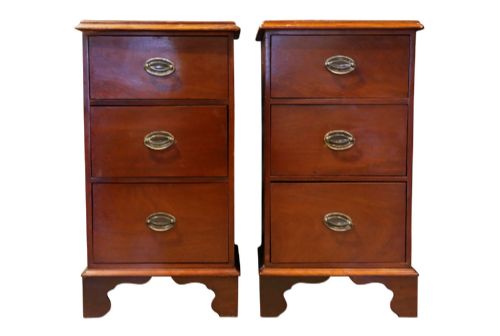
Pair Victorian Chests
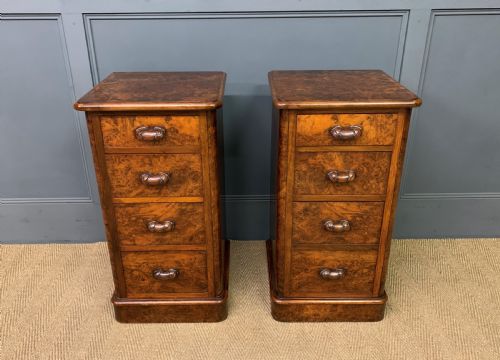
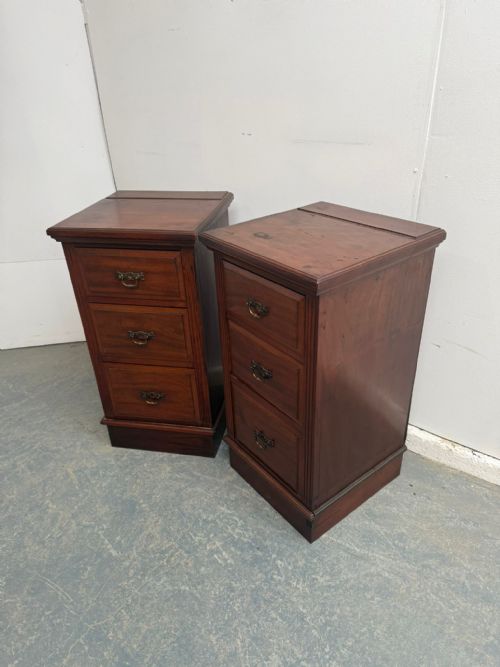
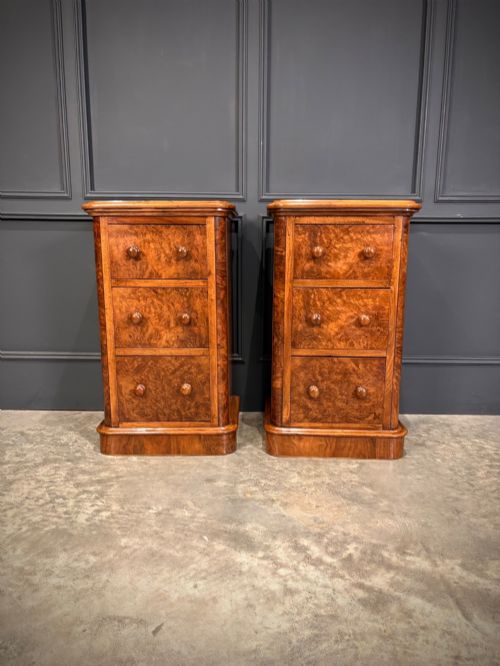
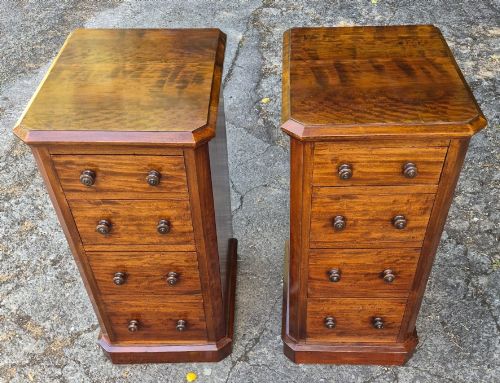
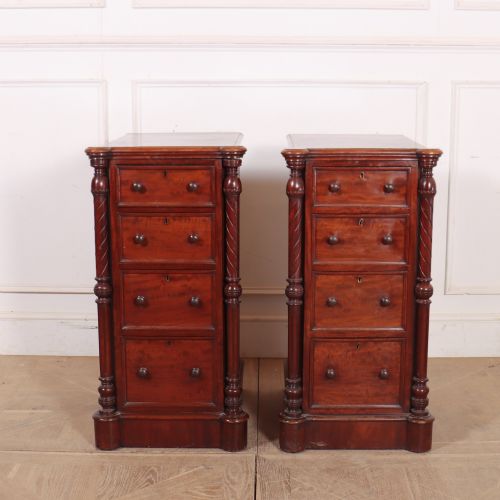
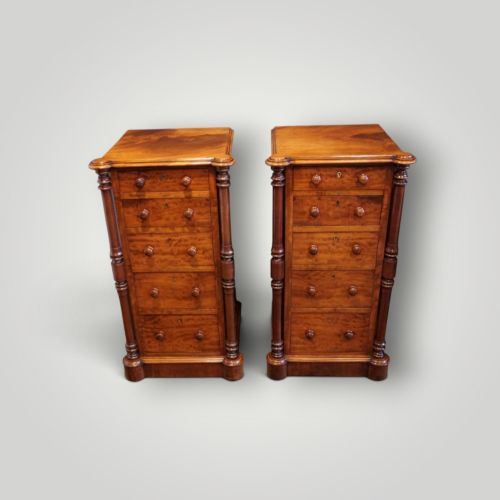
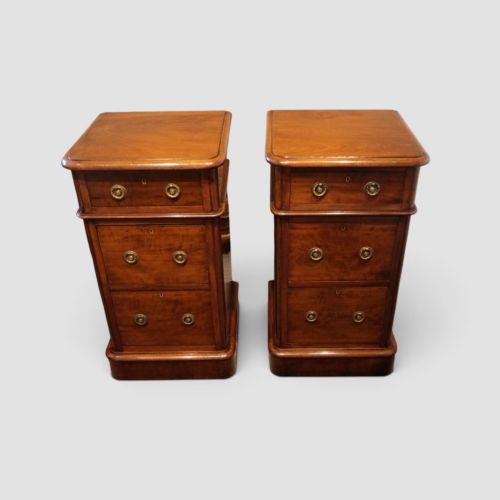
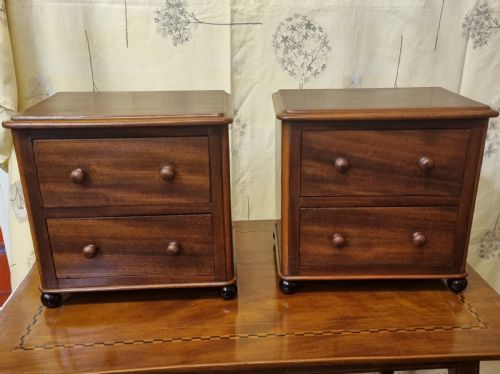
Pair Victorian chests offer matching symmetry and period character, bringing unified storage to a bedroom through traditional craftsmanship.
Pair Victorian Chests
Pair victorian chests primarily take the form of bedside chests, cabinets, and small drawers designed to flank a bed with symmetrical storage. These items span the nineteenth century, emerging in various regional workshops and metropolitan cabinet makers.
Buyers encounter numerous mahogany and burr walnut examples alongside pine, rosewood, and satin birch pieces. While most function as bedside tables or pot cupboards, the category also embraces music cabinets, Wellington chests, and tabletop collectors cabinets.
Materials and Construction
Cabinet makers utilised dense hardwoods such as mahogany and walnut, frequently selecting figured burr veneers to create striking drawer fronts and cabinet tops. Secondary timbers like pine provided internal framing and drawer construction.
Metalwork played a key structural and decorative role, with brass handles, locks, and bound corners appearing on campaign styles and military-influenced lockers. Marquetry inlay, glass panels, and faux bamboo turning further demonstrated diverse nineteenth-century joinery techniques.
Pair Victorian Chests Retail Price Guide 2026
Typical asking prices for pair victorian chests among the pieces listed under this phrase on Sellingantiques today, from the lower quarter to the upper quarter. They describe what is for sale here now, not the wider market.
Listings feature pieces spanning the Victorian era, incorporating Gothic Revival and Aesthetic Movement stylistic details.
Distinctions in Quality
The choice of timber veneer fundamentally dictates the grade of the piece, where deeply figured burr walnut or select mahogany exhibits superior natural patterning. Superior examples maintain original drawer configurations and matching grain continuity across both cabinets.
Refined craftsmanship appears in the precision of the dovetail joinery, the retention of original brass hardware, and delicate decorative elements like marquetry inlay. Altered or adapted dimensions alter the historical integrity, separating untouched period pieces from modified items.
Warings Liverpool·D Napier and Sons
The Pair Victorian Chests Glossary
- Wellington chest
- A tall, slender chest of drawers featuring a locking stile on one side that secures all drawers simultaneously.
- Burr walnut
- A highly prized wood grain harvested from tree growths, producing intricate swirling patterns used for decorative veneer surfaces.
- Campaign style
- Portable furniture constructed in sections with recessed brass fittings, designed for easy dismantling and transport during military deployment.
- Marquetry
- Decorative woodwork where pieces of contrasting veneer are fitted into a design to ornament the surface.
- Bowfront
- A curved cabinet front that swells outward in a convex shape, common in nineteenth-century case furniture.
Pair Victorian Chests: Frequently Asked Questions
What rooms suit these chests?
These small chests and cabinets fit naturally beside a bed as functional nightstands or lamp stands.
They also serve effectively in smaller rooms where matching twin storage units maintain visual balance.
How do I date them?
Dating relies on observing timber choices, construction methods like hand-cut dovetails, and stylistic influences such as Gothic Revival or Aesthetic Movement.
Secondary woods and hardware styles further help narrow down the decade of production across the nineteenth century.
Are original handles important?
Original brass handles and matching fittings contribute significantly to the historical integrity and visual harmony of matched furniture pairs.
Replacements do happen over decades of use, though matching period hardware preserves the authentic appearance of the piece.
How do I care for wood?
Maintaining nineteenth-century wood surfaces requires avoiding direct sunlight and excessive heat fluctuations that can dry out old timber and veneers.
Regular dusting with a soft cloth and occasional gentle waxing help protect the polish and natural grain.