



Tall Narrow Bedsides
Tall narrow bedsides are space-saving bedroom pieces that offer useful surface area and storage without dominating a compact room.
Tall Narrow Bedsides
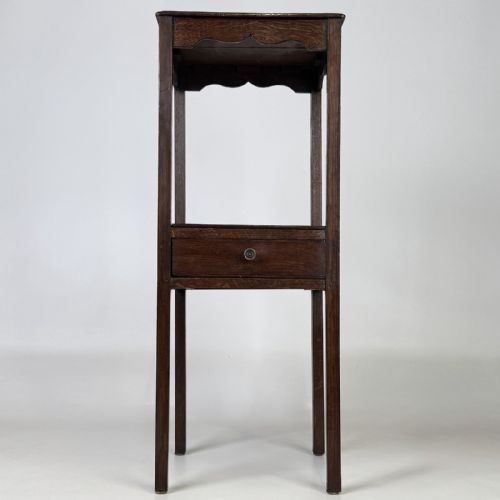
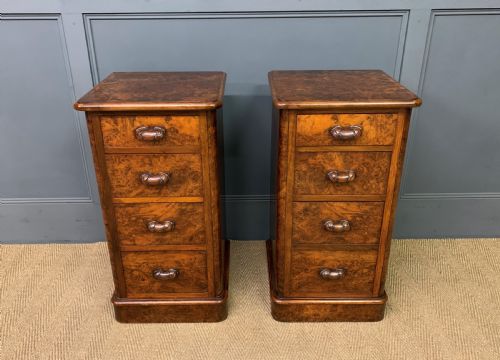
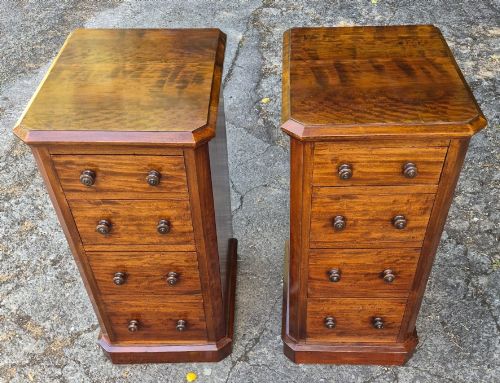
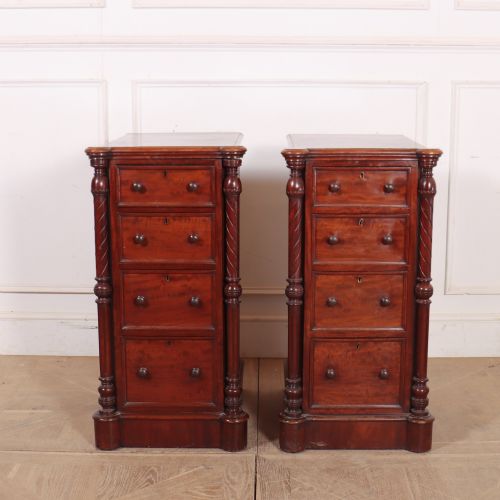
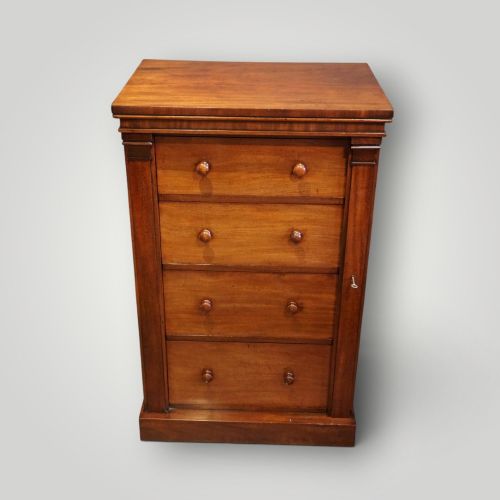
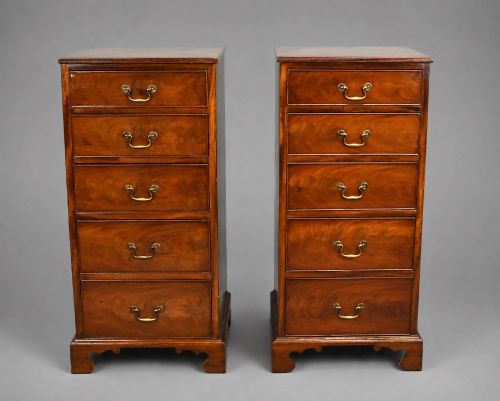
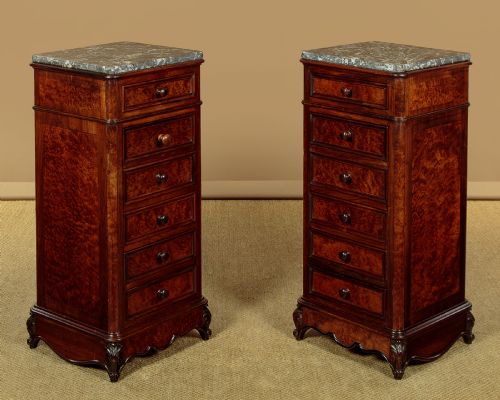
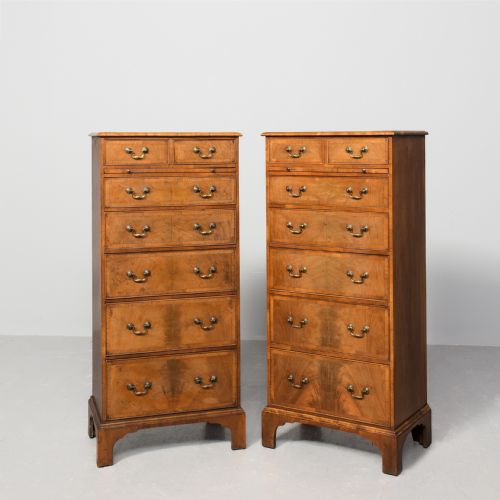
When you search for tall narrow bedsides, you find compact storage solutions designed to sit beside a bed while making efficient use of vertical space. These items appear in various forms, including bedside chests, Wellington chests, and bedside cabinets.
The pieces on this page span several periods, from the mid nineteenth century through the Victorian era into the 1920s and 1930s. You will encounter matching pairs as well as individual items constructed from traditional timbers.
Proportions are key to these items, with widths often kept minimal to fit tight spaces alongside a bed. Cabinet and drawer configurations vary, providing surface tops and enclosed storage within a slender footprint.
How they were made
Cabinet makers utilised dense hardwoods such as mahogany, walnut, and rosewood, alongside more utilitarian softwoods like pine. These timbers were often selected for their grain pattern and durability in daily domestic use.
Construction techniques include traditional joinery methods, dovetailed drawer boxes, and panelled doors. Surface finishes range from polished polishes to applied veneers such as amboyna and parquetry.
Hardware typically involves brass handles, knobs, or hinges, complementing the timber construction. Some items incorporate marble tops or tambour fronts for added function and texture.
Tall Narrow Bedsides Retail Price Guide 2026
Typical asking prices for tall narrow bedsides among the pieces listed under this phrase on Sellingantiques today, from the lower quarter to the upper quarter. They describe what is for sale here now, not the wider market.
The selection includes pieces from the Victorian era alongside 1920s and 1930s designs, constructed from mahogany, walnut, pine, and oak.
What varies in quality
The standard of timber selection and veneer matching defines the visual appeal of these pieces. Higher grade examples display carefully chosen grain and precise parquetry work across the structure.
Construction integrity shows in the smoothness of drawer operation and the tightness of joints. Well-made specimens retain structural rigidity and precise alignment in their narrow frames over decades of use.
The Tall Narrow Bedsides Glossary
- Wellington chest
- A tall, narrow chest of drawers traditionally secured by a hinged locking bar on one side. This form provides multiple deep drawers within a minimal floor space.
- Parquetry
- A geometric mosaic of wood pieces used for decorative veneer on furniture surfaces. It requires precise cutting and fitting of different timber species.
- Tambour
- A flexible shutter made of narrow strips of wood glued to fabric backing, allowing a door to slide around a curved corner. This mechanism is frequently found on specialised cabinets.
- Pedestal
- A support structure or single-pedestal chest designed to stand vertically beside furniture. These items offer compact vertical storage.
- Demi lune
- A half-moon shape used for console tables and specialised furniture fronts. This profile fits snugly against walls in narrow spaces.
Tall Narrow Bedsides: Frequently Asked Questions
How do I style tall narrow bedsides in a small bedroom?
Position the piece immediately adjacent to the mattress frame where surface space is needed for a lamp and small items. The vertical height allows for multiple drawers without occupying extra floor space.
Keep surrounding furniture low to let the height of the bedside piece act as a subtle focal point. Pair the timber tone with existing room elements for a cohesive arrangement.
Can I mix different wood tones with these bedsides?
Mixing woods is common when incorporating antique items into an existing interior scheme. The natural warmth of mahogany, walnut, or pine tends to complement other timber finishes.
Focus on the scale and proportion of the piece rather than matching the exact wood grain. Consistent hardware or styling helps unify dissimilar timber items in the same room.
How do I care for polished mahogany and walnut surfaces?
Dust the surfaces regularly with a soft, dry cloth to prevent particulate accumulation on the polish. Avoid placing damp items directly on the wood to protect the vintage finish.
Apply a quality wax periodically if the timber appears dry, following the grain of the wood. Keep the furniture away from direct heat sources to prevent timber movement.