

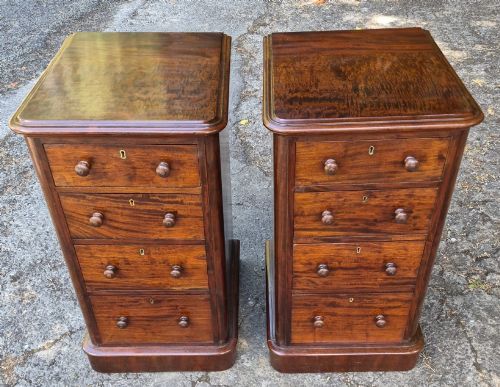
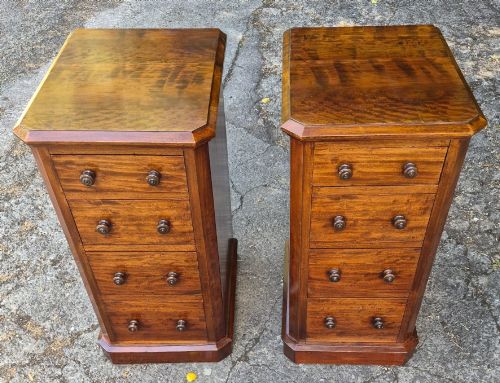
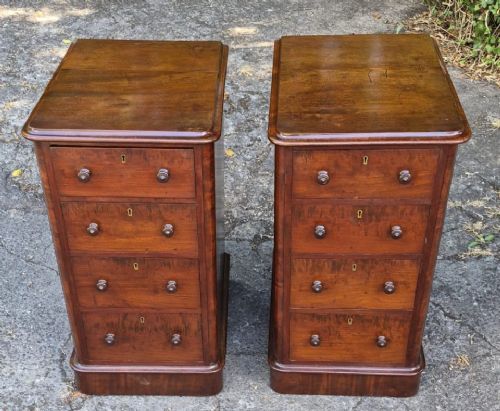
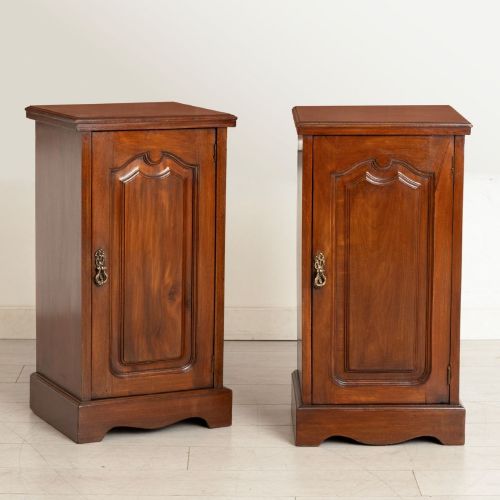
Pair Victorian Bedside Tables
A matched pair victorian bedside tables brings proportion and symmetry to a bedroom while offering practical storage beside the bed.

Pair Victorian Bedside Tables
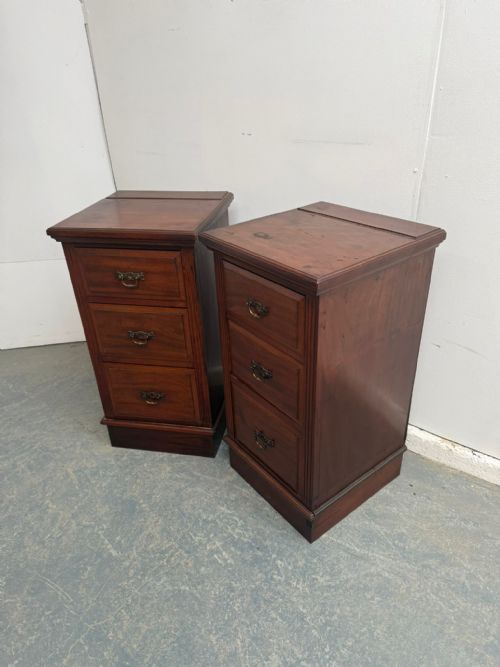
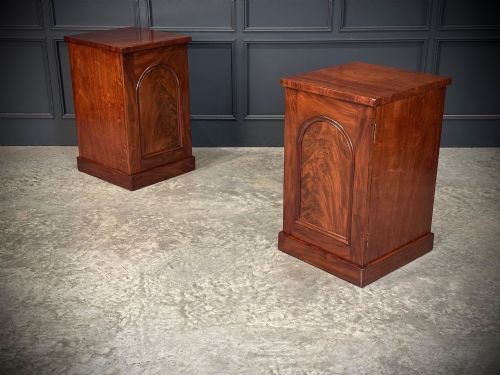
A pair victorian bedside tables encompasses small cabinets, pot cupboards, and drawer chests designed to sit beside a bed. The selection relies heavily on mahogany, oak, and walnut forms dating across the nineteenth century.
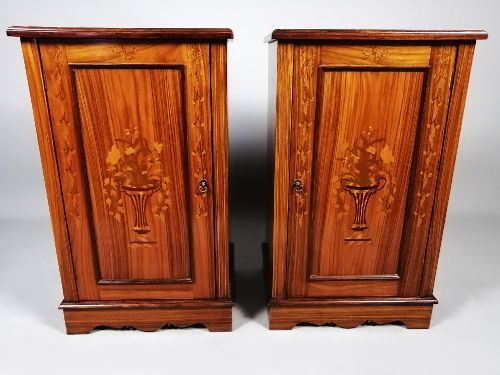
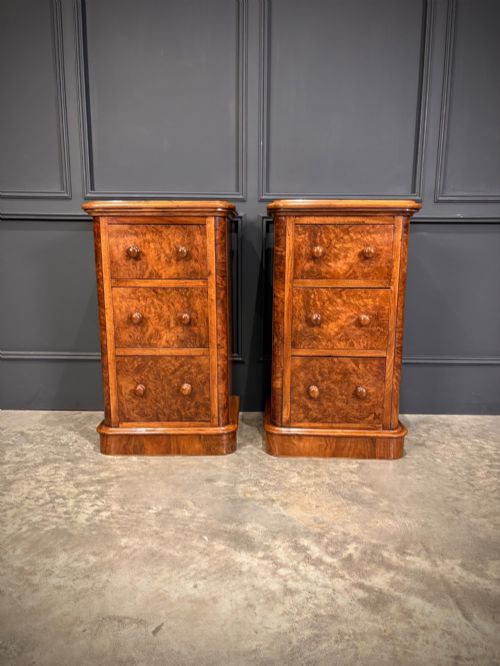
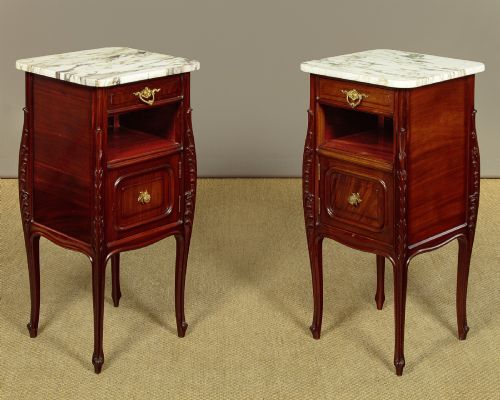
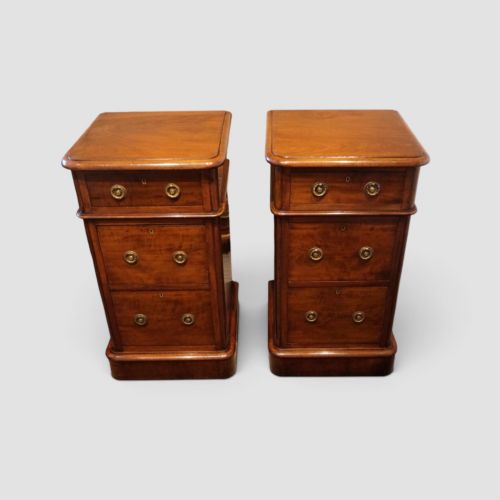
Most examples function as enclosed cupboards with a single door or compact chests featuring three small drawers. They originate primarily from English workshops, though occasional variations include faux bamboo and pine constructions.
Buyers encounter matching pairs outfitted for late nineteenth-century interiors, often exhibiting the rich timber grains favored by period cabinetmakers. These pieces double as stands for lighting and night-time essentials.
How they were made
Cabinetmakers utilised solid timbers and applied veneers, selecting figured mahogany, flame mahogany, and burr walnut for visible surfaces. Structural elements often rely on secondary woods like pine or oak within the drawer carcases.
Joinery involved traditional dovetailing for drawers and mortise and tenon construction for frames, ensuring stability in daily use. Surface finishes typically consist of waxed treatments that highlight the natural grain of the wood.
Pair Victorian Bedside Tables Retail Price Guide 2026
Typical asking prices for pair victorian bedside tables among the pieces listed under this phrase on Sellingantiques today, from the lower quarter to the upper quarter. They describe what is for sale here now, not the wider market.
Some nineteenth-century makers experimented with exotic faux bamboo painted finishes for a touch of novelty.
What varies in quality
The selection of timber grain largely dictates the distinction between standard and superior pieces, with matched flame mahogany or burr walnut representing finer execution. The crispness of carved details and the integration of marquetry or brass handles further elevate an example.
Construction integrity manifests in the smooth operation of drawers and the precision of the door fit within the cabinet frame. Original fixtures and uniform fading across both items demonstrate superior preservation over time.
Warings Liverpool·Waring & Gillows
The Pair Victorian Bedside Tables Glossary
- Pot cupboard
- A small enclosed bedside cabinet originally designed to house a chamber pot. These typically feature a single door concealing a shelved interior.
- Flame mahogany
- A veneer cut from the fork of the mahogany tree that creates a distinctive flickering, flame-like pattern. It was widely utilised on prominent surfaces of Victorian case furniture.
- Burr walnut
- A prized timber harvested from growth excrescences on walnut trees, yielding highly figured, swirling grain patterns. It often covers the front facades of high-status nineteenth-century chests.
- Dovetail
- A traditional wood joint formed by interlocking wedge-shaped fingers, prized for its tensile strength. It appears extensively in the drawer construction of period furniture.
Pair Victorian Bedside Tables: Frequently Asked Questions
How do I match these tables with modern bedroom furniture?
The rich tones of nineteenth-century mahogany and walnut complement neutral walls and contemporary lighting.
Their compact proportions allow them to sit comfortably beside modern bed heights without overwhelming the room.
Are marble tops common on these tables?
Marble surfaces appear on select late nineteenth-century cabinets to provide a durable, wipe-clean top resistant to water from jugs and glasses.
This finish is usually paired with mahogany or walnut carcases from the eighteen-nineties.
How can I tell if a pair is genuinely Victorian?
Authentic period pieces display hand-cut dovetail joints, traditional timber shrinkage, and secondary woods consistent with nineteenth-century workshop practices.
Examining the interior construction and drawer linings reveals the age and manufacturing methods.