





Satinwood Nightstands
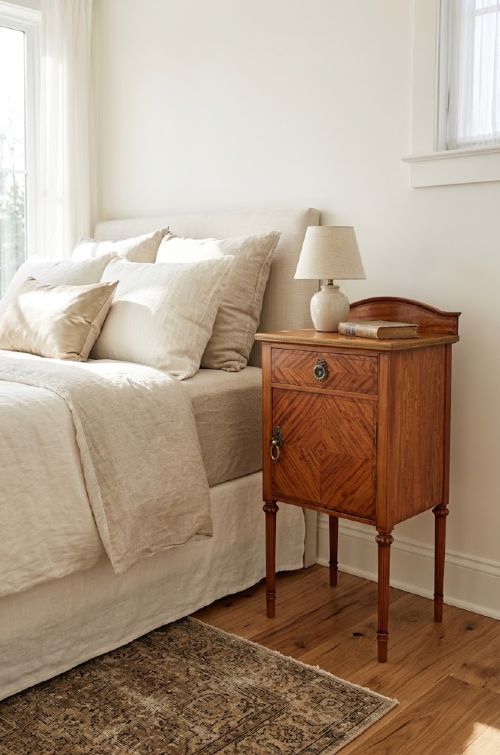
Satinwood nightstands are timber bedside pieces finished in pale, shimmering veneers that bring warmth and elegance to a bedroom.

Satinwood Nightstands
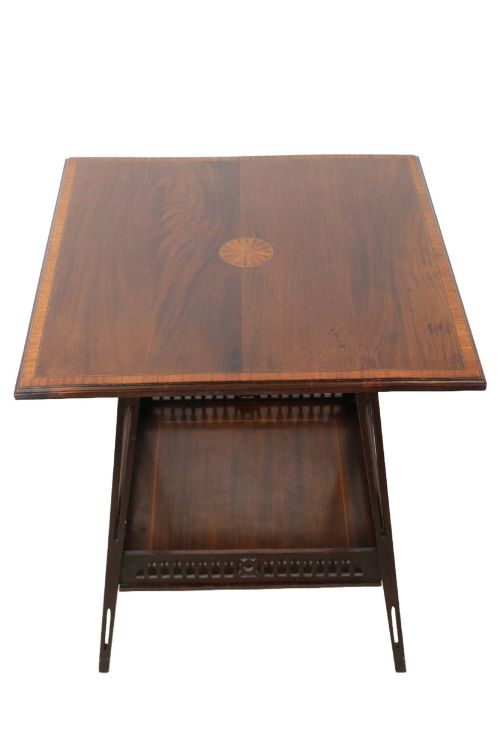
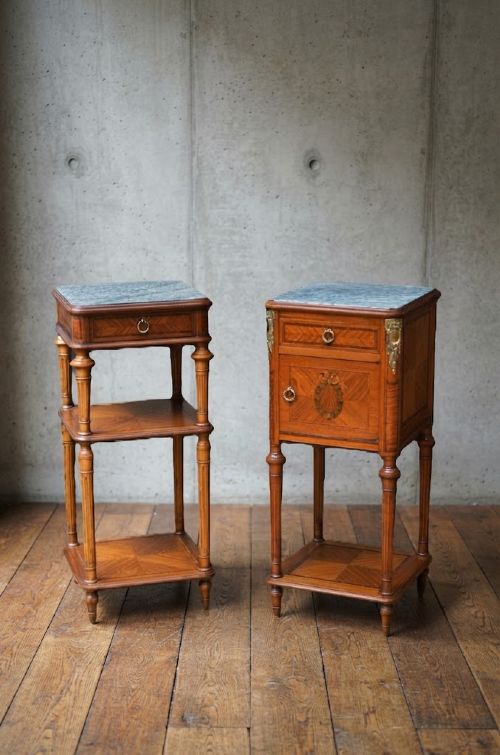
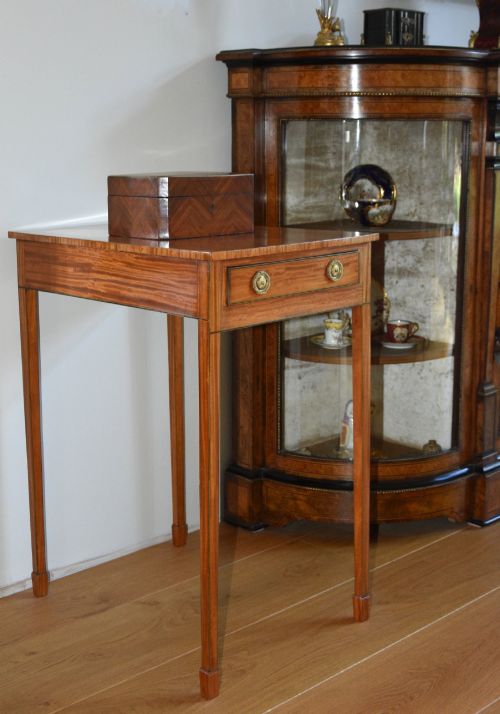
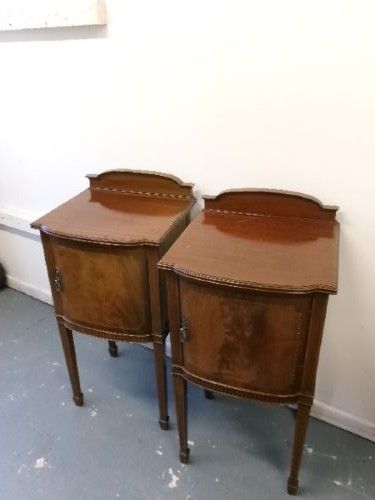
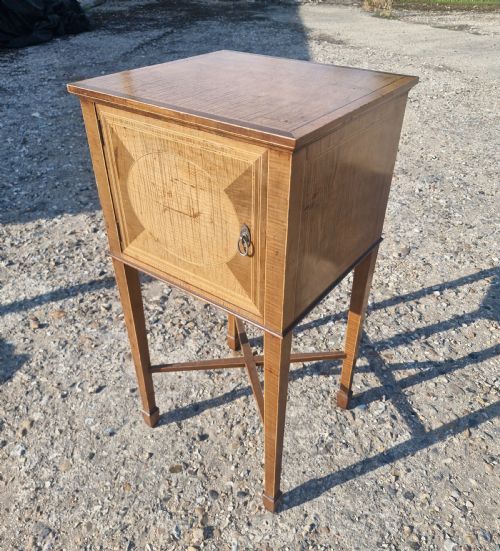
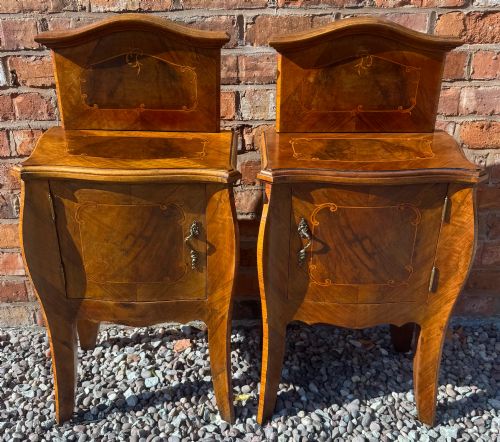
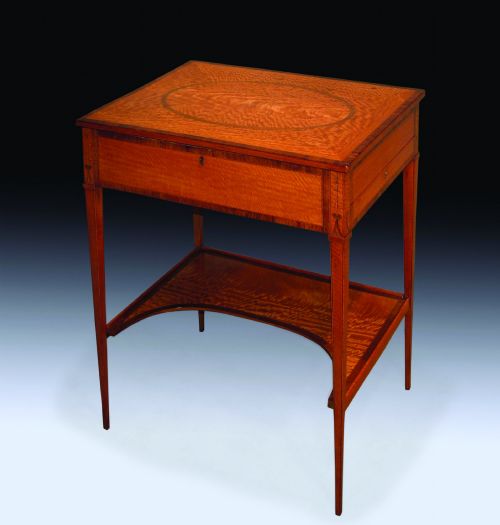
When you search for satinwood nightstands, you encounter a selection of bedside storage pieces originating from periods spanning the Georgian era through to the Art Deco decades of the twentieth century. These items take several forms, appearing most frequently as bedside cabinets and cupboards alongside occasional tables and small chests of drawers.
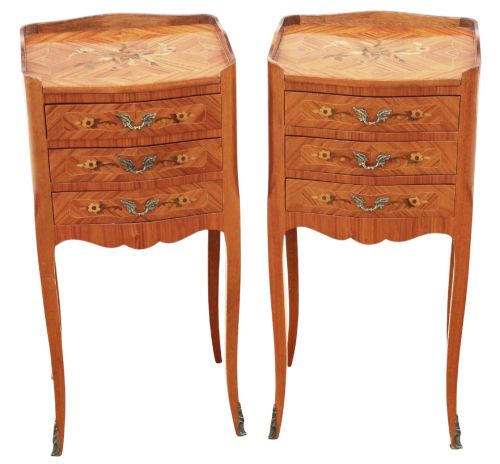
The Edwardian period supplies a large proportion of these bedside pieces, often featuring fine boxwood stringing and delicate inlay upon timber carcases. Alongside British Edwardian examples, French pieces display intricate marquetry and parquetry work utilising contrasting exotic timbers.
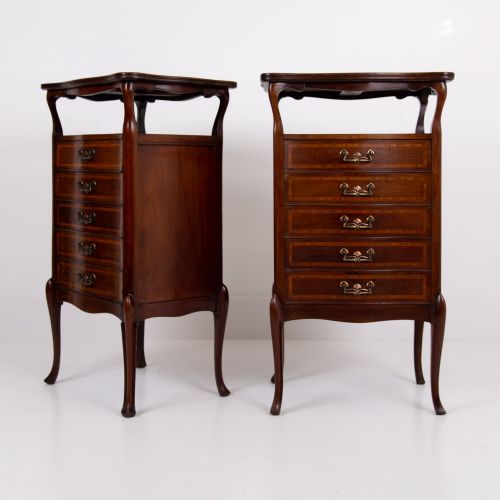
Makers and workshops of note represented in these forms include Morant and Co, Gillows, Trevor Page and Co, and Betty Joel. Pieces range from single bedside cupboards to balanced pairs intended to flank a bed symmetrically.
How they were made
Cabinetmakers constructed these pieces using sturdy carcases of mahogany or walnut, upon which they laid fine veneers of satinwood. They enhanced surfaces through marquetry, parquetry, and contrasting inlay work using boxwood, rosewood, and kingwood.
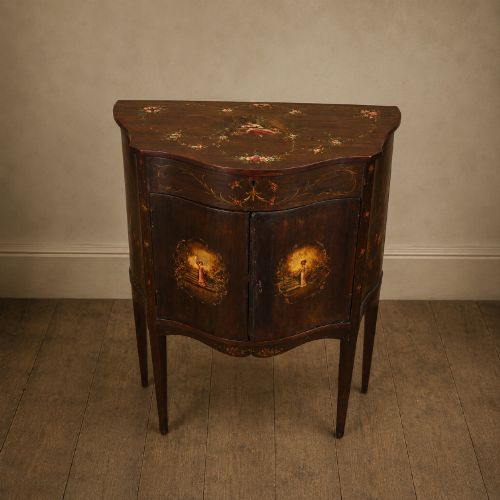
Detailing often included hand-painted motifs, serpentine fronts, and drop-leaf mechanisms, complemented by cast brass hardware. Marble tops also appear on select French and Victorian bedside cabinets for a durable working surface.
Satinwood Nightstands Retail Price Guide 2026
Typical asking prices for satinwood nightstands among the pieces listed under this phrase on Sellingantiques today, from the lower quarter to the upper quarter. They describe what is for sale here now, not the wider market.
Some Edwardian bedside cupboards doubled as discreet shoe cabinets, keeping evening slippers hidden right beside the bed.
What varies in quality
The distinction between standard commercial pieces and finer workshop items lies in the crispness of the inlay and the selection of the satinwood veneer. Master cabinetmakers achieved subtle grain contrast and precise geometric stringing that remained tight over decades.
Construction methods also separate the tiers of quality, visible in the hand-cut dovetailing of drawer boxes and the weight of the brass fittings. Stamped cabinetmaker signatures or workshop labels indicate higher workshop origin.
Trevor Page and Co·Morant and Co·Betty Joel·Gillows
The Satinwood Nightstands Glossary
- Satinwood
- A lustrous hardwood yielding a pale, golden-yellow timber with a reflective sheen. It takes a high polish and serves as a primary veneer for fine cabinetwork.
- Marquetry
- Decorative veneer work forming pictorial or geometric patterns using various coloured wood timbers. Artisans piece together thin slices to create elaborate surface designs.
- Parquetry
- A geometric mosaic of wood pieces used for decorative floors or cabinet surfaces. It relies on symmetrical patterns like cubes or chequers.
- Serpentine
- A curved line of furniture fronting that undulates outward in the centre and recesses at the sides. This shape requires advanced woodworking skill to execute cleanly.
- Stringing
- Thin inlaid lines of contrasting wood set into the surface of a timber carcase. It frames panels and defines the edges of drawers and tabletops.
Satinwood Nightstands: Frequently Asked Questions
Are these bedside cabinets sold as pairs?
Many of the bedside cabinets and tables appear as matched pairs suitable for placing on either side of a bed. Other listings provide single cupboards or occasional tables.
Checking individual descriptions clarifies whether a listing comprises a single item or a pair.
What periods do these nightstands date from?
The pieces span several eras, including Georgian, Victorian, Edwardian, and Art Deco periods. Twentieth-century examples from the 1920s and 1930s also feature prominently alongside earlier nineteenth-century designs.
Revival styles such as Sheraton Revival and Louis XVI Revival frequently emulate eighteenth-century aesthetics during later decades.
How do I maintain satinwood furniture?
Satinwood benefits from placement away from direct sunlight and radiators to prevent timber shrinkage and veneer lifting. Regular dusting with a soft, dry cloth preserves the polished surface.
Occasional application of appropriate furniture wax maintains the natural lustre of the wood without building up heavy residues.
What other timbers accompany satinwood?
Makers frequently combined satinwood with mahogany, walnut, and rosewood for structural carcases and contrasting borders. Boxwood stringing and kingwood details also appear across various inlaid panels.
Some cabinets incorporate marble inserts on the top surface for added utility.