



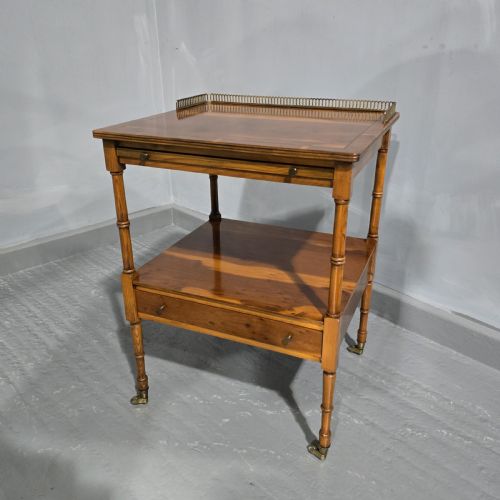


Regency Style Bedside Tables
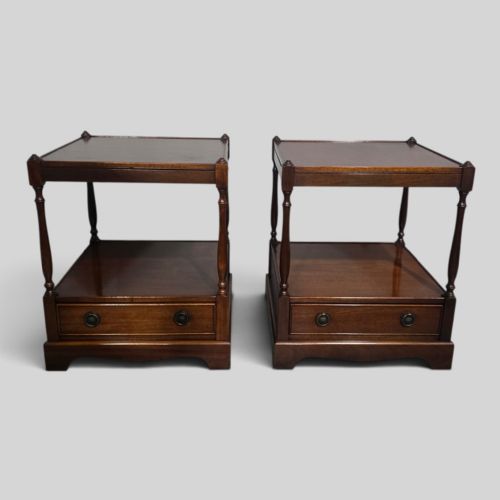
These regency style bedside tables bring architectural classical form and rich mahogany to the bedroom.
Regency Style Bedside Tables
Regency style bedside tables draw on the classical vocabulary of the nineteenth century, including pedestal cabinets, cupboards, and chests with clean structural lines. The pieces available span various eras from the nineteenth century through the Edwardian period and the early decades of the twentieth century, reflecting revivals of the neoclassical aesthetic.
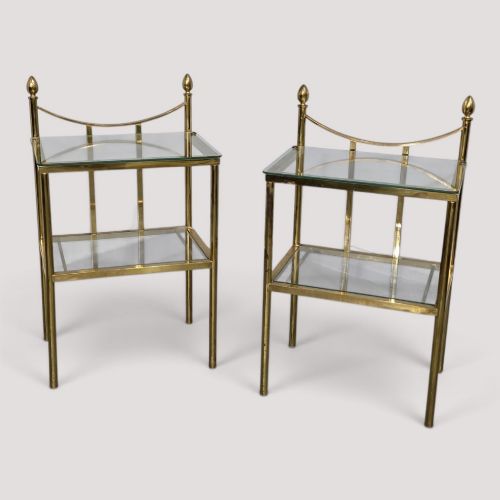
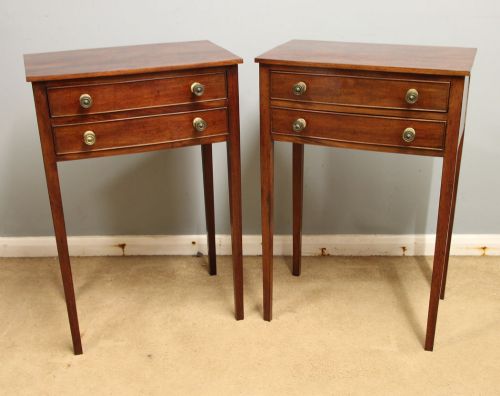
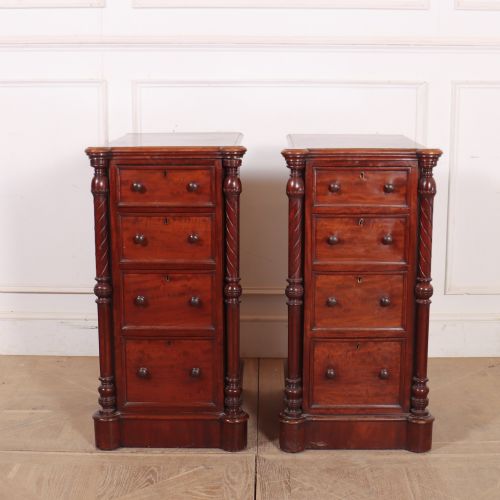
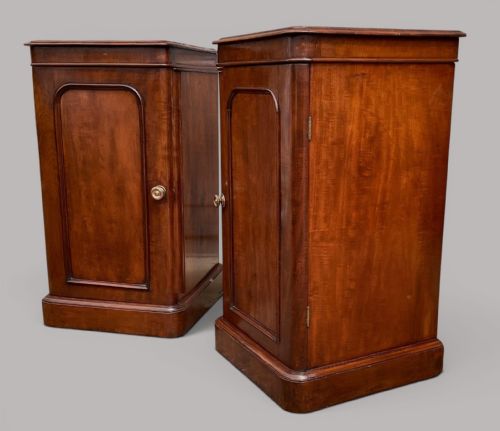
Buyers will encounter several forms on this page, most notably compact bedside chests of drawers, pedestal cabinets, and occasional drop-flap or lamp tables adapted for bedside use. Mahogany forms the backbone of these pieces, often highlighted by flame veneers or ebonised details.
Originating largely from English workshops, these items range from traditional Georgian-influenced designs to later Regency revival interpretations. They offer practical bedside storage while maintaining the architectural proportion characteristic of the style.
What varies in quality
The standard of timber selection distinguishes the finer pieces, particularly where matched flame mahogany veneer or rich yew wood is employed across drawer fronts and tops. Superior examples display crisp architectural mouldings and finely cast brass mounts rather than simplified or replacement hardware.
Joinery execution defines the durability of the structure, visible in the snug fit of cabinet doors, the precision of drawer construction, and the stability of pedestal bases. Pieces retaining their original finish and structural integrity command greater appreciation from collectors.
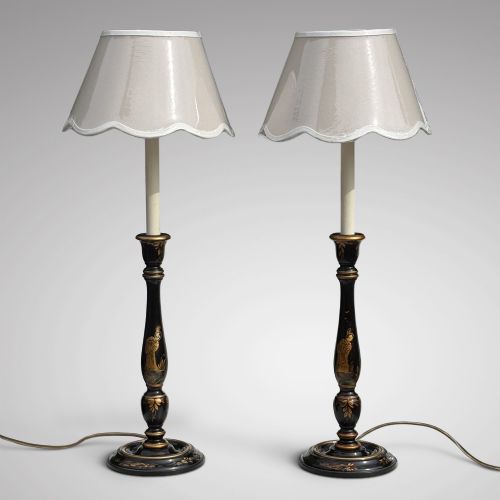
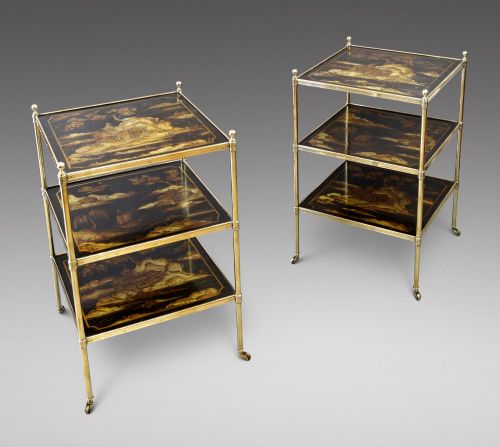
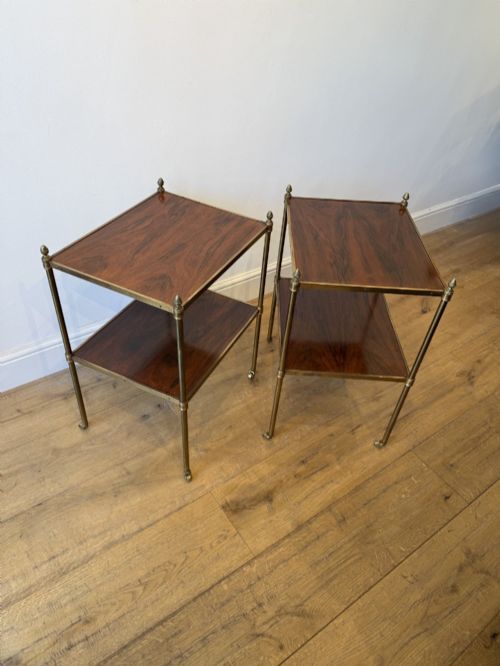
Listings feature mahogany, brass, lacquer, and ebonised wood across nineteenth-century and early twentieth-century periods.
Holland and Sons·Mallett
The Regency Style Bedside Tables Glossary
- Flame mahogany
- A veneer cut from the fork of the mahogany tree to produce a distinctive, flickering flame-like grain pattern. This decorative wood was frequently utilised on prominent surfaces of nineteenth-century furniture.
- Pedestal cabinet
- A freestanding enclosed cupboard supported on a plinth or feet, designed to house bedside essentials. These cylindrical or rectangular units keep items neatly out of sight.
- Drop-flap
- A hinged leaf attached to the side of a table that can be raised to extend the surface area or lowered when space is restricted. It adds functional versatility to compact bedside furniture.
- Ebonised wood
- Timber treated with a dark stain or finish to imitate ebony. This technique was popular in classical and revival furniture to create sharp tonal contrasts.
- Neoclassical
- A style inspired by the classical art and architecture of ancient Greece and Rome. It prioritises symmetry, straight lines, and restrained ornamentation.
Regency Style Bedside Tables: Frequently Asked Questions
What defines regency style furniture?
Regency style furniture is characterised by classical architectural proportions, clean lines, and inspiration drawn from ancient Roman and Greek design. It frequently incorporates dark timbers like mahogany alongside brass mounts and restrained carving.
Later revivals in the Edwardian period and the nineteen-twenties reinterpreted these classical motifs for smaller domestic spaces, producing versatile bedside cabinets and lamp tables.
How do I choose the right bedside table height?
Selecting the correct height involves measuring the top of your mattress to ensure the bedside table sits level with or slightly below it. This proportion allows comfortable access to lamps, books, and enclosed storage during the night.
Compact pieces measuring around thirty-seven centimetres in width or featuring drop flaps offer practical solutions for smaller bedrooms without overwhelming the floor plan.
Are these tables solid mahogany or veneer?
Makers constructed these pieces using a combination of solid woods for structural frames and decorative veneers applied to flat surfaces like drawer fronts and cabinet doors. Flame mahogany veneer was particularly favoured for its striking visual movement and rich grain depth.
Examining the edges and interior construction helps identify the underlying timbers used by the workshop.
How do I care for antique wood surfaces?
Maintaining antique wood requires regular dusting with a soft, dry cloth and avoiding placement near direct heat sources or strong sunlight. These precautions protect the polished finish and prevent the timber from drying out over time.
Occasional application of appropriate wax polish helps preserve the natural lustre of mahogany and ebonised surfaces.