
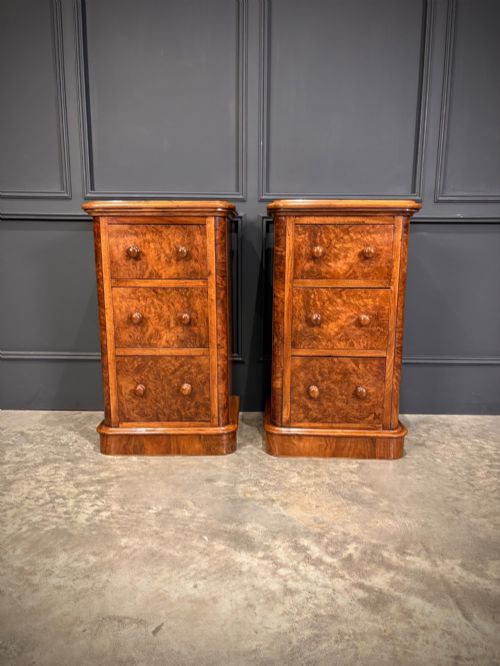

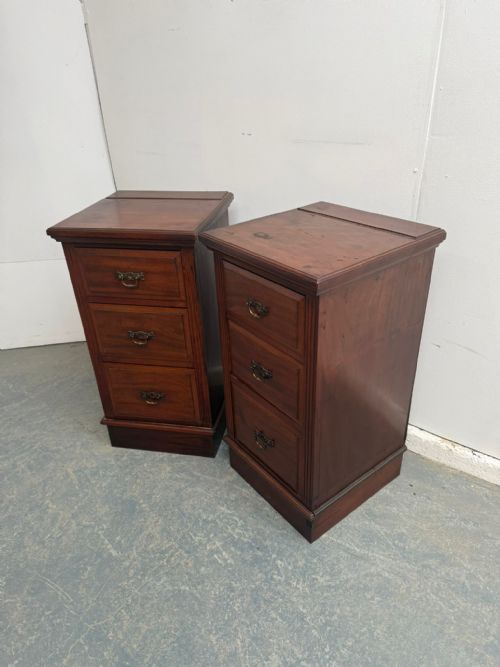
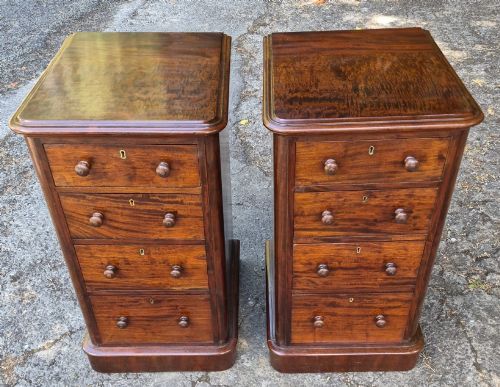
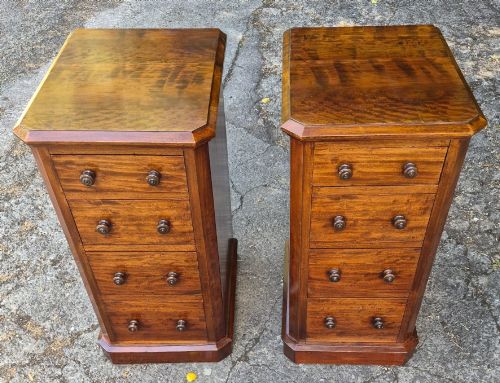
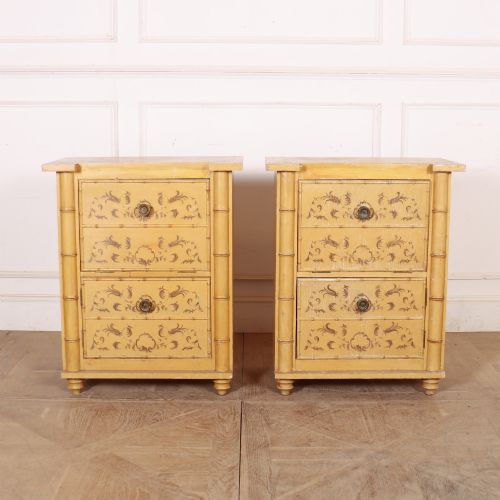


Pair Victorian Bedside Chests
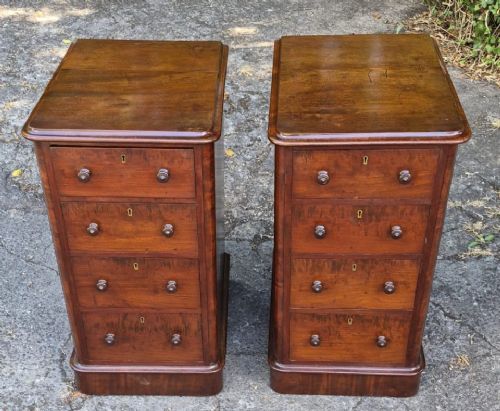
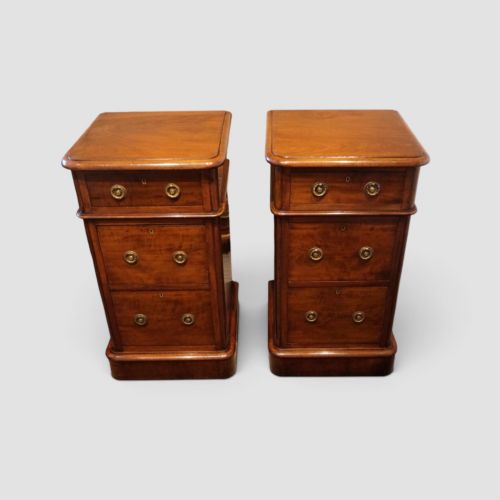
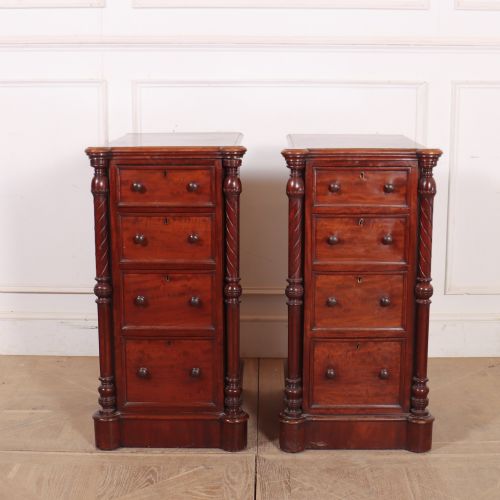
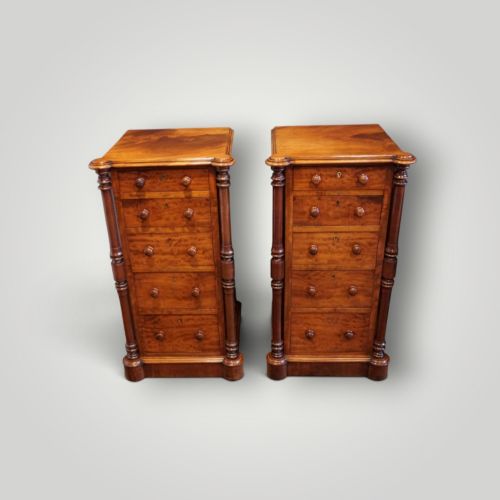
Pair Victorian bedside chests are matching drawer units designed for flanking a bed, offering practical bedside storage with nineteenth-century character.
Pair Victorian Bedside Chests
Pair Victorian bedside chests are matching small-scale drawer units designed to stand beside a bed, appearing predominantly in nineteenth-century forms across this selection.
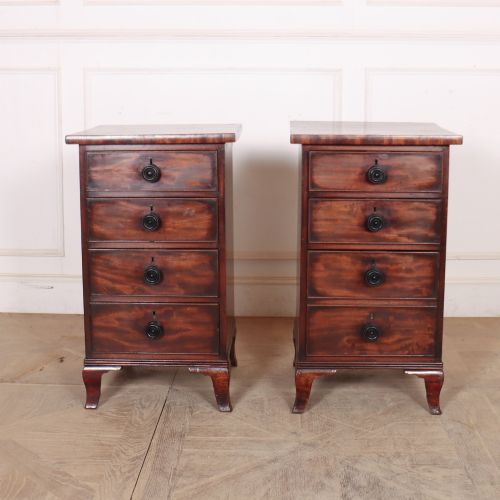
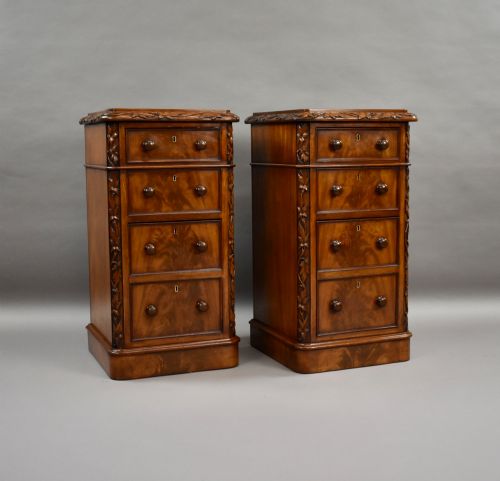
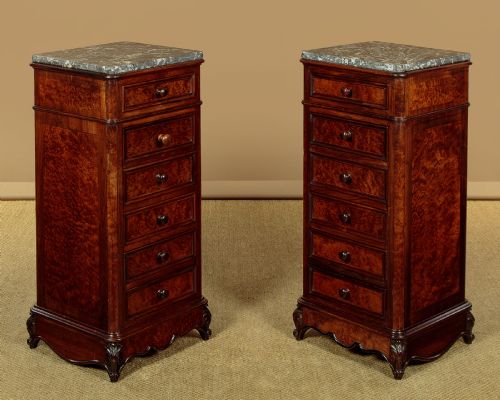
Mahogany and burr walnut dominate the surviving examples, constructed either as traditional miniature chests of drawers or as enclosed bedside cabinets with single doors.
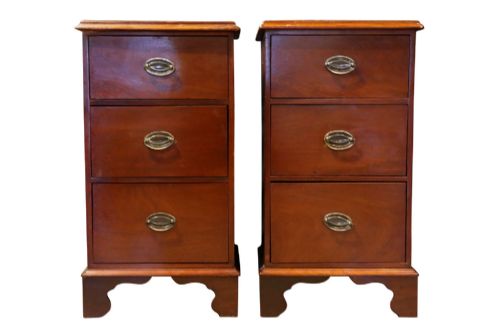
The most common version met on this page is the three-drawer mahogany chest from the Victorian era, offering compact proportions suited to domestic use.
Materials and Construction
Cabinet makers built these pieces using solid timbers like mahogany, walnut, and pine, frequently applying decorative veneers such as burr walnut and amboyna to drawer fronts.
Joinery techniques relied on traditional hand-cut dovetails for drawer construction, ensuring durability alongside applied details like brass handles, leather inserts, and marquetry inlay.
The listings here feature pieces spanning the nineteenth century, utilising solid mahogany, burr walnut, rosewood, and pine alongside decorative brass hardware.
Quality and Craftsmanship
Quality separates through the selection of timber veneers and the precision of the cabinet work, particularly in matched grain patterns across a pair.
Fine examples retain original hardware, crisp carving, and seamless drawer movement, whereas adapted or heavily restored pieces show alterations in timber and structure.
Warings Liverpool
The Pair Victorian Bedside Chests Glossary
- Burr walnut
- A figured timber veneer taken from the growth excrescences of walnut trees, prized for its swirling, organic patterns on drawer fronts.
- Dovetail
- A traditional interlocking joint used in drawer construction, valued for its tensile strength and resistance to being pulled apart.
- Campaign style
- Furniture built with flush brass fittings and inset handles, originally designed for easy dismantling and transport during military campaigns.
- Marquetry
- The decorative craft of applying small pieces of veneer to a structure to form intricate pictorial or geometric designs.
- Bowfront
- A curved cabinet front that swells outward in the centre, adding visual softness and greater interior volume to small chests.
Pair Victorian Bedside Chests: Frequently Asked Questions
What is a Victorian bedside chest?
A Victorian bedside chest is a small, nineteenth-century set of drawers or a cabinet specifically scaled to sit alongside a bed for nighttime storage.
These pieces typically feature two to four drawers and mirror each other in timber, wood grain, and overall dimensions to create a balanced look in a bedroom.
Were these chests always made as pairs?
Many nineteenth-century drawer units were constructed as matching sets, though some surviving examples have been matched together later by dealers based on timber and size.
Original pairs share identical wood figuring, handle types, and internal construction methods, making them sought after for symmetrical bedroom placement.
What timbers were commonly used?
Mahogany and walnut are the primary hardwoods found in these nineteenth-century pieces, offering rich natural tones and durable surfaces for daily use.
Makers also utilised decorative veneers like burr walnut and amboyna on drawer fronts, while secondary woods like pine appeared on interior drawer linings.
How do I care for antique bedside chests?
Protect antique wood surfaces by keeping them away from direct heat sources and strong sunlight, which can dry out timber and fade natural finishes.
Apply a traditional beeswax polish occasionally to nourish the wood and maintain a soft sheen without building up heavy chemical layers.