
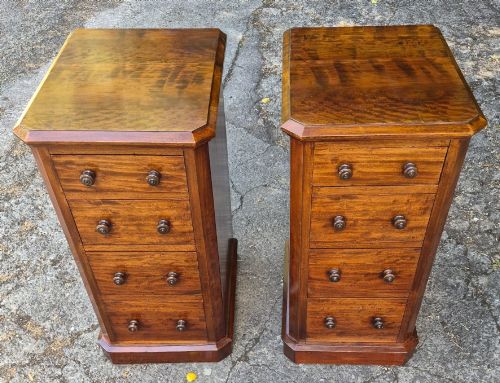
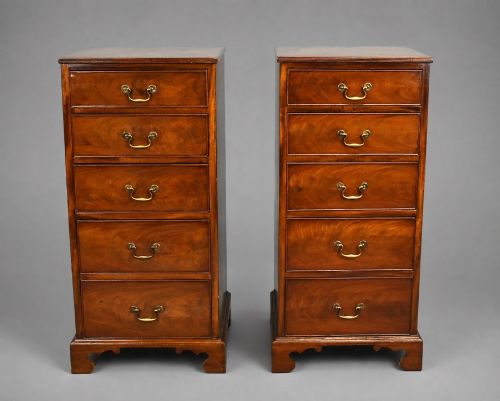
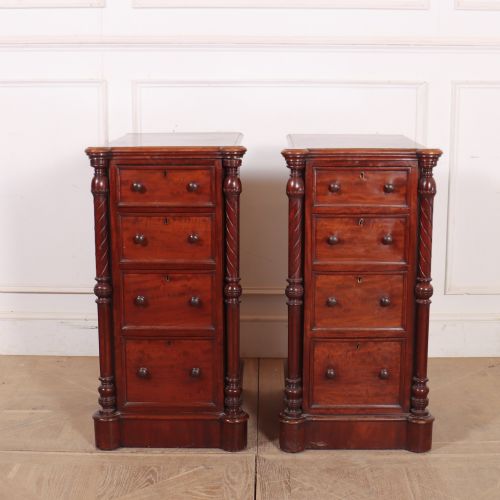
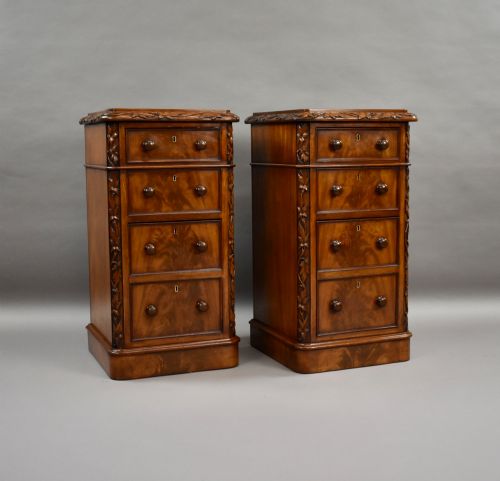



Pair Storage Chests
These pair antique storage chests deliver matching symmetry and practical capacity, bringing period character and organised containment to any room.
Pair Storage Chests
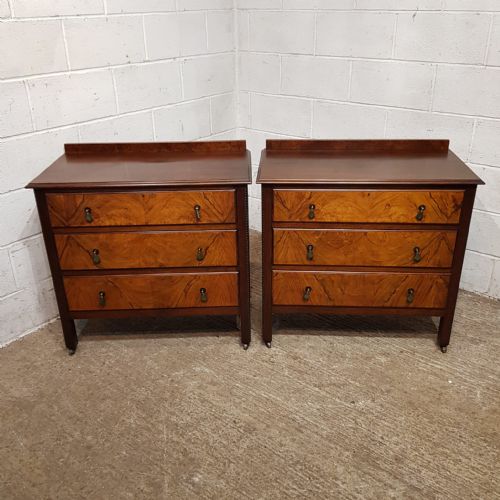
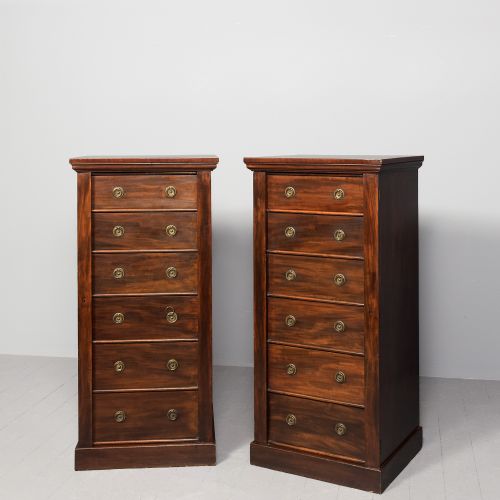
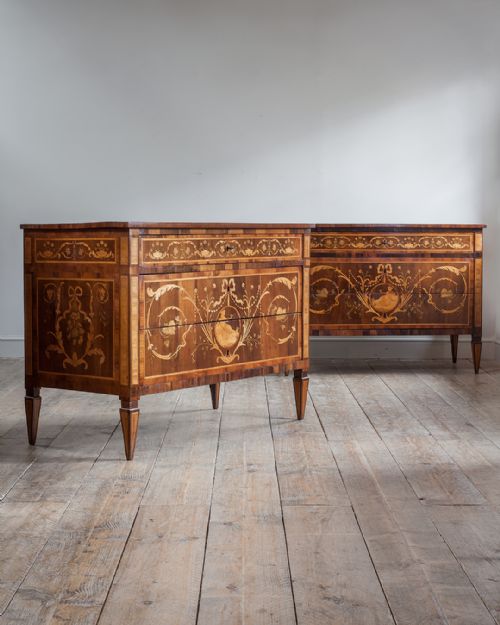
Buyers seeking pair antique storage chests encounter a diverse range of forms, from compact bedside lockers and tall Wellington designs to substantial European commodes and small trunks. The selection spans numerous decades, featuring pieces originating from English, French, Italian, and Chinese workshops.
Mahogany and walnut predominate among the surviving examples, often accompanied by pine, burr walnut, and kingwood veneers. These items served various historical purposes, including bedside storage, tea preservation, apothecary organisation, and general household containment.
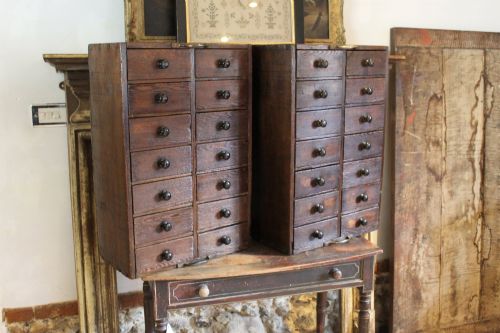
Victorian and nineteenth-century examples dominate the available selection, though Georgian items and twentieth-century productions also appear. The variety includes specialised cabinetry such as music cabinets, collectors' drawer units, and military-style lockers.
Materials and construction methods
Cabinet makers utilised dense hardwoods like mahogany and walnut for structural integrity and fine grain appearance, applying decorative veneers such as burr walnut, kingwood, and parquetry on prominent surfaces. Brass fittings, gilt bronze mounts, and iron details reinforced corners and provided operational hardware for drawers and lids.
Pine served as a sturdy timber for utilitarian trunks and painted domestic chests, while marble and faux marble tops provided durable, wipe-clean surfaces for commodes and bedside cabinets. Joinery techniques relied on traditional dovetailing for drawers and mortise and tenon frames to support daily use.
Listings feature storage chests spanning the eighteenth, nineteenth, and early twentieth centuries, constructed from mahogany, walnut, pine, and exotic veneers.
Distinctions in craftsmanship and origin
Quality rests upon the selection of timber veneers, the crispness of marquetry or parquetry patterns, and the integration of secondary woods. Superior examples display restrained proportion, precise joinery, and matching timber grains across both pieces in the pairing.
Hardware execution and structural retention dictate the standing of a piece, with heavy cast brass mounts, original locks, and intact marble or timber tops separating standard workshop output from exhibition grade output.
Edwards and Roberts·Jean-Henri Riesener·Whytock and Reid·James Shoolbred
The Pair Storage Chests Glossary
- Commode
- A low chest of drawers or cabinet, often of French origin, featuring decorative veneers and sometimes a marble top. These items typically functioned as bedside or salon storage.
- Wellington chest
- A tall, narrow chest of drawers secured by a hinged locking stile that fastens with a key down one side. This design originated in the nineteenth century for efficient security of contents.
- Parquetry
- A geometric mosaic of wood pieces used for decorative surfaces on floors and cabinetry. Makers arranged contrasting timbers to form precise patterns.
- Tea caddy
- A small box or chest designed to store tea leaves securely, often fitted with internal compartments. Examples from the Georgian and Victorian periods frequently occur in pairs.
- Collectors cabinet
- Specialised small-scale cabinetry featuring numerous shallow drawers built to house specimens such as insects, slides, or coins. These items utilise dense timbers like mahogany and walnut.
Pair Storage Chests: Frequently Asked Questions
How do I use these chests today?
These matching chests serve practical storage roles throughout the home, functioning effectively as bedside tables, living room side cabinets, or hallway organisational units. Their twin configuration allows for balanced interior placement on either side of a bed, fireplace, or doorway.
Smaller variations accommodate specialised items like jewellery, stationery, or collections, while larger commodes and trunks hold linen, clothing, and household goods. The enclosed drawer and cupboard designs conceal clutter while maintaining period aesthetic integrity.
Are these pieces truly matching pairs?
Many listings present genuine pairs manufactured together in the same workshop using identical timbers and matching proportions. Other entries describe near pairs assembled from similar period items that share comparable dimensions and decorative schemes.
Careful inspection of the timber grain, hardware placement, and drawer construction reveals whether pieces originated as a dedicated pair or were gathered together subsequently. Both options offer symmetrical styling for balanced room arrangements.
How do I care for antique wood surfaces?
Maintain timber surfaces by dusting regularly with a soft, dry cloth and avoiding placement near direct heat sources or strong sunlight. Wax finishes benefit from occasional application of traditional beeswax to nourish the wood and preserve the sheen.
Protect marble and faux marble tops from acidic spills and moisture by using coasters and mats. Handle brass hardware gently and avoid abrasive chemical cleaners that strip historical patina.
How do I distinguish nineteenth-century styles?
Nineteenth-century pieces reflect evolving aesthetic movements, transitioning from late Georgian formality through robust Victorian utility and ornate revival styles. Examination of structural framing, secondary woods, and decorative motifs helps identify the specific decade of manufacture.
Victorian items often employ solid mahogany or walnut with substantial proportions, while later nineteenth-century pieces may incorporate lighter veneers, brass detailing, or specialised interior fittings like sliding trays.