
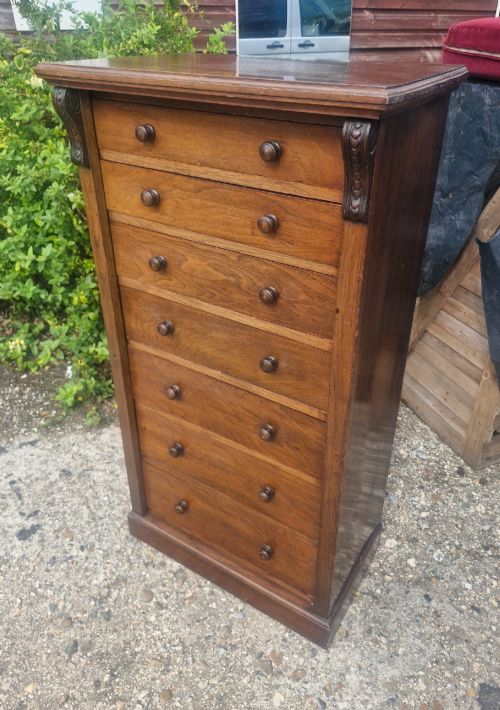
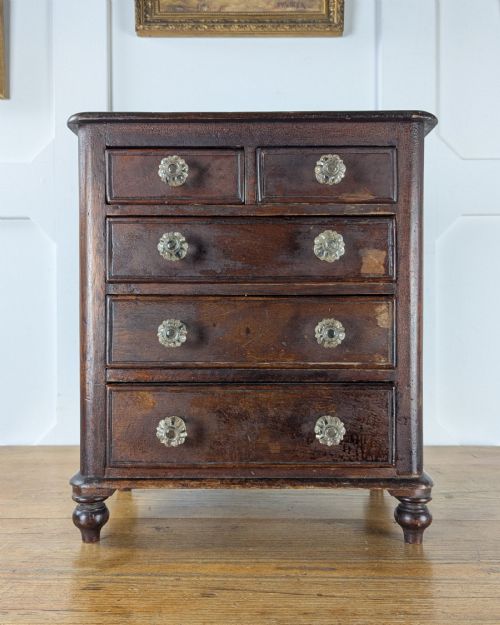
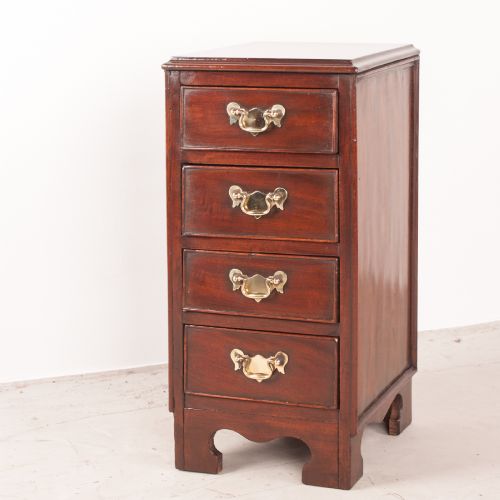
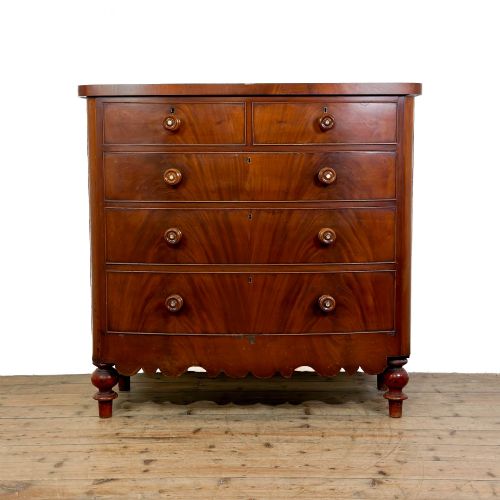
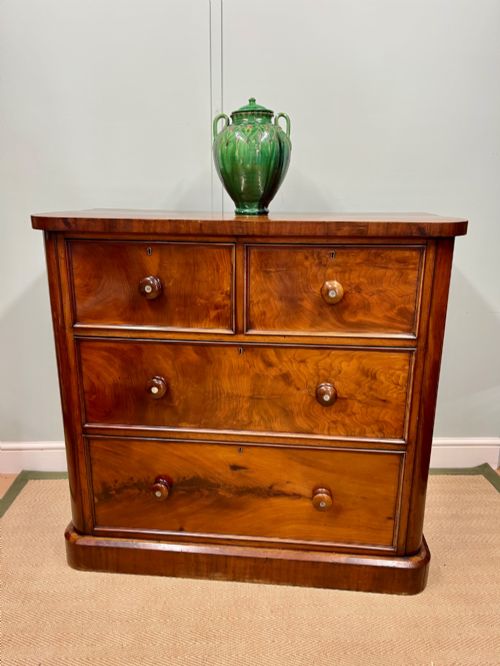

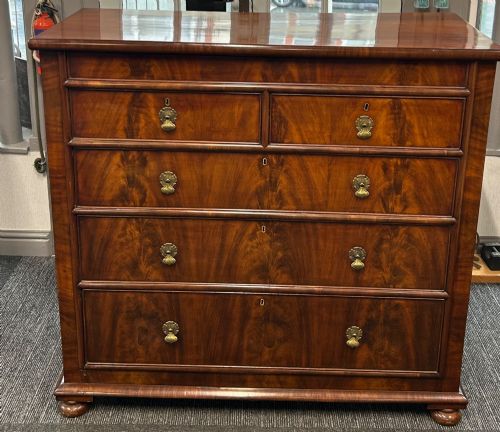

Victorian Mahogany Drawer Unit
A victorian mahogany drawer unit brings dense timber and honest storage to a room, ranging from full-scale chests to compact apothecary banks.
Victorian Mahogany Drawer Unit
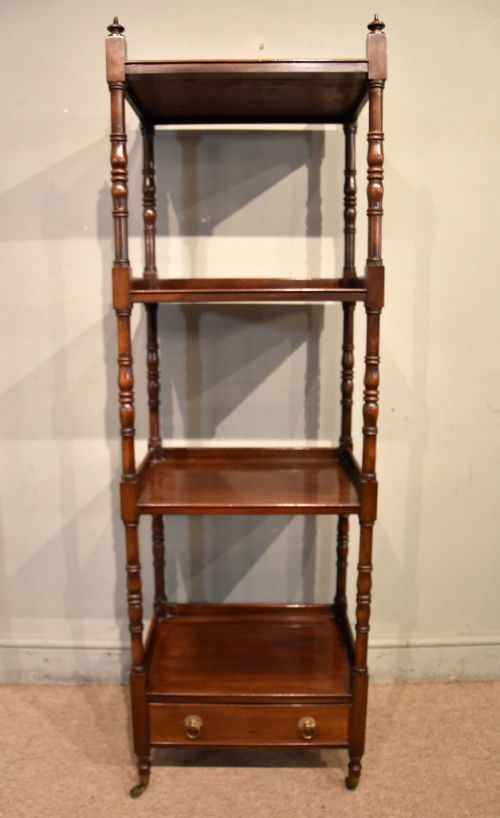
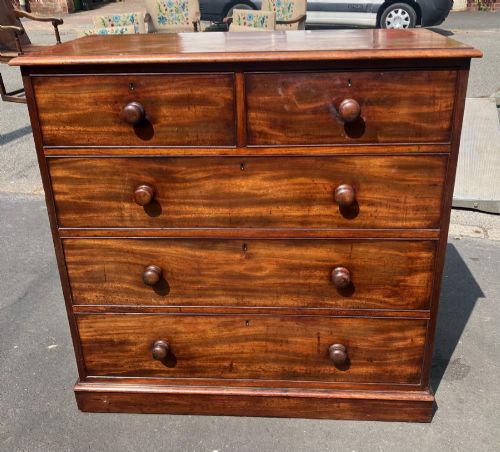
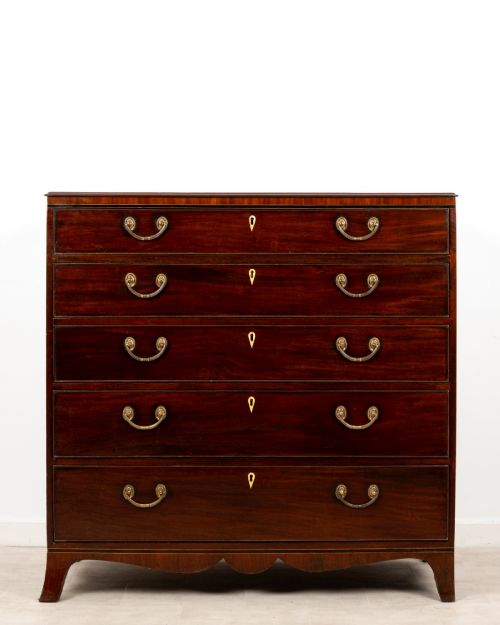
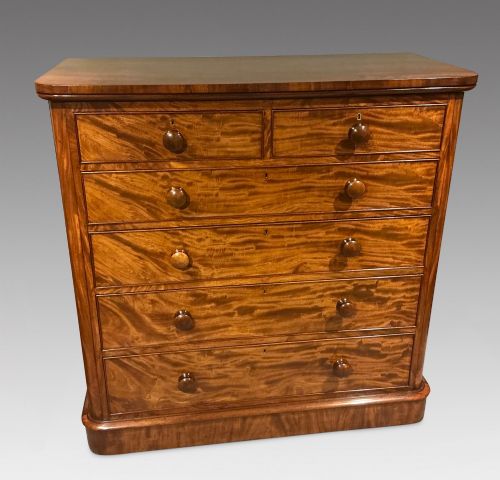
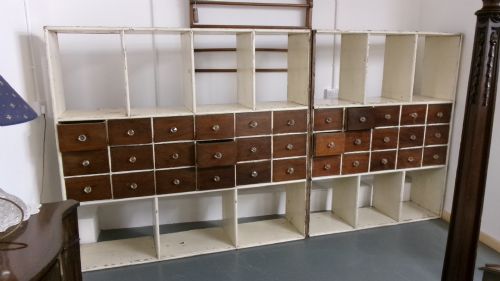
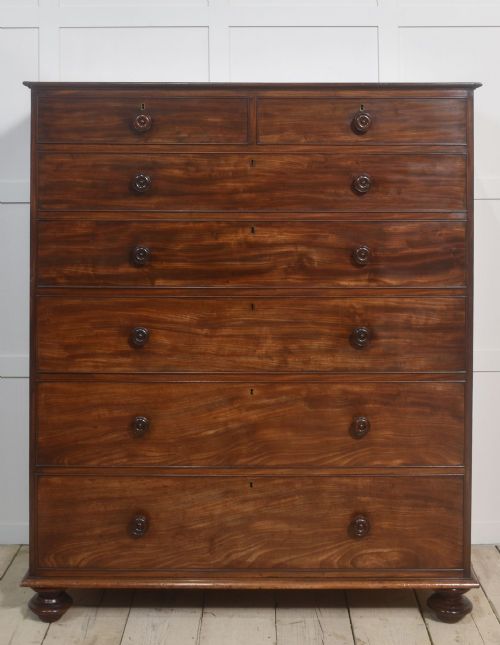
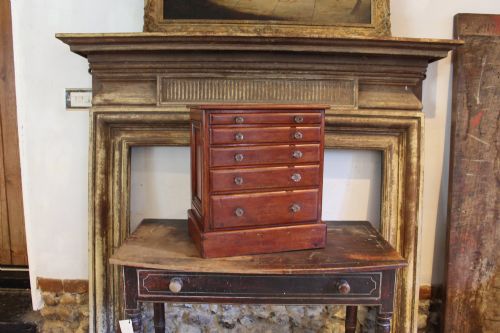
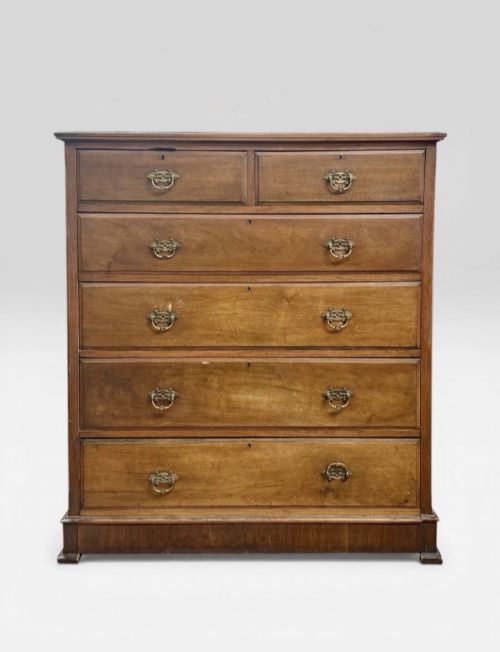
A victorian mahogany drawer unit encompasses standard chests, diminutive apprentice pieces, multi-tier whatnots with single drawers, and specialised chemist shop fittings spanning the nineteenth century. These pieces emerge primarily from the Victorian era, alongside related nineteenth-century examples and occasional Edwardian additions.
Buyers meet full-scale storage chests alongside smaller tabletop specimen cabinets, watchmaker pieces, and bedside nightstands. The selection also includes multi-tiered display pieces incorporating drawer storage at the base.
The dominant material across these forms is timber, specifically mahogany and flame mahogany veneer, supported by secondary woods such as pine.
Materials and Construction
Cabinet makers utilised solid mahogany and applied flame mahogany veneer over structural carcases of pine, achieving deep grain patterns and sturdy forms. Drawer construction frequently employed secondary timbers for interior linings.
Tiny drawers once meant for watchmaker parts or apothecary powders now happily hold modern paperclips and stray house keys.
Quality and Execution
The distinction between tiers of quality rests on the selection of timber figures, particularly the vibrancy of flame mahogany veneers across primary surfaces. Superior examples demonstrate precise joinery in drawer construction and well-matched grain patterns.
Refinement shows in the handling of secondary materials, where brass fittings, turned feet, and inlaid details integrate cleanly into the carcase rather than appearing as later additions.
The Victorian Mahogany Drawer Unit Glossary
- Mahogany
- A dense tropical hardwood valued for its rich reddish-brown colour and stability in furniture manufacture. It takes a high polish and accepts fine carving.
- Flame Mahogany
- A veneer cut from the fork of the mahogany tree where the branch meets the trunk. This produces a distinctive flickering, flame-like grain pattern.
- Apprentice Piece
- A smaller scale model demonstrating a craftsman's skill to secure master status. These miniature chests replicate full-size construction methods.
- Whatnot
- An open-shelving display piece standing on multiple tiers, frequently incorporating a single drawer at the base. It emerged in popularity during the nineteenth century.
- Escutcheon
- A protective plate surrounding a keyhole. It is commonly cast from brass on these drawer units.
Victorian Mahogany Drawer Unit: Frequently Asked Questions
What is an apprentice piece chest?
An apprentice piece is a small-scale model of a full-sized chest of drawers created by a worker demonstrating mastery of the craft. These items duplicate the precise joinery and proportions of larger furniture.
They serve as decorative tabletop pieces or miniature storage units while retaining traditional timber construction methods.
How do chemist shop fittings differ from standard chests?
Chemist shop fittings and apothecary cabinets feature numerous small drawers designed for storing medicinal herbs, dry ingredients, or instruments. They prioritize functional compartmentalisation over domestic appearance.
These pieces often display numeric or alphabetical labelling on the drawer fronts to maintain organisation within a working pharmacy.
What distinguishes flame mahogany from standard mahogany?
Flame mahogany uses veneer sliced from the fork of the tree where grain patterns swirl into vivid, undulating figures. Standard mahogany typically exhibits a straighter, more uniform grain.
Cabinet makers reserved flame veneers for the primary visible surfaces of high-status drawer fronts and top panels.
How do you integrate a multi-tier whatnot into a modern room?
A whatnot provides vertical display space and surface area without occupying a large floor footprint. The incorporated drawer handles small items while open tiers hold books or decorative objects.
These pieces suit corners or wall spaces where a heavy sideboard would overwhelm the room proportions.