



Pair of Watercolour Paintings
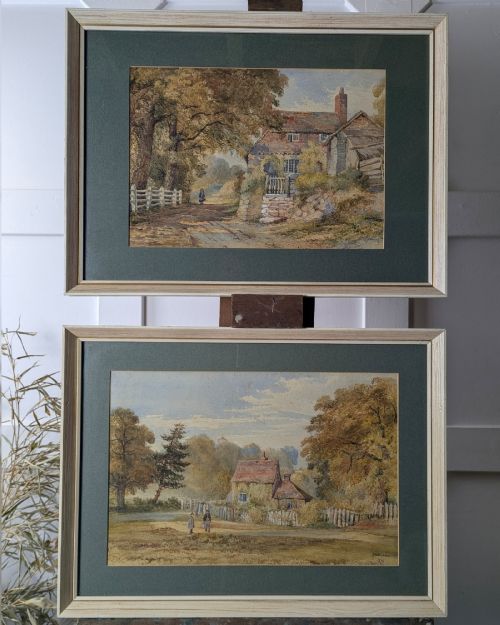
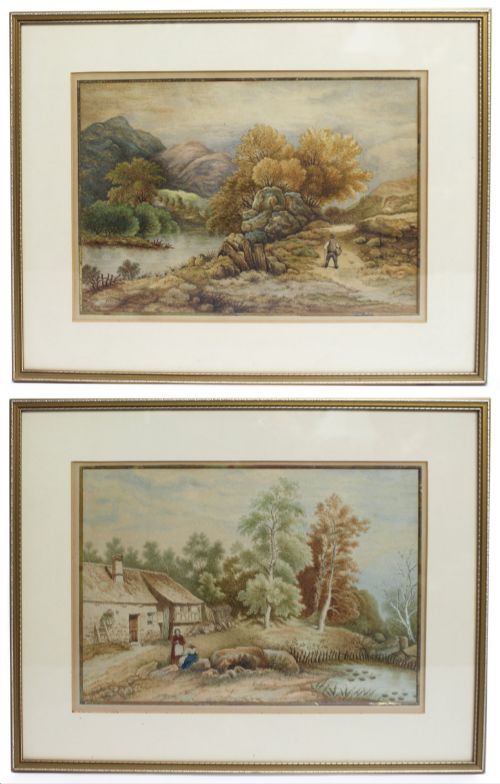
A pair of watercolour paintings brings balanced symmetry to a wall, offering matched views of landscapes, portraits, or seascapes created together by the artist.
Pair of Watercolour Paintings
A pair of watercolour paintings consists of two complementary artworks created as companion pieces, often sharing a subject, scale, and framing.
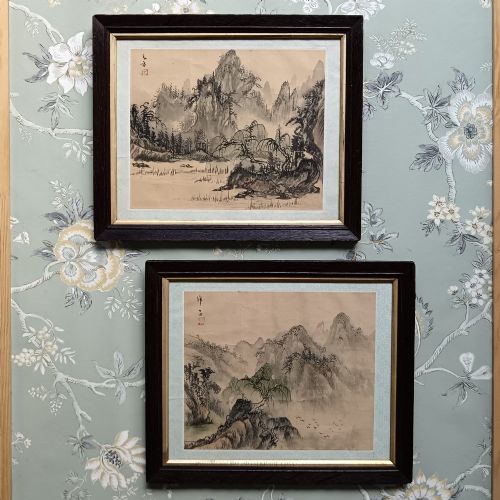
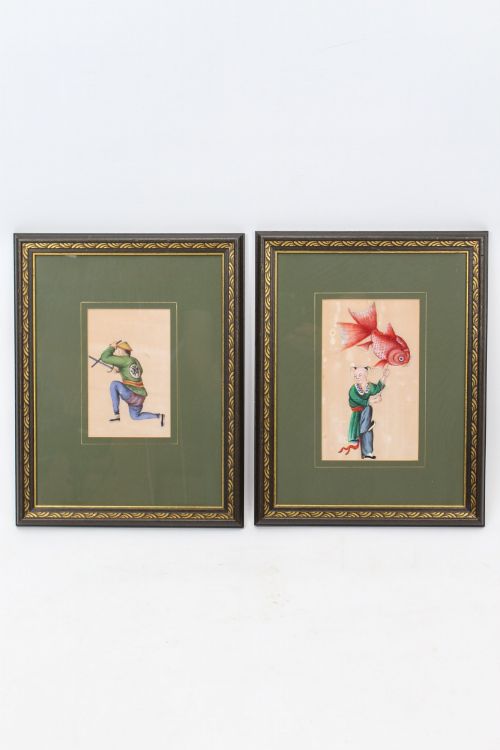
Buyers encountering this search phrase find works spanning the Georgian, Victorian, and Edwardian periods, alongside Chinese and Japanese silk and pith paper examples.
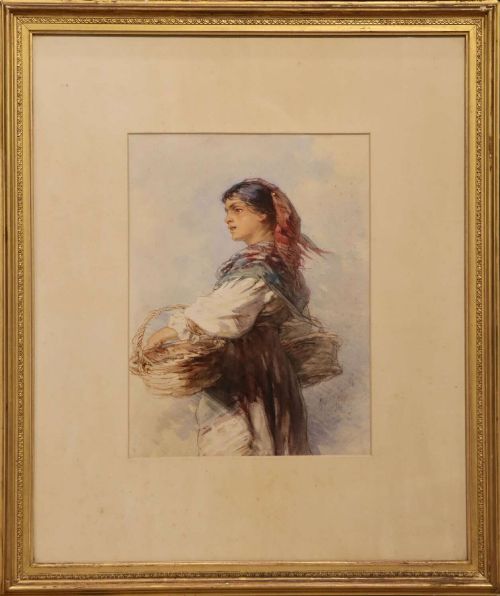
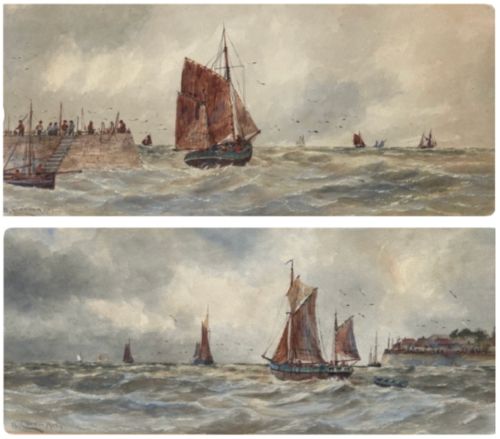
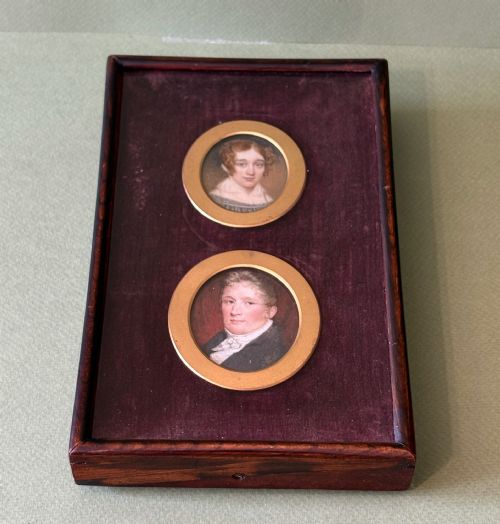
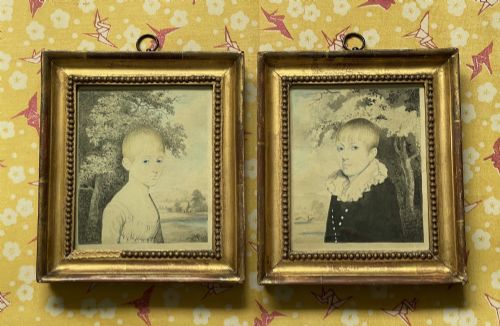
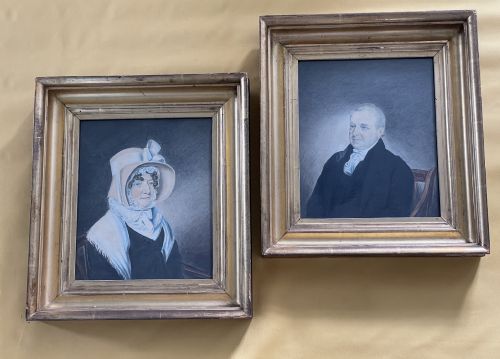
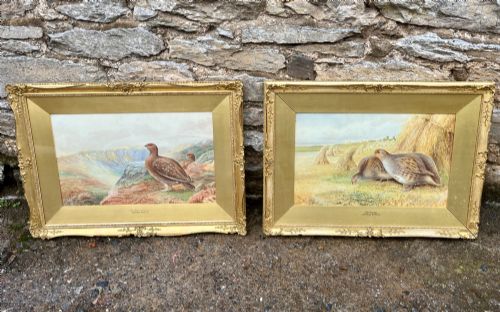
Subjects range from British and European coastal scenes and moorland landscapes to intimate portrait miniatures and detailed studies of birds.
Materials and technique
Watercolour pigment applied to paper forms the primary medium, frequently complemented by gold leaf, bodycolour, or ink on silk.
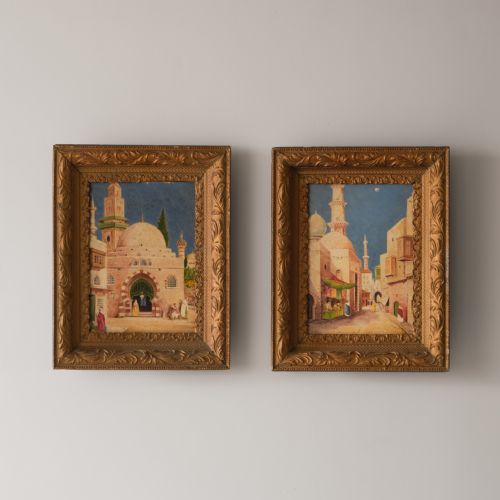
Works are preserved behind glass within wooden, ebonised, or period gilt wood frames that protect the delicate pigment from light and moisture.
One unusual pairing captures a battle of frogs depicted on silk.
Distinctions in quality
The strength of the composition and the precision of the brushwork separate accomplished hand-painted works from simpler decorative studies.
Original matching frames and the survival of clear artist signatures or inscriptions add historical integrity to the pair.
Guido Bach·William Cannon·Robert A Nottingham·Th Thibault·George Rankin·F J Snell·Alfred George Morgan·Ernest Uden·George Whyatt·Robert Buchan Nisbet·Sidney James Beer·Nora Cundell·Robert Richard Scanlan·Leslie Rackham·Jan van Couver·George Hargreaves·Thomas Woolnoth·Benedetto Salviati·John Sanderson Wells·James H Hulse·Thomas Bush Hardy·A J Thornton·Samuel Prout·Henry Charles Fox·F Wood
The Pair of Watercolour Paintings Glossary
- Watercolour pigment
- Finely ground colour mixed with a water-soluble binder, applied in washes to paper or silk. This medium allows for luminous, translucent effects.
- Pith paper
- A delicate material made from the pith of the Tetrapanax papyrifer plant, commonly used in nineteenth-century Chinese export paintings. It has a velvety texture that accepts vibrant pigment readily.
- Gilt wood
- Wood carved and coated with gold leaf or metallic paint to create a reflective frame. These frames often match the period and aesthetic of the painting within.
- Diptych
- Two painted panels or sheets designed to be viewed together as a single conceptual piece. They are usually hinged or framed as a matching pair.
- Grisaille
- A painting executed entirely in shades of grey or neutral monochrome. This technique mimics the appearance of sculpture or relief carving.
Pair of Watercolour Paintings: Frequently Asked Questions
How were these pairs originally displayed?
Companion works were traditionally hung side by side on drawing room or parlour walls to create visual balance.
Their matched frames and complementary subjects provided a sense of symmetry in period domestic interiors.
Are these paintings always signed by the artist?
Many examples feature visible signatures, monograms, or dated inscriptions on the front or reverse of the paper.
Others remain unsigned, reflecting the output of regional schools or amateur artists working in the nineteenth century.
How do I care for antique watercolours?
Works on paper require protection from direct sunlight to prevent the pigments from fading over time.
Keeping them in stable environmental conditions away from damp walls ensures the paper and glass remain preserved.
What subjects are most common?
Landscapes, seascapes, and architectural views dominate the British and European selections found in this category.
Portrait miniatures and studies of birds, insects, or flowers also appear frequently among domestic collections.