
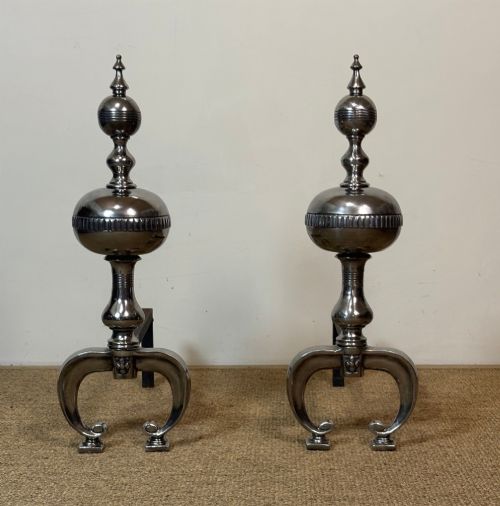

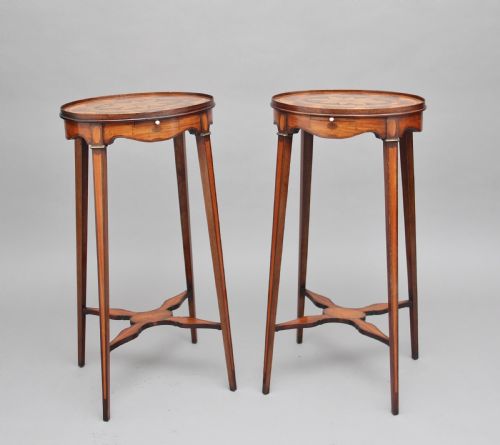

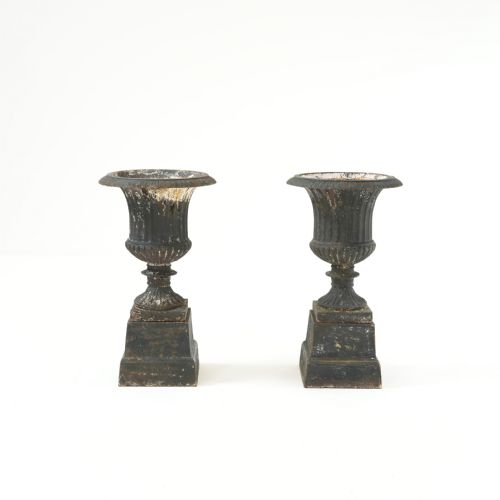
Pair of Urn Stands
A pair of urn stands elevates decorative vessels and heavy planters, bringing symmetry and proportion to interior and garden spaces.
Pair of Urn Stands
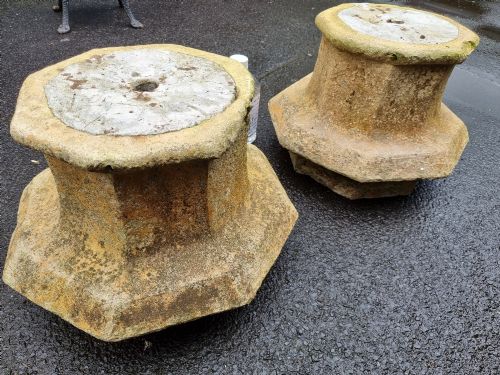
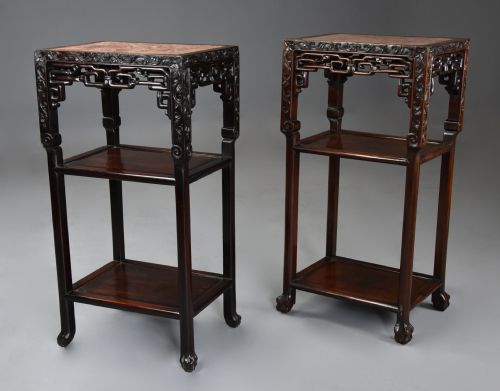
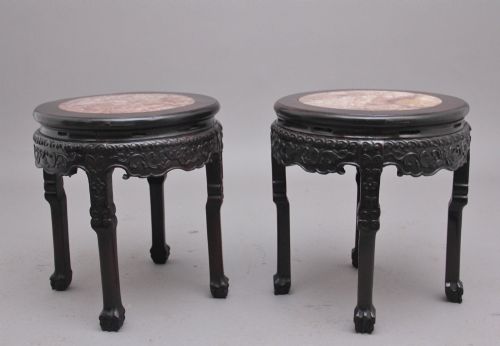
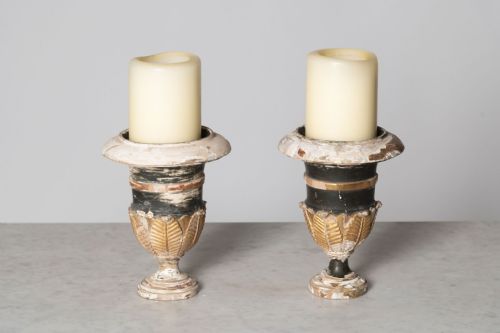
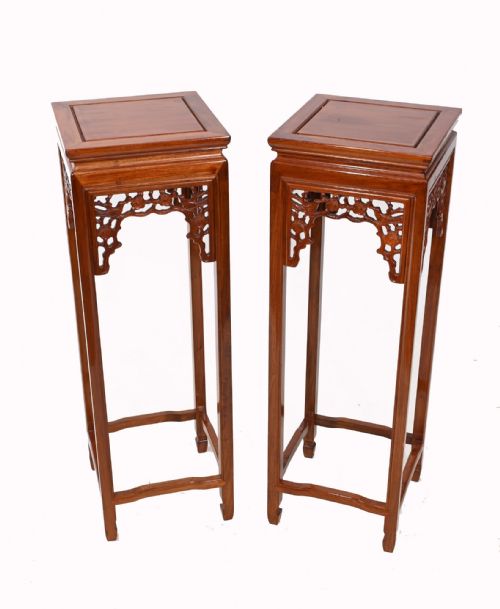
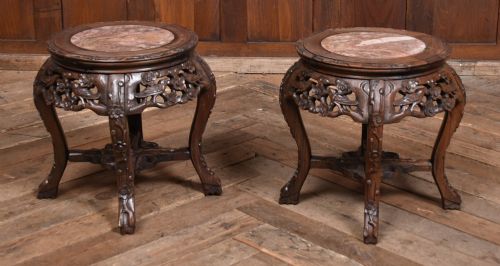
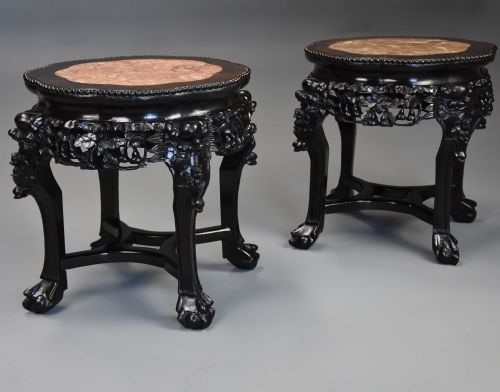
A search for pair of urn stands directs attention toward structured supports designed to elevate display vessels, garden planters, and ornamental vases. These pieces appear frequently in the form of Chinese carved hardwood tables, inset marble-top columns, and British mahogany or satinwood occasional furniture.
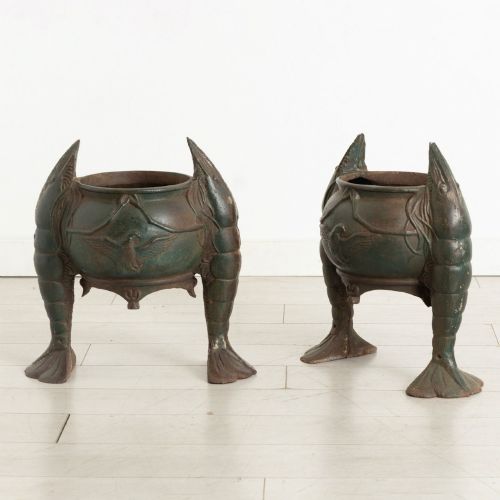
The materials and construction reflect diverse traditions, ranging from nineteenth-century Chinese Qing Dynasty huali wood and rosewood stands to Georgian and Sheraton revival satinwood designs. Garden varieties also emerge in cast iron, terracotta, and composite stone.
Many examples double as plant stands, torchiere columns, or low tables, demonstrating how domestic and garden furnishings intersected across the nineteenth and twentieth centuries.
Materials and Construction
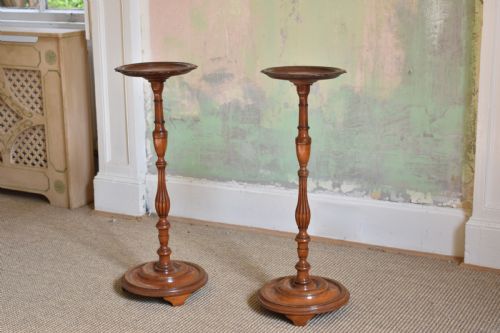
Carpenters and cabinetmakers relied on dense timbers such as mahogany, rosewood, satinwood, padouk, and huali, frequently employing intricate carving and wood-inlay techniques. Marble inserts provide durable, cool surfaces well-suited to supporting heavy stone or ceramic urns.
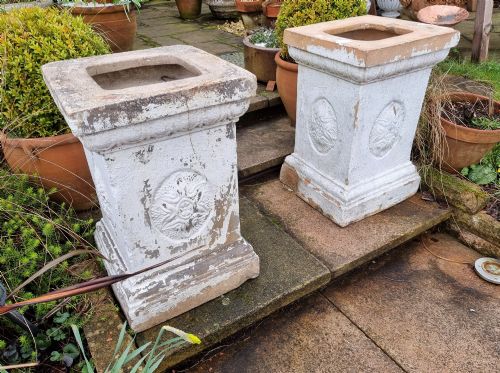
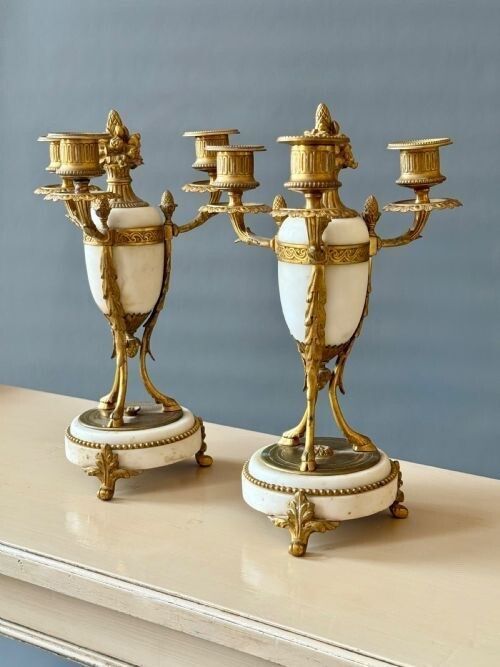
Cast iron, terracotta, and composite stone appear in garden and courtyard pieces, cast or moulded into classic campana and Medici profiles. Ormolu mounts and gilded bronze details add decorative contrast to white marble and hardwood columns.
Materials range from cast iron and terracotta for garden use to fine rosewood and white marble for interior display.
Standards of Craftsmanship
Quality rests upon the crispness of timber carving, the precision of joinery, and the selection of materials like figured rosewood or unblemished rouge marble. Finer examples maintain structural stability under heavy loads while displaying balanced proportions and refined surface finishes.
Secondary elements, such as ormolu mounts, cast bronze detailing, or hand-painted satinwood enrichment, distinguish standard utility furniture from pieces produced by notable makers or specialist workshops.
Gillows·Doulton of Lambeth·VOKINS London
The Pair of Urn Stands Glossary
- Campana urn
- A bell-shaped garden or decorative vessel with an everted rim, frequently mounted on a matching pedestal or plinth.
- Huali
- A fragrant and dense hardwood utilised in traditional Chinese furniture making for its rich grain and durability.
- Ormolu
- Gilded bronze or brass applied as a decorative mount to furniture and marble columns during the eighteenth and nineteenth centuries.
- Torchiere
- A tall stand originally designed to support a torch or candle, later adapted to hold busts, urns, or floral arrangements.
- Inlay
- A decorative technique where contrasting woods or materials are set into the surface of a piece to create geometric or pictorial patterns.
Pair of Urn Stands: Frequently Asked Questions
What were urn stands used for historically?
These supports elevated decorative garden urns, porcelain vases, and ornamental vessels to enhance visibility within grand rooms and formal gardens. They also functioned as stable platforms for heavy plant pots and classical statuary.
In domestic settings, smaller iterations served as tea kettle stands or torchieres, bringing light and decorative focus to dark corners.
How do I style a pair of urn stands at home?
Matching stands create visual symmetry when placed flanking a fireplace, doorway, or large window. They support trailing plants, cast-iron garden planters, or decorative ceramic vessels without crowding the floor area.
Mixing wood finishes with contrasting marble tops adds texture and period character to contemporary and traditional interiors alike.
Are these stands suitable for outdoor use?
Cast iron, terracotta, and composite stone versions were engineered specifically for garden, patio, and courtyard environments. These materials withstand weathering while providing a stable base for heavy outdoor urns.
Wooden and marble-topped variants require indoor placement to protect polished surfaces, delicate veneers, and natural stone from moisture damage.
How do I distinguish Chinese hardwood stands from European pieces?
Chinese stands frequently feature dense woods like hongmu, padouk, or huali, often incorporating inset marble tops and detailed Asian carving motifs. European equivalents typically employ mahogany, satinwood, or painted pine in Neoclassical, Gothic Revival, or Sheraton styles.
Construction joints and decorative vocabulary usually clarify the regional origin of the piece.