


Rouge Marble Stand
These rouge marble stand examples bring together rich stone tops and carved hardwood, brass, or mahogany frames for display.
Rouge Marble Stand
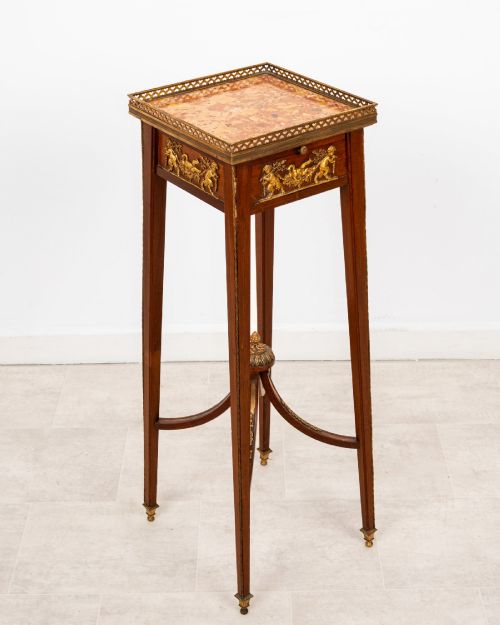
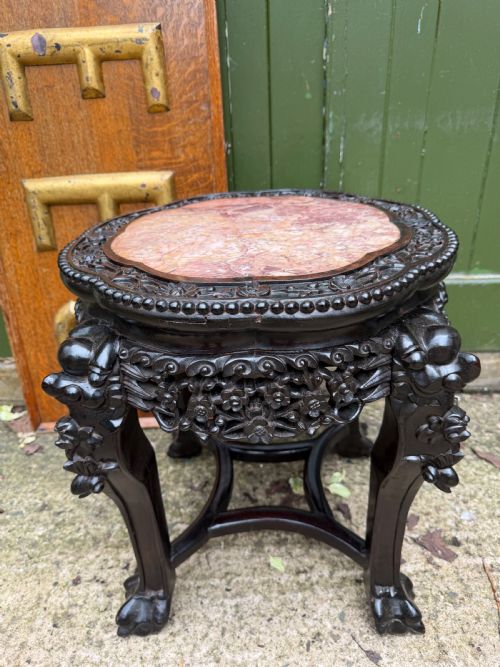
A rouge marble stand functions primarily as a decorative platform for urns, plants, lamps, and sculptural pieces. Buyers seeking a rouge marble stand will encounter examples ranging from French classical designs to carved Chinese hardwood furniture.
The pieces appearing on this page span the Victorian era, the nineteenth century, and the early twentieth century. Common forms include low jardiniere stands, tall pedestals, side tables, and washstands featuring inset stone panels.
Origin points divide broadly between European cabinetmakers utilising mahogany, ormolu, and bronze, and Chinese workshops producing carved rosewood and hongmu frames with variegated stone inserts.
How they were made
Makers set polished slabs of rouge marble into recessed wooden frames of mahogany, rosewood, ebony, and carved hardwoods. The stone provides a smooth, variegated crimson surface designed to support heavy decorative objects.
Carpenters joined the wooden structures using traditional joinery, whilst European workshops incorporated cast ormolu and patinated bronze mounts. Chinese pieces relied on intricate hand-carved frames featuring pierced aprons and cabriole legs.
Listings feature items from the Victorian period, the nineteenth century, and the early twentieth century, constructed from mahogany, rosewood, and hardwood with marble inserts.
What varies in quality
The depth and complexity of the timber carving separate standard examples from finer works, particularly in Chinese hardwood stands where hand-chiseled detailing defines the apron and legs. Weight, stability, and the richness of grain in the rosewood or mahogany also influence the overall standard.
The quality of the rouge marble itself differs in the vibrancy of its veining and the precision of its fit into the wooden rebate. Finer pieces demonstrate seamless integration between the stone top and the supporting frame.
The Rouge Marble Stand Glossary
- Rouge marble
- A deep red limestone or marble featuring white, grey, or dark veining, quarried extensively in France and used for decorative furniture tops.
- Jardiniere stand
- A small piece of furniture designed specifically to hold a decorative flower pot or plant container.
- Hongmu
- A traditional Chinese term describing dense, dark hardwoods used for fine furniture and decorative stands.
- Ormolu
- Gilded bronze mounts applied to furniture and decorative objects during the eighteenth and nineteenth centuries.
- Pedestal
- A tall upright structure intended to elevate a sculpture, urn, or candelabrum above floor level.
Rouge Marble Stand: Frequently Asked Questions
What is a rouge marble stand used for?
These stands serve as decorative pedestals or small tables designed to elevate plants, urns, lamps, and ornamental sculptures within a room.
The stone top provides a durable and heat-resistant surface that protects the wood beneath from moisture and heavy weights.
How do I care for the marble top?
Clean the surface gently using a soft, damp cloth and avoid acidic cleaners that can etch the polished stone. Periodically wiping away dust preserves the natural sheen of the crimson marble.
Placing felt pads beneath heavy objects prevents scratching and distributes weight evenly across the inset panel.
Where were these stands made?
The pieces originate from two main traditions, including European workshops influenced by French styles and Chinese workshops producing carved hardwood furniture.
European examples often utilise mahogany or patinated bronze, whilst Chinese pieces showcase rosewood, hongmu, and intricate floral carvings.
How can I tell the period?
Dating relies on examining the timber species, joinery techniques, and stylistic markers such as Victorian proportions or Qing Dynasty carvings.
Tool marks on the underside of the wood and the method used to polish the stone surface offer further clues to the age of the piece.