


Pair of Urn Lamps
Pair of urn lamps bring classical symmetry and warm illumination to a room, turning decorative vessels into functional lighting.
Pair of Urn Lamps
When you search for a pair of urn lamps, you encounter lighting fixtures formed from antique vases, cassolettes, and decorative vessels adapted for domestic illumination. These pieces bridge the gap between traditional sculpture and functional household objects, often originating from French ateliers and English workshops during the nineteenth and early twentieth centuries.
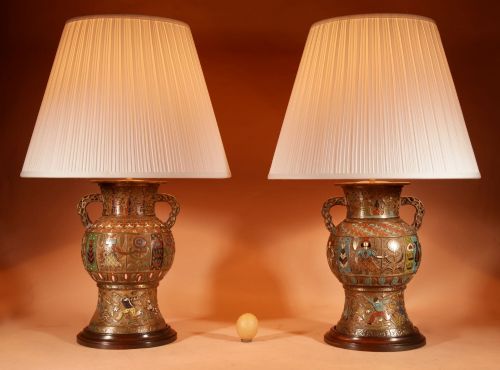
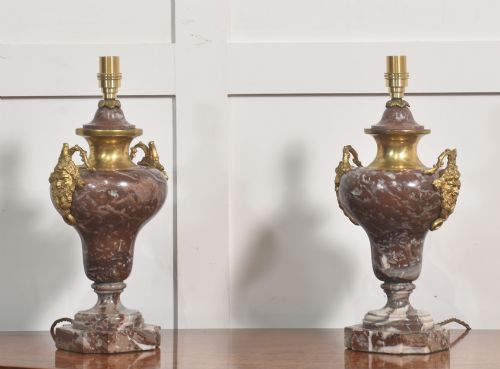
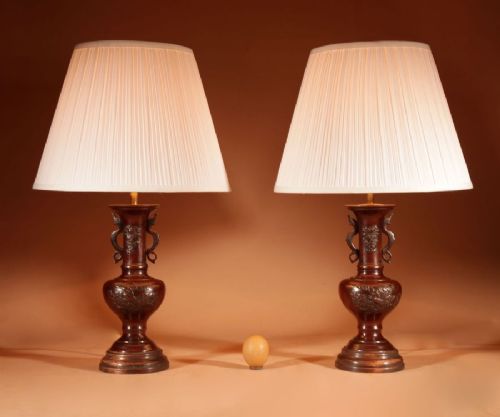
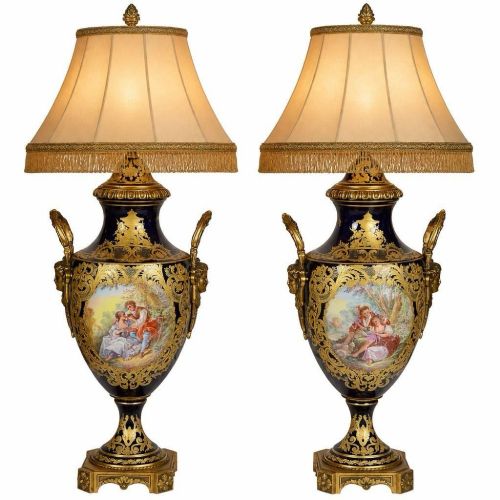
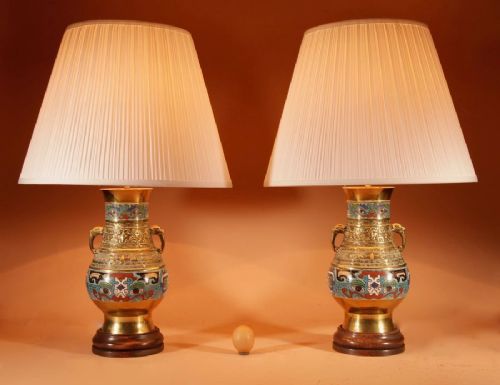
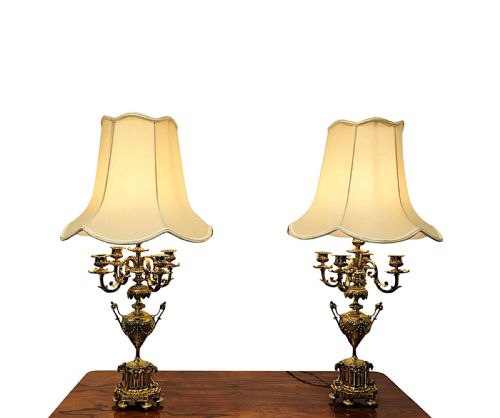
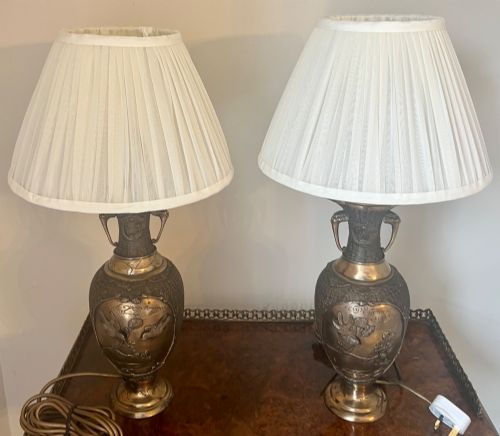
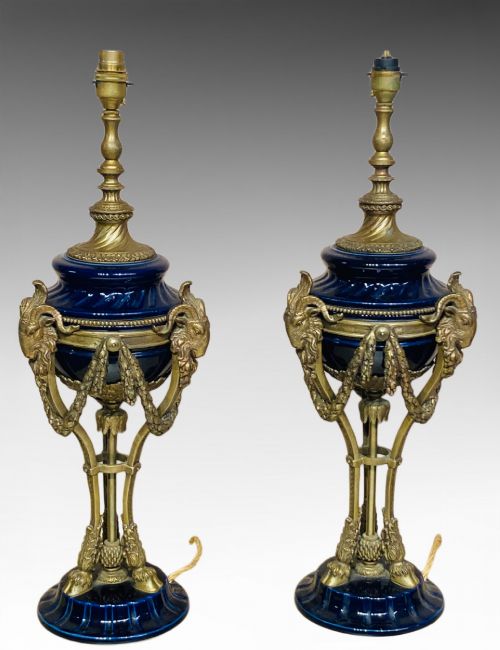
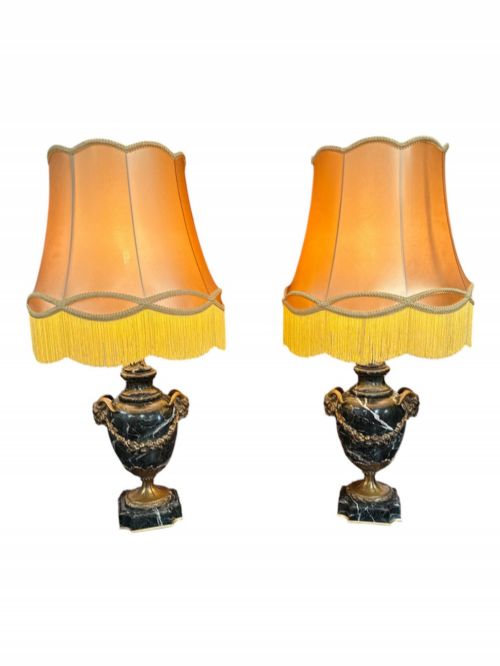
The most common examples on this page pair natural stone bodies, such as rouge marble or white onyx, with cast metal mounts in the French Neoclassical or Louis XVI style. Alongside these continental designs appear Japanese bronze and Satsuma ceramics from the Meiji period, reflecting the Victorian and Edwardian taste for exotic imported goods.
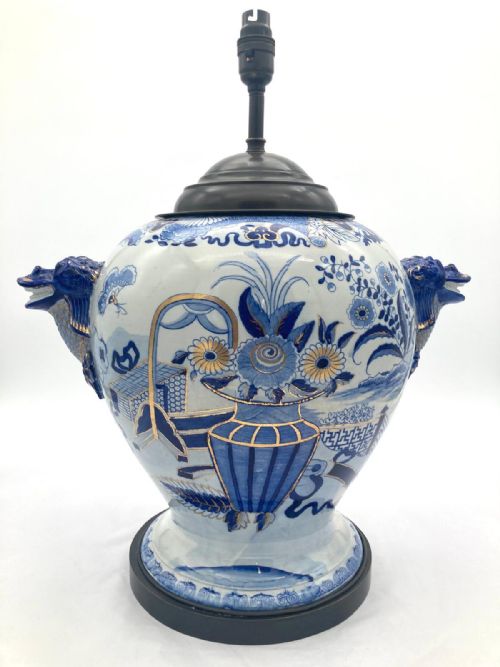
Many items in this category began life as decorative ornaments, garniture sets, or apothecary jars before receiving electrical fittings during conversion processes. This history means buyers often find classical urn shapes, campana forms, and baluster vases re-engineered to stand on side tables, desks, and mantelpieces.
How they were made
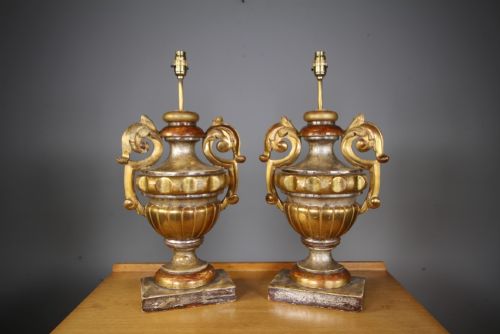
The construction of these pieces relies heavily on the combination of heavy mineral bodies and cast metal components. Turners shaped materials like mahogany, oak, and pine on lathes, while masons carved marble, alabaster, and slate into classical vessel profiles.
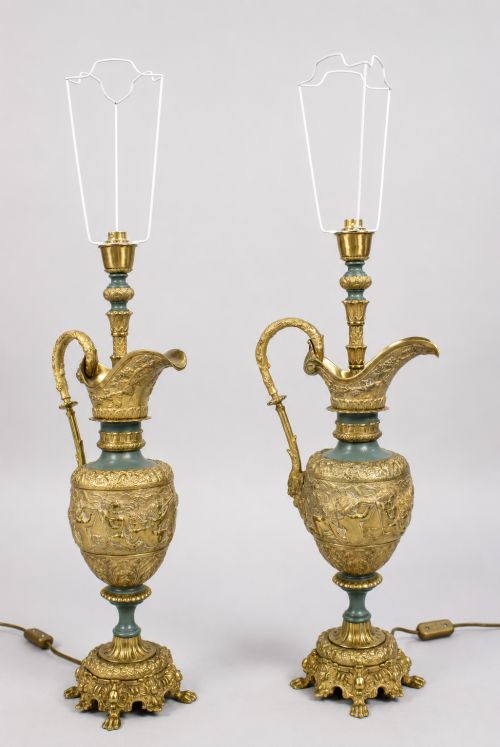
Foundries produced mounts, handles, and bases using brass, bronze, and ormolu, often fire-gilding the metal to achieve a bright, durable finish. Artisans then joined these disparate elements using threaded rods and internal wiring channels during conversion or initial assembly.
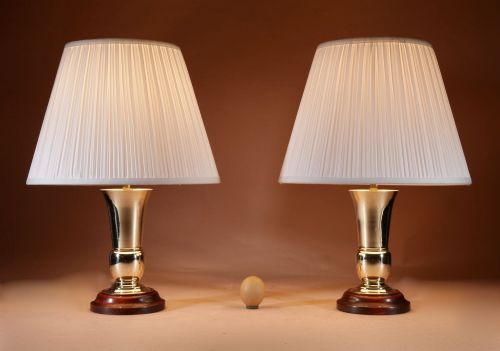
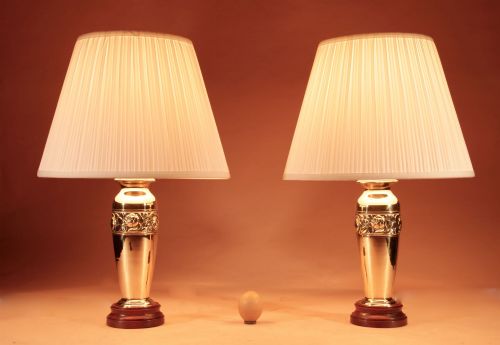
Listings feature nineteen-century French marble and ormolu alongside Japanese Meiji period bronze vessels converted into table lamps.
What varies in quality
Quality in these lighting fixtures rests on the crispness of the cast metal mounts and the selection of the stone or ceramic body. Finer examples display hand-chased detail on ormolu components and dense, highly figured marbles without structural repairs.
The integration of the electrical conversion also marks the standard of the piece, distinguishing items where wiring is threaded discreetly through original apertures from those requiring intrusive structural alterations.
Hicks and Meigh
The Pair of Urn Lamps Glossary
- Ormolu
- Gilded bronze, typically produced by applying a mixture of gold and mercury to a bronze base and heating it until the mercury vaporised. This technique creates a rich, lasting golden surface commonly seen on French decorative mounts.
- Cassolette
- A decorative vase or urn featuring a perforated lid, designed originally to hold perfumes or potpourri. In lighting, these vessels are frequently converted into lamp bases while retaining their characteristic pierced covers.
- Champlevé
- An enamelling technique where troughs or cells are hollowed out of a metal surface and filled with vitreous enamel powder before firing. Japanese and French makers utilised this method to add colourful patterns to bronze lamp bodies.
- Campana
- A bell-shaped vessel with a wide mouth and a narrower base, modeled after ancient Roman and Greek bronze wine craters. This specific silhouette forms the foundation of many classical table lamps.
- Meiji Period
- The era in Japanese history lasting from 1868 to 1912, marked by the opening of trade with Western nations. Bronzes and Satsuma ceramics exported during this time heavily influenced European interior decoration.
Pair of Urn Lamps: Frequently Asked Questions
What are urn lamps made of?
These lamps incorporate materials such as rouge marble, alabaster, brass, gilt bronze, and turned wood like mahogany and oak.
Craftsmen often combined these rigid natural elements with fabric or glass shades to complete the fixture.
Are these converted antiques?
Many examples began as decorative vases, garniture urns, or candlesticks before receiving electrical wiring in later decades.
This practice of adaptation allows historical vessels to serve modern domestic functions without losing their original aesthetic character.
How do I date a lamp?
Dating relies on identifying the manufacturing period of the base vessel, whether it stems from nineteenth-century French ateliers or the Edwardian era.
Stylistic cues like Louis XVI mounts or Meiji period bronze work provide the primary chronological markers.
Where should I place them?
A matched pair suits symmetrical placement on sideboards, bedside tables, or large desks where balanced illumination is required.
Their substantial height and architectural presence make them effective focal points in traditional rooms.