


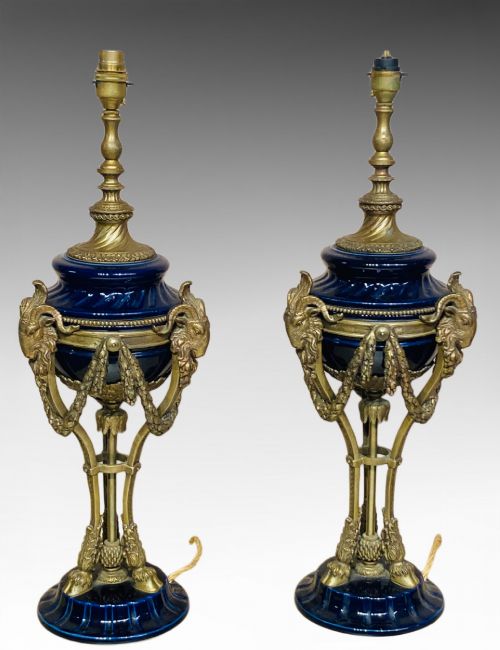
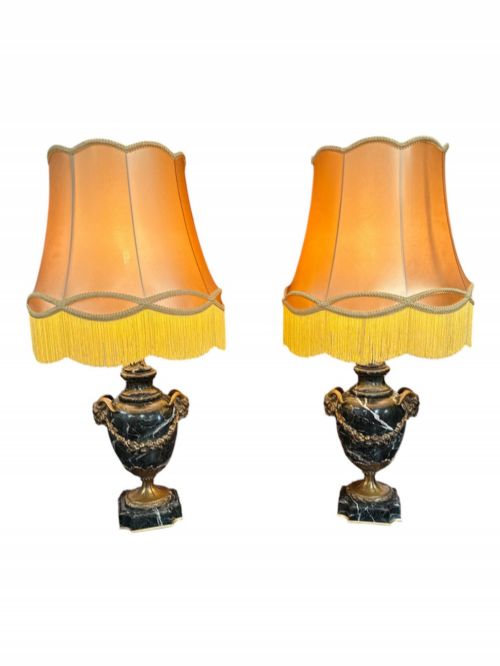
French Neoclassical Table Lights
French neoclassical table lights bring classical order and refined metalwork into a room, offering warm illumination through centuries-old design traditions.
French Neoclassical Table Lights
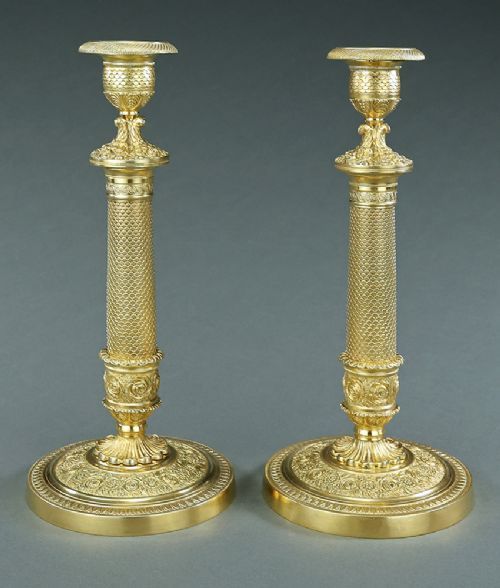
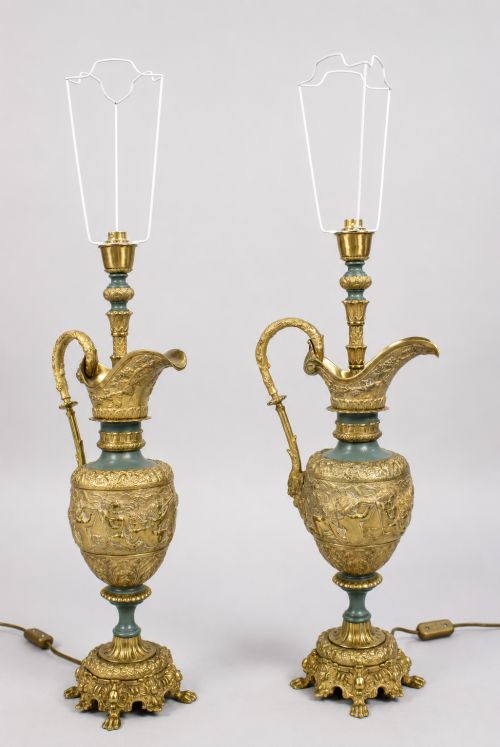
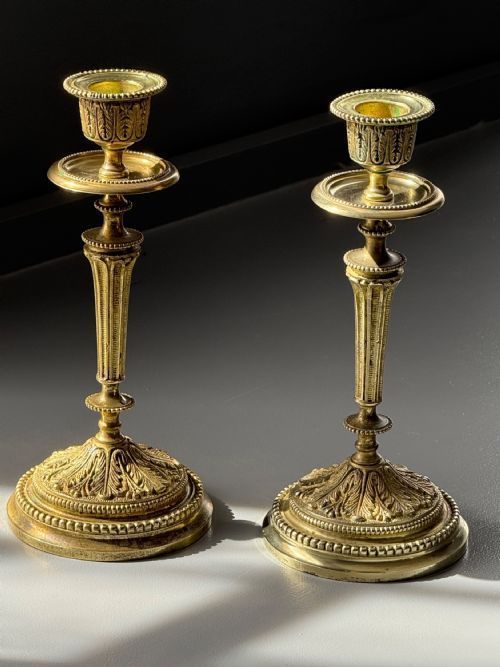
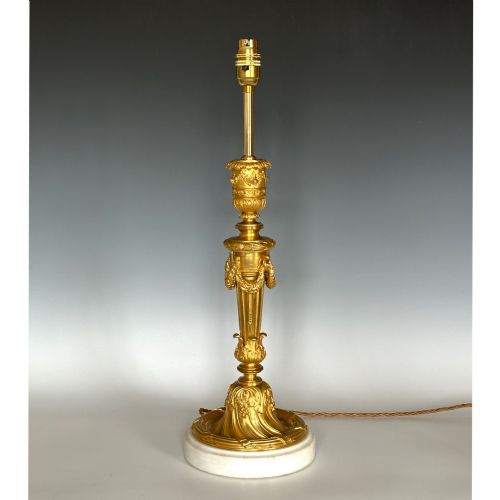
French neoclassical table lights comprise electrified lamps, converted candelabra and classical candlesticks shaped by architectural symmetry and Greco-Roman motifs. The forms frequently draw on Louis XVI, Empire and Regency design vocabulary, translating monumental columns, urns and ewers into domestic lighting.
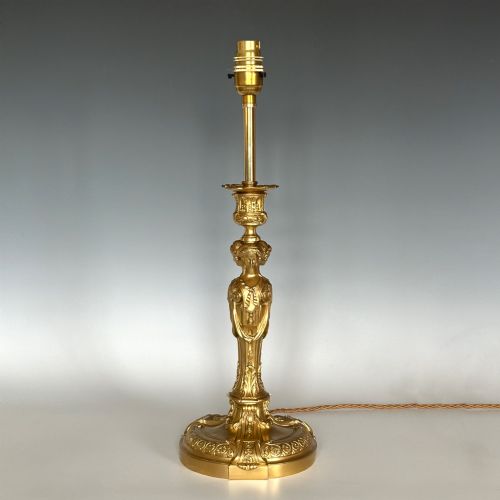
Most examples found in this category emerge from the nineteenth century, including numerous Louis XVI style revivals alongside earlier nineteenth-century castings. Makers adapted traditional candleholders and cassolettes into table lamps during subsequent decades, mounting them on marble, bronze and ormolu bases.
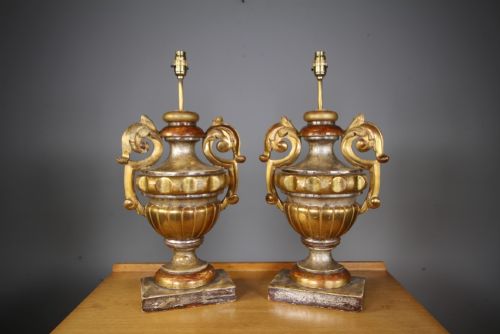
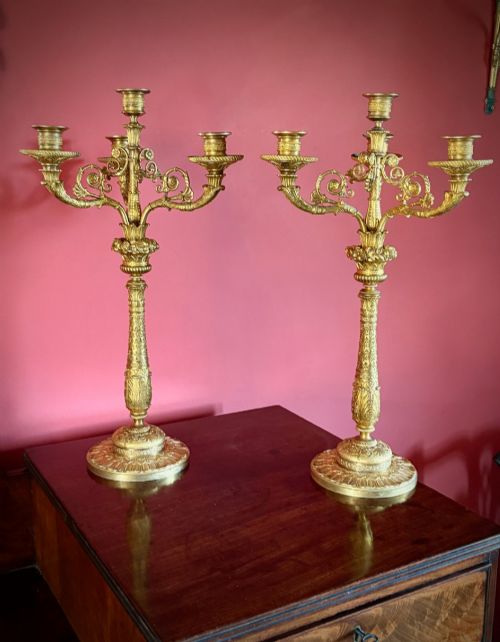
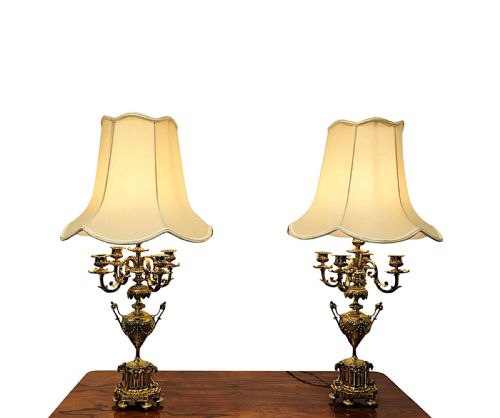
Buyers encounter distinct configurations ranging from single column lamps to grand pairs of multi-armed candelabra fitted for electricity. Materials shift between gilt bronze, polished brass, carved wood and fine marbles such as rouge or white varieties.
How They Were Made
Casting and fire-gilding form the foundation of these pieces, utilising mercury gilding or modern electroplating to impart a durable golden lustre onto bronze and brass. Artisans chiselled and chased the metal surfaces by hand after casting, sharpening acanthus leaves, fluting and beaded borders.
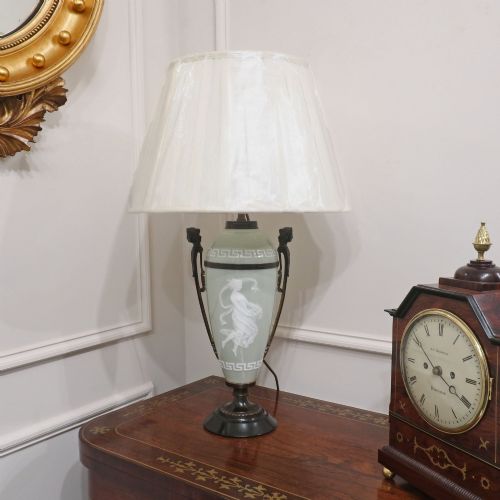
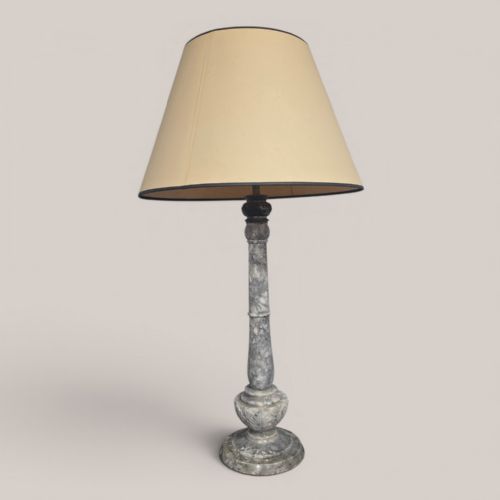
Stonemasons shaped natural marble and onyx into urn, column and pedestal bodies, turning them on lathes before mounting them with cast ormolu collars and feet. Selected items combine glazed ceramic, porcelain pate sur pate or painted tole-peinte panels with metal mounts.
Wiring conversions often took place later in the lifespan of these objects, adapting original oil fonts or candle sockets to hold electrical fittings while preserving the antique body.
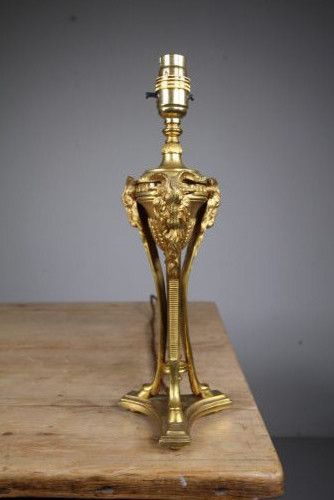
Several heavy column lamps manage to look entirely severe while secretly hiding electrical wires right down their lion paw feet.
What Varies in Quality
The crispness of the metal chasing dictates the visual hierarchy, separating sharp, hand-finished bronze mounts from softer, shallow commercial castings. Heavy mercury ormolu retains a deep, warm yellow tone that patinates gradually, unlike thin modern platings.
The selection of stone and timber heavily influences an object's stature, with dense rouge marble and finely grained giltwood demonstrating superior craftsmanship compared to lesser composites. Proportion and balance in the column shafts and lion paw feet determine the architectural success of the design.
Rabiat·Galle
The French Neoclassical Table Lights Glossary
- Ormolu
- Gilt bronze produced by applying a finely ground gold-mercury amalgam to a bronze object and heating it until the mercury vaporised. This historic technique leaves a matte and bright golden finish that resists tarnishing.
- Cassolette
- A decorative vessel shaped like a covered urn, often designed to function interchangeably as a vase or a perfume burner. In lighting formats, these stone and ormolu bodies form the central column of the lamp.
- Tole-peinte
- Painted or lacquered sheet metal, frequently utilised for cylindrical column lamps and decorative shades. The painted surfaces often display classical motifs or dark patinated finishes.
- Pate sur pate
- A ceramic decorating technique where liquid white porcelain slip is painted in successive layers onto a coloured clay body to create a low relief cameo effect. Pieces featuring this method combine classical figures with gilt mounts.
- Louis XVI Style
- A revival aesthetic drawing on the symmetry, straight lines and classical ornamentation of the French royal court during the late eighteenth century. Expect to find ribbon twists, fluted columns and laurel wreaths.
French Neoclassical Table Lights: Frequently Asked Questions
Were these lamps originally electric?
Most pieces began life as oil lamps, gas fixtures or ceremonial candlesticks before being converted for modern electrical use during the twentieth century. The conversion process typically involved running a cord through the centre without altering the historic metalwork.
Original candelabra arms often retain their original sockets alongside newer internal wiring, allowing collectors to balance period character with domestic practicality.
How do I clean ormolu mounts?
Historic ormolu requires gentle dusting with a soft dry brush to prevent accumulation in the recessed chasings. Avoid abrasive metal polishes which strip away the remaining gold layer and expose the raw brass or bronze beneath.
Professional conservation cleaning remains advisable for pieces showing heavy oxidation or surface grime, preserving the underlying metal patination.
Where should I place a heavy marble lamp?
Solid marble and bronze constructions demand sturdy sideboards, consoles or heavy desks capable of supporting substantial weight. Because these lamps often stand tall with significant top-balance, a secure surface prevents accidental tipping.
Positioning them away from high-traffic household corridors protects delicate silk shades and protruding ormolu candle arms from impact.
How do I identify a Louis XVI revival piece?
Revival items from the nineteenth century emulate the architectural rigour of the 1700s through strict geometric symmetry, urn motifs and cast acanthus leaf collars. Artisans of this later era utilised machine-assisted casting alongside traditional hand-chasing.
Examining the internal mounting screws, thread types and underlying bronze colour helps distinguish nineteenth-century interpretations from original eighteenth-century productions.