



Neoclassical Marble Lamps
Neoclassical marble lamps bring classical symmetry and refined French taste into a room, offering warm light alongside sculptural dignity.
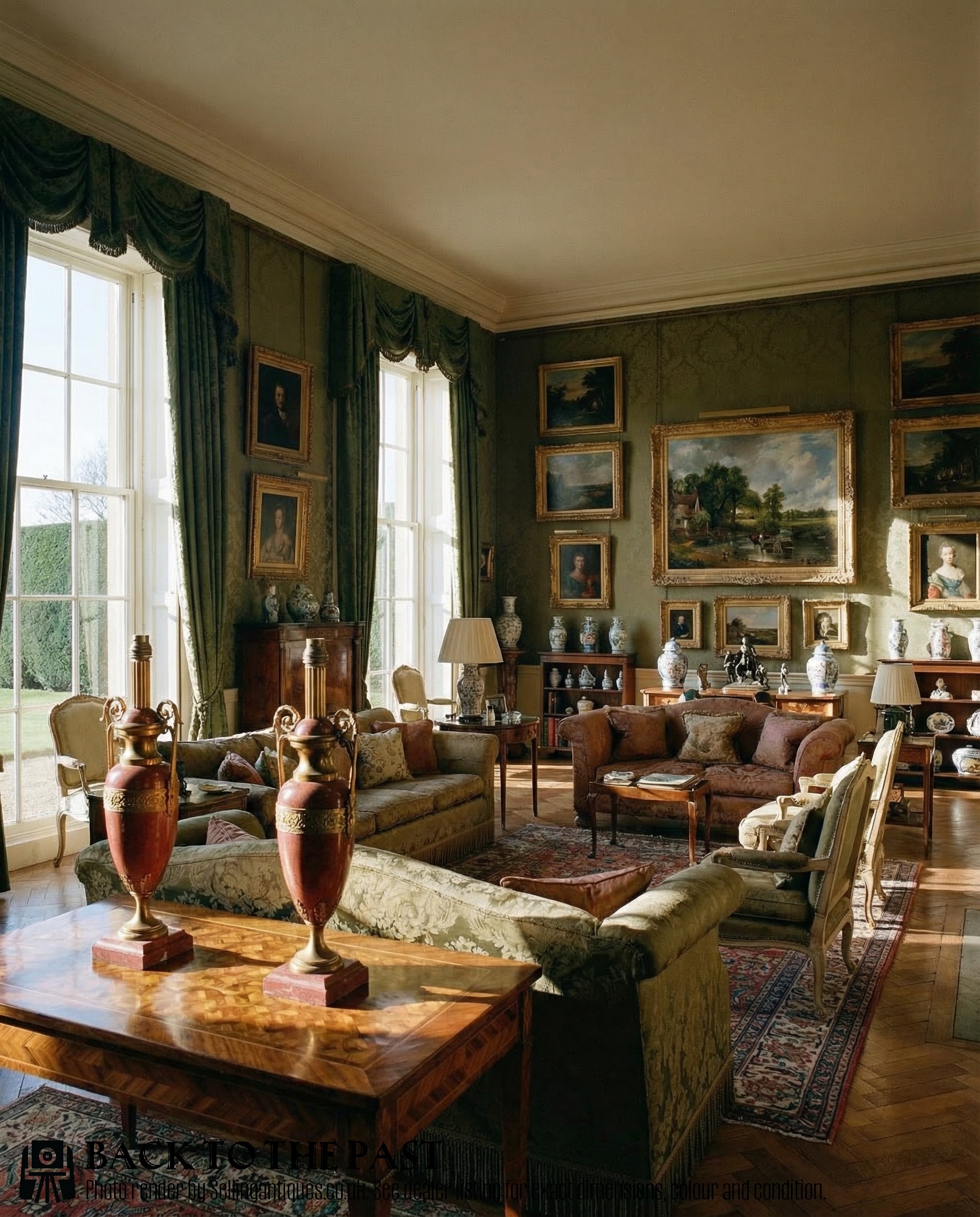
What neoclassical marble lamps are
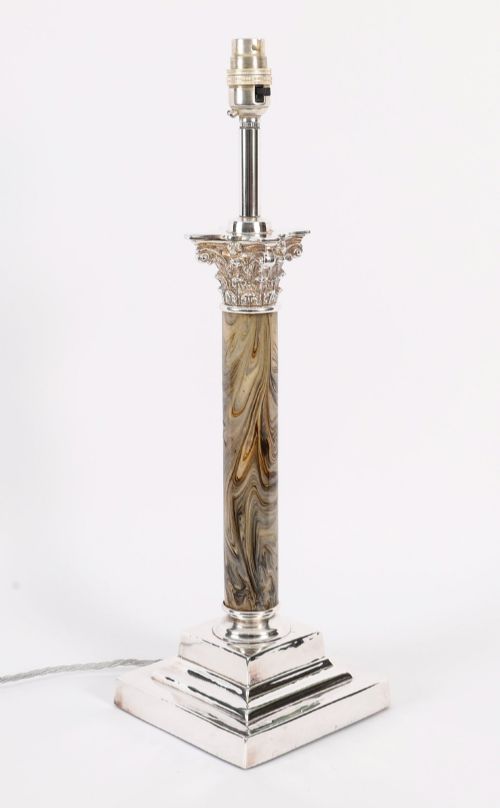
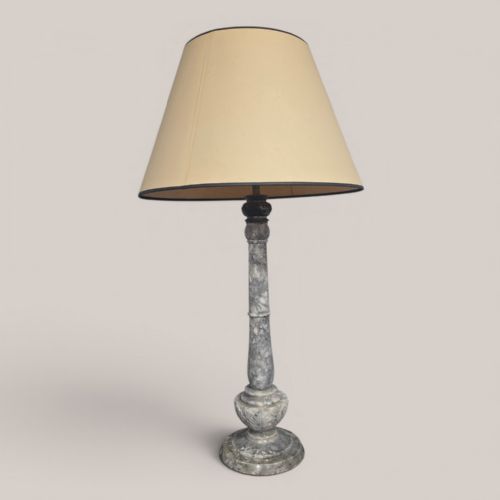
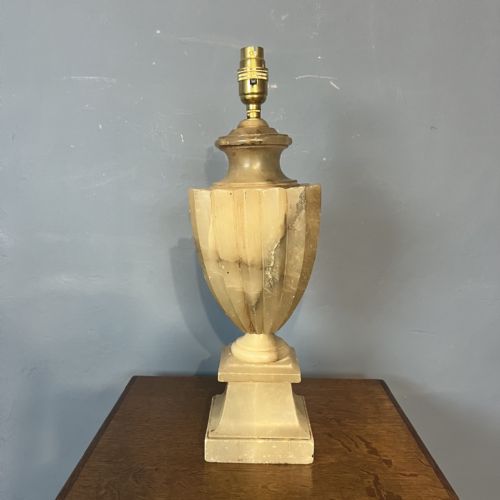
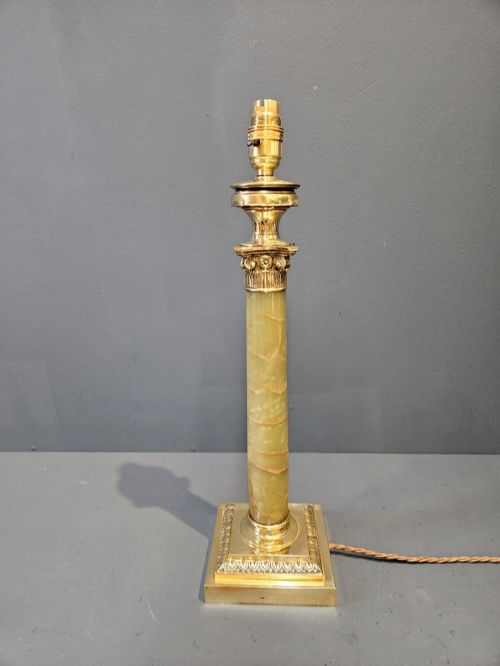
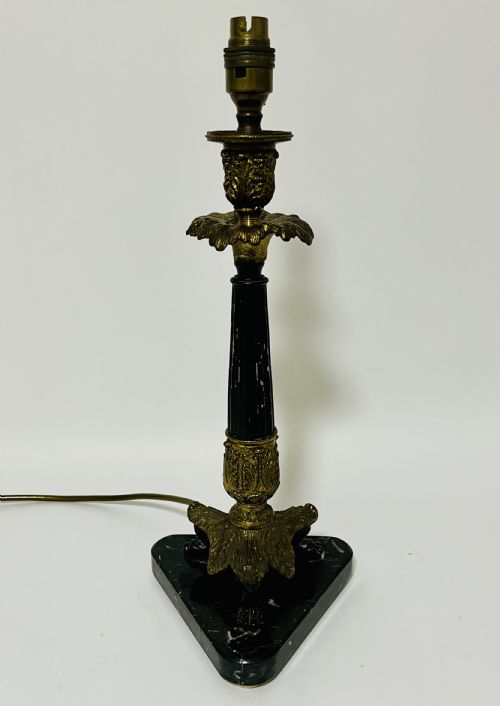
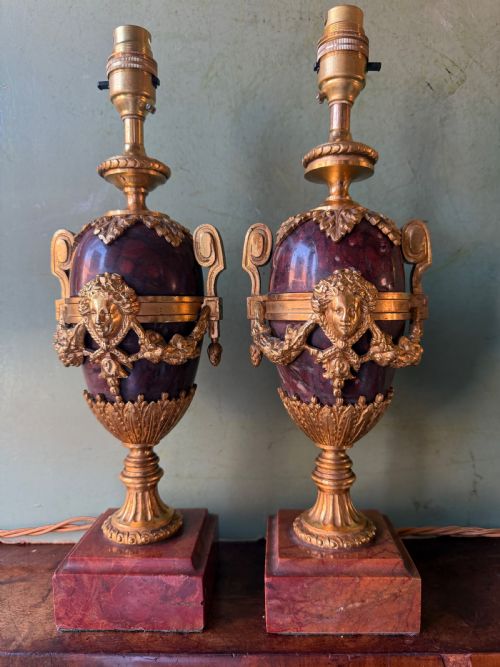
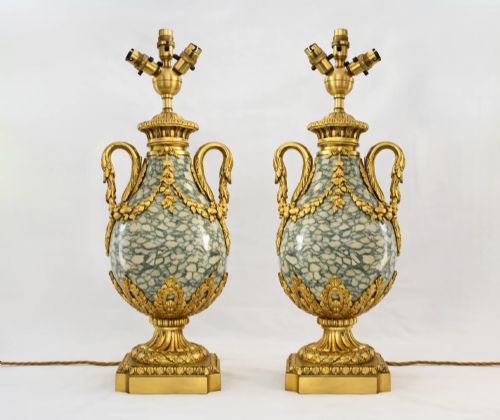
When you search for neoclassical marble lamps, you encounter table lamps that draw on classical antiquity and French eighteenth-century design. The pieces available span the nineteenth and early twentieth centuries, including table lamps and cassolette adaptations from eighteen-eighty and nineteen-twenty.
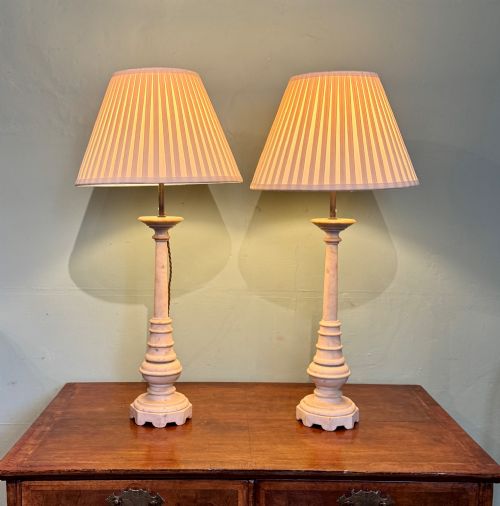
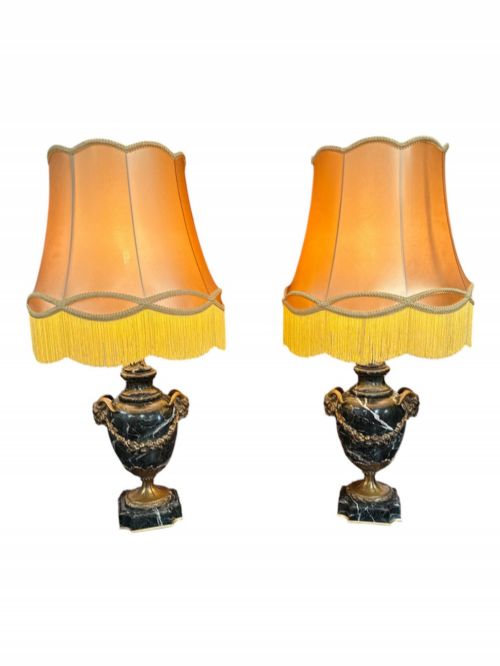
White marble, pink marble and rouge marble dominate the forms, frequently paired with metal mounts and fabric shades. Most examples appear as matched pairs, making them well suited for mantelpieces, sideboards or bedside tables where balanced illumination matters.
How they were made
Makers shaped solid marble into columns, urns and cassolette bodies, turning the stone on lathes before hand-finishing the surfaces. This stonework required steady skill to achieve smooth cylinders and crisp shoulders without fracturing the material.
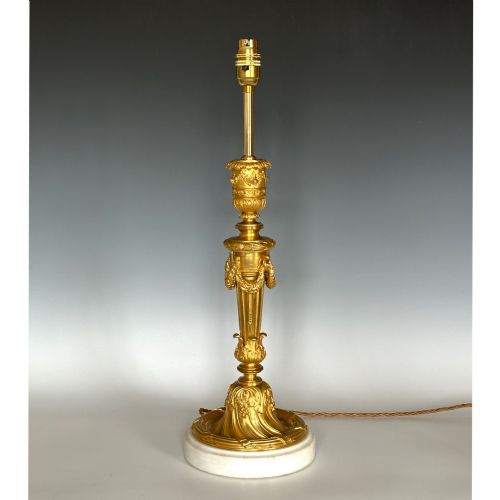
Foundries cast ormolu, gilt bronze and brass components to wrap the stone bases and collars with classical motifs, bead reels and acanthus leaves. Fabric elements and glass completed the assemblies, integrating electrical or earlier burner fittings into the stone structures.
Retail Price Guide 2026
Typical UK retail prices for neoclassical marble lamps, calculated from the Sellingantiques database of over a million retail prices indexed since 2003. This retail price guide relies exclusively on Sellingantiques data; no external sources or auction records are used, so the figures do not describe the wider market.
Listings for neoclassical marble lamps span the nineteenth century up to nineteen-twenty, utilising brass, glass, fabric, ormolu and gilt bronze alongside white, pink and rouge marble.
What varies in quality
The distinction between ordinary and exceptional pieces lies in the crispness of the metal chasing and the purity of the marble block. Finer examples show deep, sharp relief in the gilt bronze mounts and harmonious veining within the rouge or pink marble.
Proportion also dictates worth, as superior lamps maintain a balanced dialogue between the heavy stone body and the decorative bronze collars. Weaker pieces often suffer from clumsy mounts that obscure the natural grain of the stone.
The Neoclassical Marble Lamps Glossary
- Cassolette
- A reversible vessel featuring a lid that can be turned to show either a solid top or a burner, often adapted into a lamp base in nineteenth-century France. This form derives from classical incense burners.
- Ormolu
- Finely chopped leaf gold applied to a copper-alloy base through a mercury amalgamation process, or simply high-grade gilt bronze. It provides a warm, enduring lustre that does not tarnish easily.
- Rouge marble
- A rich red ornamental limestone featuring varied white and grey brecciated veins, quarried extensively in France. It was a favoured material for Louis XVI garnitures and decorative objects.
- Neoclassical
- A style spanning the eighteenth and nineteenth centuries that revived the motifs of ancient Greece and Rome. It prioritises straight lines, symmetry, urns and classical foliage.
Frequently Asked Questions
Are these lamps wired for modern use?
Many nineteenth and early twentieth-century pieces arrive with modern electrical wiring installed to meet contemporary safety standards. Buyers should check individual descriptions to confirm the current wiring status.
Rewiring is straightforward for a qualified electrician if the original brass or gilt bronze fittings need updating to accept standard modern bulbs.
How do I care for marble lamp bases?
Dust the marble regularly with a soft, dry cloth to prevent grime from settling into the porous surface of the stone. Avoid harsh chemical cleaners that can strip the polish from the marble or damage the adjacent gilt bronze.
Protect the metal mounts by using a dry brush for intricate areas. Moisture should be kept away from both the stone and the electrical components.
What is the difference between gilt bronze and ormolu?
Ormolu specifically refers to mercury gilding applied to bronze during the eighteenth and nineteenth centuries, producing a deep and lasting golden hue. Gilt bronze is a broader term for any bronze object coated in gold leaf or gilt.
Both materials were used interchangeably in listings to describe the decorative metal mounts found on French marble lamps.
Why are so many of these lamps offered in pairs?
Neoclassical interior design relied heavily on symmetry, placing matching ornaments on either side of a fireplace, mirror or window. Workshops produced these lamps as matched garniture pieces to sit balanced on large furniture.
Keeping pairs together remains important for interior styling and historical integrity.