


Pair Marble Table Lamps
When you search for pair marble table lamps, you enter a sphere of lighting defined by nineteenth-century French manufacture and classical stone forms.
Pair Marble Table Lamps
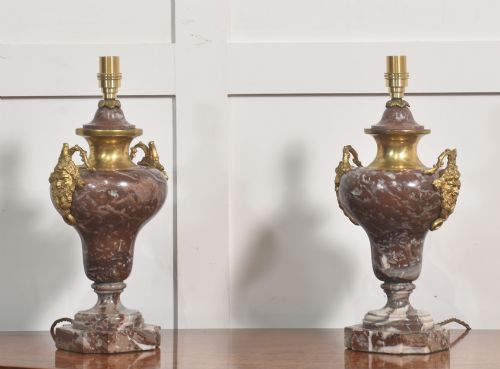
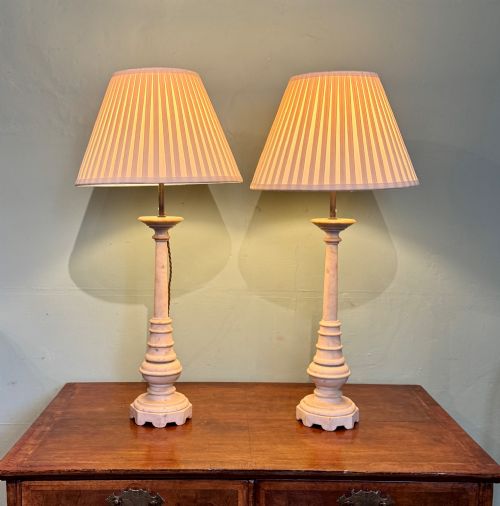
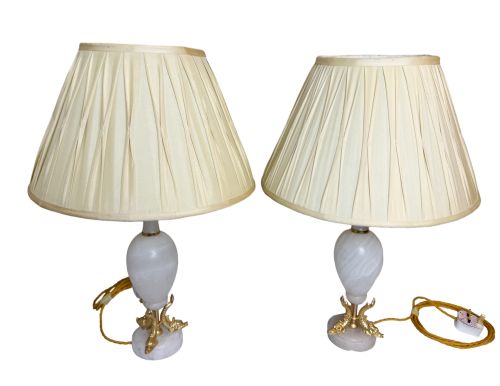
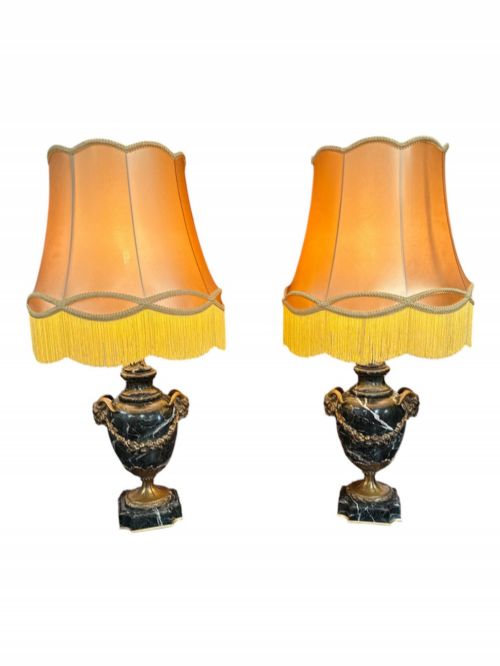
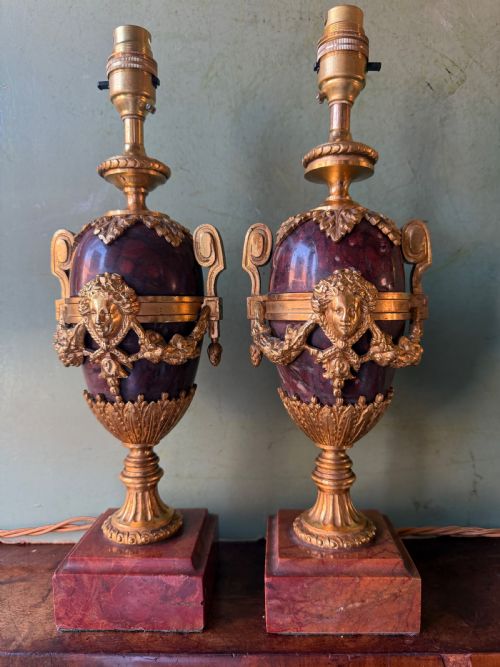
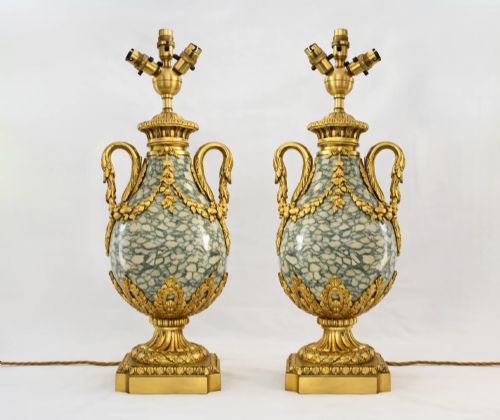
When searching for pair marble table lamps, buyers encounter items spanning from the late Victorian era through the early twentieth century, with a strong representation of nineteenth-century French design. These pieces predominantly take the form of sculptural urns, cassolettes, and classical columns raised on substantial stone plinths.
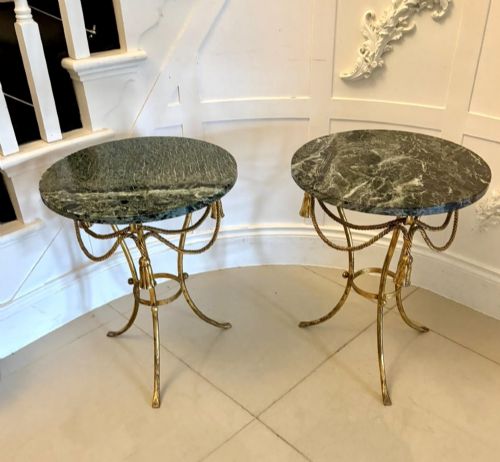
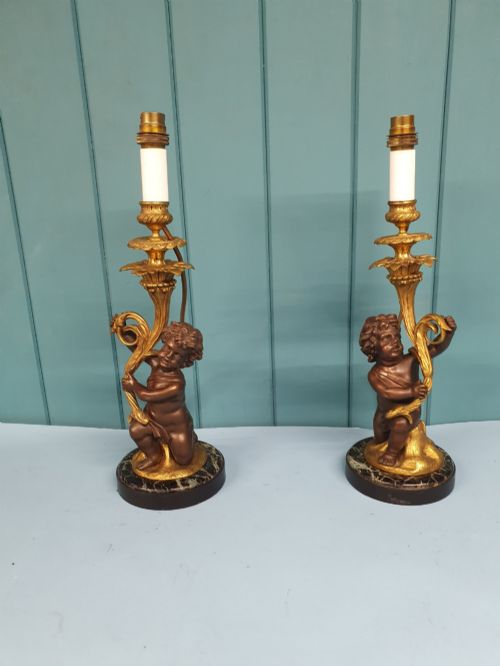
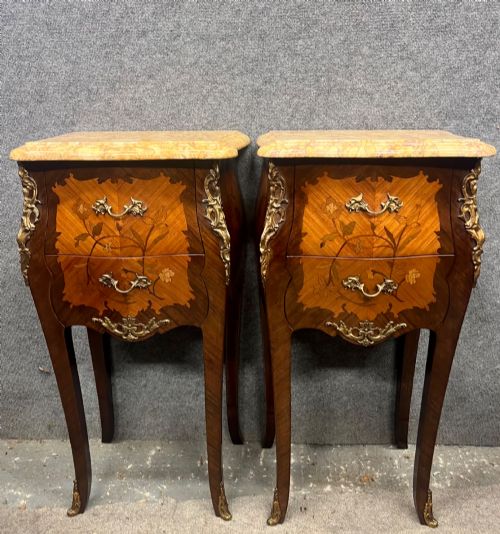
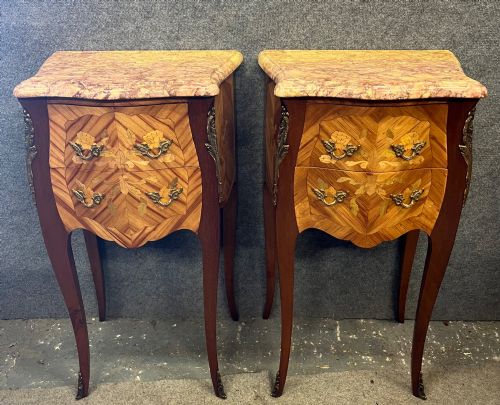
The materials paired with the stone are largely cast metals including ormolu, gilt brass, and bronze, often incorporating figural elements such as cherubs or bacchantes. Alongside standard lighting bases, the selection frequently incorporates lamp tables and bedside chests featuring inset marble tops.
How They Were Made
The construction relies heavily on turning and carving solid blocks of marble, white, rouge, green, and variegated types, complemented by cast metal mounts and brass or gilt bronze trim. Metalwork components are secured to the stone bases using threaded rods and fastenings hidden within the core of the lamp body.
Surface decoration draws on Neoclassical, Louis XVI, and Empire styles, utilising applied ormolu, patinated bronze, and occasionally marquetry woodwork on the accompanying furniture bases. Wiring is typically a later addition to bodies originally fashioned as candlesticks, vases, or architectural columns.
Pair Marble Table Lamps Retail Price Guide 2026
Typical asking prices for pair marble table lamps among the pieces listed under this phrase on Sellingantiques today, from the lower quarter to the upper quarter. They describe what is for sale here now, not the wider market.
Listings feature marble and ormolu lamp forms predominantly originating from nineteenth-century French workshops, spanning Neoclassical and Louis XVI revival styles.
What Varies in Quality
Quality rests upon the weight and density of the marble, the crispness of the chased metal mounts, and the integration between the stone and the bronze or ormolu elements. Superior examples display finely detailed casting on figural elements and precise matching of the stone grain across both items in the set.
Lower tiers exhibit simpler turned stone forms with minimal or pressed metal mounts rather than hand-finished gilt bronze. The harmony of the proportion between the stone base and the upper mount determines the overall visual balance of the pair.
E Kahn·Paul Sormani
The Pair Marble Table Lamps Glossary
- Ormolu
- Gilded bronze used widely for decorative mounts on furniture and lamp bases during the eighteenth and nineteenth centuries. This technique involves applying a mercury-gilding mixture to cast bronze.
- Cassolette
- A decorative vessel shaped like an urn, designed with a reversible lid that functions either as a solid vase or a candle holder. These pieces frequently form the body of nineteenth-century French lamps.
- Neoclassical
- An artistic revival style drawing inspiration from classical antiquity, prominent in nineteenth-century lighting and furniture. It relies on symmetrical geometry, columns, and classical motifs.
- Verde Marble
- A dark green decorative stone displaying white veining, favoured for nineteenth-century French and Italian decorative objects. It provides a strong contrast against gilt bronze mounts.
- Cassation
- An alternative term occasionally applied to decorative urns and cassolettes mounted with metal handles or collars. They reflect the formal symmetry of French classical design.
Pair Marble Table Lamps: Frequently Asked Questions
How do I date pair marble table lamps?
Dating relies on stylistic clues such as the presence of nineteenth-century French Neoclassical or Louis XVI revival motifs, alongside the method of metal casting and assembly. Archive examples show that nineteenth-century pieces often feature heavier ormolu mounts and hand-chased bronze details compared to later twentieth-century iterations.
Changes in wiring channels and the type of brass fittings used internally also help establish the approximate decade of manufacture. Examining the wear patterns on the underside of the marble base provides further context regarding the age of the item.
Were these always electric lamps?
Many pairs began life as decorative cassolettes, candlesticks, or ornamental urns before being converted to table lamps at a later date. This conversion process usually involved drilling through the stone or metal base to accommodate electrical wiring.
Original factory-made lamp bases do appear from the early twentieth century onwards, but earlier nineteenth-century specimens almost invariably started as non-electrical decorative objects. Understanding this origin helps collectors appreciate the modular construction of the pieces.
How do I clean the marble safely?
Cleaning requires a soft, dry or barely damp cloth without harsh chemical detergents that might penetrate porous stone or strip aged patination from the metal mounts. Avoid submerging the base in water, as moisture can corrode internal rods and damage adhesives securing the metal to the stone.
Ormolu and gilt bronze parts require even gentler treatment to preserve the remaining gold leaf or patination. Professional conservation products formulated specifically for stone and antique metals offer the safest approach for regular maintenance.
What styles complement these lamps in a room?
These pieces integrate naturally into traditional, eclectic, or Hollywood Regency interiors where classical symmetry and metallic accents provide a focal point. Their architectural silhouettes pair effectively with dark wood side tables, silk shades, and neutral colour palettes.
Placing them on matching bedside chests or side tables creates a balanced look that echoes their original nineteenth-century display contexts. The combination of cold stone and warm metal adds textural contrast to modern or minimalist living spaces.