




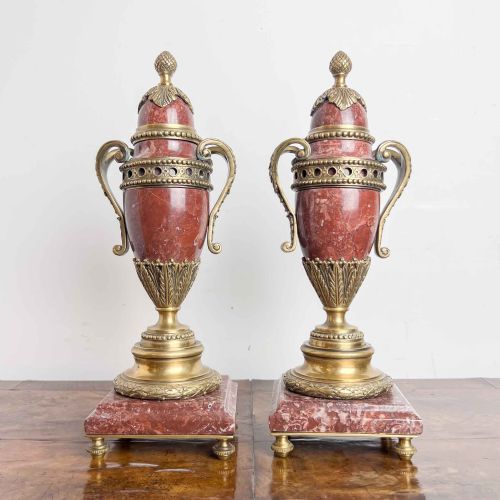
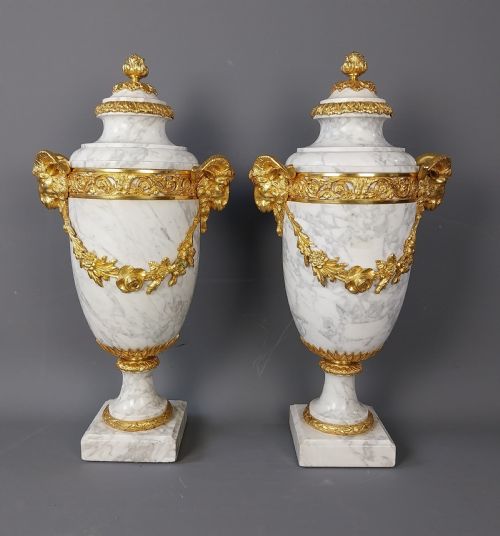


Ormolu Mounted Cassolettes
Ormolu mounted cassolettes are dual-purpose decorative urns that transform from vases to candleholders, bringing French neoclassical elegance to any mantelpiece.
Ormolu Mounted Cassolettes
When you search for ormolu mounted cassolettes, you encounter decorative objects designed to serve as both vases and candleholders through a reversible lid mechanism. These pieces frequently appear as matched pairs originating from nineteenth-century France.
The aesthetic draws heavily on French neoclassical vocabulary, encompassing Louis XVI style, French Empire, and Grand Tour influences. Makers adapted these classical forms into decorative urns and vases that dominated nineteenth-century drawing rooms.
Most examples combine carved stone bodies with cast metal mounts, appearing across Victorian collections and continental imports alike. The versatile design allows the user to flip the top insert, concealing the candle socket to display a solid decorative finial instead.
Materials and construction
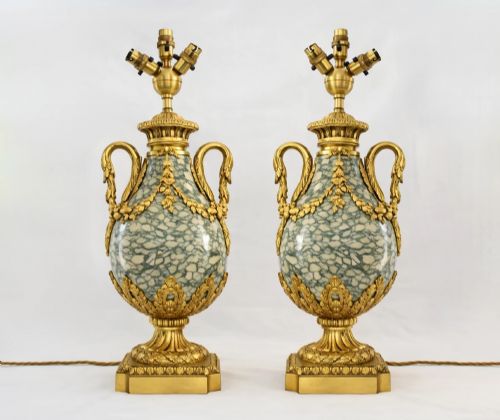
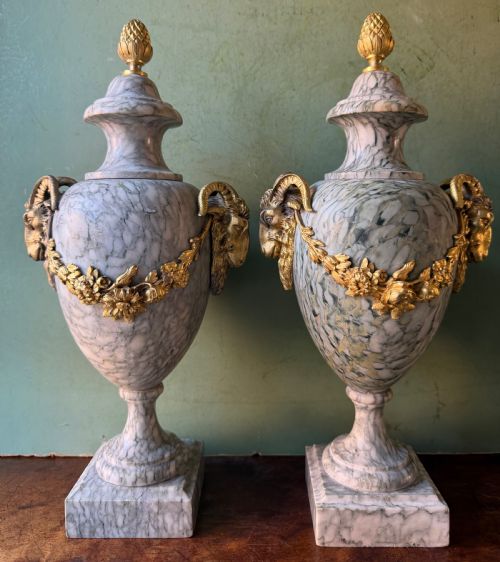
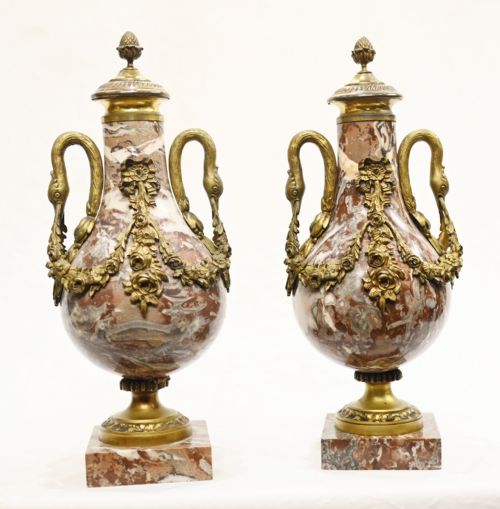
The body of each piece relies on turned and polished stone, utilising white marble, green marble, rouge marble, and occasionally quartz or majolica porcelain. These mineral vessels provide a heavy, cool foundation for the metallic enrichment.
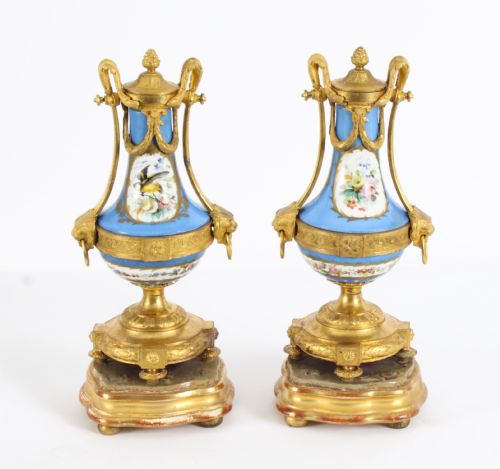
Gilt bronze and ormolu supply the decorative mounts, cast and chased with classical foliage, ribbons, and handles before receiving a layer of gold amalgamation. This metalwork frames the stone body, securing the base, rim, and reversible lid.
Ormolu Mounted Cassolettes Retail Price Guide 2026
Typical asking prices for ormolu mounted cassolettes among the pieces listed under this phrase on Sellingantiques today, from the lower quarter to the upper quarter. They describe what is for sale here now, not the wider market.
Some nineteenth-century lids finish in carved stone acorns, offering a tiny woodland detail atop classical French urns.
Assessing quality and execution
The sharpness of the bronze chasing dictates the visual success of the metalwork, separating crisp, hand-finished foliage from soft, sterile casting. Superior mounts exhibit deep undercut details and a rich, warm gilding tone.
The selection and turning of the marble body determine structural elegance, where evenly figured stone and precise lathe work create balanced proportions. Heavier, tightly fitted reversible lids indicate careful workshop assembly rather than hasty mass production.
The Ormolu Mounted Cassolettes Glossary
- Cassolette
- A dual-purpose vessel featuring a reversible lid that converts a decorative vase into a candlestick. The rotating top presents either a solid finial or a socket for a candle.
- Ormolu
- Finely chopped leaf gold applied to a copper-alloy bronze base through a mercury amalgamation process. This technique creates a durable, golden surface finish characteristic of French decorative arts.
- Grand Tour
- A cultural journey undertaken by wealthy young Europeans to study classical antiquities on the continent. Souvenirs from these travels heavily influenced nineteenth-century domestic interior decoration.
- Louis XVI Style
- A neoclassical design movement characterised by straight lines, symmetry, and classical Greek and Roman motifs. It experienced a major revival during the nineteenth century.
- Sevres
- A historic French porcelain manufactory known for producing luxury ceramic bodies mounted in gilt bronze. Pieces bearing this influence often feature rich coloured glazes.
Ormolu Mounted Cassolettes: Frequently Asked Questions
How do you use a reversible cassolette?
The central lid lifts off, rotates, and drops back into the collar to switch functions. One side holds a decorative finial while the reverse houses a candle socket.
This clever mechanism allowed nineteenth-century homeowners to adapt their mantelpieces from day to evening use without changing the decorative scheme.
What periods do these pieces date from?
Almost all examples date to the nineteenth century, spanning the Victorian era and the French Napoleon III period. Many adopt eighteenth-century Louis XVI aesthetics created during later revival movements.
Datings typically reference the broader nineteenth-century timeline alongside specific stylistic revivals like French Neoclassical and Rococo.
Where were cassolettes manufactured?
The vast majority originate from French workshops and foundries active during the nineteenth century. Paris served as the primary centre for casting bronze mounts and turning marble bodies.
Grand Tour travellers frequently purchased these decorative objects in France or Italy before bringing them back to British homes.
What marble types appear most often?
White marble and various coloured stones like rouge marble and green marble dominate the surviving inventory. Workshops also utilised specialised mineral varieties including quartz and giallo di siena.
These natural stones provided a heavy, cool contrast to the bright, warm finish of the surrounding ormolu mounts.