



Green Marble Table Lamp
A green marble table lamp brings rich natural stone and warm metallic mounts together to anchor a room with steady, classical illumination.
Green Marble Table Lamp
A green marble table lamp combines solid stone bases with metal fittings, appearing in styles ranging from Victorian and Louis XVI to Art Deco and mid-century Italian design. These pieces function primarily as decorative lighting for sideboards, desks, and side tables, bringing substantial weight and texture to an interior.
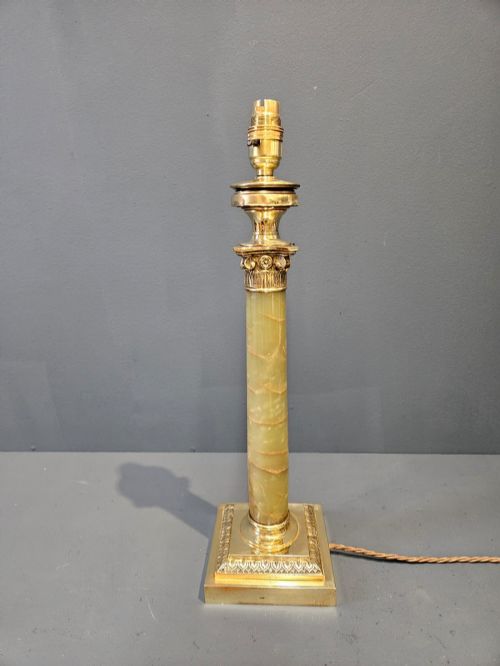
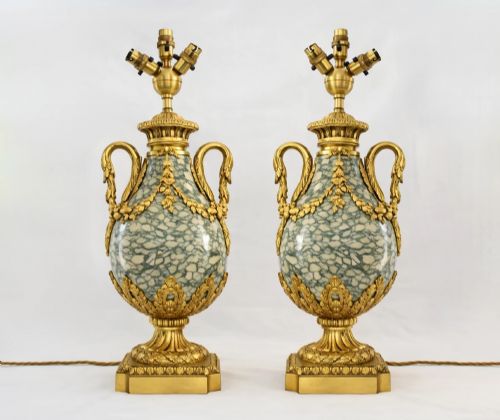
You are most likely to encounter examples from the late nineteenth century through to the 1930s, often featuring brass, ormolu, or gilt bronze mounts. Many surviving pieces retain classical architectural forms, such as Corinthian columns or cassolette urn adaptations, alongside geometric Art Deco silhouettes.
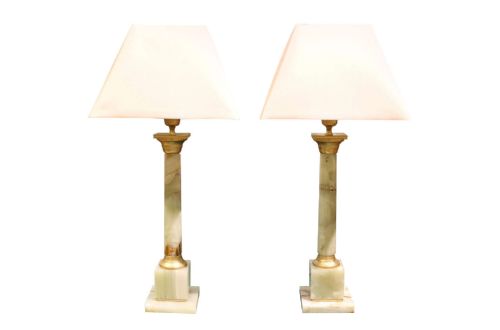
The materials span different varieties of green stone, including jade-tinted marble and variegated onyx, paired with cast metals and occasionally glass or fabric elements. They appear as single statement pieces or matched pairs, reflecting the formal lighting arrangements of their respective periods.
Materials and Construction
The foundations rely on turned and polished marble or onyx, shaped into columns, urns, and stepped geometric blocks. Stonemasons selected blocks for their natural grain and deep green coloration, frequently finishing the surfaces to a high gloss.
Metal mounts in brass, ormolu, gilt bronze, and gilt metal were cast and chased to frame the stone components. These metal elements secure the electrical or burner fittings and provide decorative collars, feet, and handles.
Green Marble Table Lamp Retail Price Guide 2026
Typical asking prices for green marble table lamp among the pieces listed under this phrase on Sellingantiques today, from the lower quarter to the upper quarter. They describe what is for sale here now, not the wider market.
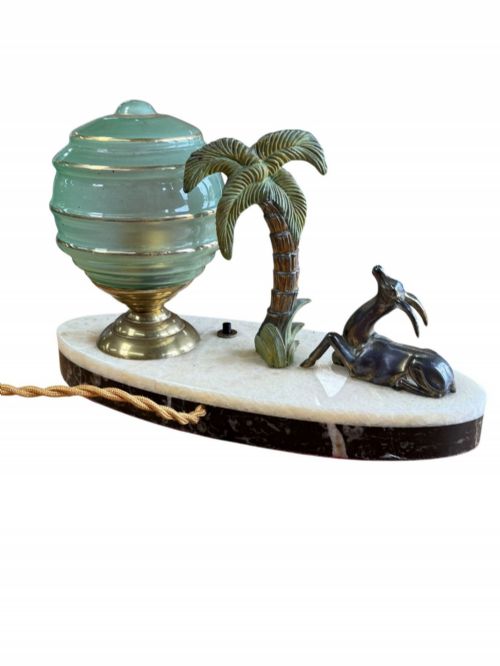
Several lamps include canine figures or glass fruit, proving that past owners liked their classical stone illumination served with a side of dogs.
Assessing Quality
Quality rests in the depth and figuring of the marble itself, alongside the crispness of the metal mounts. Heavy, finely polished stone combined with heavily chased ormolu or cast bronze indicates superior craftsmanship.
Proportion and structural integration distinguish finer examples from standard production pieces. When the metal mounts fit flush to the carved stone and the overall weight is substantial, the piece represents the higher end of period manufacture.
E Kahn
The Green Marble Table Lamp Glossary
- Ormolu
- Gilded bronze, where a layer of gold is applied to a bronze base using a mercury amalgam technique. This finish gives the metal mounts a warm, enduring lustre.
- Cassolette
- A decorative vase or urn fitted with a reversible lid that functions either as an incense burner or a solid vessel. In lamp conversions, these turned stone urn bodies form the central column.
- Gueridon
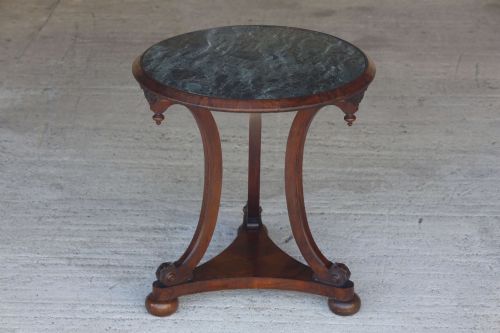
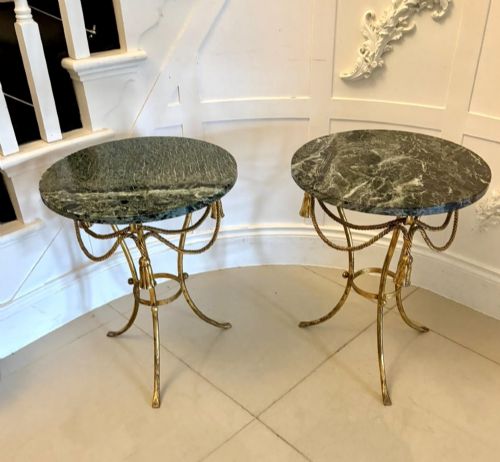
- A small round table, often with a marble top and three or more legs, originating in seventeenth-century France. These occasionally share stylistic metal mounts with period lamps.
- Spelter
- An alloy of zinc and lead used as a cost-effective substitute for bronze in decorative castings. It frequently appears in Art Deco mood lamps and figural bases.
- Corinthian Style
- An architectural order featuring ornate capitals decorated with acanthus leaves. Lamp columns adopting this style mimic classical stone pillars.
Green Marble Table Lamp: Frequently Asked Questions
How do I date a green marble lamp?
Dating relies on the stylistic vocabulary of the metal mounts and the stone cutting techniques. Victorian and Louis XVI style pieces usually show cast brass or ormolu with classical detailing, whereas 1930s examples favour stepped geometric onyx and streamlined chrome or gilt metal.
Examining the internal wiring channels and the construction of the base provides further clues to the period of manufacture, distinguishing nineteenth-century conversions from twentieth-century production.
Were these always electric lamps?
Many older examples started life as oil lamps, gas fixtures, or decorative cassolettes before being converted to electricity later in their lifespan. The presence of burner assemblies or weighted oil reservoirs indicates a conversion from earlier fuel systems.
When living with these pieces, rewiring is often necessary to meet modern safety standards while preserving the original stone and metal exterior.
How do I clean the marble and metal?
Maintenance requires dry or lightly dampened microfiber cloths to remove dust from the polished stone surfaces. Avoid harsh chemical cleaners, as acidic substances can etch marble and strip patinated finishes from brass and bronze mounts.
Gentle dusting around the cast metal details preserves the accumulated character and prevents moisture from entering unsealed joints in the stone.
What is the difference between marble and onyx here?
True marble is a metamorphic rock with a crystalline structure, while the material commonly referred to as onyx in these pieces is actually a form of banded calcite or alabaster. Both offer a smooth, cool-to-the-touch surface with natural veining in green tones.
Onyx variants often display a greater degree of translucency when light passes through the stone body, whereas classic green marble remains opaque and heavily figured.