
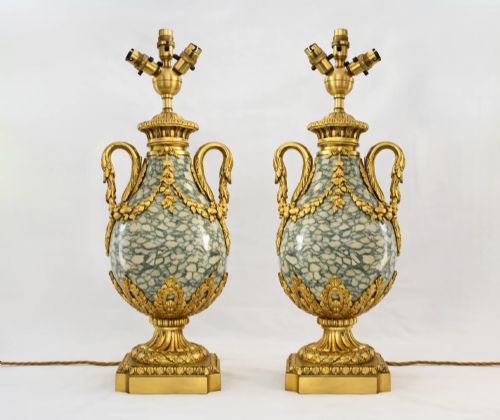


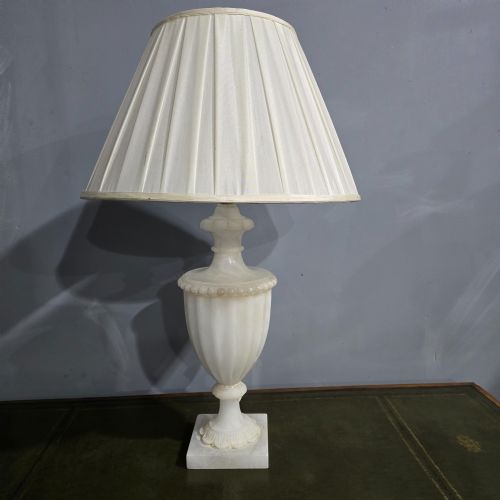


Marble Urn Table Lamp
These marble urn table lamps bring neoclassical presence to a room, combining substantial stone bodies with disciplined metal mounts.

Marble Urn Table Lamp
A marble urn table lamp adapts classic stone vessels for domestic illumination, frequently taking the form of amphorae, cassolettes, or campana shapes raised on decorative bases.
Most examples found here originate from nineteenth-century French workshops or early twentieth-century Italian makers, adopting Louis XVI styles or classical revivals with distinct architectural symmetry.
Beyond the standard lighting forms, related stands and smaller tables occasionally incorporate inset stone panels or urn motifs suited to display.
Materials and construction
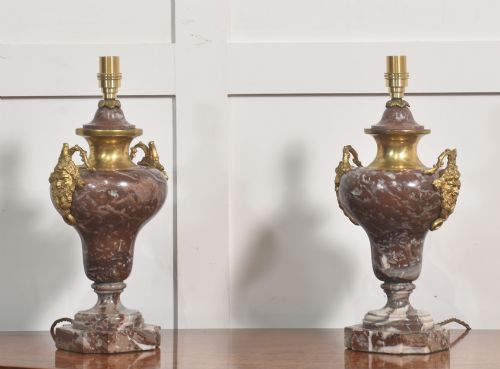
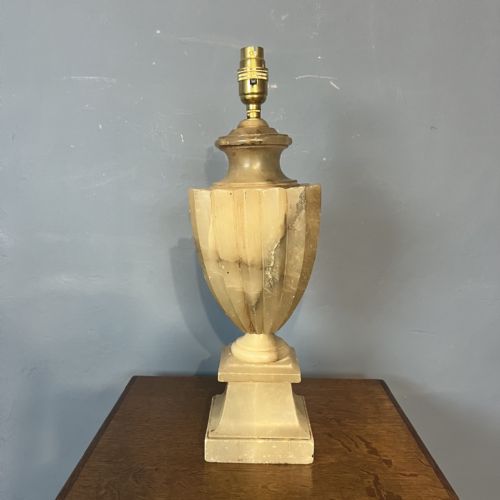
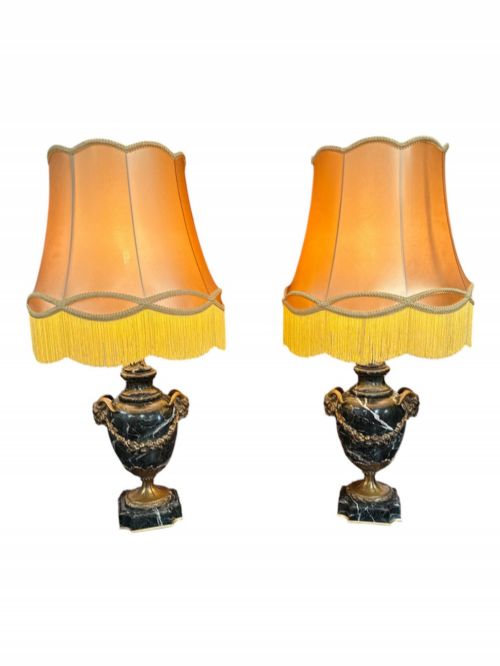
Turned and polished stone forms such as rouge marble, white marble, alabaster, and onyx provide the substantial body of each piece, frequently paired with cast bronze, brass, or gilt metal.
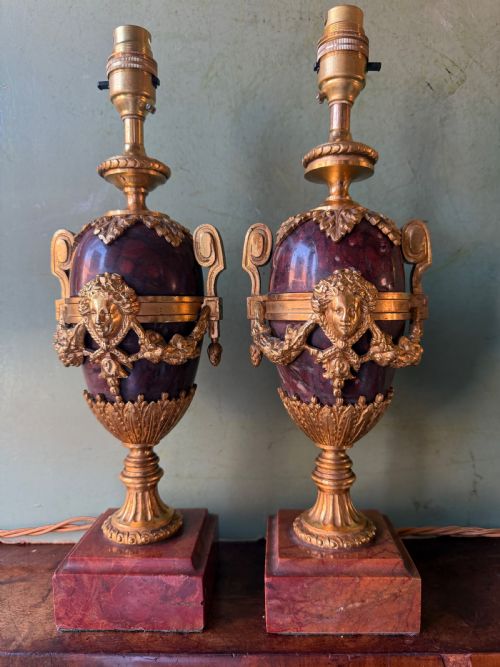
Mounts, handles, and paw feet utilise ormolu or gilt bronze, secured meticulously to the stone components to frame the classical silhouettes.
Listings feature items spanning the Victorian era through the 1930s, constructed from marble, alabaster, onyx, and bronze.
Distinctions in quality
The sophistication of the cast metal mounts distinguishes standard productions from finer examples, with chiselled ormolu displaying sharper detail than simpler brass work.
The choice and figuring of the stone itself - whether richly veined rouge marble or translucent alabaster - together with the weight of the turning, dictate the overall presence of the object.
The Marble Urn Table Lamp Glossary
- Ormolu
- Gilt bronze created by applying a finely ground high-carat gold mercury amalgam to a cast bronze object. This technique produces a warm, durable surface finish characteristic of French decorative arts.
- Cassolette
- A decorative vase or urn featuring a reversible lid, functioning alternatively as a vessel or a burner. In lighting adaptations, the profiled body serves as the main column.
- Campana
- A bell-shaped urn or vessel derived from classical antiquity. These forms provide a wide mouth tapering toward a narrow base.
- Neoclassical
- A style spanning the eighteenth and nineteenth centuries that revived classical Roman and Greek motifs. It relies on symmetry, strict proportions, and restrained ornamentation.
Marble Urn Table Lamp: Frequently Asked Questions
How do I date a marble urn lamp?
Dating relies on the combination of materials, the weight of the metal casting, and stylistic indicators such as Louis XVI revival details. Nineteenth-century examples often display heavier fire-gilt bronze mounts alongside dense rouge or white marble bodies.
Later adaptations from the early twentieth century frequently utilise lighter brass or onyx elements with simpler turned profiles. Examining the internal fixings and wiring apertures can also reveal the age of conversion from original vessel to lamp.
Were these originally made as lamps?
Many of these pieces began life as decorative cassolettes, garniture urns, or classical vases before being subsequently adapted into table lamps. The conversion process typically involved drilling the stone base or urn to run electrical cabling.
This practice was common across the nineteenth and early twentieth centuries, transforming ornamental mantel or table garnitures into functional household lighting.
How do I clean alabaster and marble?
Cleaning requires dry or barely damp microfiber cloths to avoid introducing moisture into porous stones like alabaster. Harsh chemical cleaners and excessive water will dull the polished surface and damage applied gilt metal mounts.
Gentle dusting preserves the natural lustre of the stone without eroding the delicate patination built up over decades.
What styles do these lamps follow?
The designs predominantly follow French neoclassical and Louis XVI revival aesthetics, drawing directly from archaeological discoveries of the eighteenth and nineteenth centuries. Elements such as acanthus leaves, classical handles, and paw feet recur frequently.
Chinese export influences and Edwardian interpretations also appear occasionally, widening the stylistic range within the classical framework.