


Louis XVI Style Lamps
Louis xvi style lamps bring French neoclassical symmetry and classical elegance to a room, offering warm light housed in cast bronze and marble.
What They Are
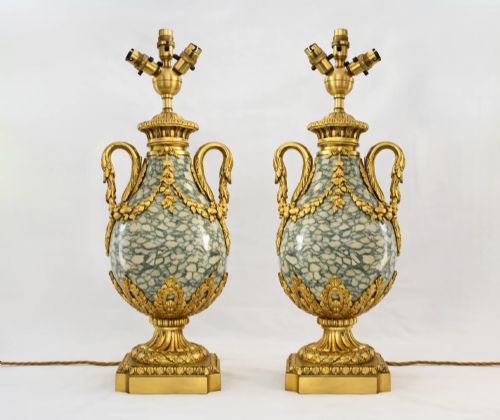
Louis xvi style lamps are decorative table lamps drawing upon French neoclassical design, typically taking the form of paired lighting suitable for sideboards or mantels. These pieces interpret classical motifs through heavy metalwork and stone bases.
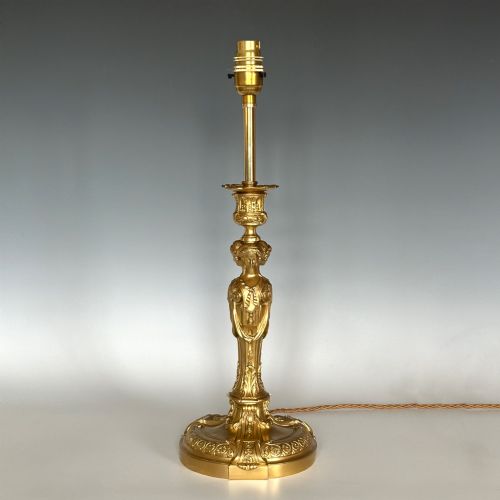
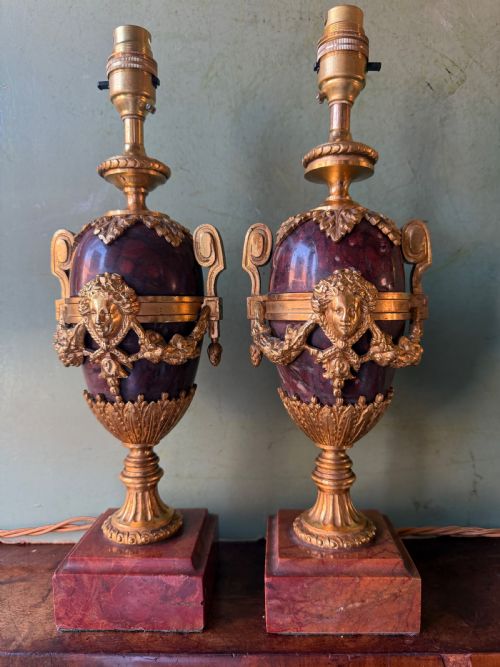
The versions most commonly met on this page are paired table lamps dating from the late nineteenth and early twentieth centuries. They combine cast bronze, gilt bronze or ormolu with marble bases, often featuring classical figures or architectural mounts.
How They Were Made
These lamps were constructed using cast bronze, brass, and ormolu combined with turned or carved marble. Metal elements were cast, chased, and gilded or patinated to create contrast against the stone.
Makers integrated natural stone bases with metal mounts, securing columns or figural standards to marble plinths. Fabric shades completed the construction, paired with electrified fittings adapted during or after the period.
Retail Price Guide 2026
Typical UK retail prices for louis xvi style lamps, calculated from the Sellingantiques database of over a million retail prices indexed since 2003. This retail price guide relies exclusively on Sellingantiques data; no external sources or auction records are used, so the figures do not describe the wider market.
Materials across these listings consistently include marble, bronze, gilt bronze, brass, ormolu, and fabric.
What Varies in Quality
Quality rests in the crispness of the bronze chasing and the weight and grain of the marble. Finer examples display deeply detailed cast ornament, sharp edges on floral or architectural mounts, and substantial stone plinths.
Lesser pieces rely on softer casting where fine details blur, or simpler brass mounts that lack the depth and finish of true gilt bronze and ormolu work.
E Kahn
The Louis XVI Style Lamps Glossary
- Ormolu
- Gilded bronze produced by applying a mercury and gold amalgam to cast metal and heating it to drive off the mercury. This technique creates a durable, warm golden finish seen on high-end mounts.
- Neoclassical
- A style drawing inspiration from the classical art and culture of ancient Greece and Rome. It emphasises symmetry, straight lines, and classical architectural details.
- Putti
- Representations of small winged infants, frequently used as decorative figures in art and metalwork. They appear supporting candle arms or standing beside columns on these lamps.
- Patinated bronze
- Bronze that has been chemically treated to alter its surface colour, usually to a dark brown or green tone. This provides a contrast against gilt metal highlights.
Frequently Asked Questions
What periods do these lamps come from?
The pieces listed and recorded in archives originate primarily from the late nineteenth and early twentieth centuries, spanning roughly eighteen ninety to nineteen twenty.
They reflect revival periods when French neoclassical designs were reproduced for affluent interiors.
Are these lamps sold as pairs?
Most entries in the archive and current listings consist of matched pairs designed for balanced placement on furniture.
Single lamps appear less frequently, with pairs remaining the standard format for this style.
What materials are used in these bases?
Bases are predominantly constructed from marble, including green marble variants, paired with bronze, gilt bronze, ormolu, or brass.
The stone provides weight and stability while the metal components carry the decorative motifs.
How do these lamps fit into modern rooms?
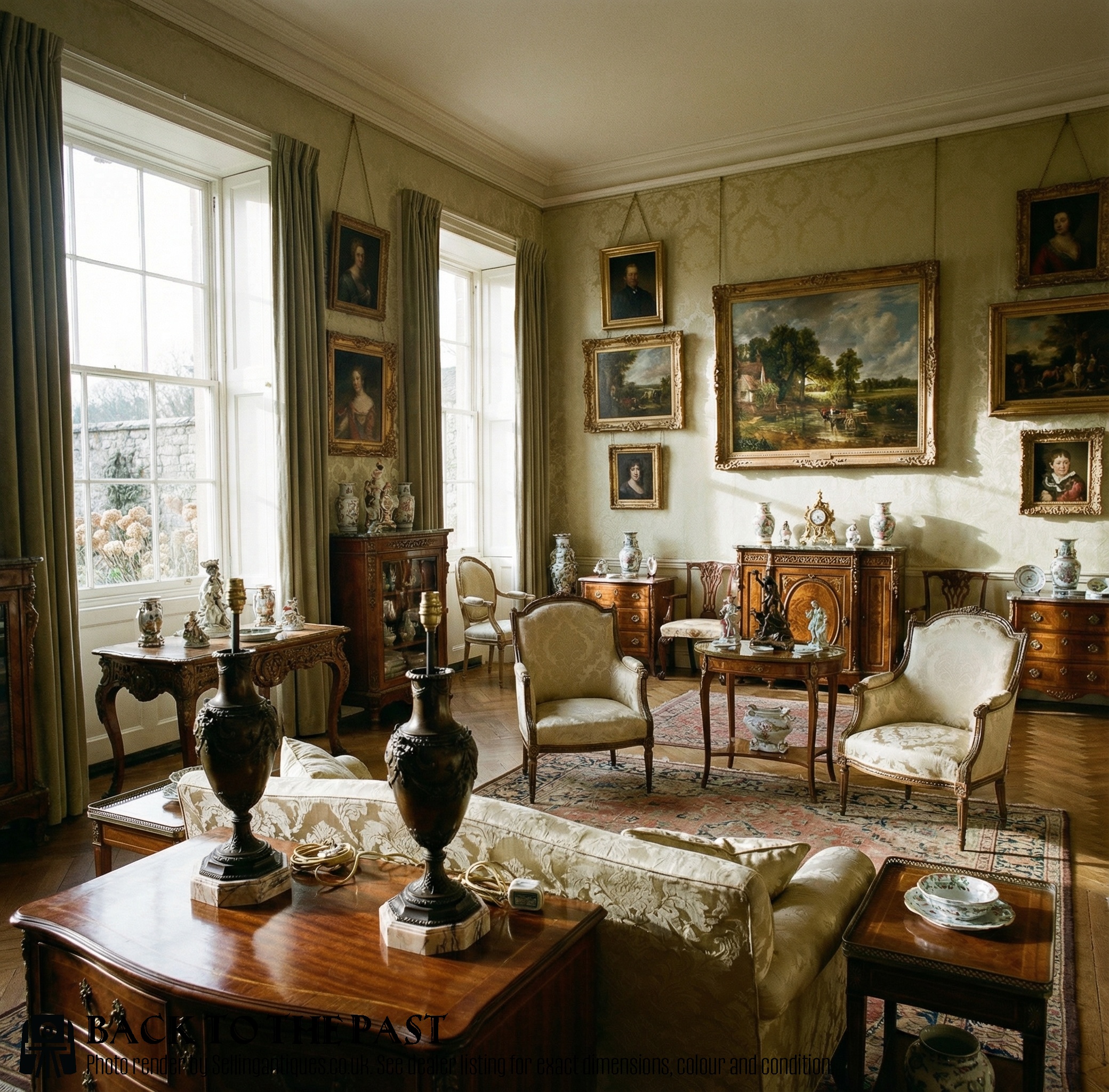
Their classical proportions and neutral stone and metal tones allow them to sit comfortably on side tables, chests, or desks in traditional or eclectic interiors.
They provide ambient lighting while functioning as sculptural decorative objects.