
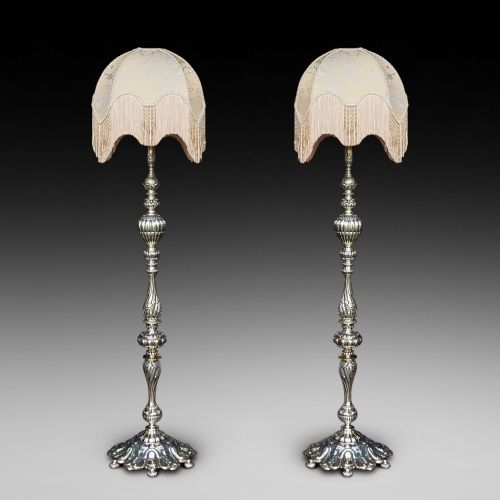


Ornate Metal Lamp
An ornate metal lamp brings weight and intricate casting to a room, turning practical lighting into a focal point.
Ornate Metal Lamp
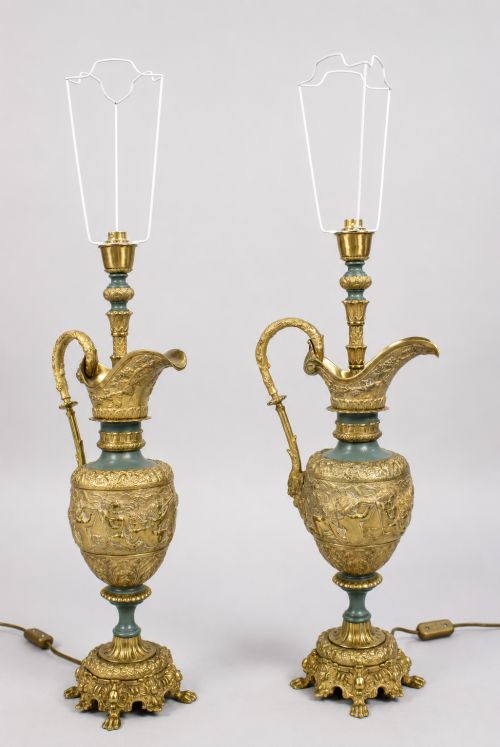
An ornate metal lamp encompasses table lamps, standard lamps, and multi-light chandeliers spanning the Victorian and Edwardian eras through the early decades of the twentieth century. These pieces draw heavily on French Neoclassical, Rococo Revival, and Classical Revival styles, often taking the form of ewers, urns, or altar adaptations.
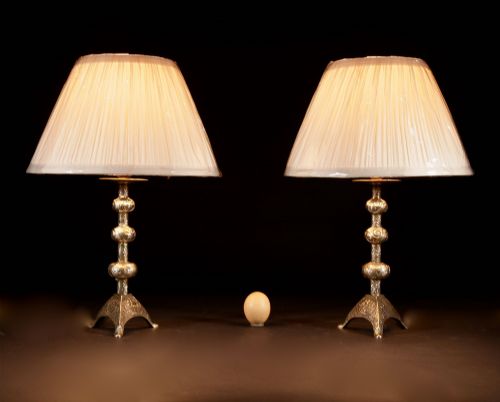
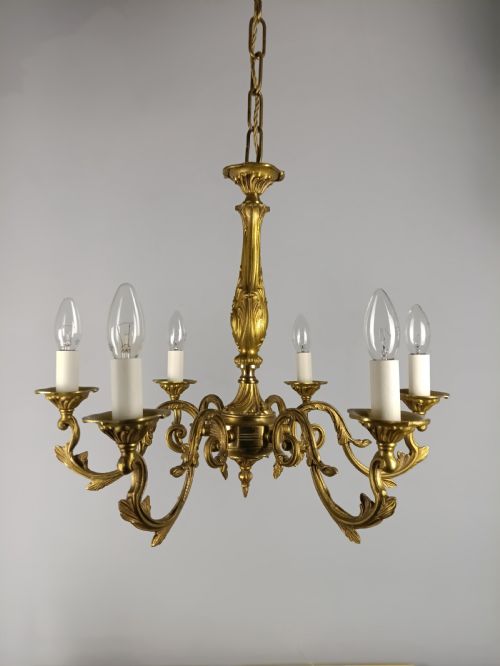
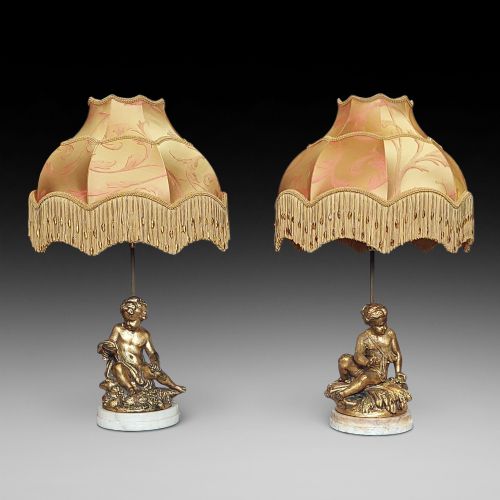
The version most commonly met on this page is the French gilt metal or brass table lamp, frequently mounted on marble or onyx bases. Buyers searching for an ornate metal lamp will also find standard floor lamps with scroll arms and heavy multi-branch chandeliers from the 1900s to the 1930s.
How they were made
The construction relies on cast metals including bronze, brass, gilded ormolu, and spelter, often combined with carved marble, onyx, alabaster, and cut glass components. Artisans utilised detailed casting and chasing techniques to produce elaborate scrollwork, paw feet, and cherubic or oriental motifs.
Many of these lamps incorporate fabric elements alongside hand-painted porcelain or gilded mounts. The structural integrity of these pieces depends on heavy metal casting and secure mounting on stone bases to support multi-branch lighting.
Listings feature items spanning the 19th century through the 1930s, incorporating materials such as bronze, brass, marble, and cut glass.
What varies in quality
Quality reveals itself in the crispness of the metal casting and the depth of the chasing, where sharper relief and finer detail separate superior pieces from simpler productions. The choice of base materials also matters, with genuine marble, onyx, or alabaster indicating a higher standard than plain metal alternatives.
The cohesion of the design distinguishes the best examples, particularly in how well gilt bronze, ormolu, or pressed brass integrate with secondary elements like cut glass or hand-painted porcelain. Heavier gauges of metal and substantial, well-balanced proportions mark the upper end of the range.
The Ornate Metal Lamp Glossary
- Ormolu
- Gilded bronze produced by applying a mercury-gilding amalgam to cast bronze. This technique creates a rich, durable golden surface seen on French lamps and candelabra.
- Ewer
- A large jug with a wide spout, historically used for water but frequently adapted as a sculptural lamp body in the nineteenth century. These forms display classical handles and tapered profiles.
- Cairoware
- Metalwork inlaid with silver or gold, typically originating from Egypt and the Middle East. Such pieces caught European imagination, leading to distinctive lamps in the early twentieth century.
- Spelter
- A zinc alloy used as a less expensive substitute for bronze or brass. It takes patination and gilding well, allowing for intricate casting on domestic lighting.
- Plaffonier
- A ceiling-mounted bowl light or shallow pendant fixture. These glass and metal fixtures sit close to the ceiling.
Ornate Metal Lamp: Frequently Asked Questions
How do I identify a French antique lamp?
Look for cast bronze or gilt metal work, often paired with marble bases or classical urn and ewer forms. Stylistic cues point toward French Neoclassical or Rococo Revival designs from the nineteenth and early twentieth centuries.
Maker signatures are uncommon on these pieces, so identification relies on the quality of the casting, the materials used, and characteristic decorative motifs such as paw feet or scroll arms.
Can standard lamps be used with modern bulbs?
Most antique standard lamps and table lights accept modern screw or bayonet bulbs, provided the internal wiring has been brought up to current safety standards. Rewiring is frequently necessary for older pieces.
Consult a qualified electrician to check the fitting and ensure the heavy metal base safely supports any restored wiring.
What is the difference between brass and bronze?
Bronze is an alloy of copper and tin, valued for its strength and ability to take fine detail during casting. Brass is an alloy of copper and zinc with a brighter, yellower tone.
Both metals appear frequently across these listings, sometimes with applied gilt or ormolu finishes that disguise the base metal underneath.
Where should I place a heavy metal lamp?
These substantial pieces require sturdy surfaces like heavy sideboards, desks, or reinforced floors for standard lamps. Their weight, increased by marble or onyx bases, demands stable placement.
Position them where the cast metal details and gilt surfaces can catch ambient light and act as a decorative centrepiece.