

Vintage Ormolu Lamps
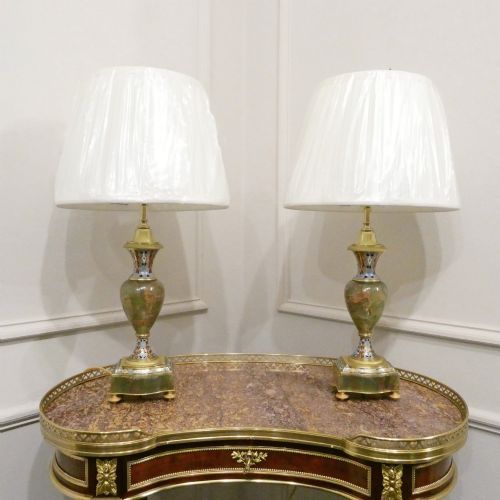
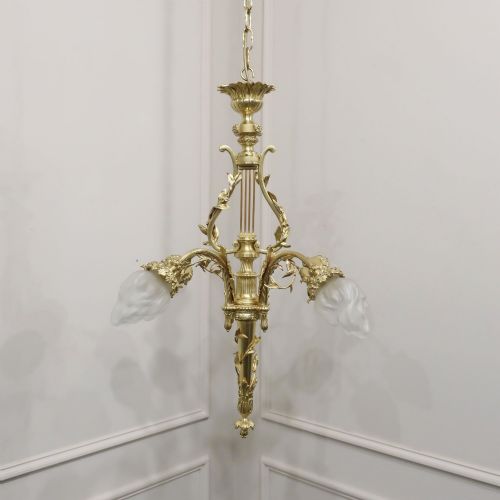
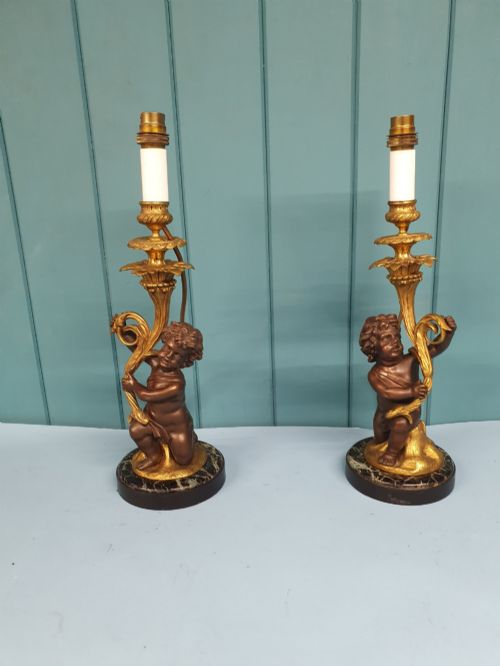
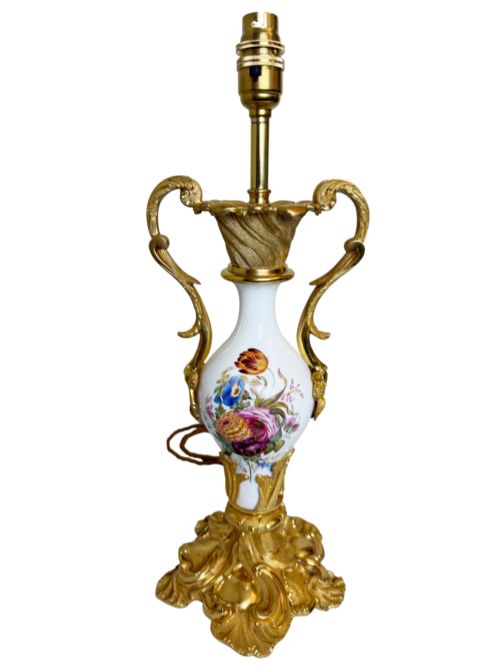
These vintage ormolu lamps bring the heavy, gilded gravity of nineteenth and early twentieth-century French salons directly onto a side table.

Vintage Ormolu Lamps
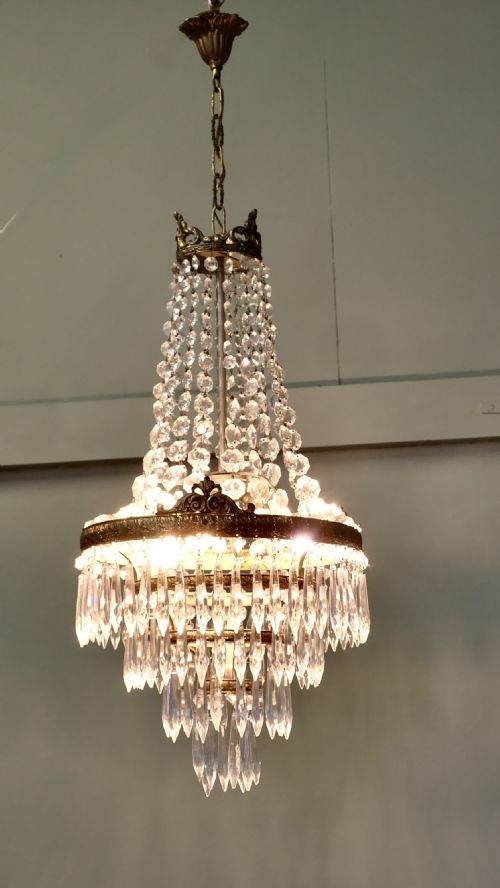
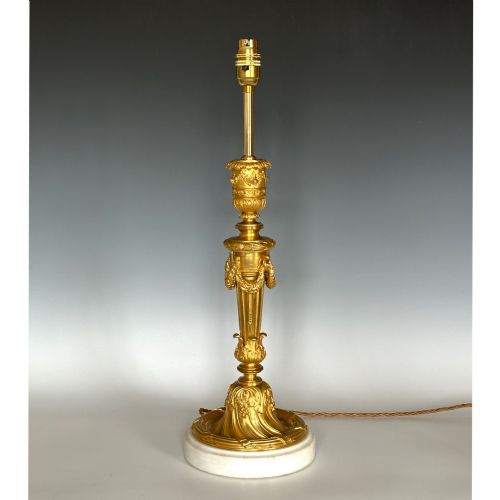
When you search for vintage ormolu lamps, you find heavy cast metal work paired with marble, porcelain, onyx and crystal, stretching from the mid-nineteenth century through the nineteen-thirties. The most frequent pieces are table lamps built in pairs, often drawing on French Rococo Revival, Louis XV and Neoclassical styles.
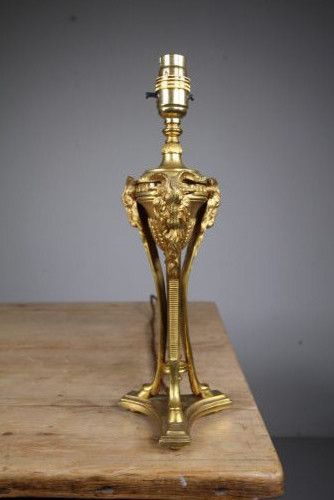
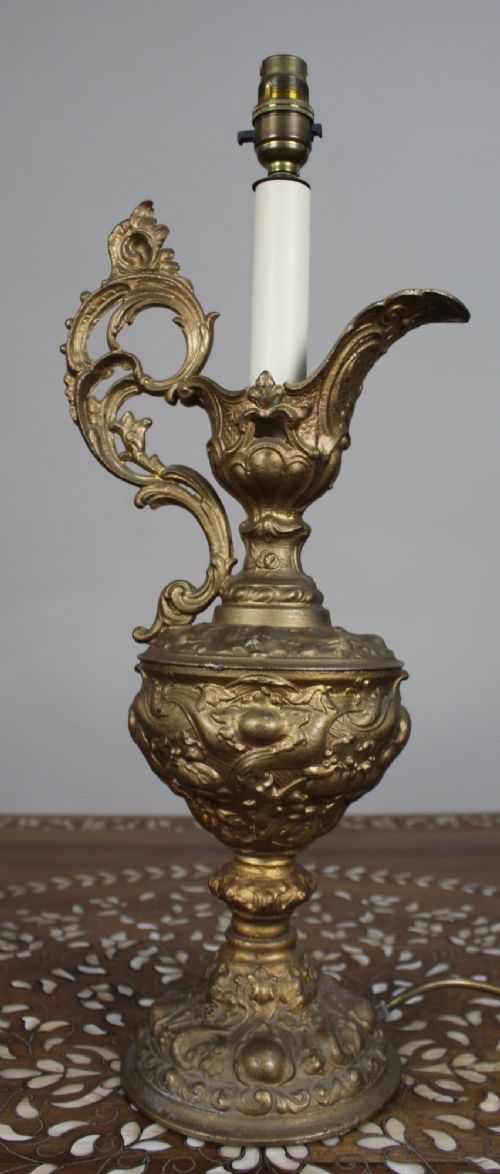
The selection here includes pieces mounted with rams heads, cherubs, and floral designs, alongside related forms like bedside lamp tables and wall sconces. Many reflect a distinct French chateau aesthetic, using classical motifs cast in bronze and brass.
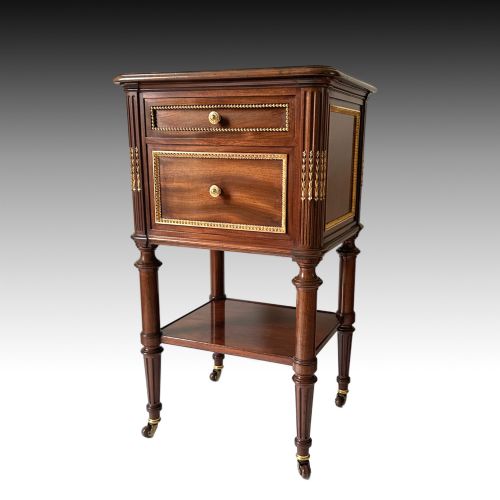
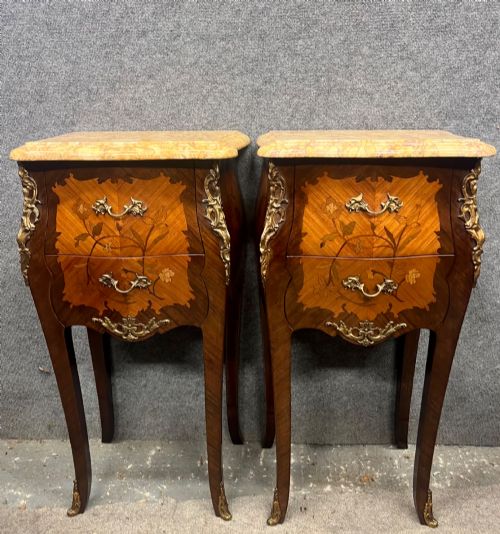
Makers and designers of the period, such as François Linke, utilised these rich mounts on mahogany and kingwood furniture as well as lighting, uniting interior schemes through heavy gilding.
How they were made
Foundries produced these objects by casting bronze or brass into intricate moulds, then applying a gold mercury amalgam or chemical gilding process to achieve the characteristic ormolu surface. This metallic finish was hand-chased with steel tools to sharpen details like acanthus leaves and drapery.
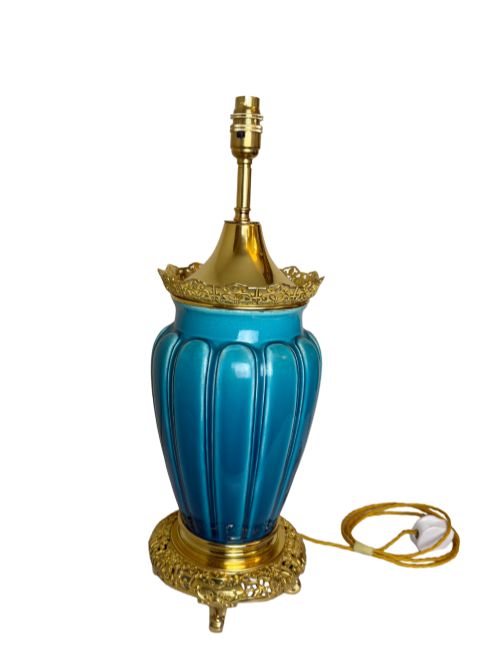
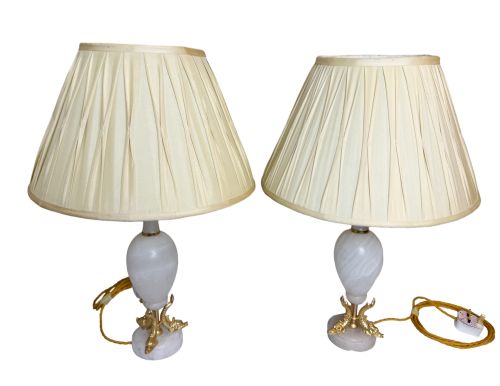
Mounts were fixed to bodies turned from natural materials including white and rouge marble, onyx, and turquoise blue porcelain. Crystal drops, glass beads, and fabric shades completed the assembly, often wired during later restorations.
The listings span from the mid-nineteenth century to the nineteen-thirties, incorporating materials like rouge marble, onyx, crystal, and turquoise blue porcelain.
What varies in quality
The distinction between standard production and top tier work lies in the depth of the metal chasing and the crispness of the cast. Lesser pieces show blurred leaf work and flat surfaces, whereas superior examples exhibit sharp undercutting and hand-tooled definition across every scroll and mount.
Material selection also dictates standing, with solid white marble bases, heavy cast gilt bronze rather than lighter brass, and unblemished porcelain bodies marking out the higher end of the range.
François Linke
The Vintage Ormolu Lamps Glossary
- Ormolu
- A gilded bronze surface created by applying gold to a base metal. It provides a warm, metallic lustre that does not tarnish easily.
- Champlevé
- An enamelling technique where troughs are dug into metal and filled with vitreous colour before firing. It appears frequently alongside ornate brass and bronze mounts.
- Rococo Revival
- A nineteenth-century design movement mimicking the asymmetrical scrolls and natural motifs of the French eighteenth century. It dominates many of the cast bronze pieces here.
- Neoclassical
- A style rooted in classical Greek and Roman architecture, marked by symmetry, urns, flaming torches, and crisp geometric lines. It influences many of the torch-form wall lights and urn lamps.
- Chasing
- The manual tooling of cast metal with a hammer and punches to refine details and textures. Fine chasing separates ordinary metalwork from exceptional sculpture.
Vintage Ormolu Lamps: Frequently Asked Questions
What is ormolu exactly?
Ormolu is a term describing gilded bronze, where a layer of gold is applied to a cast metal base. The surface is then hand-chased to create a detailed, non-tarnishing finish.
Historically, this technique was mastered in France to decorate furniture, clocks, and lighting fixtures with rich, golden ornamentation.
How do I date these lamps?
Dating relies on stylistic clues like Rococo Revival curves versus Neoclassical symmetry, alongside the type of stone or porcelain used in the body. Wiring methods and plug types also offer clues to later twentieth-century updates.
Most pieces span from the mid-nineteenth century up to the nineteen-thirties, reflecting broader shifts in interior design tastes.
Are these lamps usually wired?
Most antique lamps found today have been rewired at some point to meet modern safety standards. Original wiring from the nineteenth or early twentieth century is rarely left in use.
Buyers should inspect the cord and lampholder to ensure compatibility with current household fittings.
How do I clean gilt bronze?
Cleaning requires only a soft, dry cloth to remove dust from the crevices of the chased metal. Water and chemical polishes can strip the historic gilt surface.
Treating the metal gently preserves the original golden tone and prevents wear to the high points of the casting.