

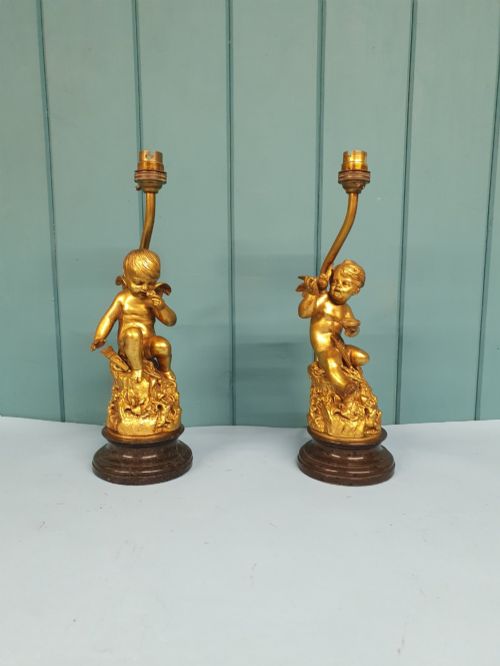
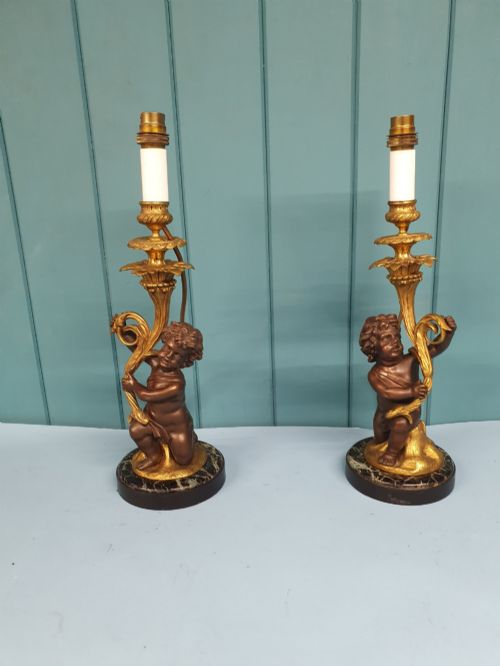
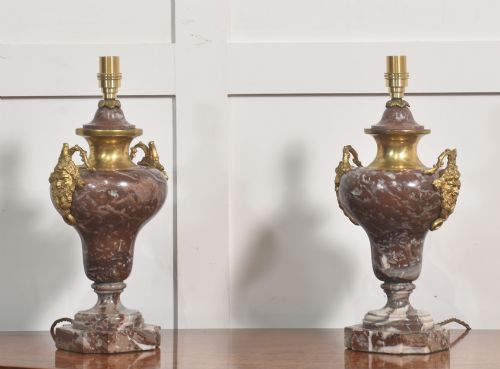
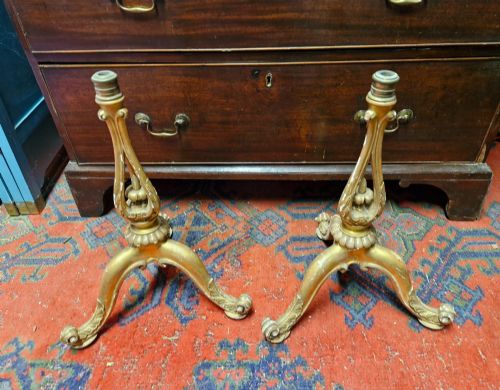
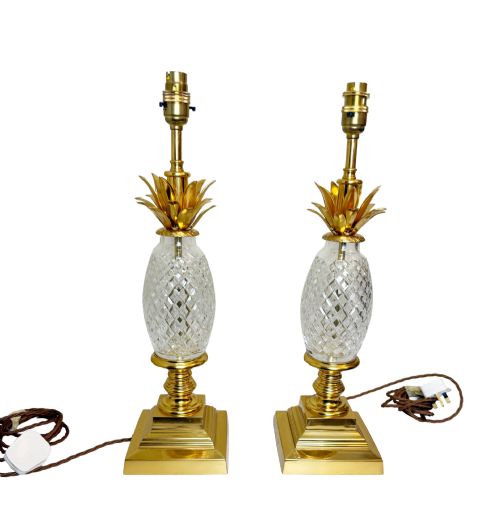
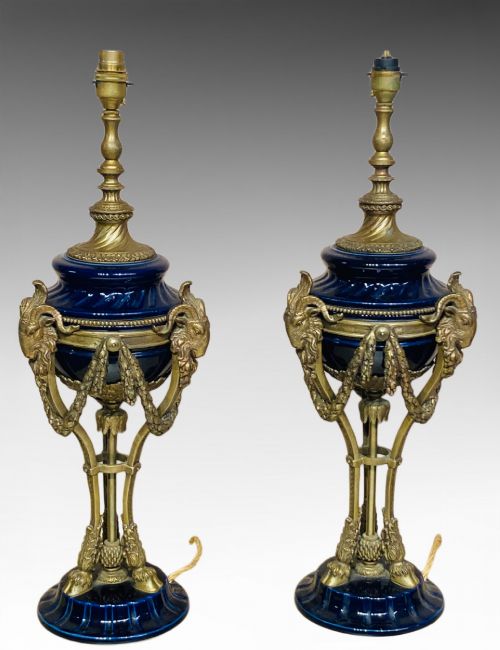
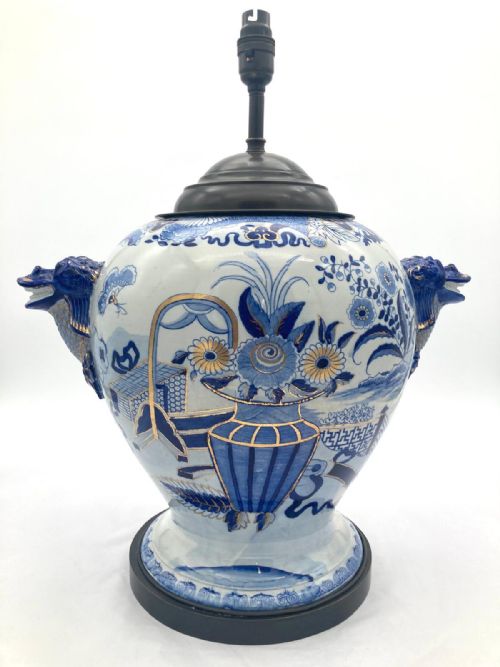
Pair Gilt Table Lamps
When choosing pair gilt table lamps, you select matched illumination bringing classical French and Victorian grandeur directly into domestic interiors.

Pair Gilt Table Lamps
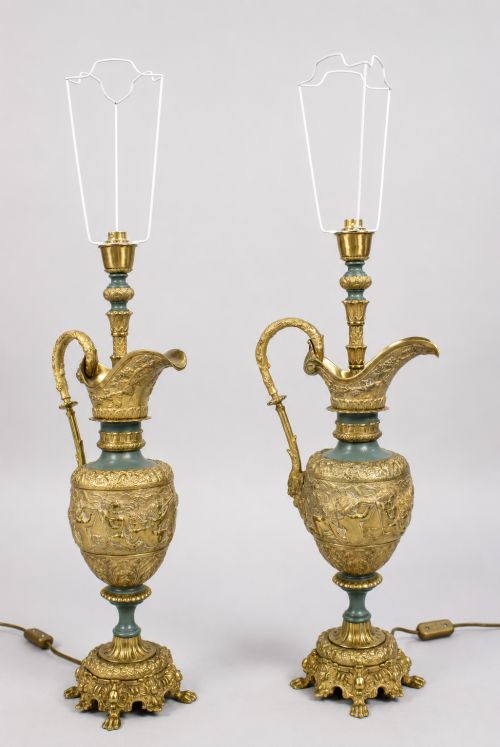
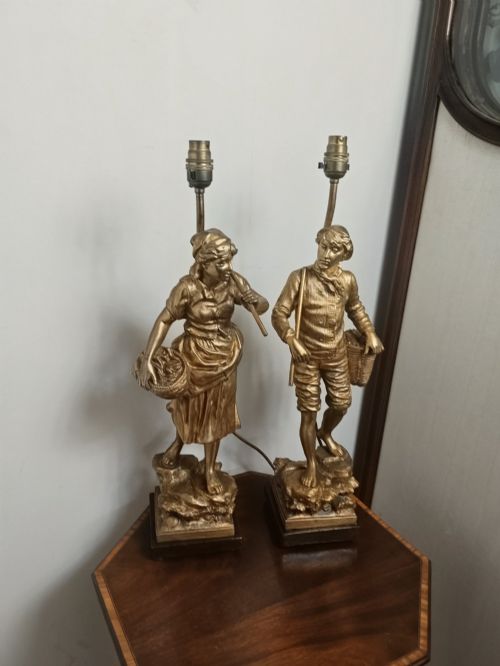
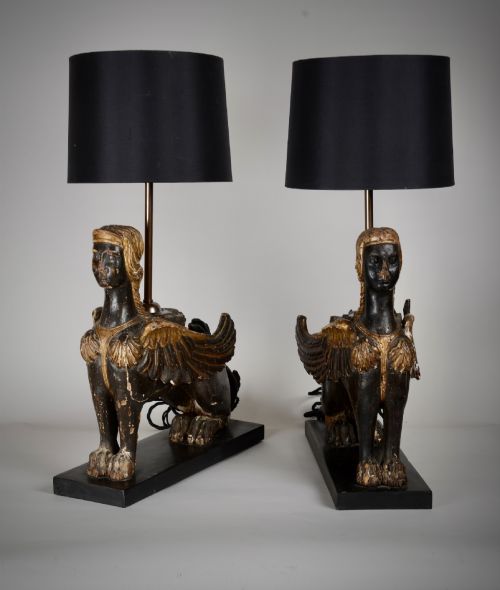
Pair gilt table lamps encompass diverse decorative forms originating predominantly from nineteenth and early twentieth century European workshops. These matched fixtures emerge frequently as converted candelabra, classical urns, columns, and figurative bronzes mounted upon weighted bases.
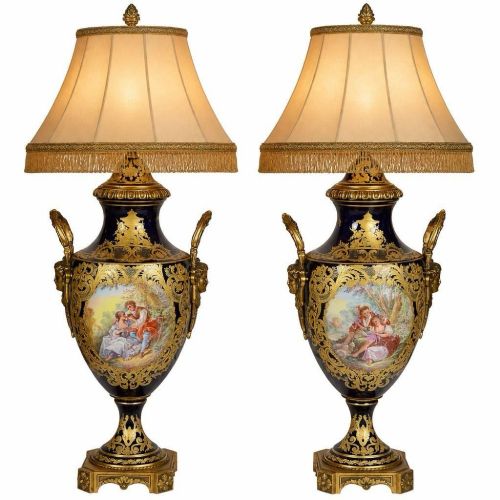
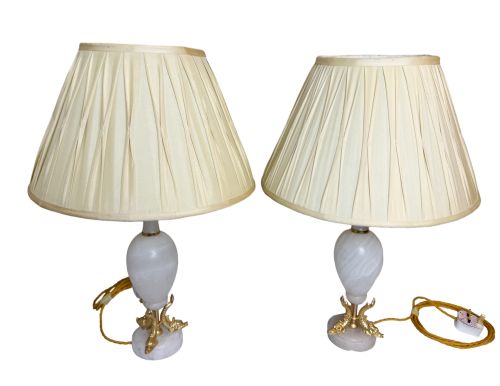
Many examples reflect Neoclassical, Louis XVI, and Rococo Revival design vocabularies utilising gilt bronze, ormolu, carved wood, and marble. French iterations dominate the selection, appearing alongside Italian alabaster models and Japanese Satsuma ceramic conversions.
Quality and Execution
Superior execution shows in the crispness of the chasing on bronze and ormolu mounts, where delicate floral and classical motifs remain sharp rather than softened by excessive wear or poor casting. The weight and selection of the supporting stone, such as finely figured marble or dense alabaster, indicate the original ambition of the piece.
Integration of the conversion from candle or oil fitting to electricity reveals the care taken to preserve the structural integrity of the original antique body without unnecessary drilling or distortion.
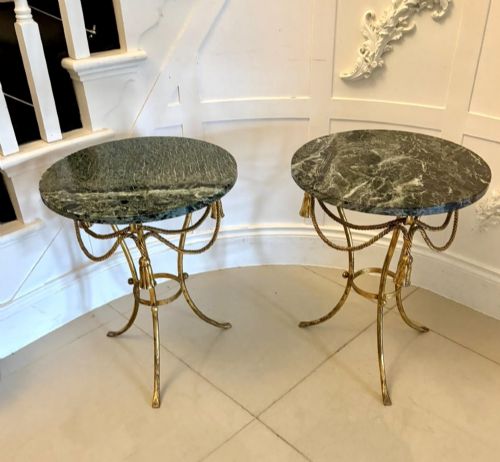
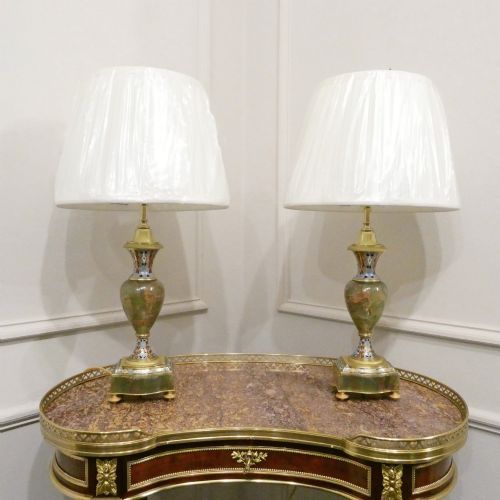
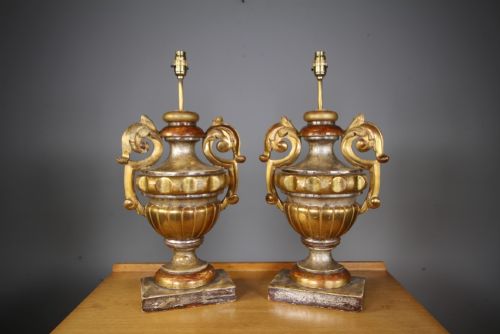
Listings feature nineteen-century French ormolu and marble designs alongside twentieth-century Italian alabaster and carved giltwood columns.
E Rousseau·Hicks and Meigh·Paul Sormani·Barbedienne
The Pair Gilt Table Lamps Glossary
- Ormolu
- Gilded bronze produced through a mercury amalgamation process common in eighteenth and nineteenth century French manufacturing. This technique produces a deep, durable golden lustre distinct from modern electroplating.
- Cassolette
- A decorative vessel featuring a reversible lid that functions as either a solid vase or an incense burner. These frequently form the bodies of nineteenth century French lamps.
- Champlevé
- An enamelling technique where troughs are dug into a metal surface and filled with vitreous paste before firing. It appears on decorative metalwork alongside marble and onyx.
- Tole-peinte
- Painted sheet metal utilised for lamp bodies and shades, particularly during the early twentieth century. It provides a smooth surface for coloured floral or decorative motifs.
- Parcel gilt
- A surface treatment where only specific carved or raised details receive gold leaf while the underlying wood or metal remains exposed. This technique emphasises relief work on candlesticks and frames.
Pair Gilt Table Lamps: Frequently Asked Questions
How are these lamps converted safely?
Electrical wiring is typically threaded through the original central channel or burner assembly without altering the exterior metalwork or stone body.
Modern internal components are fitted to meet current safety standards while preserving the antique mountings.
Can original shades be found?
Surviving period shades remain uncommon, as fragile fabrics deteriorate over decades of use.
Most examples feature replacement silk or handmade shades selected to complement the proportions of the gilded base.
How do I date an ormolu lamp?
Dating relies upon stylistic markers such as neoclassical column proportions, Louis XVI foliate mounts, or Belle Epoque casting depth. The weight of the bronze and the quality of the mercury gilding provide further chronological indicators.
What maintenance do gilt surfaces need?
Gilded bronze and ormolu require only gentle dusting with a soft, dry cloth to prevent accumulation in recessed chasing. Abrasive cleaners and chemical polishes strip the historic gold surface entirely.