

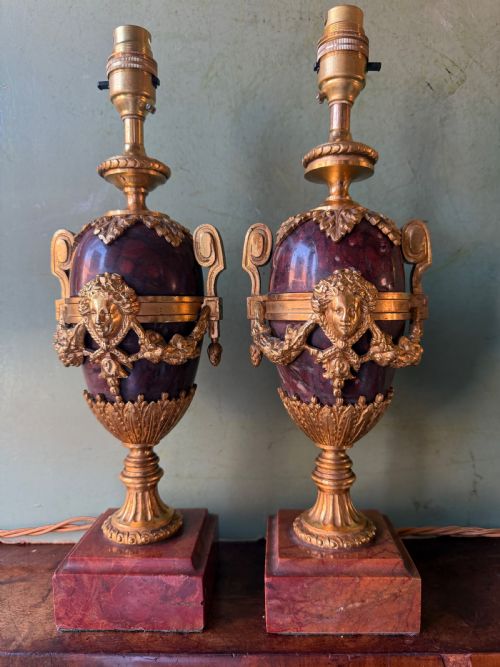


Gilded Urn Table Lamps
These gilded urn table lamps bring sculptural neoclassical presence and warm illumination to a room.
Gilded Urn Table Lamps
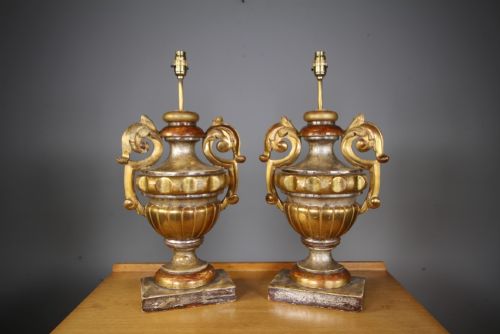
Gilded urn table lamps take classical vessels, ormolu mounts and converted oil lamps, turning them into commanding sources of light. Buyers seeking these pieces encounter a rich mix of continental styles, Japanese Satsuma porcelain and carved wooden forms.
The selection here draws heavily on nineteenth-century French and English taste, alongside Japanese Meiji period ceramics mounted in European bronze. Many started life as vases, ewers or oil lamps before receiving electrical wiring and fabric shades.
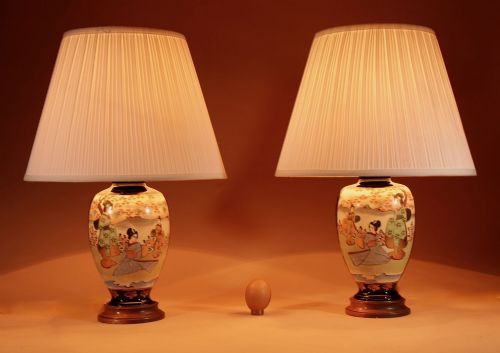
Forms range from slender Japanese Kutani and Satsuma porcelain vases to robust carved giltwood and rouge marble designs. Pairs dominate the offerings, providing symmetry for mantelpieces, sideboards and large console tables.
Materials and construction
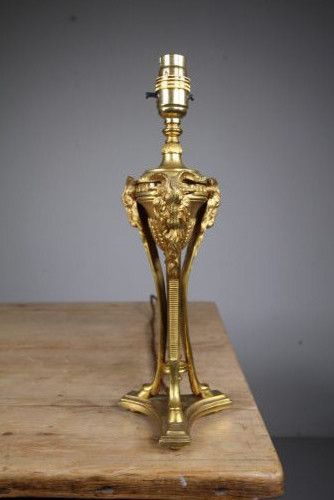
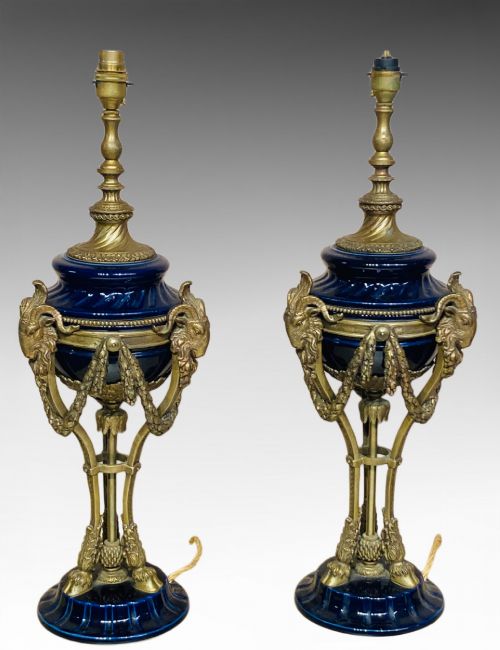
Metalwork forms the backbone of these pieces, utilising cast brass, ormolu and gilt bronze to create crisp classical details like rams' heads and acanthus leaves. Carved pine and giltwood provide an alternative sculptural body, finished with layers of gold leaf over gesso.
Ceramic bodies combine glazed porcelain, earthenware and stoneware, sourced from European factories and Asian kilns alike. Many feature hand-painted cobalt blue or famille rose decoration beneath or beside the metal mounts.
Marble and stone components, particularly rouge marble, add substantial weight and a refined tactile contrast to the shining metal surfaces. Fabric elements are typically modern additions designed to complement the antique bases.
Materials recorded across the inventory include porcelain, marble, brass, ormolu, fabric, wood and earthenware.
Quality and execution
The crispness of the casting and carving dictates the distinction between ordinary and exceptional examples. Finer ormolu mounts display sharp chasing and deep mercury gilding, whereas lesser pieces show softer, shallower detail in the metalwork.
The integrity of the underlying material matters greatly, whether one examines the weight of the marble base or the hand-painted precision on porcelain and Satsuma vases. Original gilding surfaces that retain their complex tonalities outshine heavy modern re-gilding.
The Gilded Urn Table Lamps Glossary
- Ormolu
- Gilt bronze, created by applying an amalgam of gold and mercury to a bronze base and heating it to drive off the mercury. This technique produces a rich, durable golden surface seen on many nineteenth-century mounts.
- Satsuma
- Japanese earthenware pottery featuring a crackle-glaze ivory body decorated with intricate enamels and gilt. These vases frequently found new life as luxury lamps in European interiors.
- Neoclassical
- A decorative style inspired by classical Greece and Rome, emphasising symmetry, restraint and architectural motifs. It shapes the urn forms and rams' head details found across these lamps.
- Famille Rose
- A palette of Chinese porcelain enamels dominated by opaque pink, introduced in the eighteenth century and emulated later. Pieces bearing these floral and figural scenes often became grand table lamps.
Gilded Urn Table Lamps: Frequently Asked Questions
Are these lamps converted from old oil lamps?
Many examples began as oil lamps, vases or decorative ewers before being adapted for electricity. The conversion process preserves the antique body while integrating modern internal wiring and lamp holders.
Buyers often find that these converted vessels retain their original burners, fonts or handles, offering a tangible link to their domestic history.
How do I choose between porcelain and metal bases?
Porcelain and ceramic bases, such as Satsuma and famille rose vases, introduce colour and painted narrative scenes to a room. They suit spaces that benefit from patterned ceramics and softer, glazed textures.
Metal and marble designs rely on sculptural form and reflective surfaces. Ormolu and carved giltwood bring architectural weight and bright metallic highlights to darker interiors.
How do I date a gilded urn lamp?
Dating relies on combining the stylistic clues of the base with the evidence of manufacturing techniques. Nineteenth-century pieces often display hand-chased ormolu mounts, period pine carving or nineteenth-century ceramic bodies.
Makers and periods are identified through specific decorative idioms, such as Louis XVI revival styling or Meiji period Japanese porcelain production.
How do I style a pair of large urn lamps?
Large pairs demand substantial furniture, such as heavy sideboards, wide console tables or grand mantelpieces. Their height and visual weight anchor a room, making them ideal for framing a mirror or large artwork.
Selecting appropriate fabric shades ensures the proportions remain balanced while casting a warm, directional light across the surrounding space.