




Large Pair Urn Lamps
Large pair urn lamps bring classical presence to a room, offering matched illumination through converted vessels and decorative vases.
Large Pair Urn Lamps
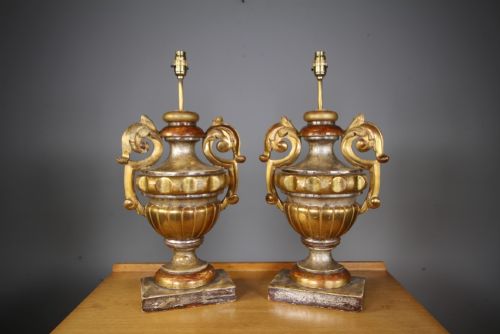
Large pair urn lamps are substantial matched lighting pieces created from decorative vases, classical urns, and vessel forms. When you search for large pair urn lamps, you encounter matching sets drawn from nineteenth-century, nineteen-hundred, nineteen-ten, nineteen-thirty, and Regency periods.
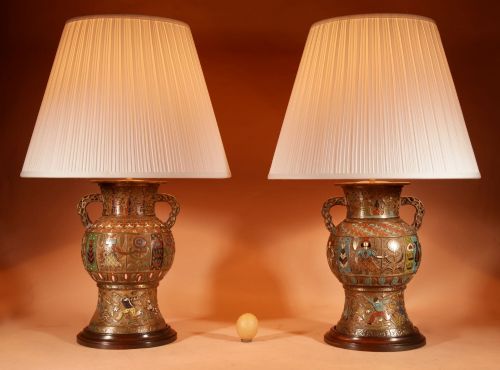
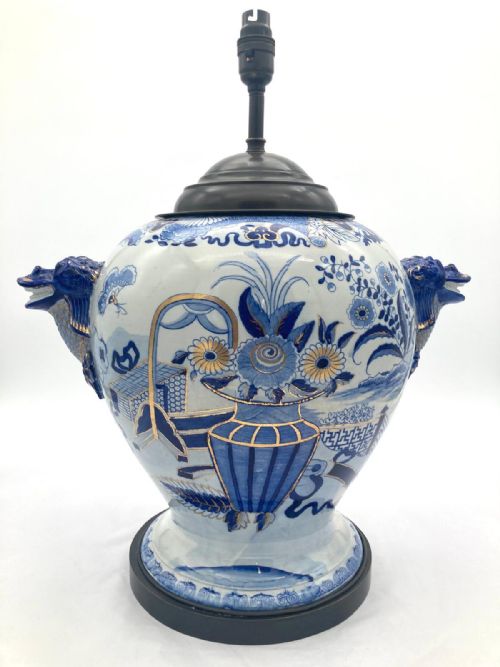
The forms originate across various traditions, including Neoclassical European designs, Japanese Satsuma, Meiji period work, and Chinoiserie styles. Many examples begin life as decorative porcelain, ironstone, or bronze vases before conversion into functional table lamps.
Materials and construction
The construction of these lamps relies on sturdy base materials such as bronze, brass, carved pine, ironstone, and marble. Metalwork often incorporates gilt, ormolu, or champlevé enamel to enrich the surface texture of the body.
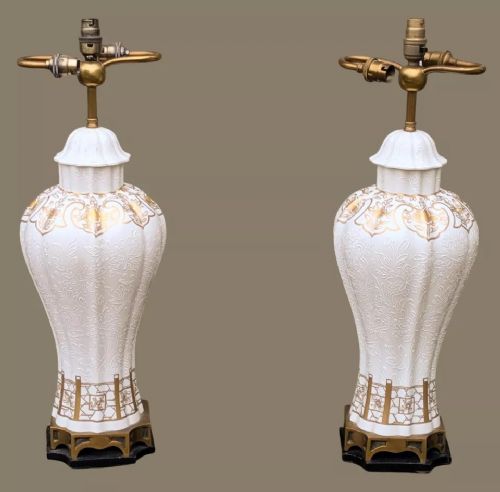
Ceramic versions utilise porcelain, pottery, or white glass, frequently hand-painted with blue and white glazes, rose medallion motifs, or Oriental scenes. Fabric shades top the wired fixtures, completing the conversion from decorative vessel to functional lighting.
Design influences include Neoclassical, French Chinoiserie, and Japanese Meiji period aesthetics.
Evaluating quality and execution
Quality in large pair urn lamps rests upon the artistic merit of the original vessel and the precision of its conversion. Fine hand-painted detail on porcelain or intricate champlevé enamel work distinguishes superior examples from simpler productions.
The integration of metal mounts, such as ormolu or cast bronze, determines the overall refinement of the piece. Heavier materials like marble and quality-carved pine provide stability and presence that elevate the finished lamp.
The Large Pair Urn Lamps Glossary
- Urn
- A rounded vessel on a stem or pedestal, traditionally used for ornamental purposes before conversion into a lamp base. These forms provide the foundational silhouette for the matching pairs found in this category.
- Champlevé
- An enamelling technique where troughs are carved into a metal surface and filled with vitreous enamel before firing. This method creates detailed patterns seen on bronze and brass lamp bodies.
- Ormolu
- Gilded bronze ornamentation applied to furniture and decorative objects. It adds metallic lustre and classical detail to marble and ceramic lamp bases.
- Ironstone
- A heavy, durable type of earthenware developed in the nineteenth century. It serves as a sturdy body for large decorative vases later adapted for lighting.
- Meiji Period
- A Japanese era lasting from eighteen-sixty-eight to nineteen-twelve noted for distinctive ceramic and bronze production. Pieces from this time often feature intricate decorative painting.
Large Pair Urn Lamps: Frequently Asked Questions
What rooms suit large pair urn lamps?
These substantial lamps suit principal reception rooms, grand hallways, or large sideboards where their height and matched symmetry create a strong focal point. They provide balanced ambient lighting when placed on twin pieces of furniture.
Their decorative weight pairs well with traditional interiors, studies, or drawing rooms that benefit from classical or Oriental motifs.
How are vases converted into lamps?
Conversion typically involves mounting the original vessel on a stable base and running internal wiring through the body to support a lamp fitting and shade. This process adapts decorative vases for modern electrical use while preserving the exterior artistry.
Professional conversion ensures the piece remains structurally sound and safe for daily domestic illumination.
How do I identify Regency style?
Regency style draws heavily on classical Greek, Roman, and Egyptian motifs, reflected in clean architectural lines and formal symmetry. Pieces from this design vocabulary often incorporate bronze, brass, and gilt detailing.
Chinoiserie elements frequently blend with Regency forms, showing an eighteenth and nineteenth-century fascination with East Asian aesthetics.