
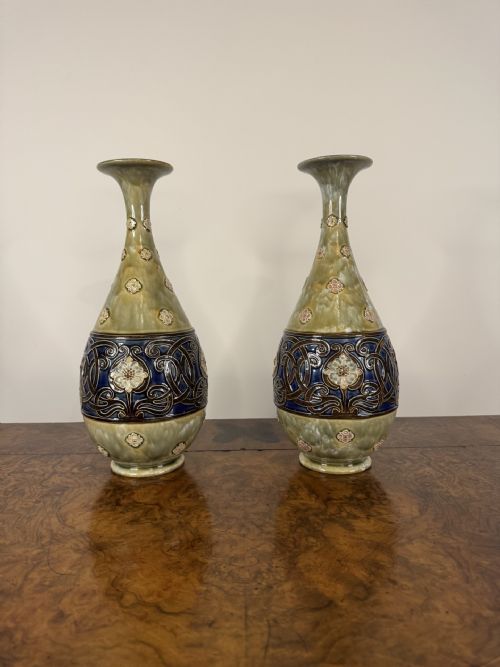


Pair of Stoneware Vases
A pair of stoneware vases brings symmetry and grounded weight to a room, offering tactile surfaces from the Victorian era through the early twentieth century.
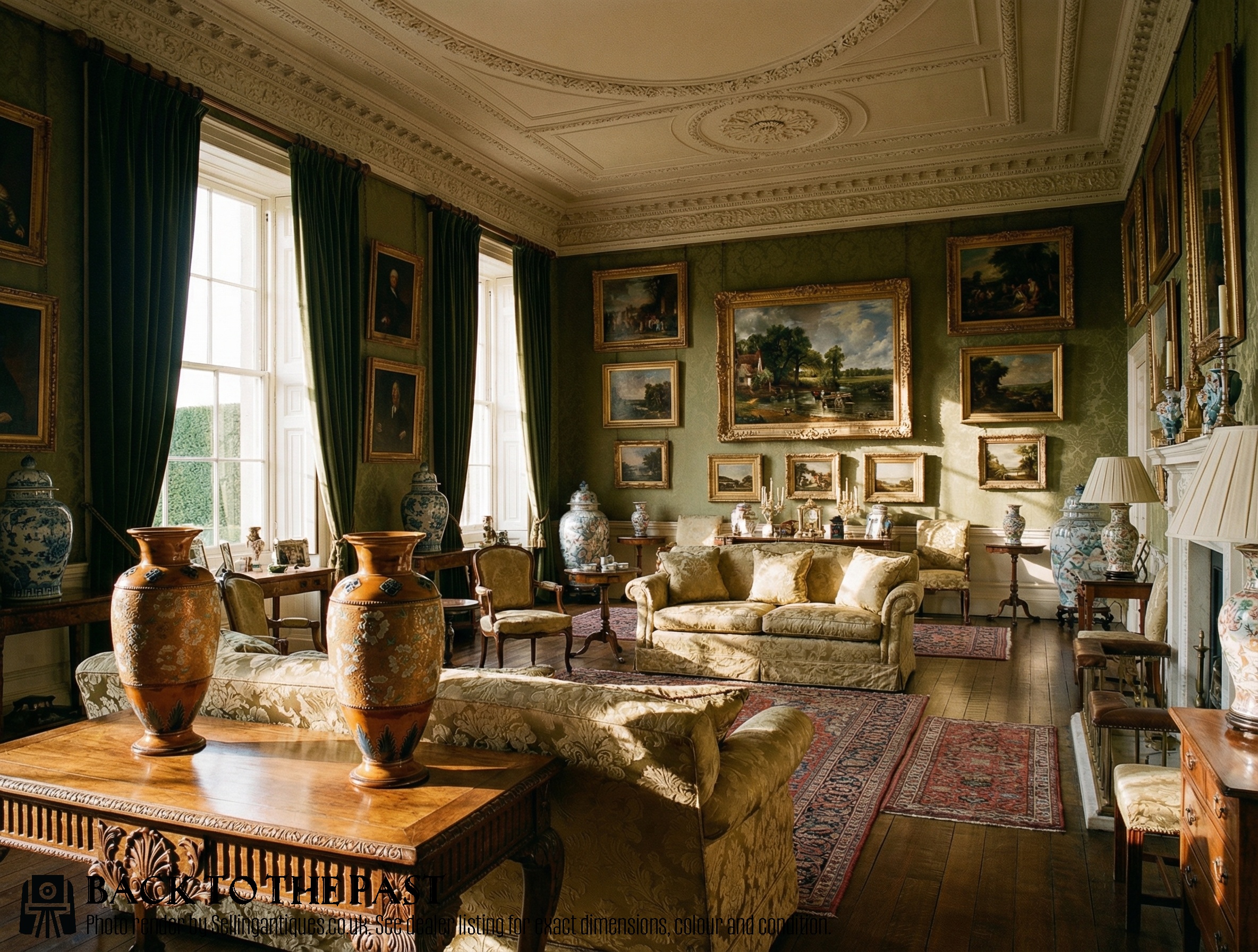
Pair of Stoneware Vases
When you search for a pair of stoneware vases, you encounter dual vessels shaped from dense, vitreous clay that holds water and resists moisture without needing internal glazing.
The selections available here lean heavily towards British production from the late nineteenth and early twentieth centuries, spanning periods from the Victorian era through the Edwardian years.
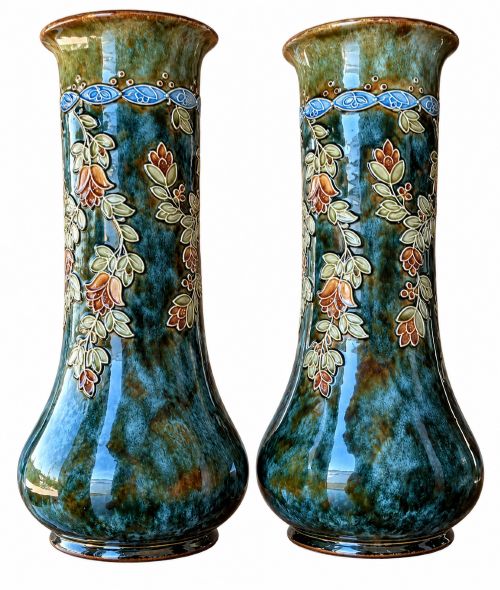
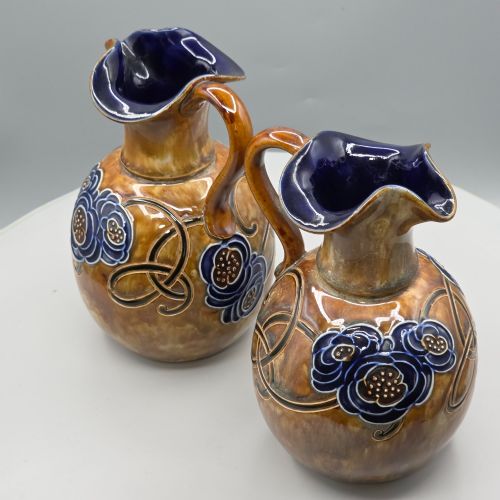
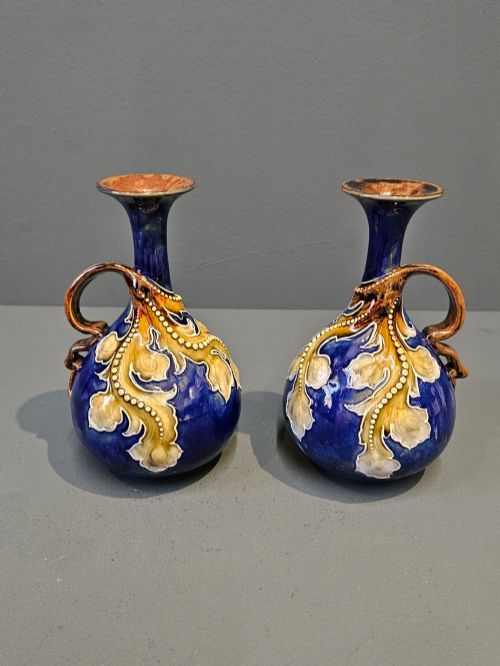
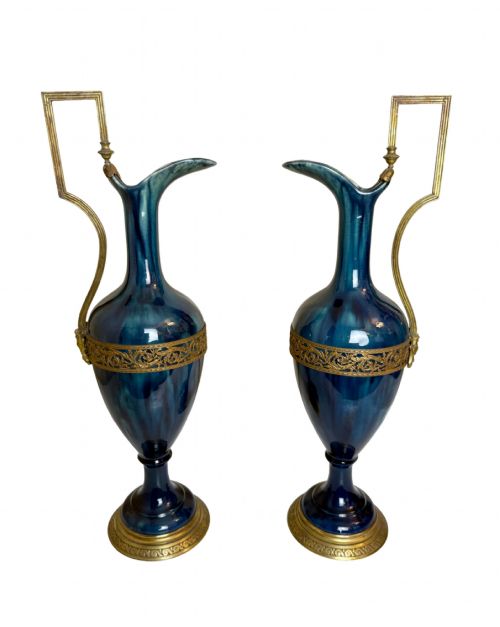
Forms range from baluster silhouettes and slender jugs to campana urns and globular vessels, reflecting the shift from ornate Victorian tastes into clean Art Nouveau and Arts and Crafts designs.
How they were made
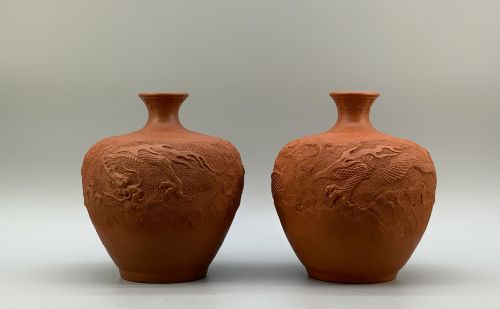
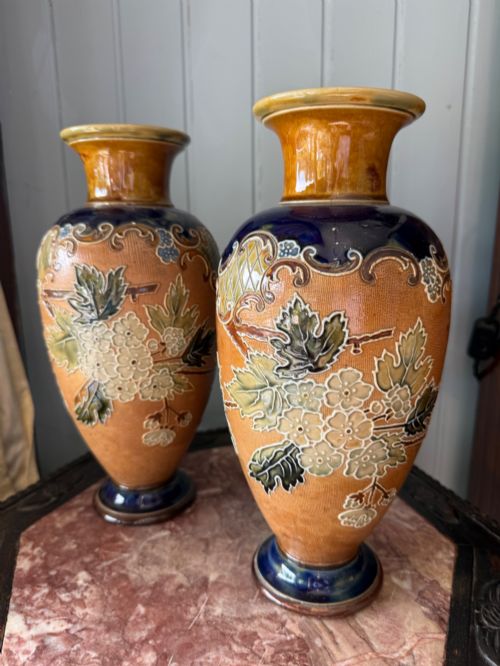
Potters shaped these heavy bodies using durable stoneware and red clay, often applying salt glazing or textured surface treatments like Slater's patent lace impressions directly into the damp clay.
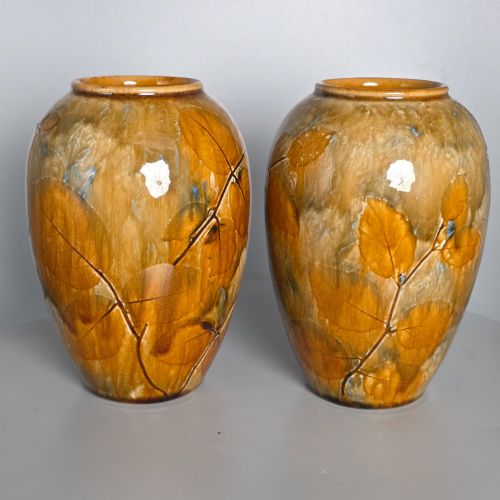
Decoration relied on applied enamel floral décor, hand-painted leaf patterns, and low-relief bas-reliefs in contrasting white against blue bodies.
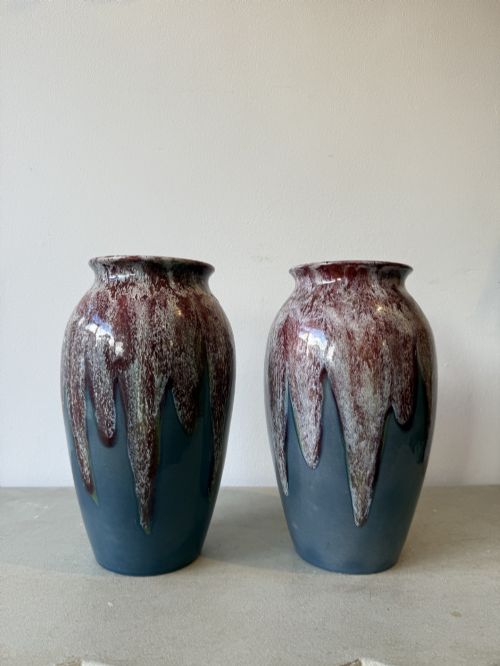
Firing at high temperatures vitrified the clay body, locking in deep glazes and metallic oxides that created mottled autumnal tones and rich blue fields.
Listings span Victorian, Edwardian, and Art Nouveau periods, uniting British stoneware, German pottery, and Japanese red clay.
What varies in quality
Distinction across these pairs rests on the precision of the throw, the clarity of the incised ornament, and the ambition of the studio or maker.
Pieces bearing the monogram or signature of known artists reveal superior hand-detailing in floral motifs and enamel work compared to standard factory output.
The crispness of moulded bas-relief elements and the even saturation of glazes across both matching vessels separate ordinary production from exhibition-grade examples.
Royal Doulton·Doulton Lambeth·Louisa Wakely·Emily Edwards·Ethel Beard·Mettlach Pottery·Wedgwood·Tokoname
The Pair of Stoneware Vases Glossary
- Stoneware
- A robust, vitrified ceramic fired at high temperatures until non-porous. It provides a heavy, durable body suitable for everyday display.
- Baluster
- A vertical architectural form swelling gracefully toward the bottom. This shape gives stoneware vases a stable, grounded stance on furniture.
- Campana
- A classical bell-shaped vessel with a flaring rim and a pedestal foot. These urns derive their silhouette from ancient Roman bronze and marble archetypes.
- Slater's Patent
- A decorative technique pressing lace or fabric directly into moist clay before firing. This leaves a textured, patterned ground often highlighted with enamel and gilding.
Pair of Stoneware Vases: Frequently Asked Questions
How do I display a pair safely?
Place them on stable, level surfaces away from high-traffic walkways where accidental knocks might occur.
Because stoneware possesses considerable weight, ensure your furniture supports the combined load of both vessels easily.
Can I use them for fresh flowers?
Stoneware bodies are naturally impermeable to water, making them entirely practical for holding liquid and fresh stems.
Clean the interiors gently after use to prevent mineral deposits from clouding the historic glaze.
How do I date these vases?
Examine the base for impressed factory marks, registry numbers, and artist monograms that correspond to specific production eras.
Stylistic cues such as symmetrical Victorian moulding versus sinuous Art Nouveau flora also point toward the correct decade.
What is Japanese Tokoname clay?
Tokoname refers to an ancient Japanese pottery centre known for dense, unglazed red clay vessels.
These pieces often feature hand-modelled dragons and phoenixes applied in high relief.
Why are they sold as pairs?
Mantels, sideboards, and architectural brackets traditionally demanded symmetrical arrangement for formal interior decoration.
Keeping both vessels together preserves their original decorative intent from the Victorian and Edwardian periods.