
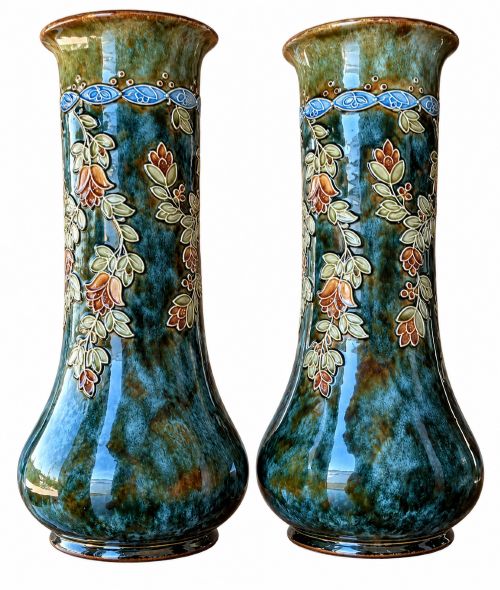
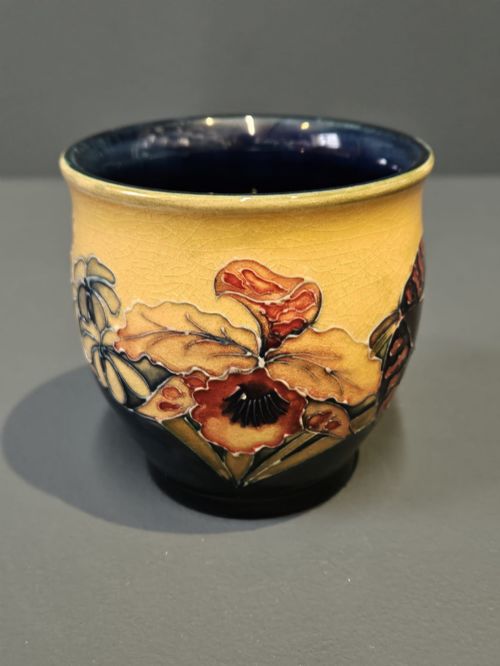
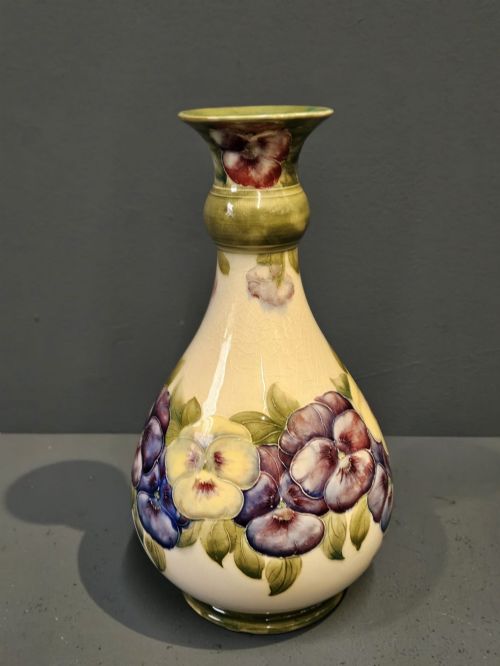
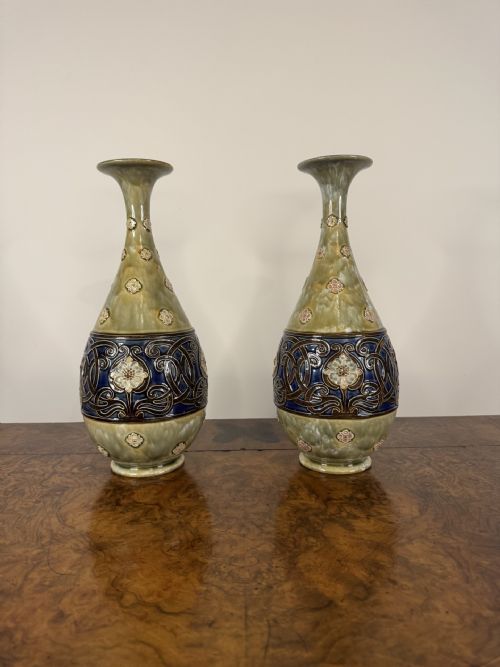


Tubelined Decorative Vases
Tubelined decorative vases bring rich tactile relief and bold glaze work to a room, offering the definitive look of early twentieth-century art pottery.
Tubelined Decorative Vases
Tubelined decorative vases are ceramic vessels defined by raised clay outlines that contain pools of coloured glaze. When you browse tubelined decorative vases, you encounter distinct stylistic phases spanning the late Victorian era through the Art Deco period.
The pieces on this page include baluster forms and pairs from workshops working in the Art Nouveau, Arts and Crafts, and Art Deco styles. These vessels range from early twentieth-century English art pottery to robust stoneware productions from major potteries.
You are most likely to meet earthenware and stoneware bodies decorated with floral or abstract motifs. The raised clay lines keep the bright enamels separated during the firing process, creating a stained-glass effect on a curved ceramic surface.
How they were made
Makers formed these vessels using ceramic, earthenware, and stoneware bodies shaped into traditional vase and baluster profiles. The characteristic raised lines were applied using a slip trailer, squeezing liquid clay through a nozzle onto the unfired body to map out the design.
Potters filled the compartments created by the raised clay lines with coloured glazes and enamel before subjecting the pieces to high kiln temperatures. This technique required precise control to ensure the fluid glazes pooled evenly within their prescribed borders without running together.
Early decorators occasionally left stray thumbprints trapped beneath the glaze, offering a quiet, permanent handshake across the century.
What varies in quality
The distinction between standard production pieces and superior examples lies in the crispness of the trailing and the ambition of the palette. Finer vessels display confident, steady raised lines that maintain their height and sharpness beneath rich, even layers of glaze.
Artistic authorship and pattern complexity also elevate certain specimens above commercial output. Signed pieces or works bearing specific artist ciphers demonstrate individual hand-painting and careful coordination of enamel tones that lesser factory items lack.
Royal Doulton Lambeth·Louisa Wakely·William Moorcroft McIntyre·Charlotte Rhead·English Cranston
The Tubelined Decorative Vases Glossary
- Tubelining
- A ceramic decoration technique where liquid clay is piped onto a raw pot through a nozzle to form raised outlines. This creates compartments that hold pools of coloured glaze during firing.
- Baluster
- A vase shape characterised by a rounded body that tapers towards a narrow neck and base. It provides a stable, curving canvas well suited to bold surface decoration.
- Earthenware
- Porous pottery fired at lower temperatures, commonly used as a base body for brightly coloured decorative wares. It requires a complete glaze coating to become fully watertight.
- Stoneware
- A dense, impermeable ceramic fired at high temperatures until the body vitrifies. This material produces robust, heavy vessels that resist chipping and moisture.
- Enamel
- A glassy composition applied to ceramic surfaces to add vibrant colour during kiln firing. It fuses with the glaze to produce a glossy, durable finish.
Tubelined Decorative Vases: Frequently Asked Questions
What is the difference between stoneware and earthenware?
Stoneware is fired at higher temperatures until the clay vitrifies, resulting in a dense, non-porous body that is naturally waterproof and durable. Earthenware is fired at lower heats, remaining slightly porous and reliant on its glazed surface to hold liquid.
In this selection, sturdy stoneware appears in heavy studio and factory productions, while earthenware supports vibrant, lighter colour palettes associated with floral designs.
How can I date my ceramic vase?
Examine the base of the vessel for factory stamps, painted artist monograms, and impressed registration marks. Different periods utilised distinct backstamps and signature styles that link individual pieces to specific operational years.
Stylistic cues such as flowing Art Nouveau plant motifs or geometric Art Deco patterns also provide a reliable window into the decade of manufacture.
Where should I display these vases?
Place your vessels in locations with stable ambient temperatures and indirect lighting to protect the coloured glazes from fading over time. Position them away from direct heat sources like radiators, which can cause older ceramic bodies to stress.
Choose spots where natural light catches the glossy surface and highlights the tactile relief of the raised outlines.