

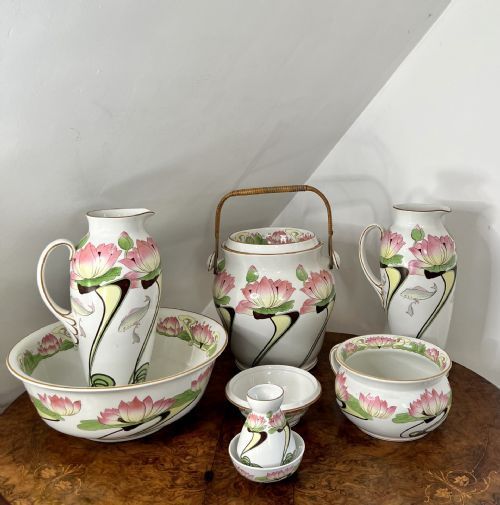


Vintage Art Nouveau Ceramic
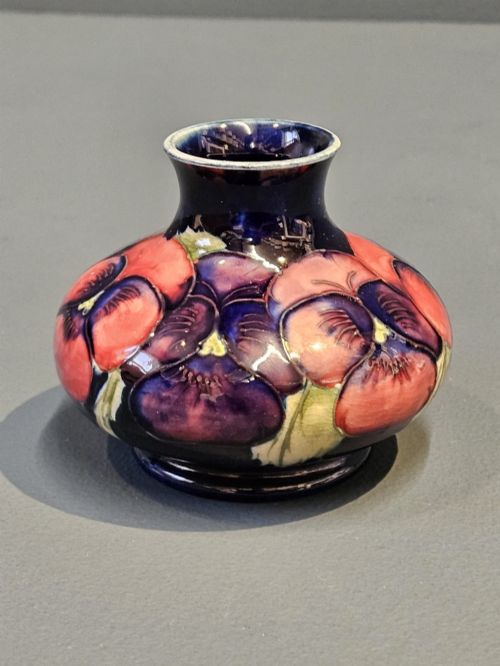
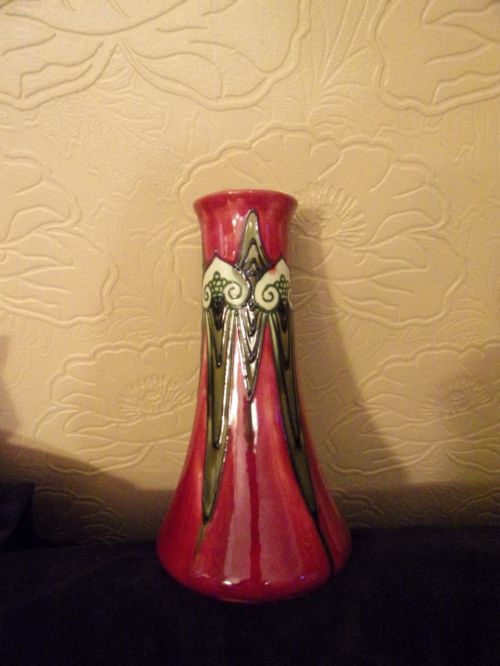
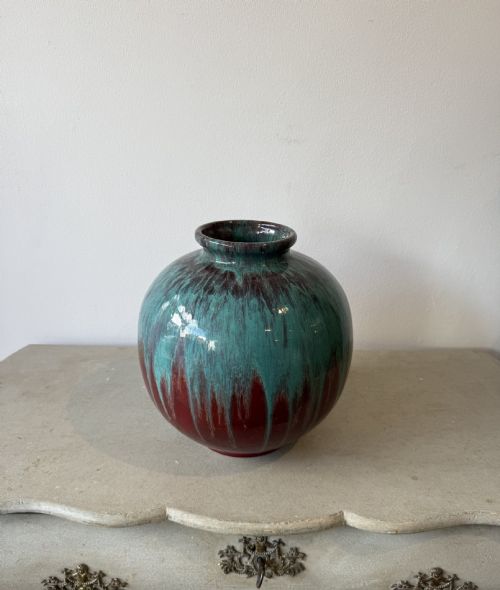
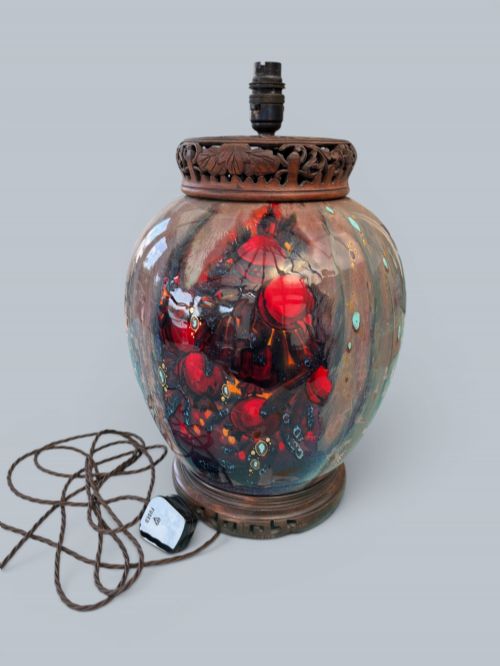
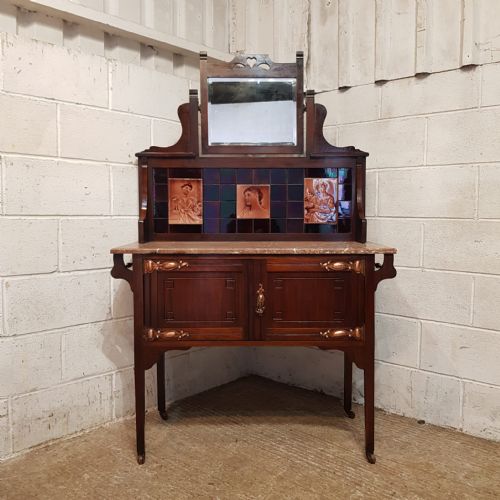
These vintage art nouveau ceramic pieces bring organic floral curves and iridescent glazes directly from late Victorian and Edwardian interiors into modern rooms.
Vintage Art Nouveau Ceramic
When you search for vintage art nouveau ceramic, you encounter pieces spanning the late nineteenth century through to the early decades of the twentieth century, including the Edwardian period and the 1920s.
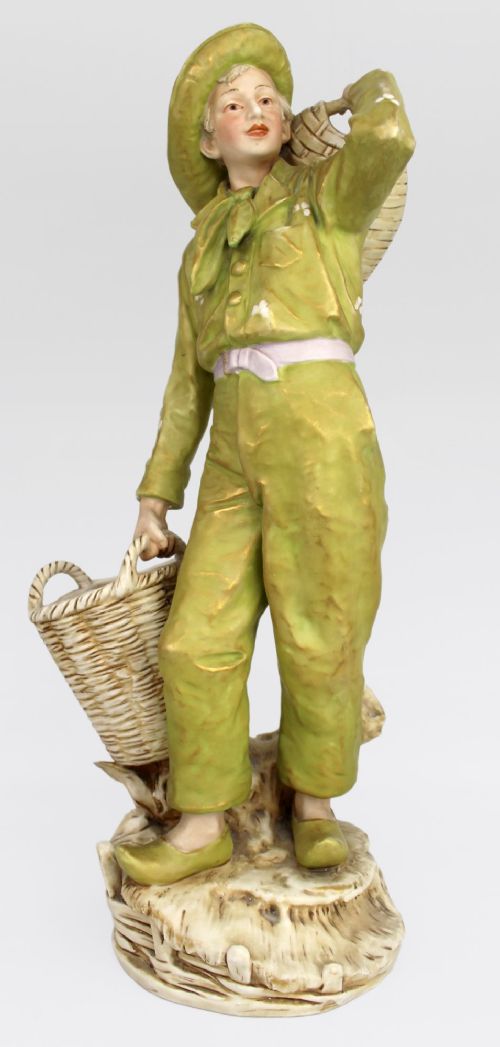
The selection centres on decorative vessels, figures and tableware originating from British potteries like Doulton Lambeth, Moorcroft and Wedgwood, alongside continental European works from Hungary, Austria, France and Bohemia.
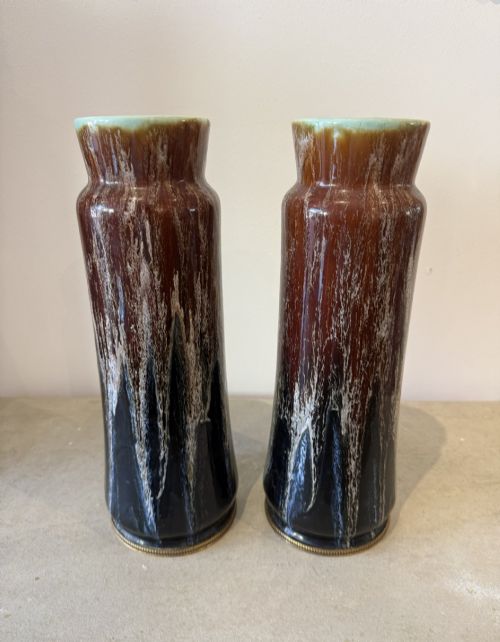
Vases, decorative bowls, jardinières and sculptural figures dominate the forms, reflecting the characteristic flowing lines and natural motifs of the style.
Materials and Techniques
Makers utilised ceramic, porcelain and earthenware bodies, shaping them through throwing, slip casting and terracotta moulding.
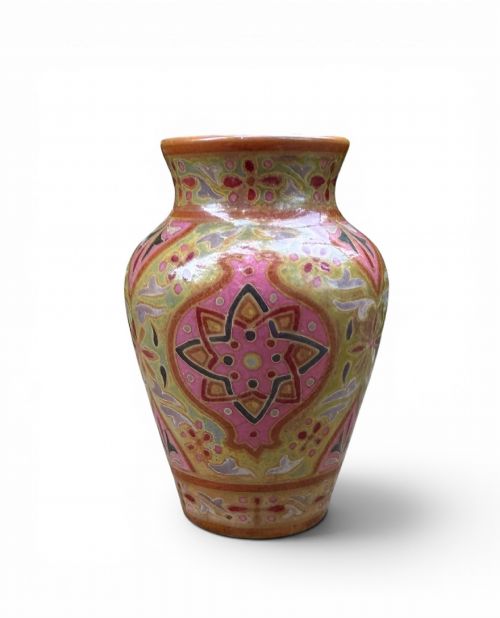
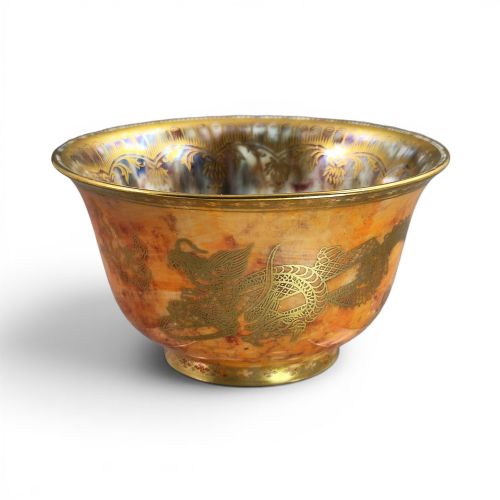
Surface decoration relied heavily on lustre glazes, enamel, gold leaf and tube-lined designs that created raised outlines to hold vibrant colour.
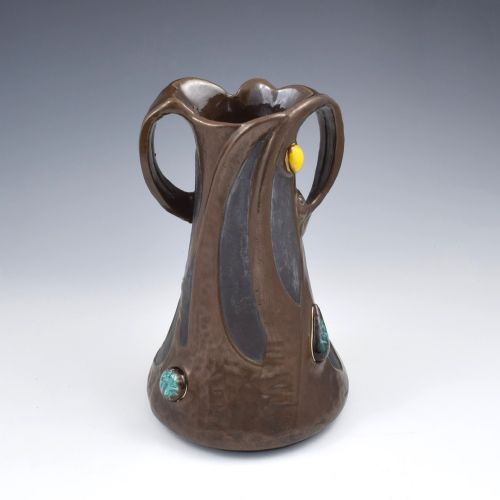
Some decorative vessels incorporated applied jewelled cabochons or copper effects to enhance the tactile quality of the ceramic surface.
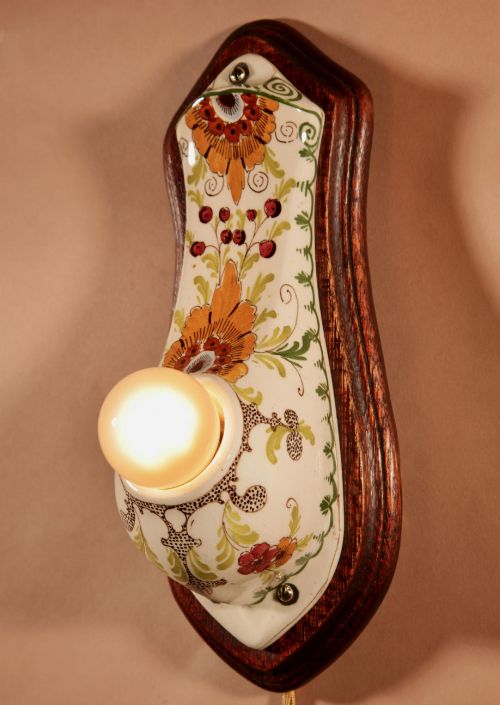
Listings feature ceramic, porcelain and earthenware forms spanning the Victorian era through the 1920s, incorporating decorative bowls, vases and sculptural figures.
Distinctions in Execution
The upper tier of pieces exhibits crisp definition in tube-lined or hand-painted motifs, where the artist exercises precise control over complex glaze reactions.
Execution of sculptural figures ranges from standard factory output to finely modelled porcelain and terracotta works bearing specific artist or designer signatures.
Moorcroft·Royal Dux Bohemia·Goldscheider·Zsolnay Pecs·Boch Freres·Bretby Pottery·Doulton Lambeth·Wedgwood·Eichwald·Julius Dressler
The Vintage Art Nouveau Ceramic Glossary
- Tube-lined
- A ceramic decoration technique where a fine line of clay slip is squeezed through a nozzle onto the body to create raised outlines for enamel colours. This method defines many pottery items from the period.
- Lustre Glaze
- A metallic film applied to pottery that produces an iridescent, rainbow-like sheen upon firing. Wedgwood and Zsolnay pieces frequently utilise this finish.
- Jardiniere
- A large ornamental ceramic pot designed to hold a plant or floral arrangement. These substantial pieces often feature bold floral motifs.
- Earthenware
- Porous pottery fired at a lower temperature than stoneware or porcelain. It serves as the primary body for many decorative bowls and vases in this style.
Vintage Art Nouveau Ceramic: Frequently Asked Questions
What defines art nouveau ceramics?
These pieces draw inspiration from natural forms, featuring sinuous plant stems, floral motifs and organic asymmetry. The aesthetic emerged strongly during the late Victorian and Edwardian eras.
Makers translated these flowing lines into three dimensions through sculpted vases, figures and decorative bowls with rich glaze effects.
How were lustre glazes applied?
Potters painted metallic salts onto a previously fired and glazed ceramic surface. A subsequent low-temperature firing in a reduced oxygen kiln then produced the characteristic iridescent sheen.
This complex chemical process resulted in the shimmering surfaces seen on specialised bowls and vases.
Where were these ceramics made?
Production spanned across British potteries in England alongside prominent continental European workshops in Austria, Hungary, France, Bohemia and the Netherlands. Each region developed distinct regional interpretations of the style.
British factories often focused on tube-lined earthenware, while continental houses produced elaborate porcelain figures and metallic-lustre vessels.
How do I care for antique ceramics?
Dust these decorative items gently with a dry, soft cloth to protect delicate enamels, gold leaf and lustre finishes from abrasion. Avoid using water or chemical cleaners on porous earthenware and overglaze decorations.
Keep pieces away from direct sunlight and areas of high humidity to preserve the integrity of the glaze.