


Pair of Slipper Chairs
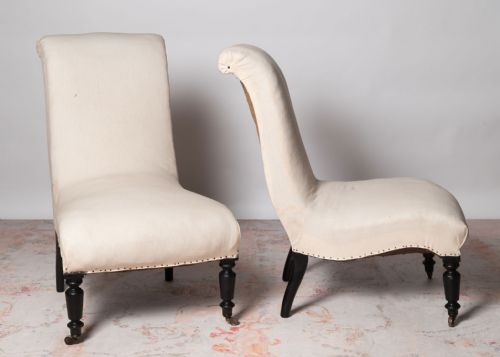
A pair of slipper chairs brings low-slung, upholstered comfort to a bedroom or boudoir, prized for their supportive frames and graceful profiles.
Pair of Slipper Chairs
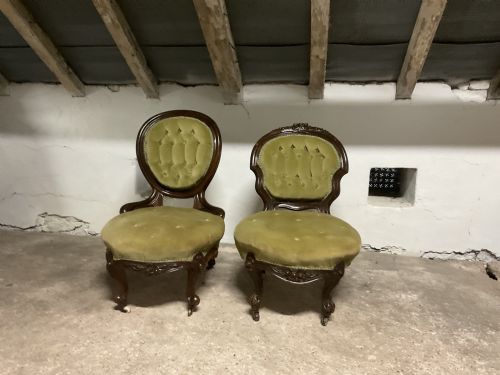
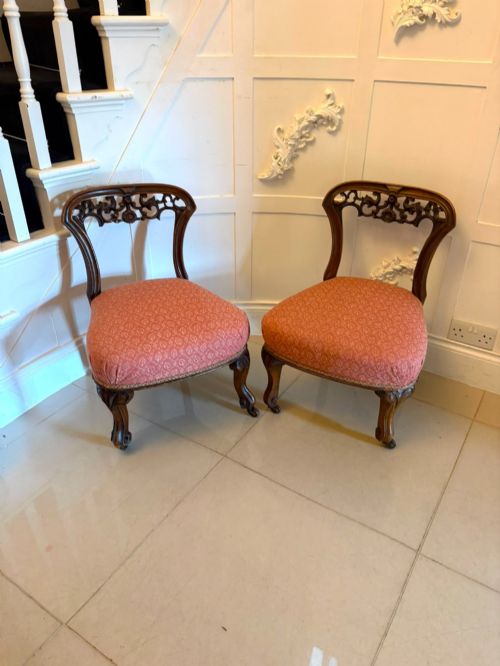
A pair of slipper chairs represents a specific form of low-seated upholstered furniture historically designed for dressing rooms and bedrooms. These pieces frequently appear in nineteenth century and Victorian iterations, spanning variations like deep-seated boudoir models and low-profile nursing chairs.
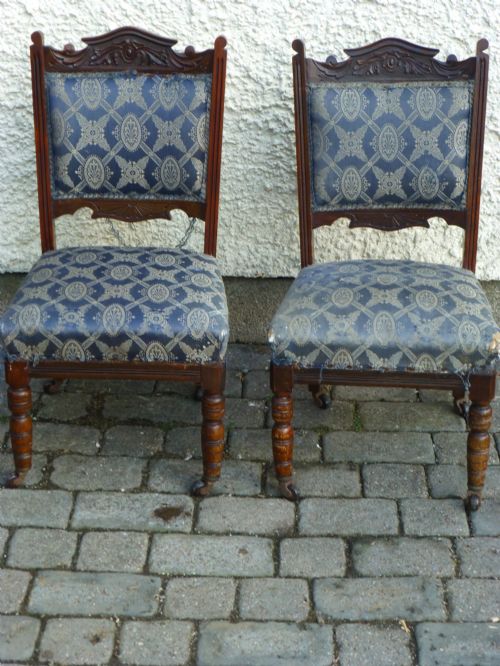
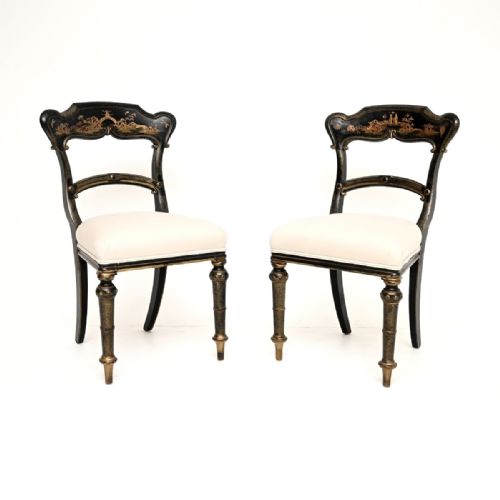
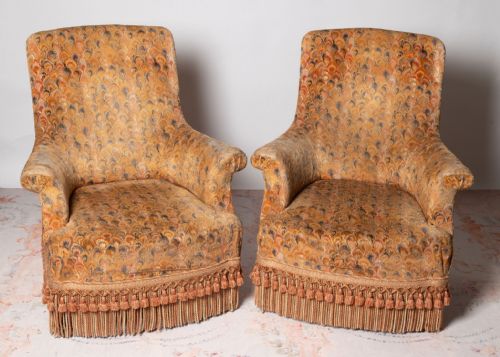
Buyers encountering this search phrase find frames constructed from woods such as mahogany, walnut, and rosewood, often paired with fabric, velvet, or ticking upholstery. The selection encompasses English country house examples alongside French styles, including Napoleon III and scroll-backed designs.
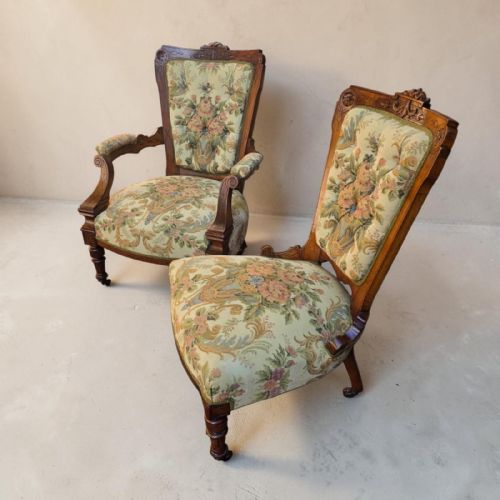
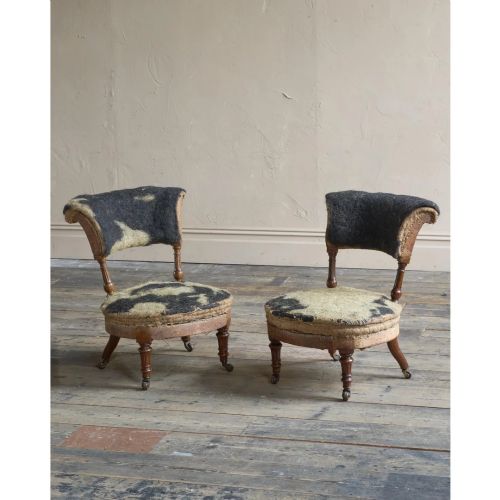
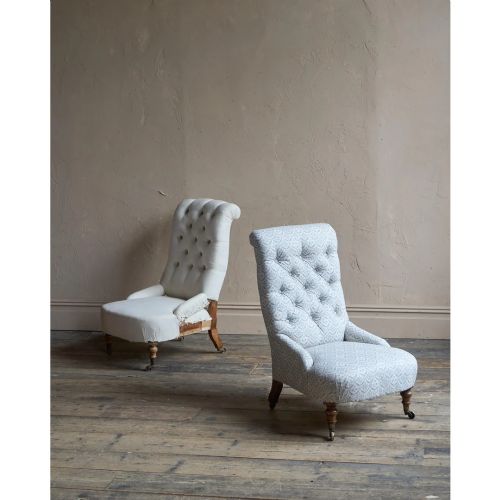
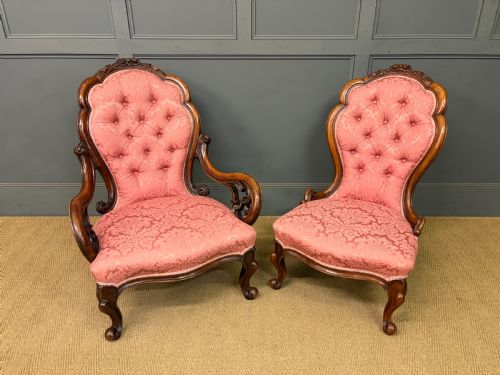
The form accommodates various configurations, from button-backed armchairs to round-seat versions and low side chairs equipped with castors. Many survive from the Victorian era and the nineteenth century, retaining their characteristic proportions built for relaxed seating.
How they were made
Makers utilised solid timbers including mahogany, walnut, rosewood, and oak to construct the underlying frames of these low chairs, often incorporating carved walnut or ebonised wood details. Structural stability relied on traditional joinery methods suited to supporting upholstered seats and backs.
Upholstery techniques involved fabric, velvet, or ticking applied over sprung or padded foundations, frequently finished with button backing or deep-seated cushioning. Metal components such as brass castors appeared on the legs of nineteenth century examples to aid mobility.
Decorative touches included lacquered papier-mâché, gilt wood, and intricate carving, particularly on Victorian and French models. Frames were shaped into scroll backs, hoop backs, or low profiles designed to sit near the floor.
These low-seated chairs owe their domestic charm to a bygone era when getting dressed required a seat close to the floor.
What varies in quality
The distinction between ordinary and superior examples lies in the integrity of the frame construction and the pedigree of the maker. Pieces bearing attribution to prominent nineteenth-century workshops display finer timber selection and more refined carving.
Proportion and scale dictate the visual success of the pair, with oversized country house models and well-balanced scroll backs commanding greater presence. The execution of the woodwork, whether carved walnut or ebonised finish, reflects the original tier of production.
Howard and Sons·Jennens and Bettridge·J Kendell·Gillows·Holland and Sons·Portman
The Pair of Slipper Chairs Glossary
- Castor
- A small wheel fitted to the foot of a chair leg to allow easy movement across floor coverings. These metal and ceramic fittings are frequently found on nineteenth-century bedroom chairs.
- Button back
- An upholstery style where depressions are formed in the padding by pulling buttons deep into the stuffing. This technique secures the interior materials and creates a distinctive tufted pattern.
- Scroll back
- A chair design where the top rail curves outward and backward in a scroll shape. This profile provides ergonomic support and a characteristic nineteenth-century silhouette.
- Ebonised
- Wood treated with a dark finish to imitate expensive ebony. This treatment was particularly popular during the Victorian and Aesthetic periods for side and child chairs.
- Ticking
- A tightly woven, durable cotton or linen fabric traditionally used to cover mattress springs and cushions. It appears frequently as original or replacement upholstery on country house seating.
Pair of Slipper Chairs: Frequently Asked Questions
What is a slipper chair?
A slipper chair is a low-seated, typically upholstered chair designed originally for nineteenth-century bedrooms and dressing rooms. Its low profile made it convenient for ladies putting on shoes or garments.
These pieces generally lack arms and feature compact dimensions, allowing them to fit into intimate spaces while offering comfortable, deep-seated support.
How do I date a pair?
Dating relies on observing the timber, frame shape, and construction details recorded across Victorian and nineteenth-century examples. Earlier pieces often display rosewood or mahogany with hand-carved walnut details.
Later Victorian and Edwardian variations introduce different upholstery styles and ebonised finishes, helping to distinguish mid-century production from the turn of the twentieth century.
Where were they used?
These chairs historically inhabited private spaces such as bedrooms, boudoirs, and dressing rooms rather than formal reception rooms. Their low stature suited them for intimate domestic interiors.
Today, buyers place them in bedrooms, studies, and drawing rooms where their compact footprint and decorative upholstery complement existing seating arrangements.
Are they comfortable?
Their comfort derives from deep seating and supportive upholstered backs designed for relaxed lounging. Many nineteenth-century examples feature generous proportions and sprung interiors.
Choosing a pair with appropriate depth and intact padding ensures they remain practical for modern daily use while retaining their period character.