





Ebonised Leg Slipper Chair
These ebonised leg slipper chair pieces bring low-slung nineteenth-century seating and decorative presence to a bedroom or drawing room.
Ebonised Leg Slipper Chair
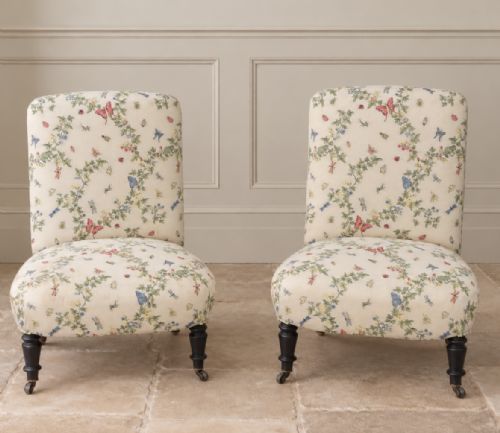
An ebonised leg slipper chair is a low Victorian or nineteenth-century seat designed originally for a bedroom or dressing room, allowing a lady to sit comfortably while putting on shoes. The forms seen here include nursing chairs, drawing room chairs, and tub chairs, often offered in pairs or individually.
Most examples hail from the nineteenth century, encompassing Victorian and Napoleon III periods as well as the Aesthetic Movement around eighteen eighty. French origins appear frequently alongside English pieces, showing characteristic low seats and upholstered frames.
How they were made
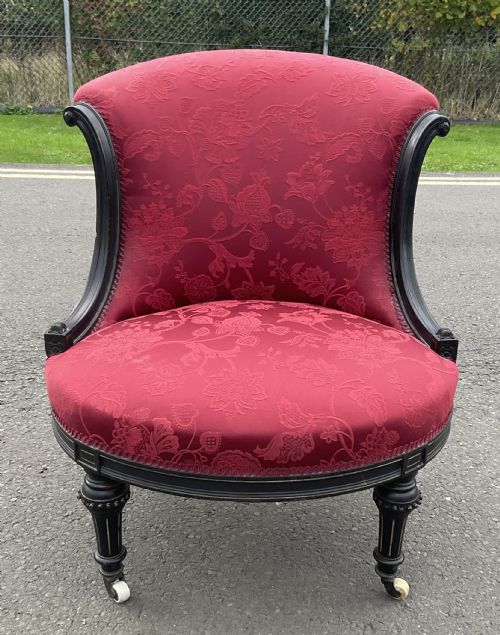
The framework utilises wood finished with an ebonised coating to imitate expensive ebony, occasionally enhanced with gilding on the legs. Supporting elements include ceramic castors and brass fittings.
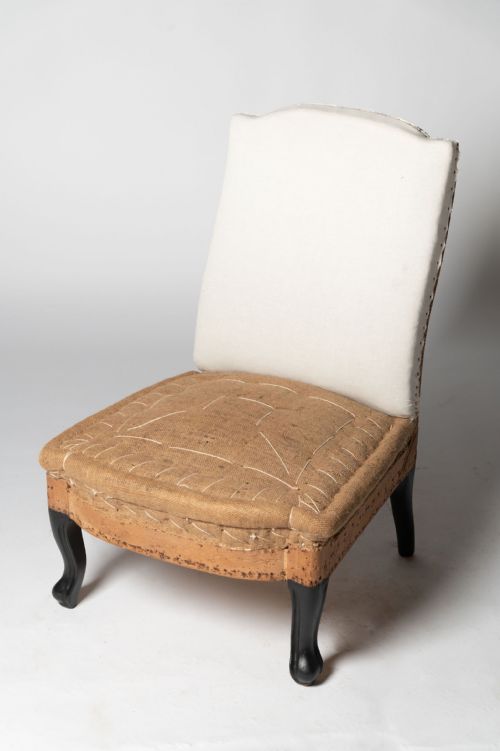
Upholstery techniques rely on traditional foundations using hessian, calico, and fabric coverings such as damask, with button tufting seen on English drawing room examples. Frames are constructed to maintain a low profile suited to bedroom and nursing chair forms.
Ebonised Leg Slipper Chair Retail Price Guide 2026
Typical asking prices for ebonised leg slipper chair among the pieces listed under this phrase on Sellingantiques today, from the lower quarter to the upper quarter. They describe what is for sale here now, not the wider market.
Listings span the nineteenth century, featuring Victorian, Napoleon III, and Aesthetic Movement pieces with ebonised wood and ceramic details.
What varies in quality
Quality rests in the crispness of the ebonised and gilt turnings on the wooden legs and the structural integrity of the low frame. Pieces with original ceramic castors and well-proportioned button-upholstered backs command greater attention.
Origin and stylistic detail also distinguish the range, from plain nineteenth-century French frames awaiting upholstery to detailed Victorian Aesthetic Movement nursing chairs with specific period character.
The Ebonised Leg Slipper Chair Glossary
- Ebonised wood
- Timber stained or painted black to resemble ebony, widely utilised in nineteenth-century furniture production.
- Slipper chair
- A low-seated upholstered chair traditionally used in bedrooms for dressing and putting on footwear.
- Nursing chair
- A low nineteenth-century chair designed for comfort while feeding infants, closely related in form to the slipper chair.
- Napoleon III
- A French nineteenth-century design period incorporating eclectic revival styles and dark polished finishes.
- Aesthetic Movement
- A late nineteenth-century British design style emphasising visual beauty and artistic reform in decorative arts.
Ebonised Leg Slipper Chair: Frequently Asked Questions
What is an ebonised leg slipper chair?
An ebonised leg slipper chair is a low-profile nineteenth-century seat featuring dark stained wooden legs, traditionally used in bedrooms or dressing rooms.
These pieces encompass Victorian, Napoleon III, and Aesthetic Movement styles, often found in French or English origins.
Where were these chairs used?
Historically, these low seats were placed in bedrooms, dressing rooms, and drawing rooms for intimate seating and dressing tasks.
Their compact height made them practical for domestic spaces where taller armchairs would prove cumbersome.
How do I identify a Victorian example?
Victorian examples often display button upholstery, robust proportions, and specific design markers like Aesthetic Movement details from around eighteen eighty.
Comparing the frame construction, fabric choices such as damask, and leg turnings helps distinguish English Victorian pieces from French equivalents.
Can I reupholster a slipper chair?
Many nineteenth-century frames are offered specifically for upholstery, allowing buyers to select modern or traditional fabrics like calico and Hessian.
This approach lets you finish the piece to match your interior while preserving the original ebonised wooden frame.