

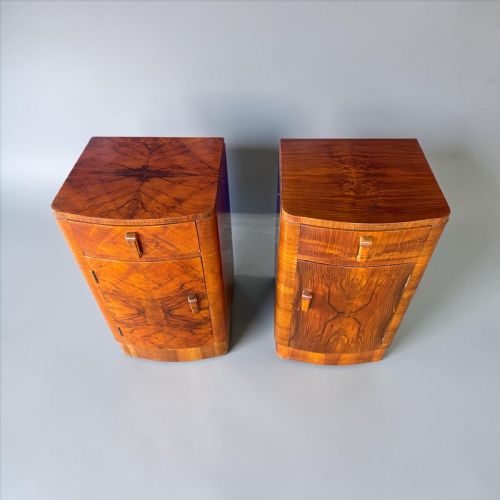
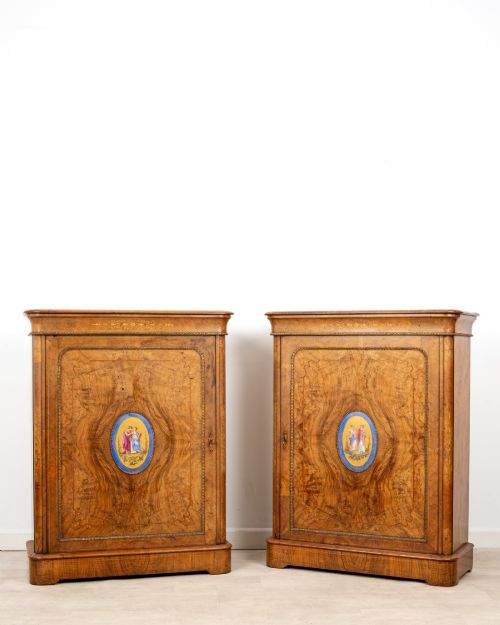
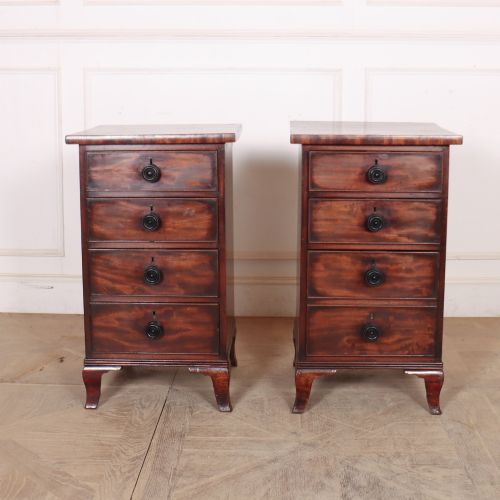
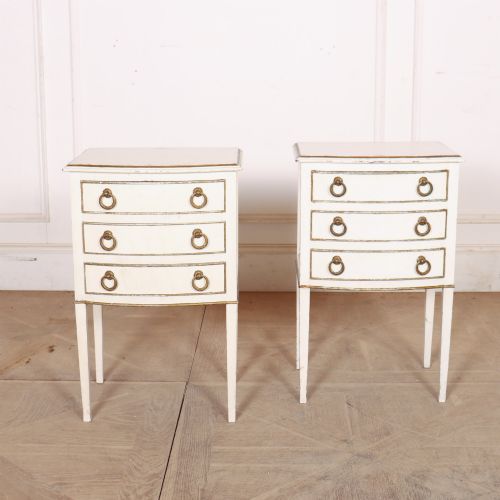
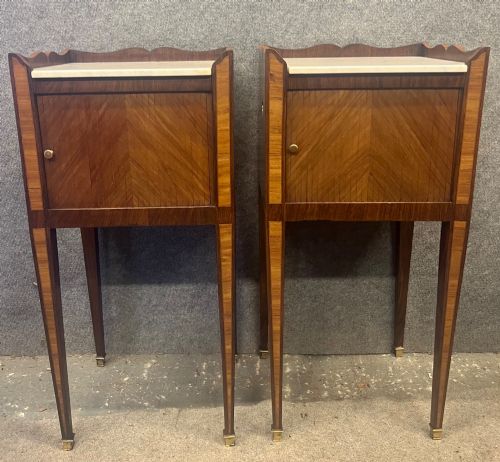
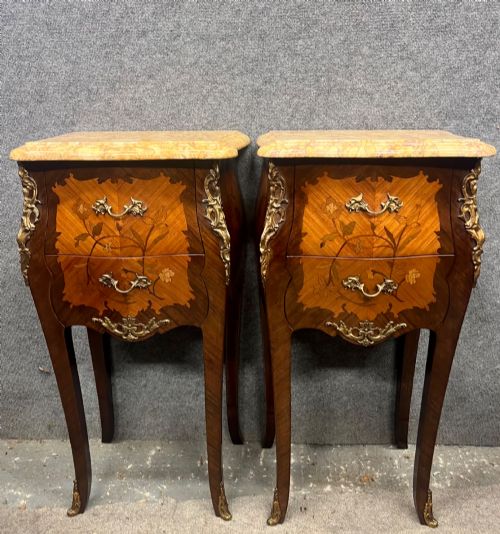
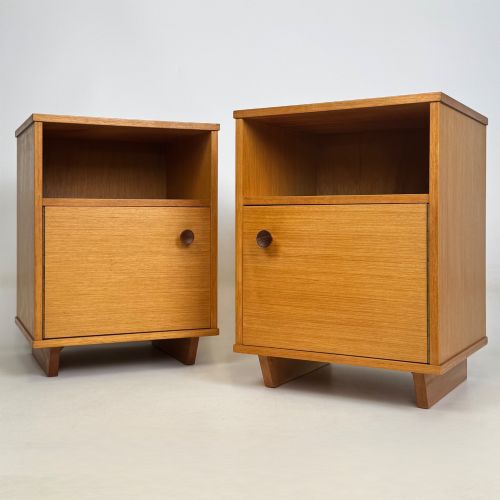
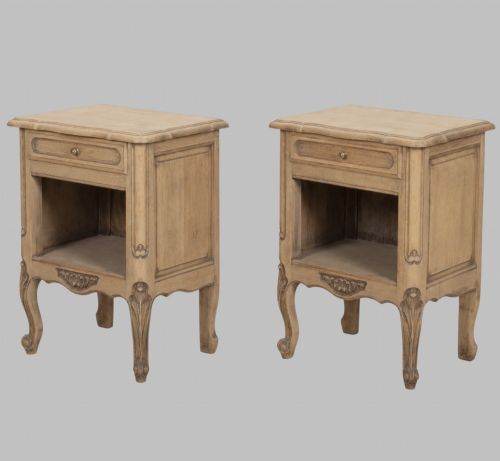
Pair of Side Cupboards
A pair of side cupboards balances symmetry and function beside a bed or in a drawing room.
Pair of Side Cupboards
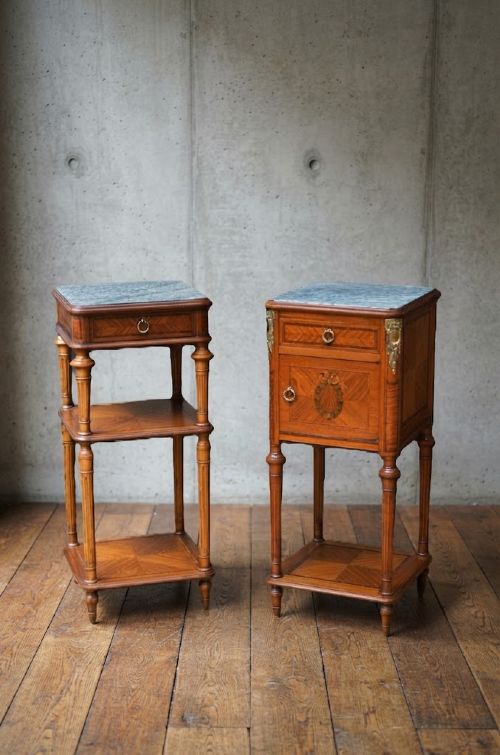
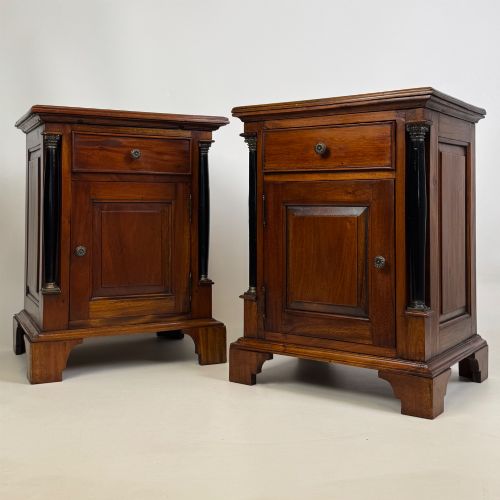
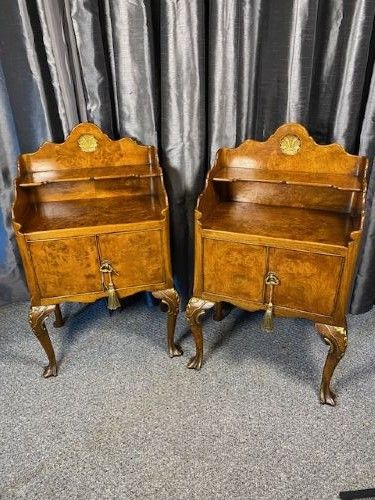
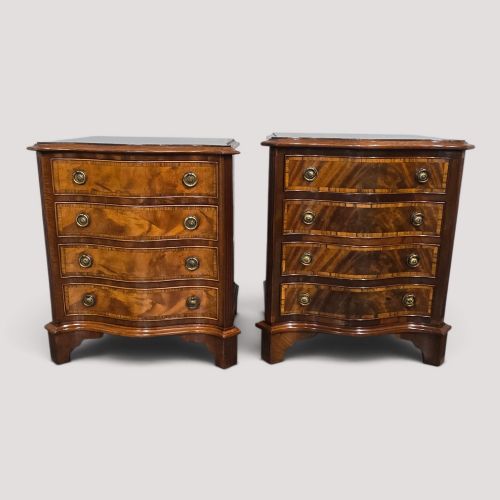
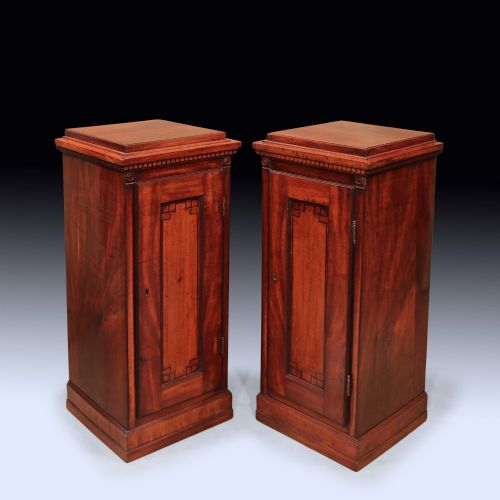
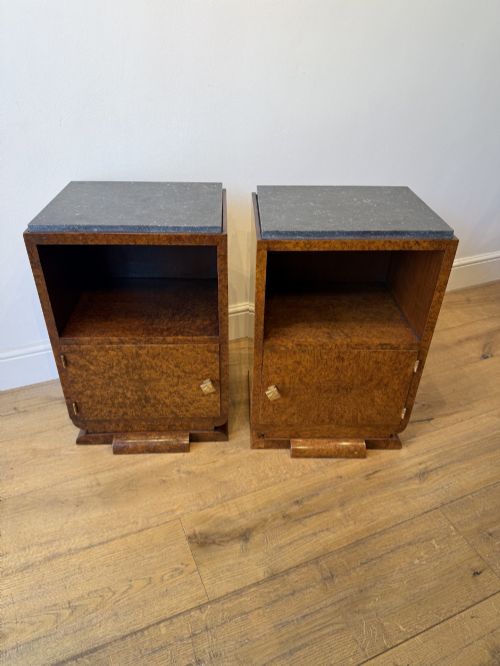
A pair of side cupboards brings matched storage and display to a room, functioning as bedside cabinets, commodes, or small pedestals. These twin pieces often serve to anchor a bed or frame a fireplace with balanced proportion.
Most examples encountered here date from the nineteenth and twentieth centuries, spanning periods from Edwardian and Victorian eras to the interwar Art Deco years. Common forms include compact bedside chests, marble-topped commodes, and pedestal cupboards designed to match.
Originating in English, French, and Italian workshops, these furnishings reflect shifting domestic habits across Georgian, Victorian, and revivalist movements. Buyers select them for their twin utility and the harmony that matched proportions bring to interior spaces.
Materials and construction
Cabinet makers utilised dense hardwoods such as mahogany, walnut, and rosewood, frequently applying decorative veneers like satinwood, kingwood, and burr walnut over secondary pine or oak carcasses. Marquetry and inlay added geometric or floral motifs across the drawer fronts and door panels.
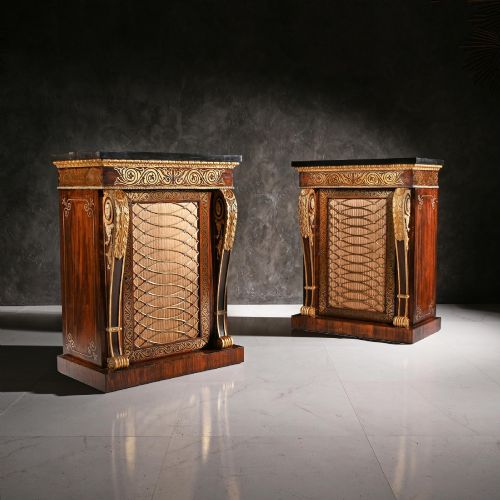
Many finer specimens incorporate marble tops, brass or ormolu mounts, and porcelain plaques to elevate the surface texture and visual weight. Joinery relied on traditional techniques, ensuring stability across the matched pair through hand-cut dovetails and panelled construction.
Listings feature walnut, mahogany, and kingwood timbers alongside marble tops across nineteenth and twentieth century periods.
The markers of distinction
The distinction between ordinary utility items and exhibition-grade pieces rests on the choice of timber and the precision of the veneer work. Matched grain patterns across both cupboards demonstrate superior planning by the maker, whereas lesser pieces show mismatched or hastily applied timbers.
Hand-chased bronze mounts, integral marble slabs with precise bevelling, and subtle marquetry elevate the status of a pair. The crispness of carved details and the smooth operation of drawers indicate the level of craftsmanship invested in the construction.
Maple and Co·Louis Constantin Le Gaigneur·E Kahn
The Pair of Side Cupboards Glossary
- Marquetry
- Decorative veneer work arranged in pictorial or geometric patterns using various coloured woods. It requires immense skill to cut and fit each tiny piece into the background veneer.
- Ormolu
- Gilded bronze mounts applied to furniture for decorative effect during the eighteenth and nineteenth centuries. The technique involves applying a mercury and gold amalgam to cast bronze.
- Bombe
- A swelling, outward-curving contour found on the front and sides of case furniture. This curvaceous profile is particularly characteristic of French cabinet making.
- Serpentine
- A shape featuring a curved front with a convex centre flanked by concave ends. It demands exceptional carpentry to execute cleanly across solid timber or veneered drawer fronts.
- Pedestal cupboard
- A tall, narrow freestanding cabinet designed to stand beside a bed or desk. These pieces typically conceal a single interior shelf or small drawer behind a panelled door.
Pair of Side Cupboards: Frequently Asked Questions
How were side cupboards used originally?
These cabinets served primarily to store chamber pots, nighttime essentials, or personal items within easy reach of a bed. In larger rooms, they functioned as miniature sideboards or lamp tables to hold candlesticks and small books.
Over time, their practical role evolved into decorative display surfaces, accommodating porcelain, clocks, and table lamps while concealing small storage behind fitted doors.
Are matched pairs always truly original?
Makers sometimes manufactured pieces individually or gathered single cabinets together later to form a matched set. Subtle differences in timber grain, interior depth, or hardware can indicate whether two items started life side by side.
Examining the construction methods and wear patterns helps determine if the pair was created together in the same workshop.
How do I care for marble tops?
Marble surfaces require gentle cleaning with a damp cloth and mild, pH-neutral soap to avoid dulling the polished finish. Acidic liquids like citrus juice or wine can etch the stone and should be wiped away immediately.
Applying a specialist stone sealer periodically helps protect the porous surface from accidental stains while preserving the natural lustre.
What distinguishes French styles from English ones?
French designs from the nineteenth and early twentieth centuries frequently embrace serpentine contours, bombe profiles, and elaborate ormolu mounts. They often showcase kingwood or fruitwood veneers with intricate marquetry.
English equivalents tend to rely on rectilinear proportions, heavier mahogany or walnut solids, and more restrained decorative inlay inspired by Sheraton or Georgian traditions.