

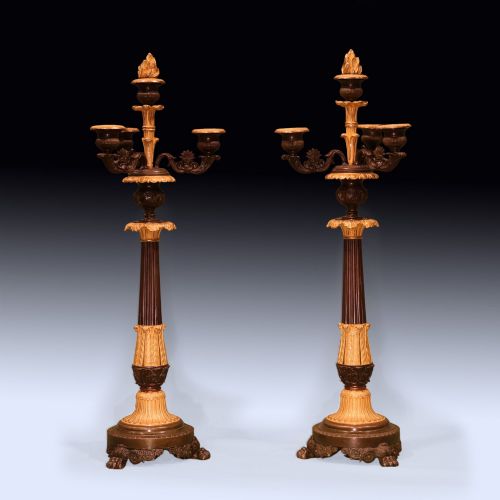
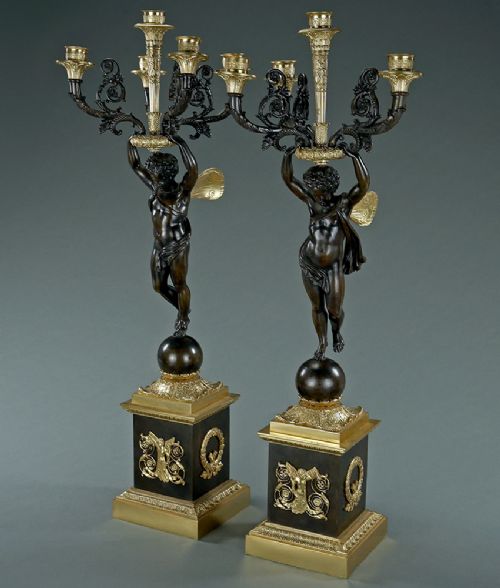
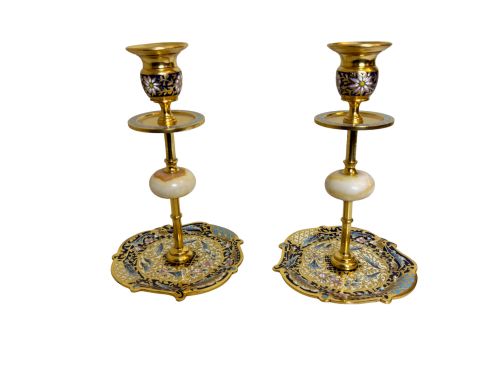
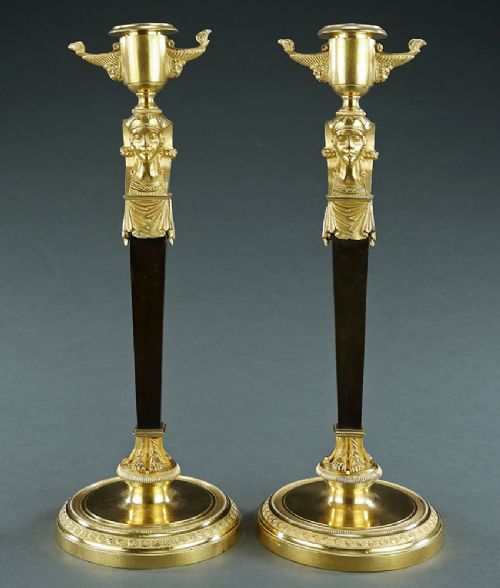
Pair of Ormolu Candlesticks
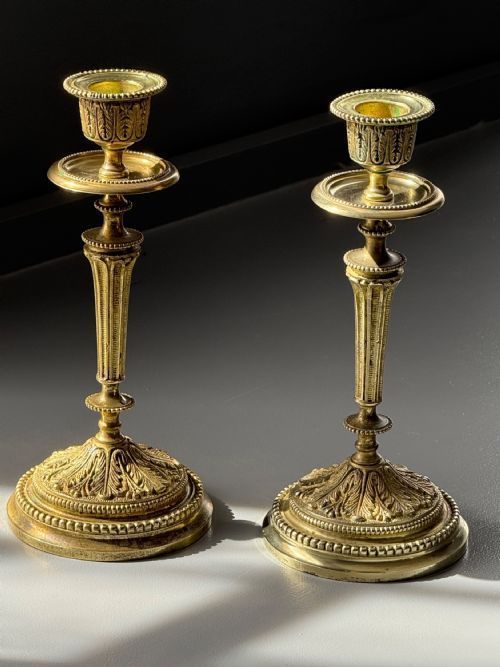
A pair of ormolu candlesticks brings gilded French elegance and sculptural warmth to any mantelpiece.
Pair of Ormolu Candlesticks
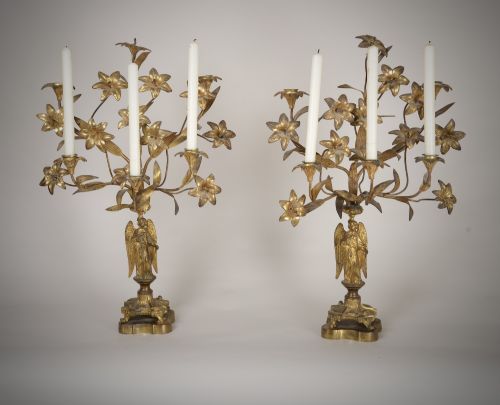
A pair of ormolu candlesticks comprises matching domestic lighting supports forged predominantly in gilded bronze or brass, frequently incorporating marble bases or cut crystal drops. These decorative objects date largely from the eighteenth and nineteenth centuries, spanning periods such as Regency, Louis XVI, and the Victorian era.
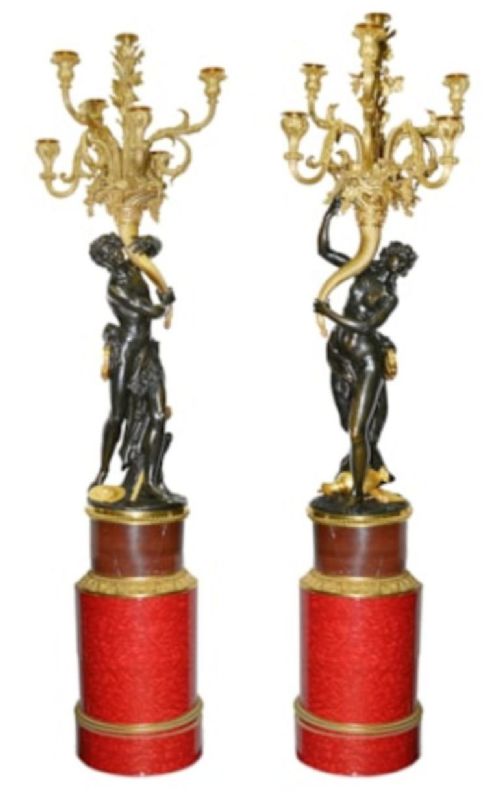
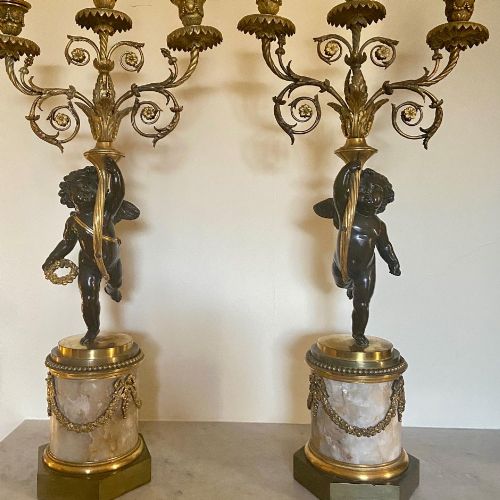
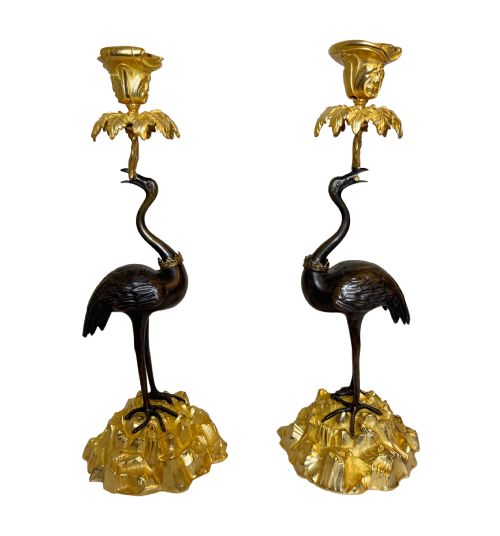
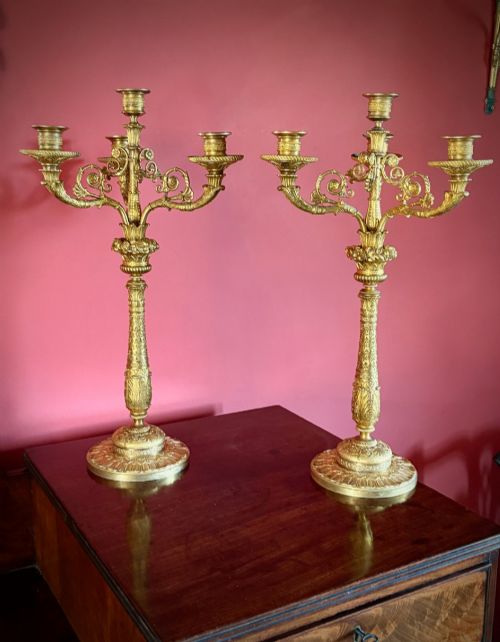
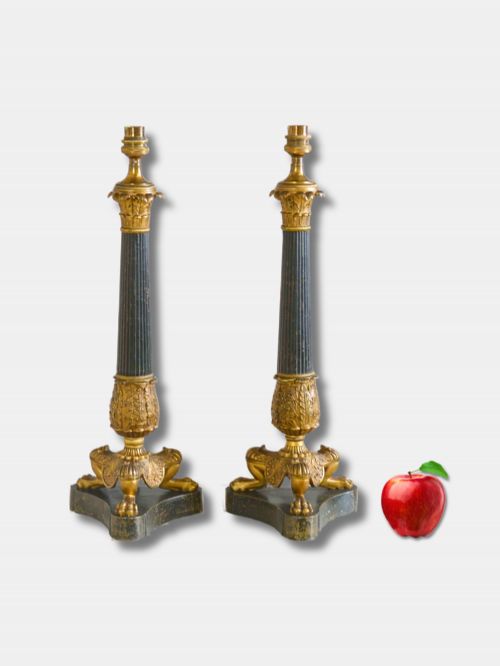
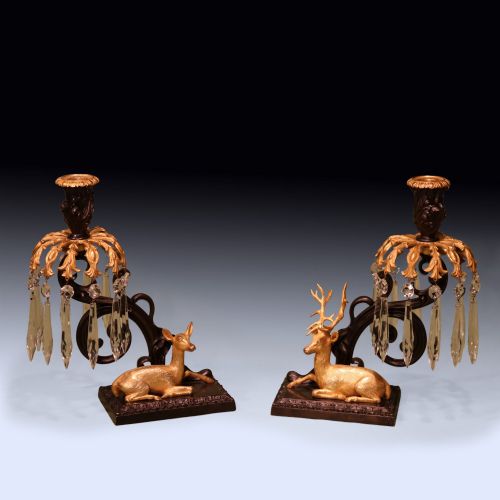
Buyers commonly encounter French revival styles, including Louis XVI and Rococo, alongside neoclassical and Empire designs featuring figures like putti, cherubs, and animals. Many examples double as multi-branch candelabra or have been adapted historically into lamp bases while retaining their original metallic character.
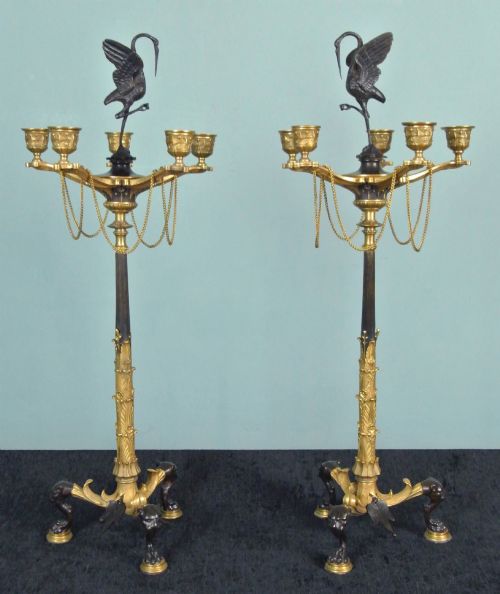
The aesthetic leans heavily toward continental sophistication, with workshops producing works modelled on classical antiquity, mythological themes, and naturalistic motifs. Surviving pairs frequently demonstrate the union of patinated dark bronze with bright mercurial gilding.
Materials and manufacture
The primary material is cast bronze or brass, finished with a technique known as ormolu, which involved applying a finely ground mercury and gold amalgam to the metal before heating. This process yielded a rich, durable golden surface that required meticulous hand-chasing after casting to sharpen details in hair, drapery, and foliage.
Secondary elements such as white marble, onyx, fluorspar, and cut crystal glass provide structural contrast and weight to the composition. Patinated dark bronze frequently appears alongside the gilded components to create a two-tone visual interplay typical of the French Empire and Regency periods.
Listings feature items spanning the eighteenth to the twentieth centuries, utilising materials like gilt bronze, patinated bronze, marble, and cut crystal.
Factors determining quality
The crispness of the bronze chasing dictates the visual success of the piece, separating mass production from works of high artistic ambition. Master founders utilised precision chiselling after casting to define facial expressions, feather tips, and acanthus leaves with sharp clarity.
The depth and durability of the gilding itself mark the division between standard domestic items and elite workshop output. Original mercury gilding retains a deep, warm lustre that ages with a characteristic soft patina, unlike later chemical coatings or modern electroplate.
Barbedienne·Francois Redmond·Thomas Hope·Elkington and Co·William Bateman
The Pair of Ormolu Candlesticks Glossary
- Ormolu
- Finely ground gold amalgamated with mercury and applied to bronze, then heated to vaporise the mercury and bond the gold. This historical technique is also known as bronze dore.
- Patinated bronze
- Dark chemical or natural surface treatment applied to bronze to create contrast against bright gilt elements. It highlights sculptural modelling by casting shadows across recesses.
- Candelabra
- A branched candlestick designed to hold multiple tapers from a single central stem. These often feature removable nozzle inserts for easy cleaning.
- Champleve
- An enamelling technique where troughs are dug into the metal surface and filled with vitreous paste before firing. It appears on nineteenth-century decorative bases.
- Lustre
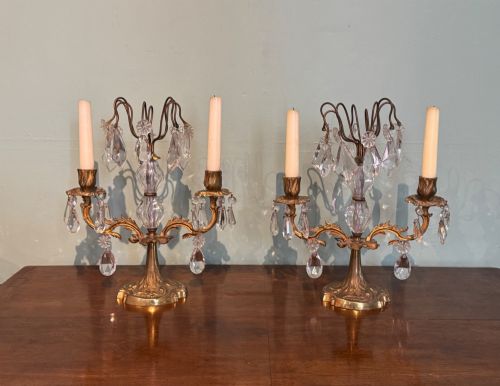
- Cut crystal glass pendants suspended from the sconce or drip pan to refract candlelight. They add sparkle and movement to the silhouette.
Pair of Ormolu Candlesticks: Frequently Asked Questions
How do I clean ormolu candlesticks?
Dust gently with a soft, dry brush to prevent accumulation in the intricate recessed chasing. Avoid abrasive commercial metal polishes, which strip away the delicate gold layer.
Water and harsh chemical cleaners damage both the mercurial gilding and the underlying bronze. Professional conservation is recommended for heavily tarnished surfaces.
Were these originally for candles?
Most examples served as functional lighting on dining tables, mantelpieces, and sideboards during the eighteenth and nineteenth centuries. Tallow and beeswax candles provided the primary illumination before domestic gas and electricity.
Many surviving pairs were later converted safely into table lamps during the twentieth century. This adaptation often involved drilling through the central stem for wiring.
How do I tell Empire from Regency style?
French Empire pieces rely heavily on strict neoclassical symmetry, military motifs, and references to ancient Rome or Egypt. Bronze figures often feature crisp, uniform patination combined with bright fire gilding.
Regency examples produced in Britain share classical roots but incorporate distinct local interpretations, such as carved animal feet or marine themes. The casting techniques can sometimes show slightly heavier proportions than their Parisian equivalents.
What is the purpose of marble bases?
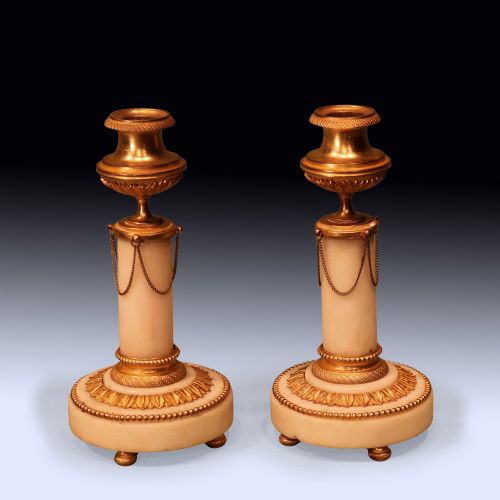
White marble, onyx, or slate plinths added substantial weight to keep the tall candlesticks stable when holding heavy multi-branch candelabra. The stone also provided a cool, classical contrast to the warm golden tones of the metal.
Different coloured stones help date the manufacture, with white Carrara marble prevailing in the eighteenth century and variegated types emerging later.