

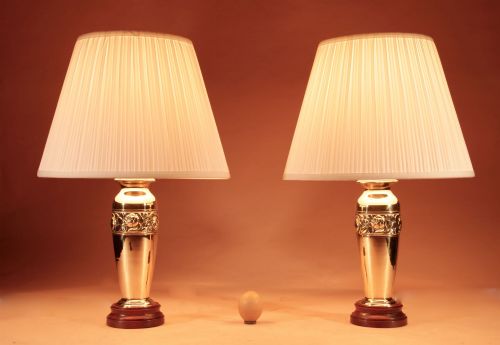
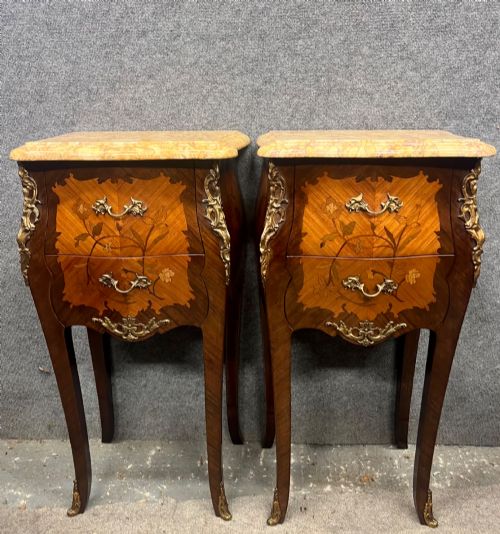
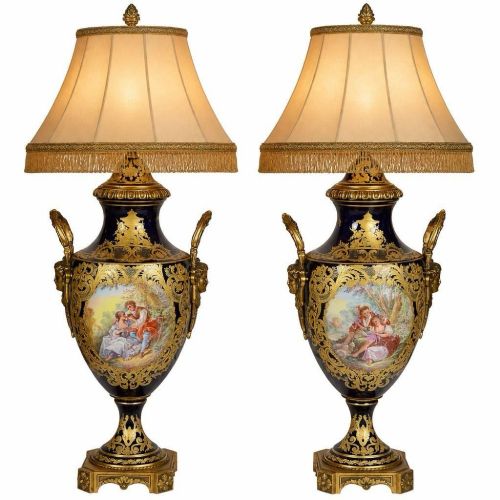
Pair of French Lamps
When sourcing a pair of French lamps, you are selecting matching decorative illumination rooted in nineteenth and early twentieth century Continental craftsmanship.
Pair of French Lamps
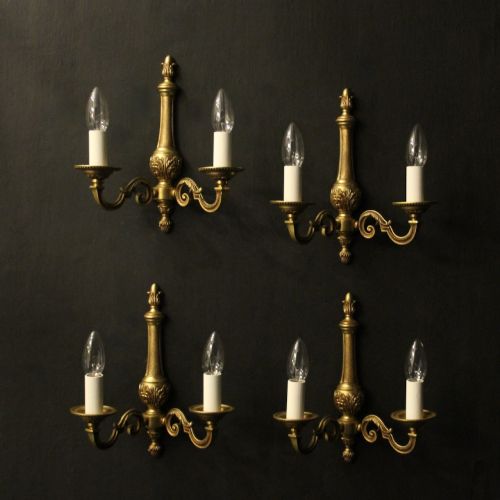
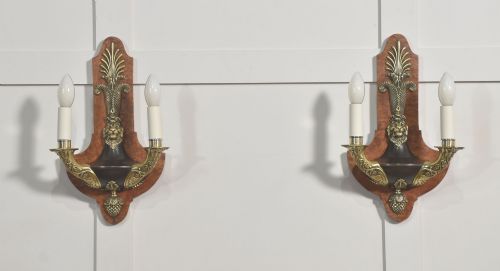
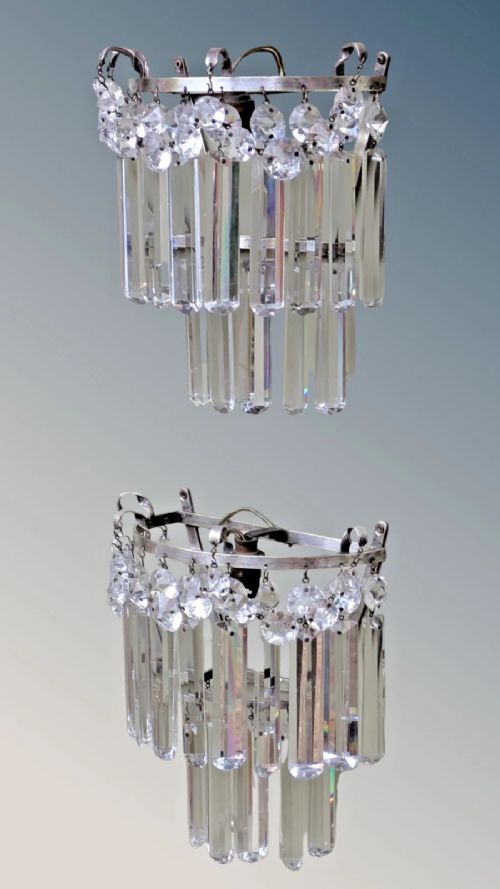
A pair of French lamps encompasses lighting fixtures designed in matched pairs, originating from workshops across France during the nineteenth and early twentieth centuries. These objects frequently take the form of table lamps, urn conversions, and wall sconces that reflect historical design movements.
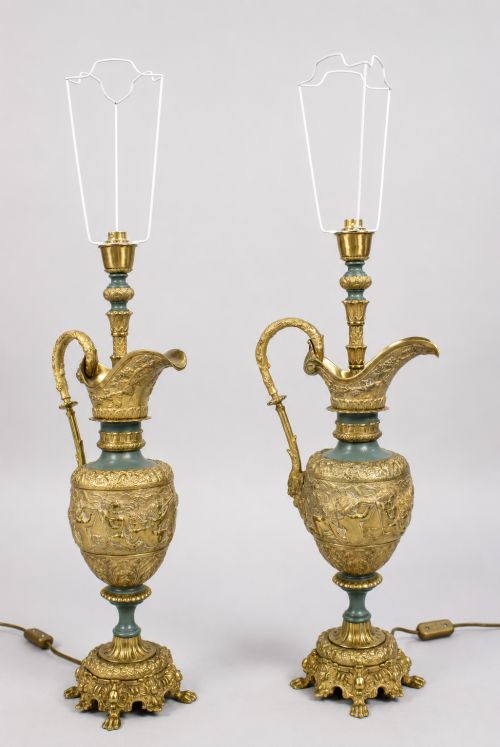
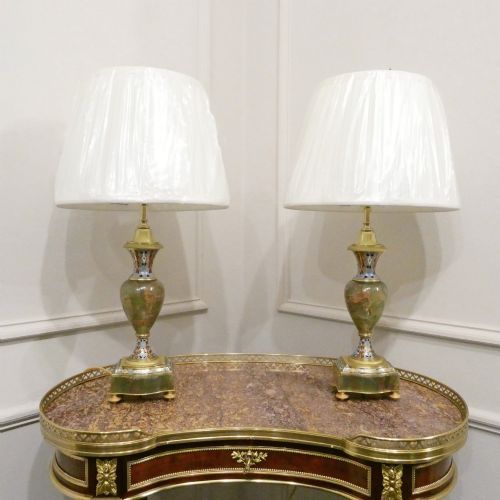
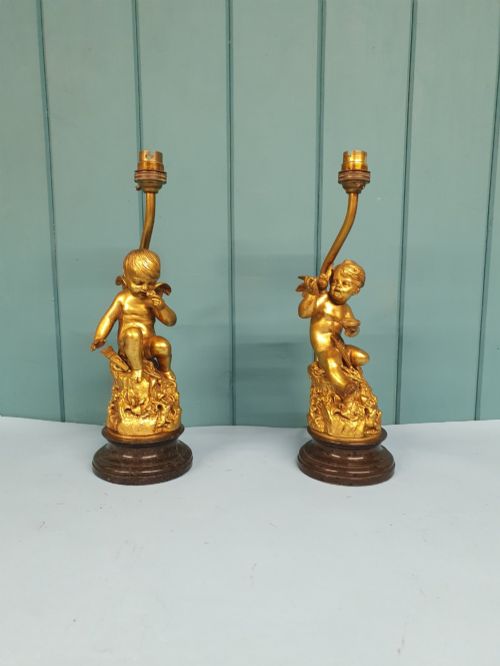
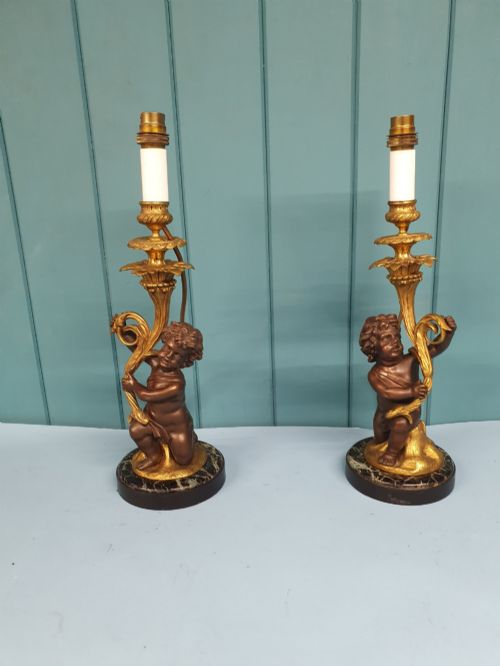
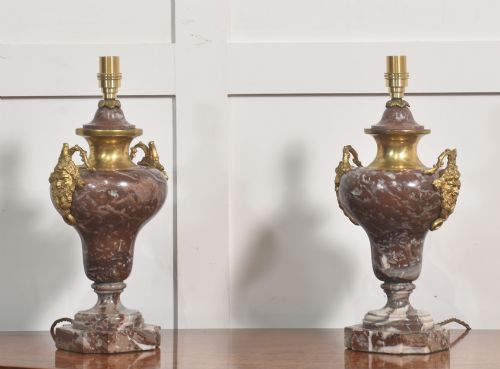
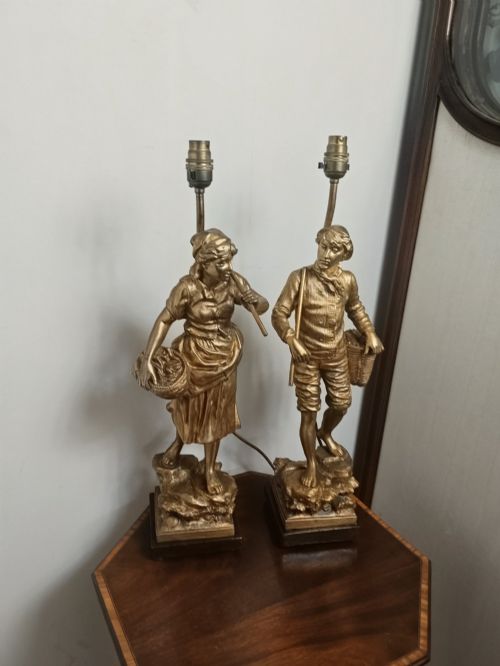
The selections available on this page lean heavily toward nineteenth-century classical and transitional styles, alongside early twentieth-century interpretations. Common manifestations include rouge marble and ormolu mounts, porcelain bodies, and cast brass figures such as cherubs or putti.
Buyers encounter everything from converted nineteenth-century candelabra to purpose-built Art Deco mood lighting and opaline glass columns. The unifying element across these diverse forms is the symmetry of a matched pair designed to balance interior spaces.
How they were made
The construction of these pieces relies heavily on cast metals combined with natural minerals, utilising brass, bronze, and ormolu paired with rouge marble, onyx, or cut crystal. Metal components were typically cast, chased, and gilded, while stone bases were turned and polished to support heavy mounts.
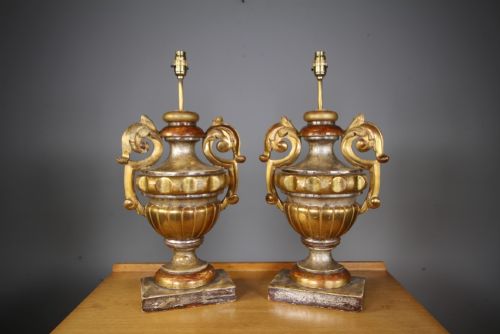
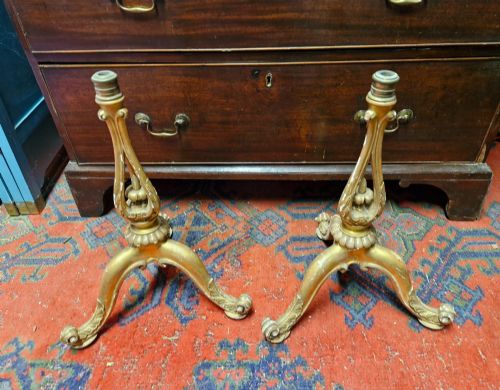
Many examples represent secondary adaptations, where earlier nineteenth-century candelabra, vases, or altar sticks were subsequently converted into electric lamps. Ceramic elements, including Sevres-style porcelain and pate-sur-pate, were frequently fitted with bronze or brass collars, handles, and bases during mounting.
Several brass cherubs hold their lighting duties with permanent, cheerful expressions despite bearing heavy nineteenth-century wiring.
What varies in quality
The distinction between standard production and superior examples rests on the crispness of the metal chasing and the quality of the raw materials. Finer items exhibit deeply detailed bronze or ormolu mounts with sharply defined relief work, whereas lesser pieces display softer casting marks and simpler surface finishing.
Material selection and integrity significantly influence the character of the object, particularly in the density of the marble or the clarity of the porcelain and crystal. Heavy, well-balanced stone foundations and robust gilt mountings indicate higher original workshop standards.
E Rousseau·Eutrope Bouret
The Pair of French Lamps Glossary
- Ormolu
- Gilded bronze, where finely ground high-carat gold is applied to a bronze base using a mercury amalgamation technique or electroplating. This finish gives eighteenth and nineteenth-century mounts their characteristic warm lustre.
- Cassolette
- A decorative vase or urn featuring a reversible lid that functions either as an incense burner or a solid decorative vessel. In lighting, these bodies are frequently drilled and mounted to serve as lamp bases.
- Pate-sur-pate
- A ceramic decoration technique where liquid white porcelain slip is painted in successive layers onto a coloured clay body. This builds up a low-relief cameo effect before final glazing and firing.
- Champleve
- An enamelling technique where troughs or cells are hollowed out of a metal surface and filled with vitreous enamel powder before firing. The resulting design sits flush with the surrounding metal borders.
- Opaline glass
- A type of semi-translucent white glass popular in nineteenth-century France, often blown into vases, column sections, and globes. It diffuses light softly and takes tinting well.
- Tole-peinte
- Painted sheet metal, typically iron or steel, finished with decorative enamels or oils. It was commonly utilised for shades and body elements in French wall and coach lighting.
Pair of French Lamps: Frequently Asked Questions
How do I identify a nineteenth-century period lamp?
Authentic nineteenth-century pieces generally rely on genuine cast bronze, hand-chased ormolu mounts, and heavy natural stones like rouge marble or onyx. The weight, construction joints, and patination on the metal surfaces offer clear indicators of age.
Furthermore, many of these pieces began life as oil lamps, candelabra, or decorative vases before receiving later electrical conversions. Examining the internal fitting spaces and the manner in which mounts are secured helps determine the manufacturing era.
Were these lamps originally made for electricity?
Most pieces originating from the nineteenth century were originally manufactured for candlelight, oil, or gas illumination. They were adapted later for electric wiring, often retaining their original structural metalwork and ceramic bodies.
Twentieth-century examples, particularly those from the Art Deco period, were more frequently designed from the outset to accommodate electrical components. Rewiring is standard practice for safe domestic use while preserving the antique housing.
How should I clean ormolu and brass mounts?
Ormolu and gilt brass require gentle dusting with a soft, dry cloth to prevent the accumulation of grit in recessed chasing. Avoid abrasive chemical polishes, which can strip away the historical gilding and expose the base metal underneath.
If deeper cleaning is necessary, a damp cloth with mild soap followed by immediate drying is safest. Preserving the natural patina maintains the historical integrity of the piece.
Can I mix different shades on a pair?
Matching a pair successfully depends on maintaining visual symmetry in height, material weight, and stylistic period. While minor variations in fabric shades can be adjusted, the underlying lamp bases must share matching proportions.
Using identical or complementary shades ensures that the balanced aesthetic intended by the original maker is maintained. Mismatched bases disrupt the visual symmetry expected from a pair.