




Pair of Corner Cabinets
A pair of corner cabinets makes an entire room feel composed, turning neglected angles into symmetrical points of display.

Pair of Corner Cabinets
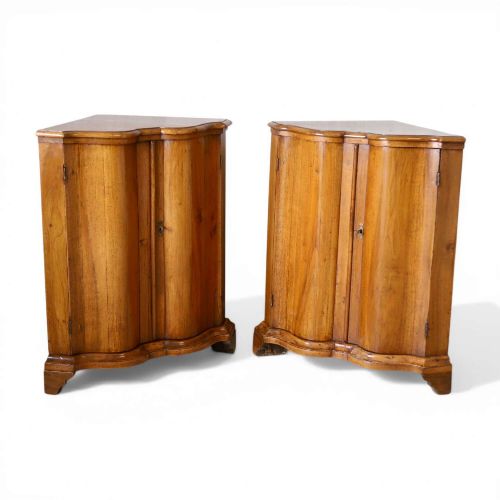
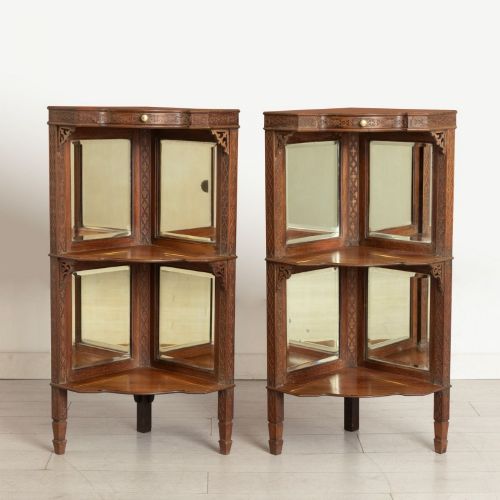
A pair of corner cabinets provides matched storage and display designed specifically to fit the intersecting walls of a room. These dual pieces appear in forms ranging from glazed display cases to solid cupboards and washstands.
The versions most frequently met on this page span the eighteenth and nineteenth centuries, executed primarily in mahogany and walnut with various inlaid timbers. Many examples utilise the architectural angles of domestic interiors to balance a space.
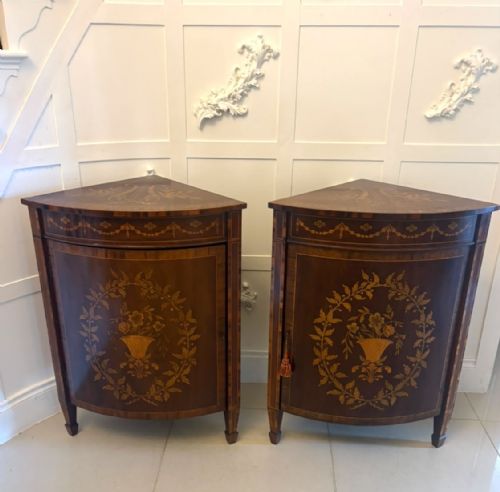
Makers adapted the form across Georgian, Victorian, and Edwardian periods, introducing marquetry, parquetry, and glass panels. Buyers encounter both tall floor-standing cupboards and smaller hanging or table-height variations.
Materials and construction
Cabinet makers utilised dense hardwoods like mahogany and walnut as the primary structural carcase, often applying finer veneers of kingwood, fruitwood, and goncalo alves for decorative surfaces. These timbers were selected for their stability and capacity to take intricate marquetry and parquetry inlays.
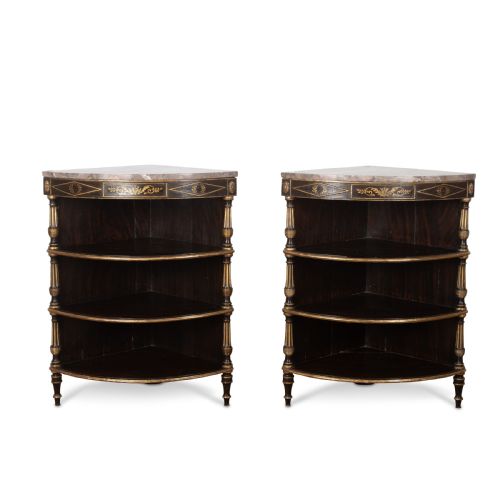
Metal elements such as brass hinges, ormolu mounts, and specialised hardware reinforced corners and secured doors. Glass was integrated into glazed doors for display cabinets, while marble tops appeared on select French and Regency iterations.
Listings feature mahogany, walnut, kingwood, brass, and marble across eighteenth and nineteenth-century periods.
Assessing quality and execution
The distinction between standard utility items and high-end pieces lies in the precision of the timber matching and the depth of the marquetry inlay. Superior examples demonstrate continuous grain across panel joins and meticulous hand-cut botanical or geometric patterns.
Hardware integration and timber selection further separate the tiers, with finer workshops employing solid secondary woods, robust brass hinges, and well-balanced door alignments that maintain structural integrity over centuries.
Edwards & Roberts
The Pair of Corner Cabinets Glossary
- Marquetry
- Decorative veneer work forming pictorial or geometric patterns using various coloured wood timbers. Skilled artisans cut these elements to fit precisely into a background veneer.
- Parquetry
- Geometric mosaic woodwork used for repeating patterns on cabinet doors and tops. This technique relies on small rectangular or triangular wooden tiles.
- Ormolu
- Gilded bronze mounts applied to furniture for decorative enrichment. These metallic accents provide contrast against dark hardwoods like mahogany.
- Boulle
- An elaborate marquetry technique using tortoiseshell and brass inlay developed in France. It appears on high-status cabinets from the period.
- Glazed
- Fitted with glass panels to allow visibility into the interior display space. These doors protect collections while keeping them visible.
Pair of Corner Cabinets: Frequently Asked Questions
Where should I place a pair?
These cabinets suit symmetric placement on opposing corners of a dining room, hallway, or drawing room. They anchor the perspective of a space by balancing the architectural sightlines.
Because they occupy corners rather than flat wall space, they utilise dead areas efficiently while providing substantial surface or interior storage.
How do I clean mahogany surfaces?
Maintain the timber using a traditional beeswax applied sparingly with a soft cloth. Avoid modern silicone sprays that build up residue and soften the original polish.
Buff the surface gently along the grain to maintain the natural warmth and depth of the nineteenth-century polish.
Can these hold heavy china?
Most antique cupboards feature fixed or adjustable wooden shelving capable of supporting standard porcelain and glassware collections. Inspect the shelf supports and internal peg construction to confirm weight capacity.
Floor-standing models generally offer greater structural load-bearing capacity than wall-mounted or smaller display variations.
How do I identify Victorian pieces?
Victorian examples often feature darker walnut or mahogany timbers combined with dense marquetry inlay and heavier brass hardware. Construction methods during this era transitioned towards industrial assistance while retaining hand-finishing.
Look for nineteenth-century secondary timbers inside the drawers and carcass to confirm the period of manufacture.