



Curved Front Corner Furniture
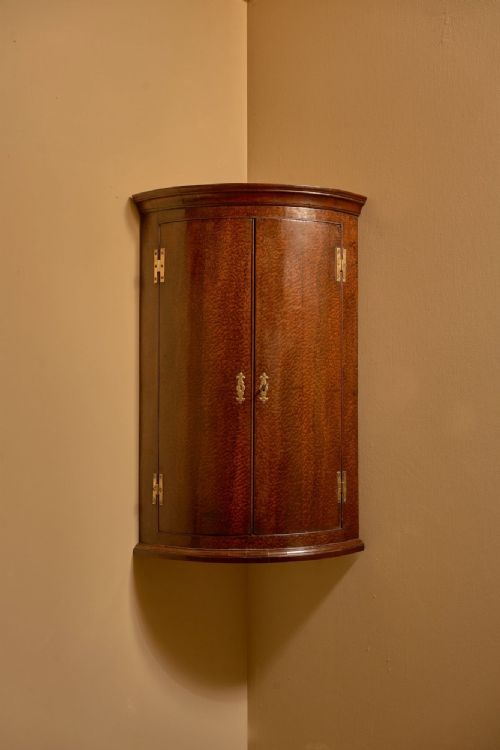
Curved front corner furniture comprises corner cabinets, cupboards and washstands designed to utilise dead space.
Curved Front Corner Furniture
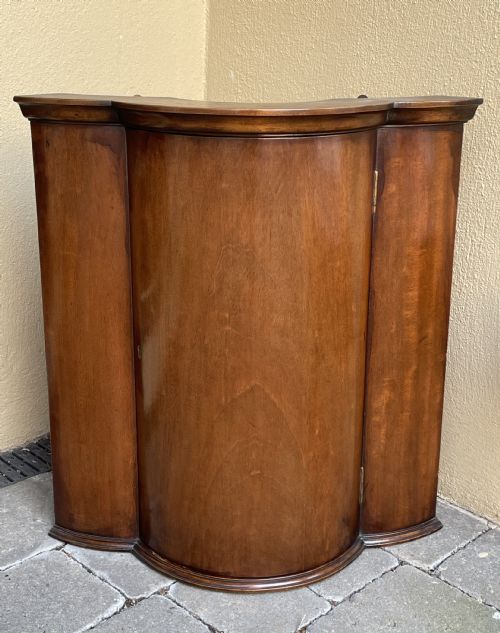
Curved front corner furniture solves the problem of difficult angles by fitting neatly into room intersections while offering display and storage. When searching for curved front corner furniture, buyers encounter pieces shaped with bows, serpentines, or gentle radii.
The selection ranges from wall-hung Georgian designs to floor-standing double height display cabinets from later periods. Walnut, mahogany, and oak form the bulk of the structural timber across these examples.
Vernacular pieces appear alongside finer urban workshop output, reflecting both rural and metropolitan domestic needs. Common formats include single door cupboards, glazed display units, and twin washstands.
How they were made
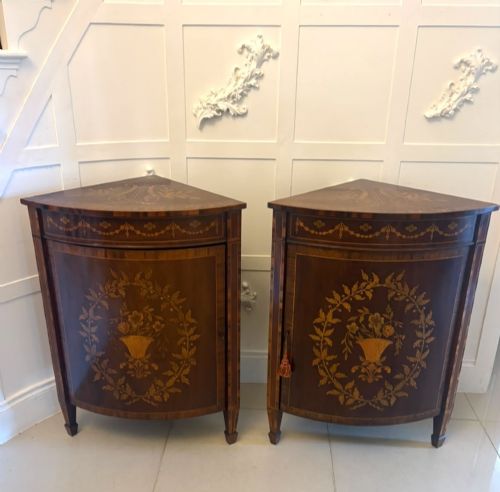
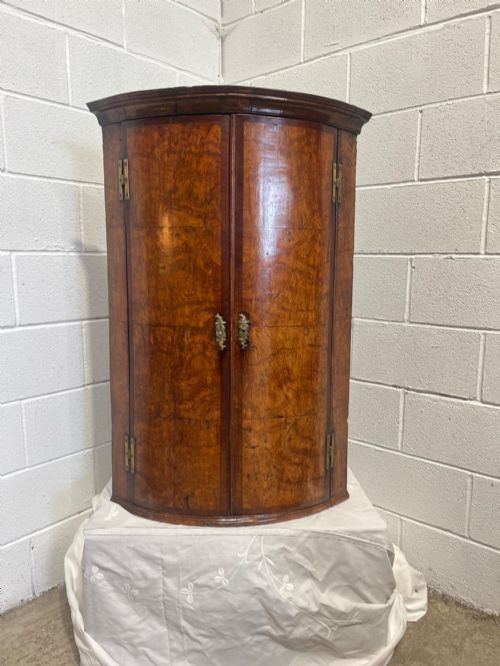
Cabinetmakers constructed these carcases primarily from solid mahogany, oak, and walnut, often applying veneers of burr oak or satinwood to visible surfaces. Marquetry inlay and boxwood stringing provide decorative contrast on select pieces.
Curved doors and bowed fronts required specialised framing and bentwood techniques to achieve stable radii that would not warp over time. Brass hardware, including hinges and escutcheons, secures the doors and drawers.
Curved Front Corner Furniture Retail Price Guide 2026
Typical asking prices for curved front corner furniture among the pieces listed under this phrase on Sellingantiques today, from the lower quarter to the upper quarter. They describe what is for sale here now, not the wider market.
The listings span the Georgian, Victorian, and Edwardian eras, utilising mahogany, oak, walnut, and satinwood.
What varies in quality
Quality reveals itself in the selection of timber figures, such as the richness of burr oak or the depth of mahogany grain. Finer examples incorporate precise marquetry inlay and well-executed boxwood stringing rather than plain surfaces.
Construction methods distinguish standard workshop production from master cabinetmaker output, particularly in the joinery of curved fronts and internal shelving. Original brass hardware and well-preserved glass panes elevate the standing of a piece.
Edwards And Roberts
The Curved Front Corner Furniture Glossary
- Bow front
- A convex curved cabinet front that projects outward in a smooth arc. This shape softens the angular transition of a room corner.
- Serpentine front
- A furniture front characterised by a concave central section flanked by two convex ends, or vice versa. It demands high skill from the cabinetmaker.
- Marquetry
- Decorative inlay work using various coloured wood veneers to form pictorial or geometric patterns. It often adorns the doors of finer cabinets.
- Tambour
- Slats of wood glued to a canvas backing to create a flexible sliding door. This mechanism appears on select storage compartments.
- Stringing
- Thin inlay lines of contrasting wood used to outline panels and drawers. Boxwood is frequently utilised for this purpose.
Curved Front Corner Furniture: Frequently Asked Questions
Where should I place a corner cabinet?
These pieces fit directly into the ninety-degree junction of two walls, turning dead space into functional storage or display.
Floor-standing versions anchor a room layout, while wall-hung cupboards liberate floor area below them.
How do I tell a bow front from a serpentine front?
A bow front curves outward in a single continuous convex arc from edge to edge.
A serpentine front weaves inward and outward through three distinct directional curves.
Were these cabinets used for display or storage?
Glazed upper sections served to exhibit porcelain and glassware away from dust.
Solid wooden doors concealed household provisions, linens, or documents out of sight.
What woods are most common?
Mahogany and oak dominate the surviving examples from both rural and urban workshops.
Walnut and decorative veneers like burr oak appear on pieces intended for more formal reception rooms.