


Marquetry Corner Display
Marquetry corner display cabinets utilise inlaid timber veneers to fill neglected room angles with glass-fronted shelving.
Marquetry Corner Display
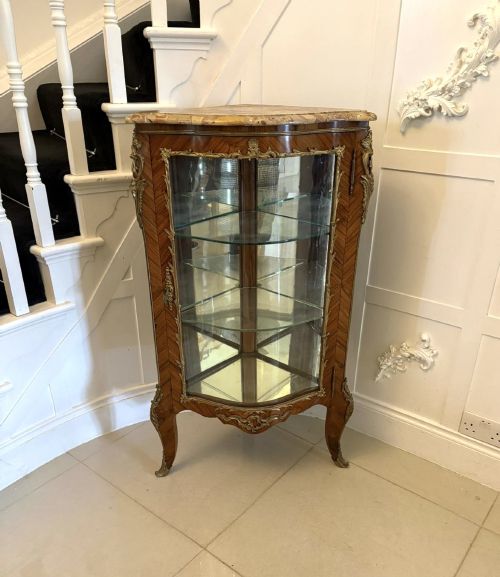
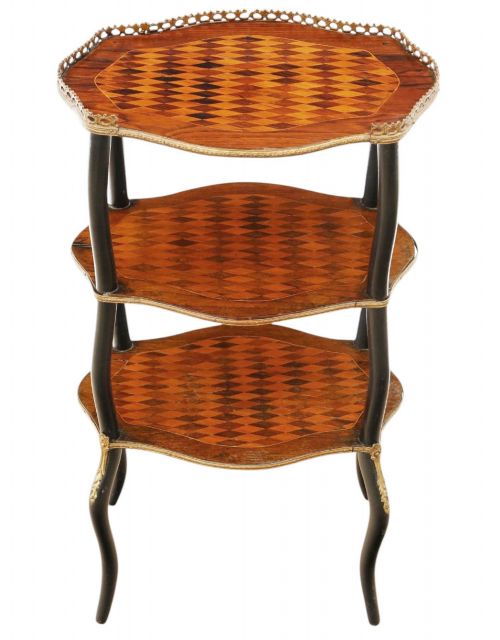
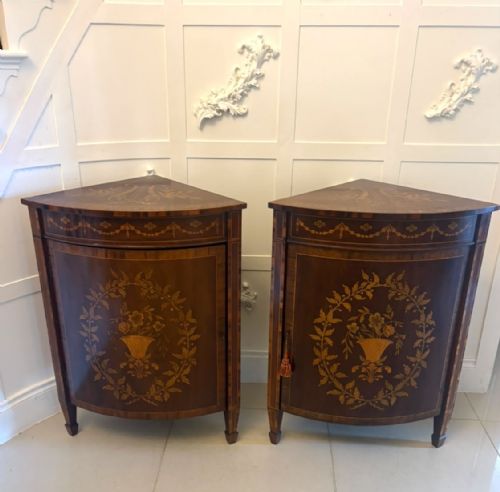
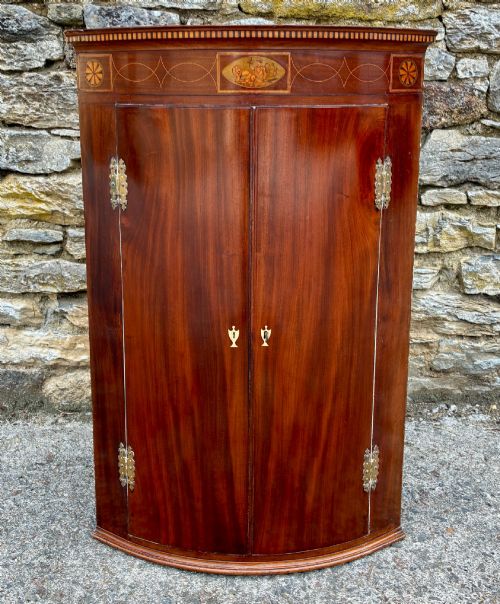
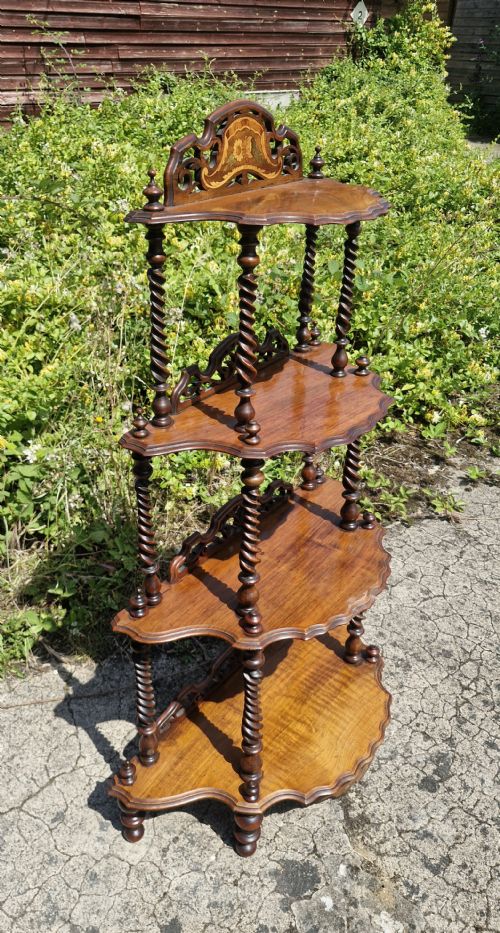
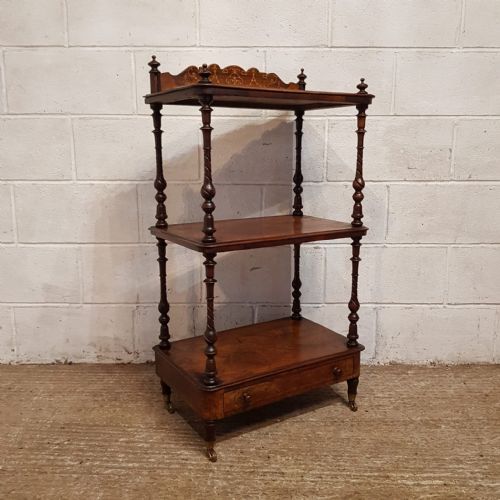
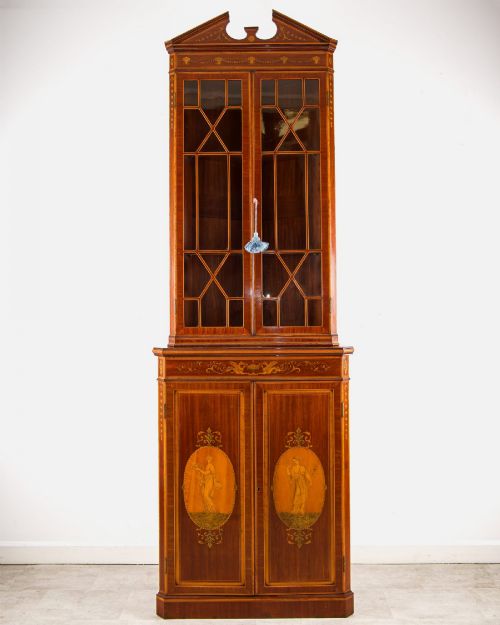
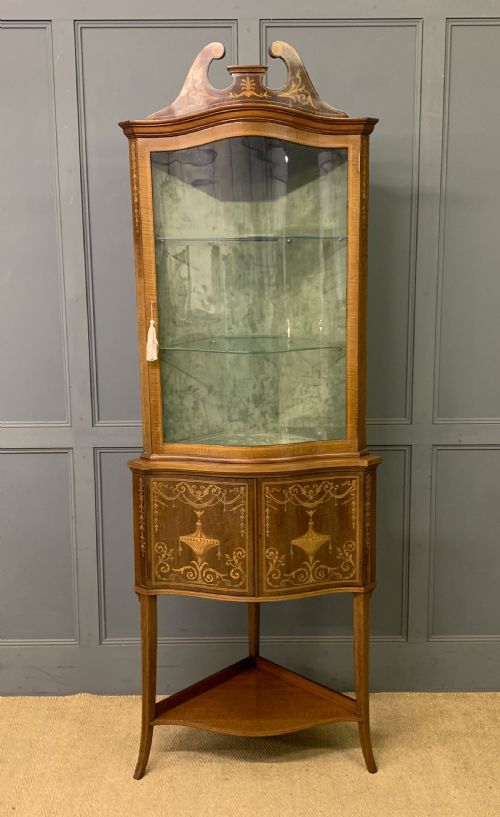
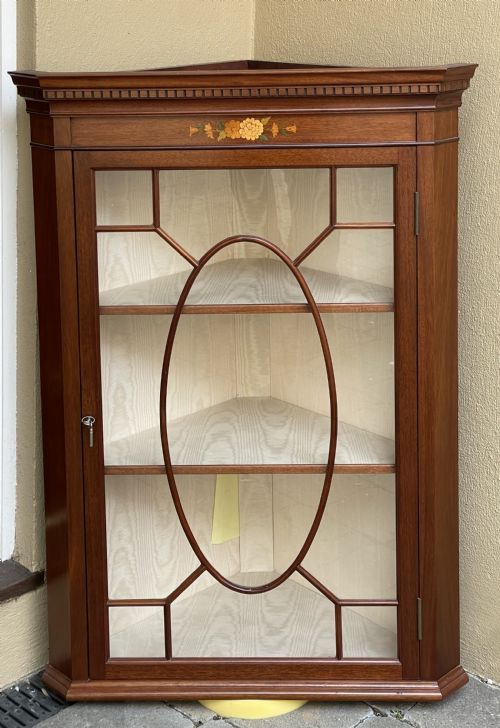
A marquetry corner display piece sits neatly into domestic angles, taking the form of hanging cupboards, standing single-height units, or towering double-height display furniture.
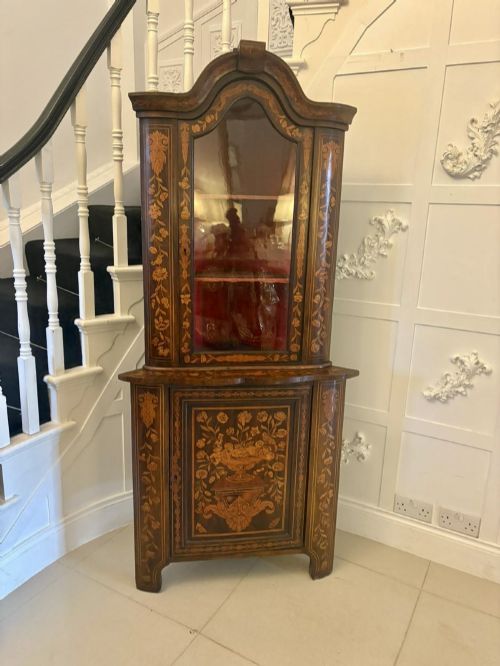
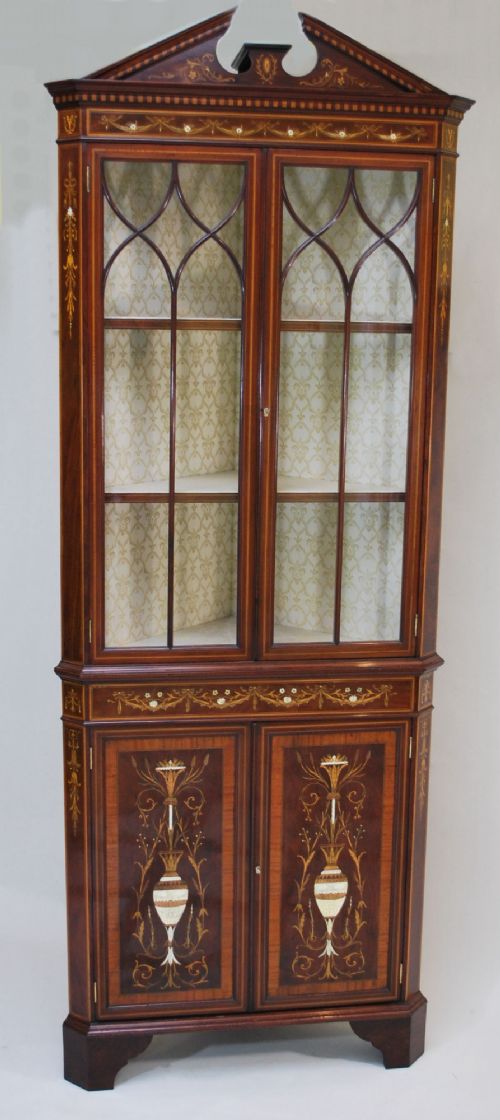
The pieces appearing here span from the Georgian era through Victorian and Edwardian periods, with revival styles such as Sheraton Revival and Dutch Baroque prevailing.
Makers shaped these items primarily from mahogany, walnut, and rosewood, incorporating glazed doors or open shelves designed to exhibit porcelain and small ornaments.
Materials and Technique
Cabinet makers built the structural carcases using solid timbers like mahogany, oak, or walnut, which provided stable framing for the angled walls.
Surfaces received decorative veneers of satinwood, rosewood, and kingwood, cut and fitted into intricate floral or geometric marquetry patterns.
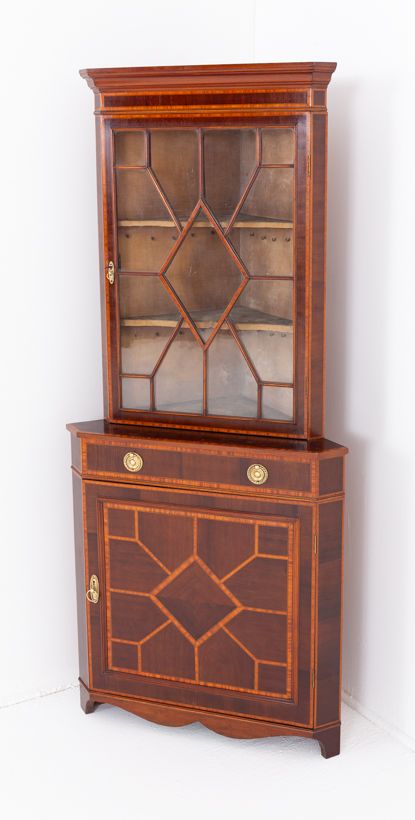
Additional detail came through contrasting stringing, parquetry blocks, brass mounts, and glazed doors with astragal bars.
Archive records show that standing double-height corner units often separate into two distinct stacking sections for easier transport.
Judging Quality
Quality rests upon the crispness of the timber inlay and the precision with which disparate wood veneers meet along complex curves.
Finer examples employ dense burr walnut or rich rosewood alongside well-figured mahogany, whereas simpler iterations rely on plain timber grounds.
The structural ambition separates basic hanging cupboards from grand double-height standing cabinets fitted with serpentine fronts and glazed display compartments.
Edwards And Roberts
The Marquetry Corner Display Glossary
- Marquetry
- Decorative patterns formed by fitting together thin slices of wood veneer on a carcase. It differs from inlay by covering the entire surface in a picture or motif.
- Astragal glazing
- Wooden moulding strips dividing glass panes within a cabinet door. These bars create geometric grids across the display front.
- Serpentine front
- A cabinet face curving outward in the centre and inward at the sides. This fluent shape demands advanced joinery skills.
- Etagere
- A piece of furniture consisting of a set of open shelves for displaying small objects. They often stand in corners or against walls.
- Stringing
- Thin lines of contrasting wood inlaid into furniture surfaces. It outlines panels and draws geometric boundaries around the marquetry.
Marquetry Corner Display: Frequently Asked Questions
What is a marquetry corner display?
A marquetry corner display is a cabinet or set of shelves built to fit snugly into the 90-degree angle of a room. These pieces combine fitted woodwork with decorative wood veneer patterns and glass doors.
They serve to exhibit ceramics, glassware, and small collections while making use of floor space that often remains empty. Most surviving examples date from the Victorian and Edwardian eras.
How do I secure a hanging corner cabinet?
Hanging corner cabinets require fixing directly into solid wall studs or masonry using appropriate screws and rawlplugs. Because the door and contents add front-heavy weight, the top hanging brackets bear substantial downward and pulling force.
Professional installation ensures the cabinet remains level and secure, preventing the frame from twisting over time.
How do I distinguish Edwardian from Georgian pieces?
Georgian pieces from the 18th century generally display heavier solid timber construction with simpler panelled doors and minimal applied decoration. They prioritize architectural proportion over surface ornamentation.
Edwardian and Sheraton Revival pieces from around 1900 often feature lighter mahogany carcases densely covered in floral marquetry, satinwood banding, and delicate glass framing.
How do I clean delicate marquetry surfaces?
Cleaning requires a soft, dry cloth to remove dust from the intricate veneer crevices without snagging loose edges. Excessive moisture damages old polish and can cause glued veneers to lift from the base timber.
Applying a traditional beeswax polish sparingly once or twice a year maintains the sheen of walnut and mahogany without building up heavy residue.