
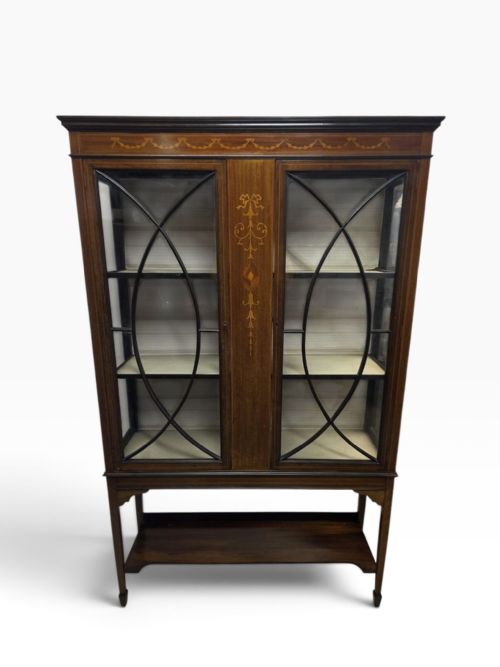
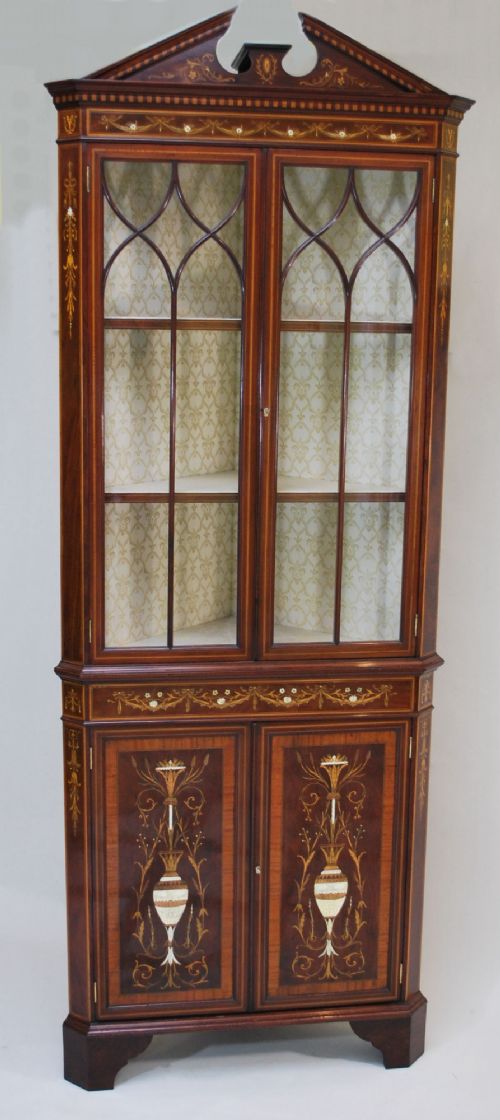
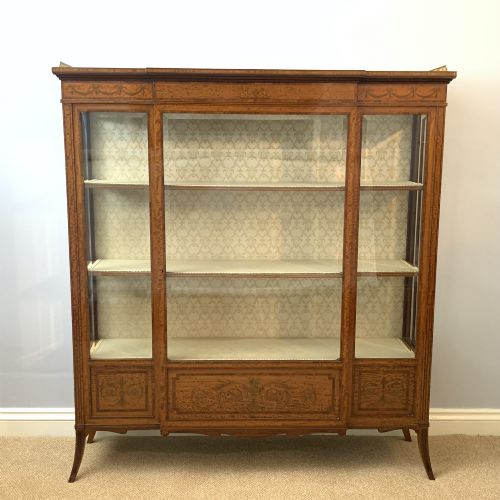
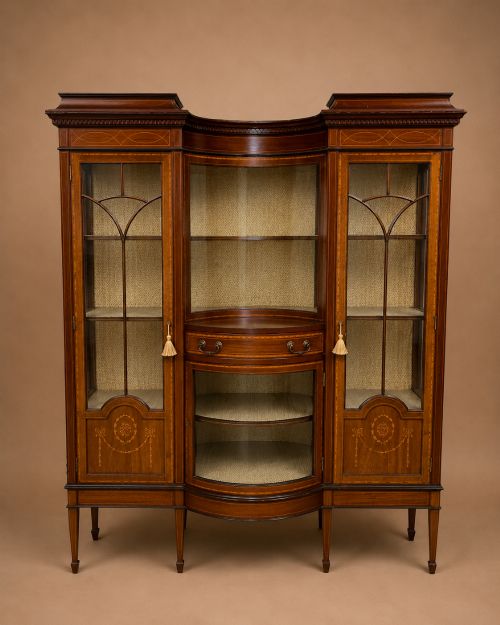
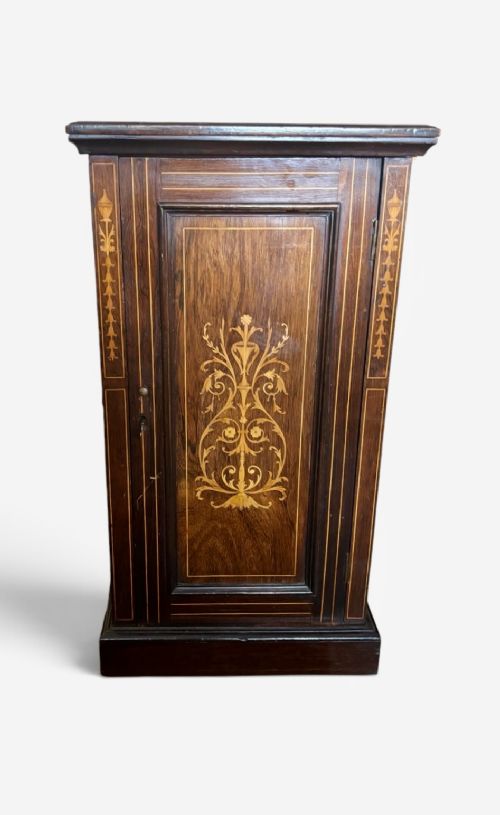
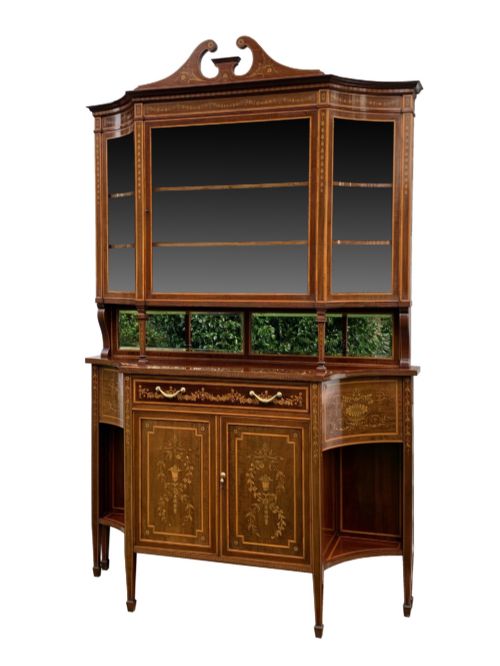
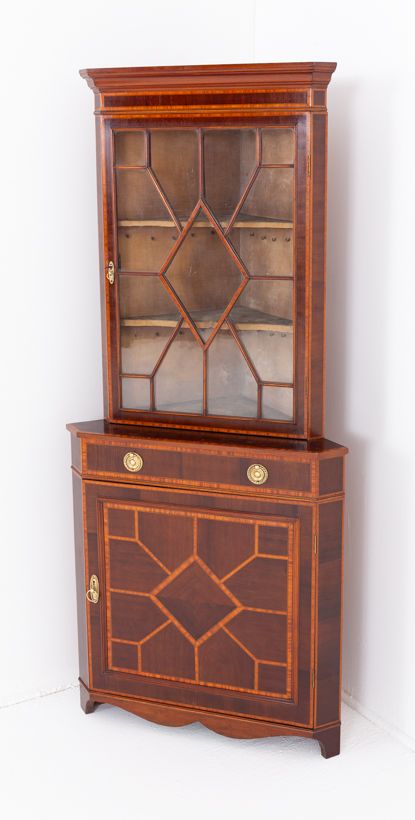
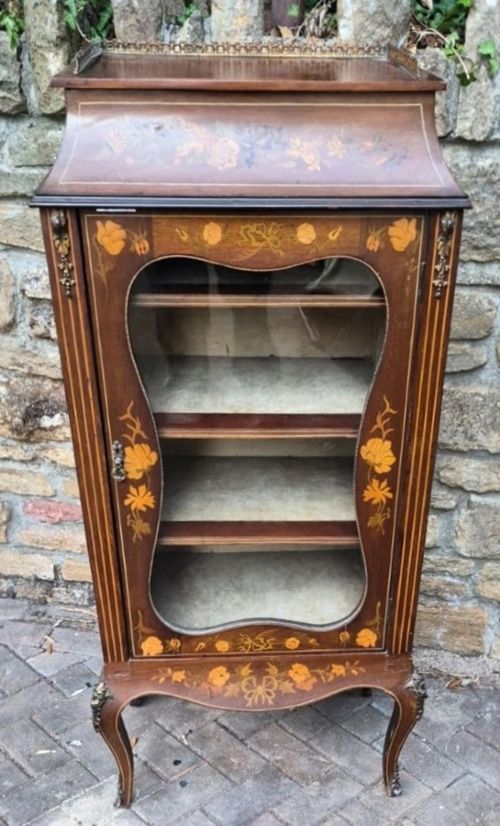
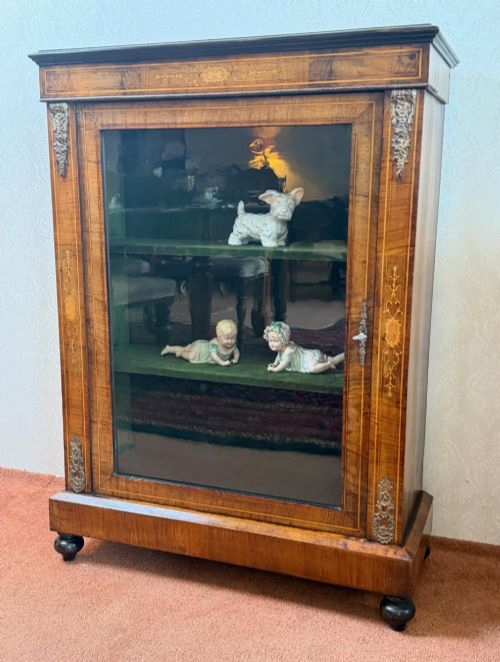
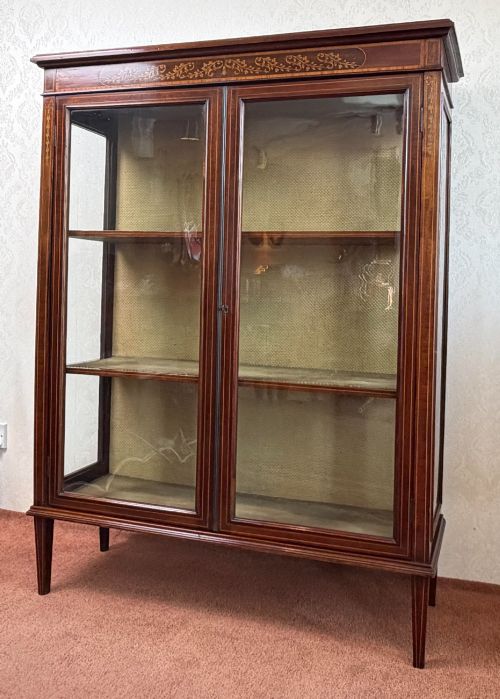
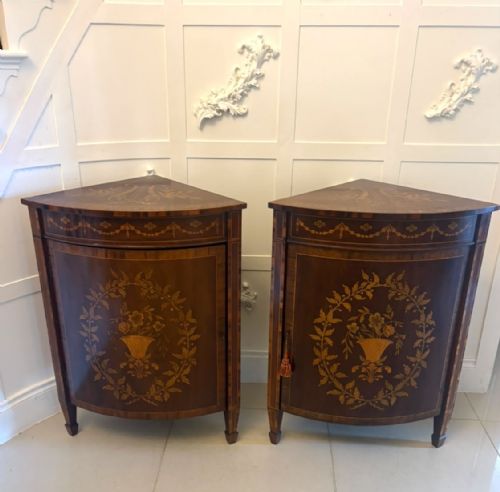
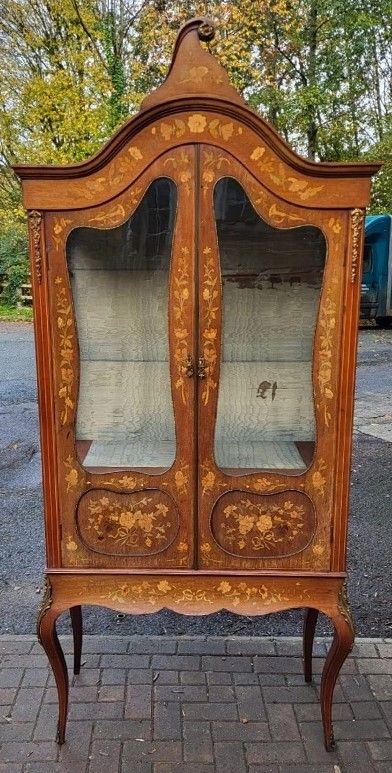
Edwardian Marquetry Display Cupboard
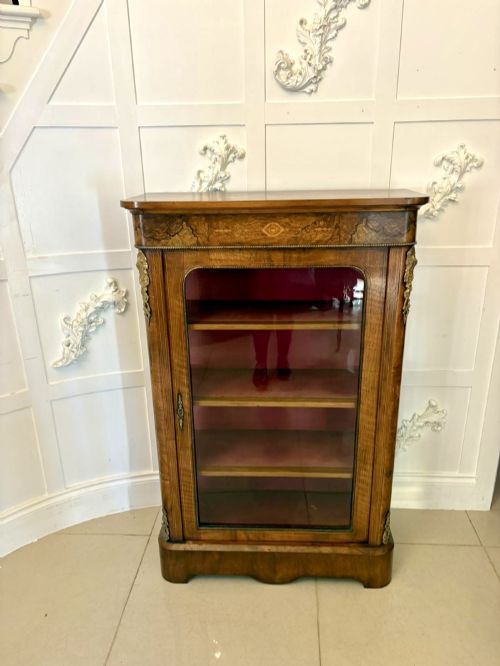
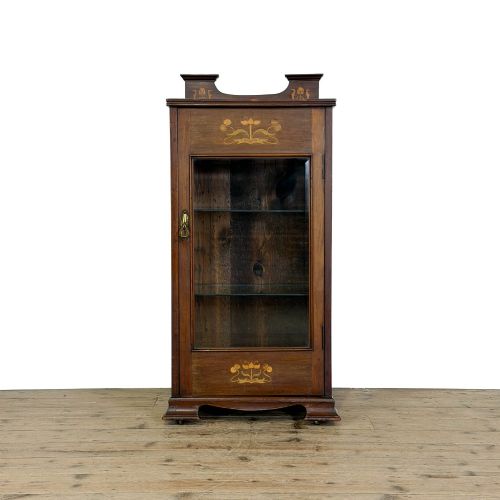
An Edwardian marquetry display cupboard brings structured elegance and refined storage to a room through glazed doors and intricate wood inlay.

Edwardian Marquetry Display Cupboard
An edwardian marquetry display cupboard combines the lighter timbers and delicate ornamentation characteristic of the early twentieth century with practical exhibition space. These pieces serve to showcase cherished objects behind glass panels while offering enclosed shelving beneath or beside the main display area.
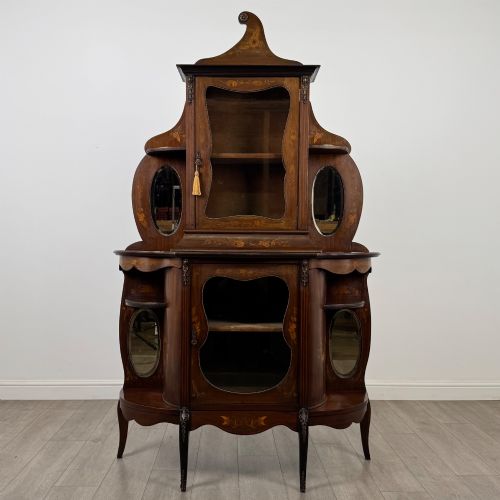
The selection on this page centres predominantly upon Edwardian examples alongside related late nineteenth century Victorian interpretations. Cabinets appear in various configurations including freestanding upright display units, corner cabinets designed to utilise room perimeters, and two-part standing furniture.
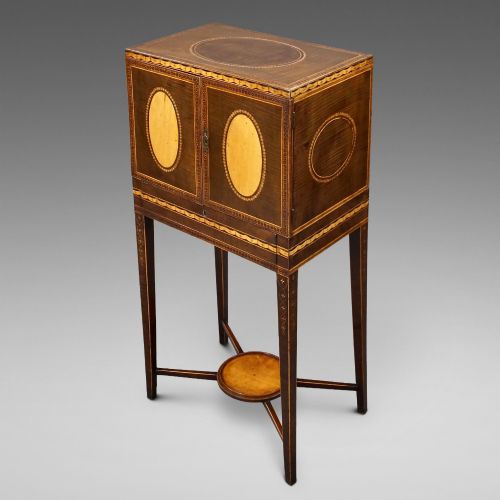
Makers and workshops of the period drew heavily upon earlier design vocabularies, producing pieces described as Sheraton Revival alongside simpler Edwardian and occasional Art Nouveau forms. Timber choices lean towards mahogany and satinwood, frequently embellished with contrasting wood inlays and floral marquetry motifs.
How They Were Made
Cabinet makers constructed the foundational carcases of these pieces using solid and veneered hardwoods such as mahogany, walnut, and satinwood. Wood inlay and marquetry techniques involved hand-cutting contrasting timbers, including harewood and amboyna, to form floral or geometric patterns set flush into the primary surface.
Glazing typically involved individual glass panes held by slender wooden bars or astragal mouldings, while brass hardware secured doors and internal fittings. Back panels often incorporated mirror glass or fabric linings to reflect light through the displayed contents.
The archive shows that taller two-part standing corner display cupboards combine enclosed lower storage with upper glass-fronted exhibition space.
What Varies in Quality
The refinement of the marquetry work and the crispness of the inlaid details distinguish standard production from exceptional pieces. Artisans who employed a richer variety of contrasting timbers and achieved seamless integration of floral motifs created work of superior visual impact.
Proportion and structural framing also determine the distinction between ordinary utility cabinets and fine cabinet work. Well-balanced cornices, finely divided astragal glazing, and the inclusion of named makers elevate the standing of a piece within the range.
Edwards & Roberts·Maple & Co.
The Edwardian Marquetry Display Cupboard Glossary
- Marquetry
- Decorative veneer work formed by fitting together small pieces of wood, shell, or ivory to create pictorial or geometric designs. This technique distinguishes ornamental furniture surfaces.
- Astragal
- A moulding profile used to hold glass panes within a door frame. Slender astragals define the classic glazed compartments of these cabinets.
- Pier Cabinet
- A narrow display cabinet designed specifically to stand against the wall space between windows. These pieces often feature glass doors and velvet or mirrored interiors.
- Satinwood
- A durable, lustrous tropical timber with a golden yellow sheen. It serves frequently as a contrasting veneer or primary wood in late period furniture.
- Sheraton Revival
- A late nineteenth and early twentieth century design movement inspired by the neoclassical furniture of George Sheraton. It relies on satinwood, fine inlay, and tapered legs.
Edwardian Marquetry Display Cupboard: Frequently Asked Questions
Where should I place a corner display cupboard?
Corner display cupboards suit underutilised angles in dining rooms, living spaces, or hallways where flat furniture might obstruct pathways. Their triangular footprint allows them to occupy minimal floor area while drawing the eye upward.
Position the cabinet away from direct sunlight to protect internal contents and fragile timber finishes from fading. Ensure the surrounding floor is level so the glazed doors hang true and open smoothly.
How do I style the interior shelves?
Arrange displayed objects by height and material, balancing heavy ceramics with delicate glassware across the available shelves. Leaving empty space around groupings prevents the cabinet from appearing cluttered and lets light pass through the glass.
Take advantage of mirrored backs where present to reflect objects from multiple angles. Group items of similar periods or colour palettes to create a cohesive internal display.
How do I tell Edwardian from Victorian cabinets?
Edwardian pieces generally exhibit lighter proportions, paler timbers like satinwood, and restrained inlay patterns influenced by the Sheraton Revival style. Victorian equivalents tend to use darker woods such as burr walnut and heavier structural forms.
Examine the internal construction and backboards, as later Edwardian workshops often adopted modified manufacturing techniques alongside traditional hand joinery. Stylistic details like subtle floral marquetry point firmly towards the Edwardian era.
How should I clean the wood and glass?
Dust the exterior mahogany or satinwood regularly with a soft, dry lint-free cloth to prevent particulate buildup on the marquetry. Avoid silicone-based polishes and instead use traditional beeswax sparingly to maintain the natural sheen of the timber.
Clean the glazed panels with a gentle glass cleaner applied directly to the cloth rather than the wood, preventing liquid from seeping beneath the astragal mouldings.