


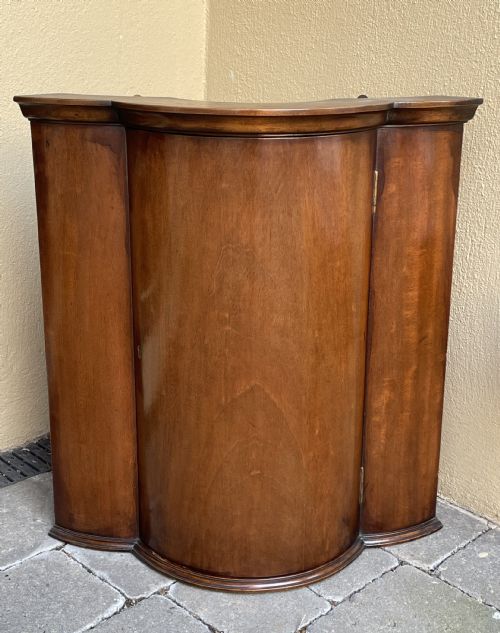


Vintage Mahogany Corner Furniture
Vintage mahogany corner furniture brings practical timber storage and display into unused angles of a room.

Vintage Mahogany Corner Furniture
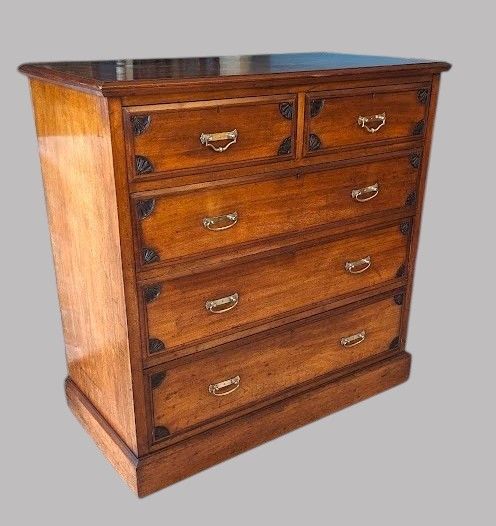
Vintage mahogany corner furniture gathers corner cabinets, cupboards, chests of drawers, and tier-based whatnots designed to fit room angles efficiently. These utilitarian and display forms appear across Georgian, Victorian, Edwardian, and Regency periods, using dense timber to anchor room perimeters.
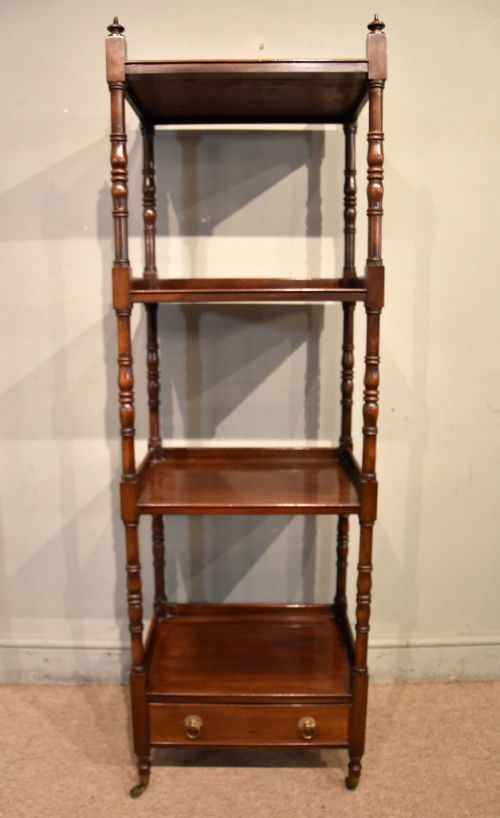
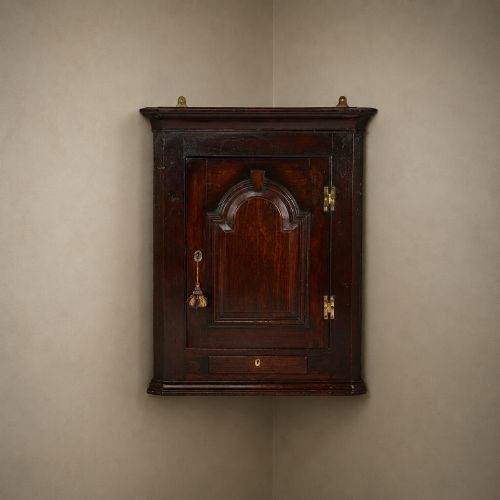
Hanging wall cupboards and standing double-height display units make up the primary cabinet options on this page. Multi-tiered whatnots and tiered shelving units also emerge frequently, offering open display surfaces rather than enclosed storage.
Military campaign chests and specialised washstands provide alternative forms within this timber group. Buyers encounter pieces ranging from Georgian country house cupboards to Edwardian inlaid display units, all built for triangular floor space.
Materials and Construction Techniques
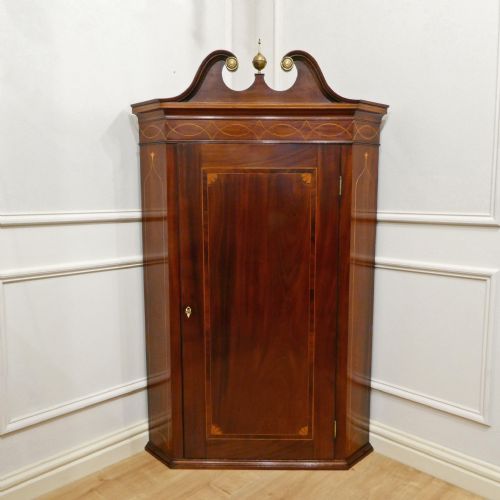
Makers built these pieces predominantly from solid mahogany and flame mahogany, often incorporating contrasting satinwood inlay or marquetry decoration. Structural joinery accommodated the demanding angles of corner units, utilising brass hardware and glass doors on display cabinets.
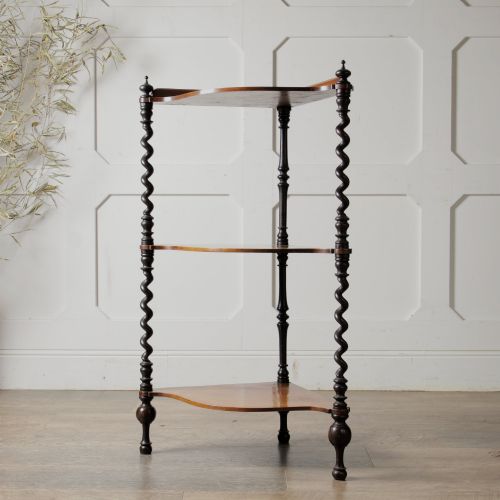
Accessory materials included leather surfaces on campaign desks and chests, alongside turned components like barley twist supports on whatnots. Oak frequently appeared in secondary framing, while brass corner brackets reinforced travel chests built for military use.
Listings feature periods spanning Georgian, Victorian, Edwardian, and Regency eras, constructed in mahogany, flame mahogany, and oak with brass and glass elements.
Distinctions in Quality
Quality reveals itself in the selection of timber grain, particularly the depth of flame mahogany and precision of satinwood inlay. Superior workshops employed meticulous marquetry and robust brass hardware that integrated cleanly into the overall carcass.
Refinement in the turning of vertical supports on whatnots and the crispness of cabinet mouldings separate standard production from exceptional examples. Maker attribution, such as signed Edwards and Roberts pieces, further establishes the upper tier of manufacture.
Edwards And Roberts
The Vintage Mahogany Corner Furniture Glossary
- Whatnot
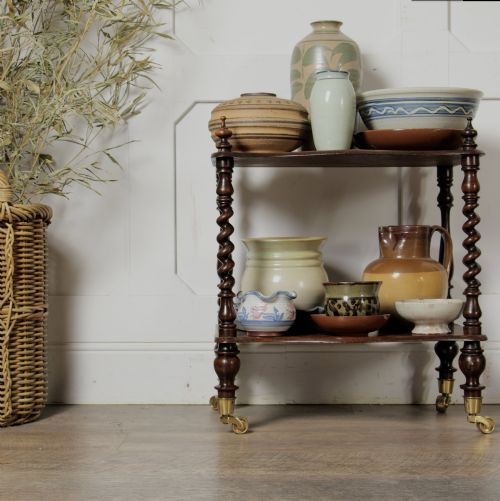
- A set of open shelves supported by pillars, used for displaying ornaments and small objects. These tiered stands frequently feature three, four, or more levels.
- Campaign chest
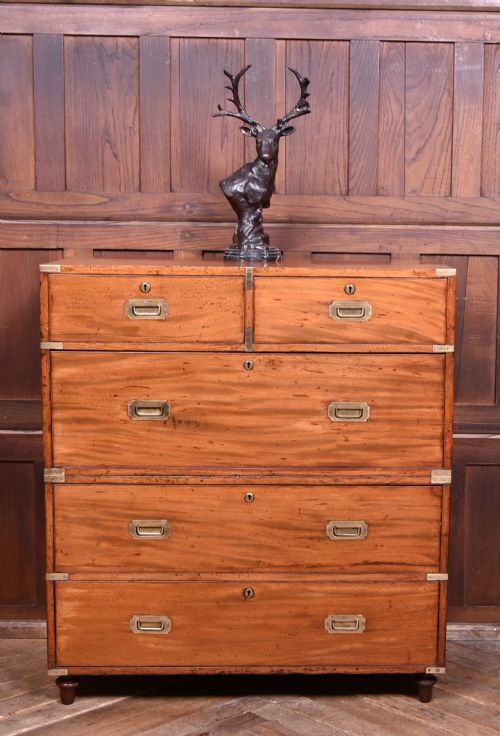
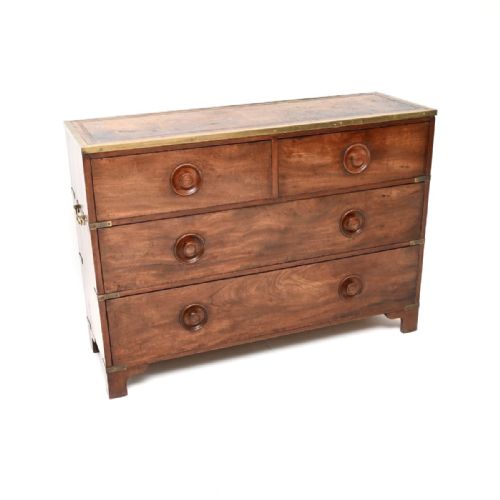
- A split-carcass set of drawers designed for easy transport by military officers. Brass corners, recessed handles, and carrying straps characterise these travel items.
- Marquetry
- Decorative veneer work forming pictures or patterns by using thin pieces of wood. This technique appears on Edwardian cabinet doors and surfaces.
- Corner cupboard
- A storage unit built with a triangular plan to fit neatly into the corner of a room. Versions include both wall-hanging models and standing double-height formats.
Vintage Mahogany Corner Furniture: Frequently Asked Questions
How do I choose between a corner cabinet and a whatnot?
Corner cabinets feature enclosed doors, often glazed, to protect stored objects from dust while keeping them visible. They work well when you need concealed storage paired with modest display space.
Whatnots provide open shelving across multiple tiers to display decorative items freely. They suit spaces where visual lightness matters more than enclosed storage capacity.
What is the difference between Georgian and Edwardian pieces?
Georgian items originate from the eighteenth or early nineteenth century, prioritizing architectural proportion and solid timber construction. They often present simpler surfaces or restrained classical mouldings.
Edwardian pieces date around nineteen hundred, frequently showcasing Sheraton revival influences with delicate marquetry and satinwood inlay. These later items emphasise decorative surface patterns and lighter proportions.
Where should I place a corner cabinet?
These units fit directly into room angles, utilising dead space that standard rectangular furniture leaves empty. Wall-hanging variants mount securely at eye level, while standing cupboards anchor floor perimeters.
Dining rooms and hallways benefit from the enclosed display offered by glazed doors. Living spaces accommodate standing tier units and whatnots effectively.
How do military campaign pieces differ from standard furniture?
Campaign furniture splits into separate modular sections to facilitate transport during travel. Brass recessed handles, corner brackets, and protective strapping distinguish these functional pieces.
Standard items remain unified carcasses fixed for static domestic interiors. Campaign chests and desks prioritize robust portability without sacrificing polished mahogany surfaces.