


Pair Marble Top Pedestals
These pair marble top pedestals bring solid stone surfaces and sturdy vertical form to any room, working as stands, tables, or cabinets.
Pair Marble Top Pedestals
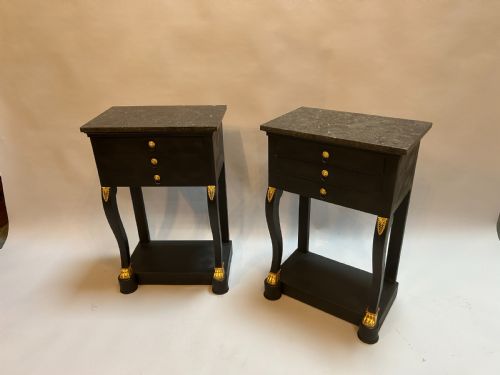
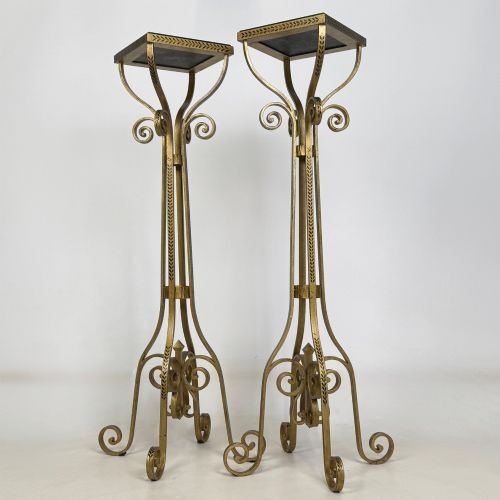
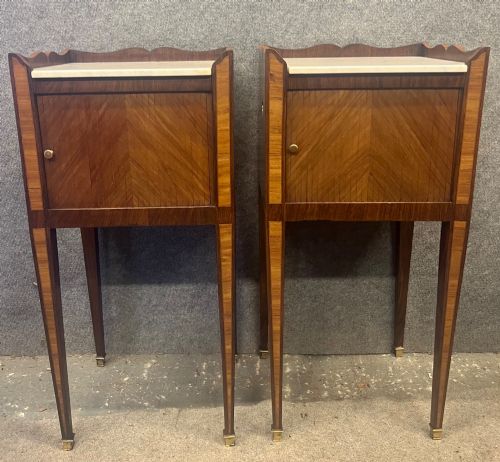
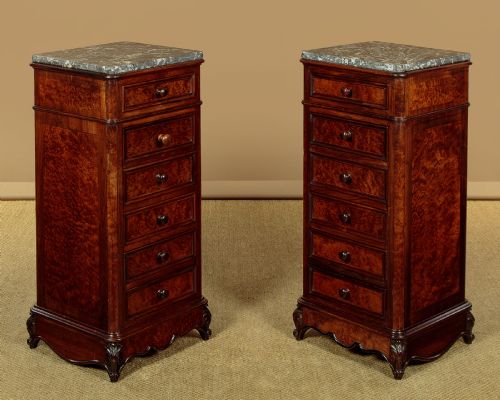
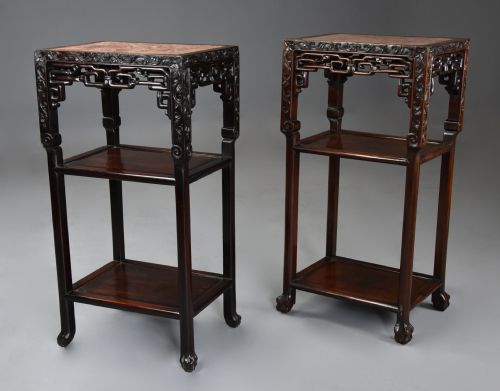
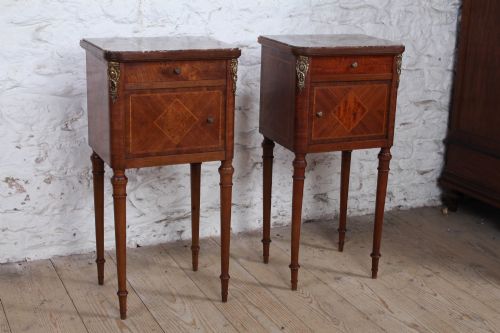
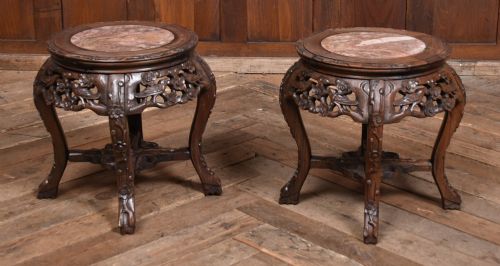
When searching for pair marble top pedestals, buyers encounter a diverse mix of forms that serve as plant stands, bedside cabinets, and urn supports. These pieces range from compact bedside tables to tall display columns designed to hold lamps, busts, or botanical specimens.
The most common versions on this page are French and Chinese designs originating from the nineteenth and early twentieth centuries. French examples often lean towards walnut, mahogany, or giltwood styles, while Chinese pieces utilise hardwoods like rosewood and padouk alongside inset marble.
Makers and manufacturers produced these pairs across various stylistic movements, including Victorian, French Empire, Art Nouveau, and Qing Dynasty periods. Buyers will find cylindrical cupboards, open plant stands, and tiered tables fulfilling similar decorative and functional roles.
How they were made
Construction relies heavily on dense timbers such as mahogany, walnut, rosewood, and various Oriental hardwoods, paired with fitted stone surfaces. Workshops utilised traditional joinery alongside applied veneers like burr and fruitwood, often incorporating brass mounts, ormolu, and mother-of-pearl inlay.
Periods represented reach from the eighteenth century through the Victorian era up to the nineteen-twenties.
What varies in quality
Quality rests primarily in the sharpness of the timber carving and the selection of figured veneers like rosewood or burr walnut. Superior examples display precise joinery where the stone top sits flush within the wood or metal surround without excessive gap.
The weight and type of the stone insert also signal standard, with thick rouge marble or finely figured alabaster marking out higher tiers of production. Furthermore, the crispness of cast bronze mounts or intricate mother-of-pearl inlay distinguishes standard utility pieces from workshop masterworks.
The Pair Marble Top Pedestals Glossary
- Pedestal
- A support or base for a statue, vase, or lamp. These items elevate objects to eye level and provide a stable vertical footprint.
- Torchere
- A tall stand designed specifically to carry a light or candle. In later periods, these often doubled as plant or urn holders.
- Hongmu
- A category of dense, dark Chinese hardwoods often translated as red wood. Craftsmen prized this material for its strength and ability to take intricate carving.
- Ormolu
- Gilded bronze used for decorative mounts on furniture. It adds metallic contrast to dark woods like mahogany and rosewood.
Pair Marble Top Pedestals: Frequently Asked Questions
What were pair marble top pedestals used for?
These items functioned as versatile supports in period interiors, holding everything from heavy porcelain urns and potted plants to bedside lamps and washing basins.
Tall column versions displayed sculptures or busts, while cabinet variants concealed chamber pots or personal belongings beside a bed.
How do I clean a marble top?
Use a soft cloth dampened with warm water and mild, pH-neutral soap to wipe down the stone surface gently.
Avoid acidic cleaners like vinegar or lemon juice, which can etch and dull the polished finish over time.
Are these pieces French or Chinese?
The selection includes both European and Asian origins, with French Empire and provincial walnut pieces sitting alongside Chinese Qing Dynasty hardwood stands.
Distinguishing between them comes down to timber choice, such as padouk or rosewood versus mahogany, and the specific carving motifs employed.
Can these stands support heavy plants?
Most hardwood and mahogany examples possess robust frames capable of holding substantial planters or heavy ceramic urns securely.
Checking the stability of the central column and the thickness of the stone top ensures the piece can bear the intended weight safely.