
Pair Marble Side Tables
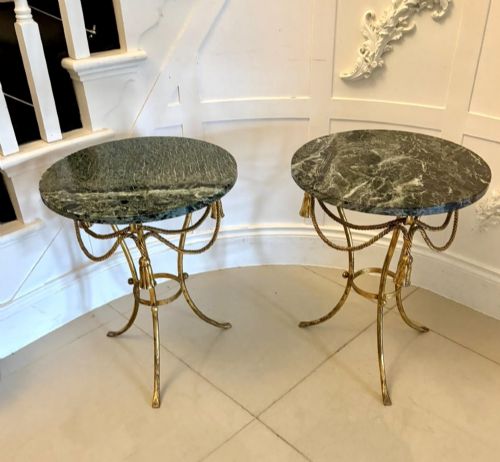
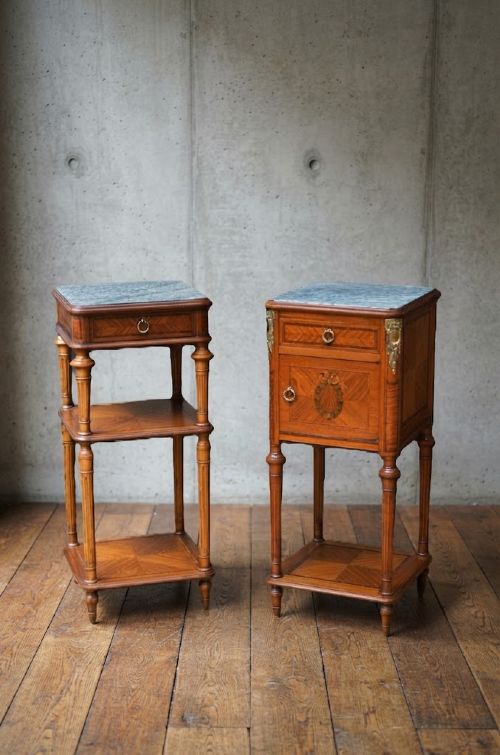
When you search for pair marble side tables, you are entering a category dominated by French bedside cabinets and console tables featuring stone tops.
Pair Marble Side Tables
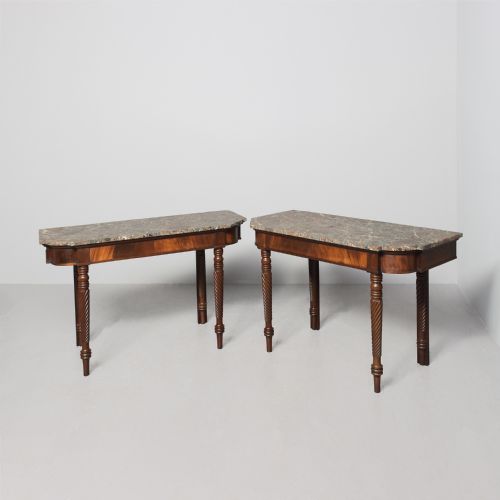
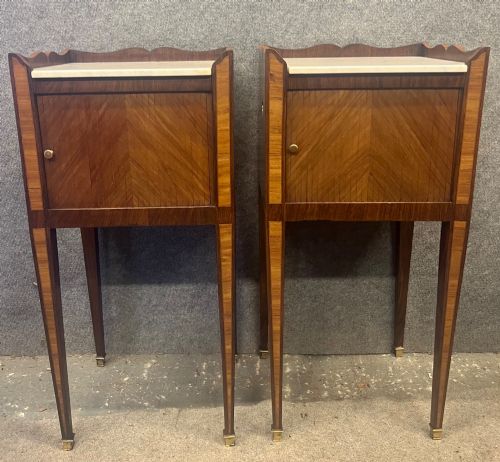
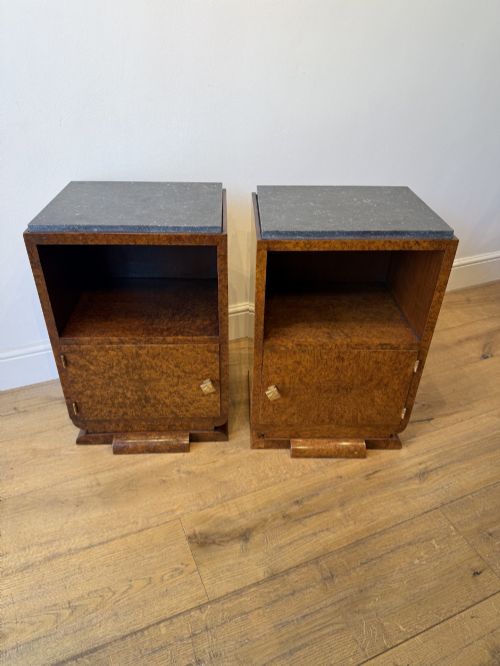
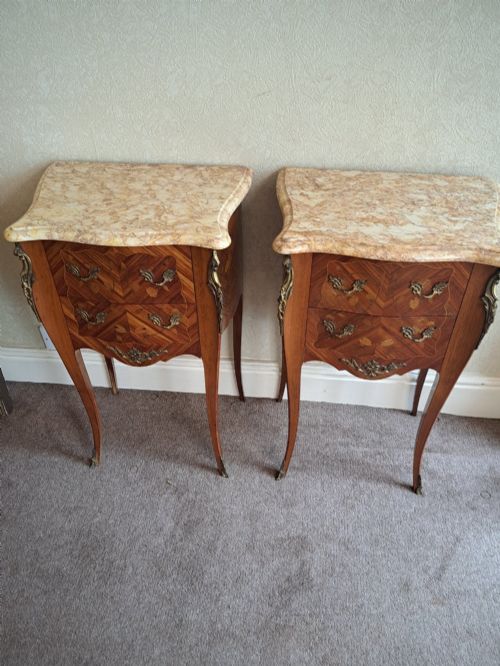
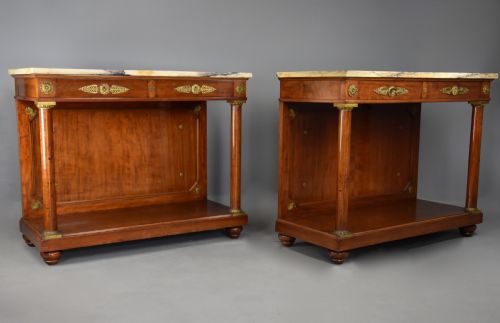
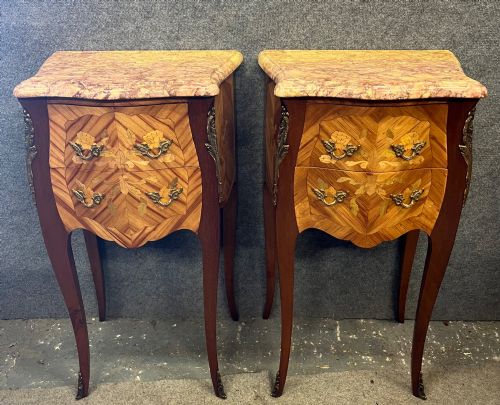
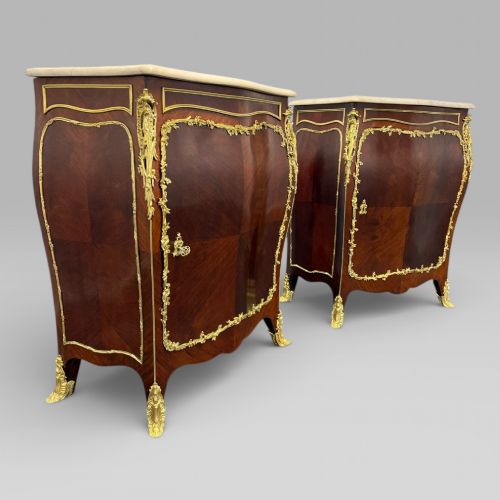
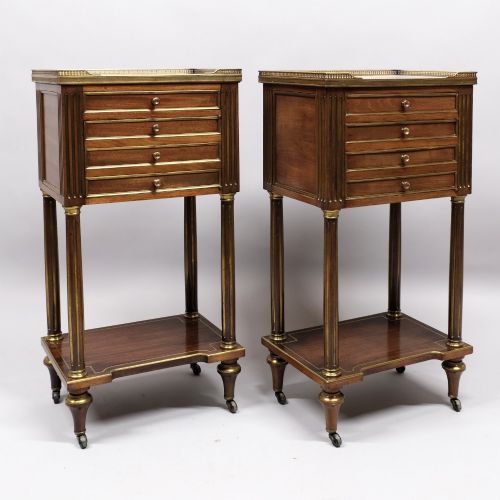
Pair marble side tables primarily encompass European bedside cabinets, lamp tables, and console tables designed with stone surfaces. The form is frequently found in French furniture styles spanning the nineteenth and early twentieth centuries.
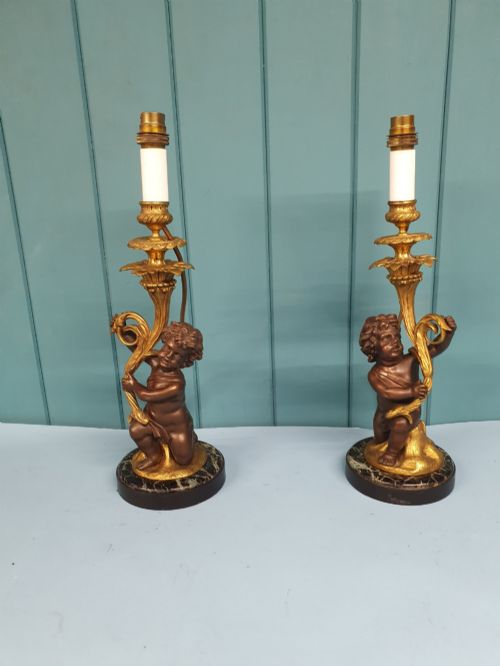
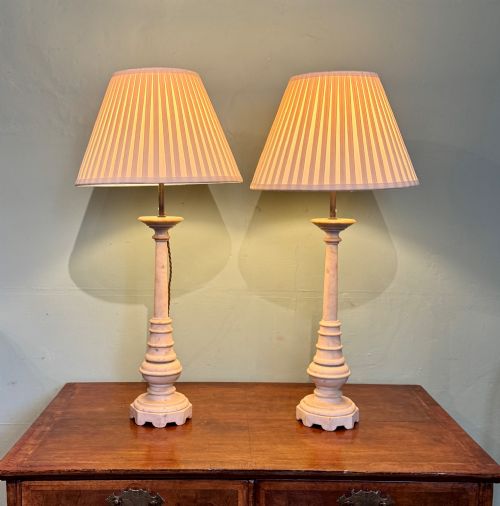
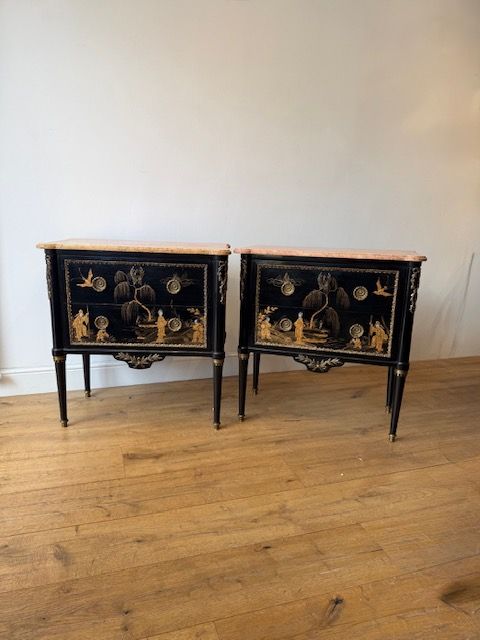
Beyond standard lamp and bedside tables, this category includes occasional tables, plant stands, and larger hall consoles fitted with marble inserts. These pieces originate from various regional traditions, including nineteenth-century French cabinetmaking and Chinese hardwood carving.
The predominant format on this page is the bedside cabinet or small lamp table, usually paired to flank a bed or seating arrangement. Walnut, mahogany, kingwood, and satinwood form the typical wooden structures supporting the stone slabs.
Materials and construction
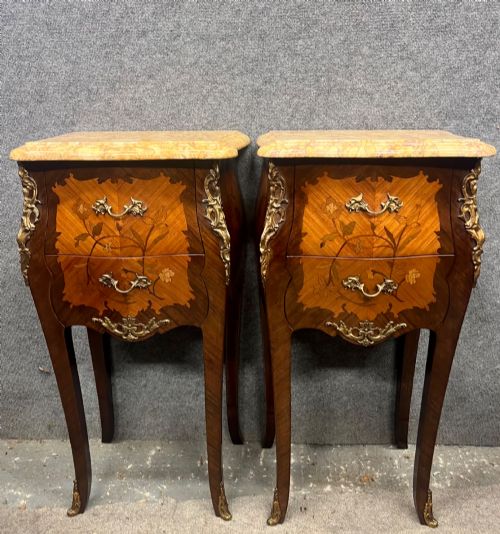
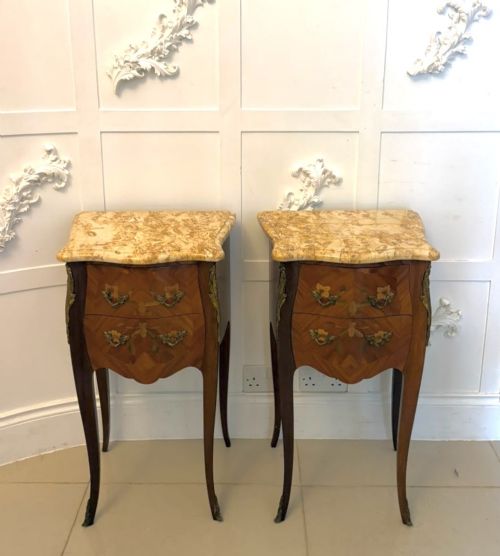
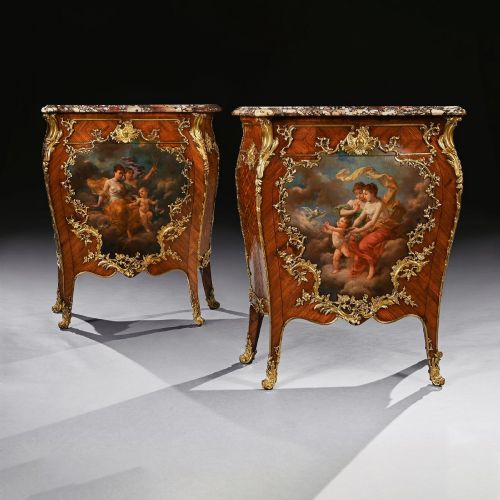
Makers combined solid hardwoods and decorative veneers, such as kingwood, mahogany, walnut, and satinwood, over supportive timber carcases. Marquetry inlay, brass mounts, and gilt bronze or ormolu details frequently adorn the exterior surfaces of these items.
The defining element is the fitted stone top, ranging from white marble to verde and breccia varieties, cut to follow the contours of the table. Some examples incorporate specialist techniques like Vernis Martin lacquer or chinoiserie decoration alongside the stone slab.
Materials recorded across the inventory include white and verde marble, gilt bronze, ormolu, brass, walnut, mahogany, satinwood, kingwood, and Chinese hardwood.
Judging the range
Quality in these tables rests on the precision of the cabinetmaking, particularly in the execution of marquetry, veneer matching, and serpentine or bombe curves. Finer examples display crisper cast bronze or ormolu mounts and carefully selected figured woods.
The thickness, colour variation, and polish of the marble top also distinguish workshop tiers. Superior pieces integrate the stone cleanly into the wooden frame with balanced edge moulding and cohesive grain alignment across the pair.
Krieger Paris·E. Kahn
The Pair Marble Side Tables Glossary
- Marquetry
- Decorative patterns formed by fitting small pieces of veneer into a wooden background. This technique creates complex floral or geometric designs on cabinet doors and tabletops.
- Ormolu
- Gilded bronze mounts applied to furniture for decorative effect. The technique involves coating metal with a gold-amalgam mixture and heating it to leave a rich gold layer.
- Bombe
- A bulging, outward-curving shape characteristic of certain continental case furniture. This profile requires skilled carpentry to shape the wood carcase and fit the marble top precisely.
- Console table
- A table designed to stand against a wall, frequently secured with brackets. In this category, console tables often feature substantial marble surfaces and carved wooden bases.
- Verde marble
- A dark green stone with pale veining commonly utilised for tabletops. It provides a distinct contrast against gilt metal mounts and polished woods.
Pair Marble Side Tables: Frequently Asked Questions
How were pair marble side tables used originally?
These tables served primarily as bedside cabinets or small lamp tables in domestic interiors, holding lighting, books, and personal items. Their stone surfaces offered practical resistance to water and cosmetics.
Larger console variants occupied hallways and reception rooms, providing a stable surface for decorative objects, urns, or lamps while displaying the maker's skill.
How do I care for marble tops?
Marble requires gentle cleaning with warm water and a soft cloth, avoiding acidic substances or harsh chemical cleaners that can etch the polished surface. Regular dusting preserves the natural finish of the stone.
Using coasters and mats prevents staining from drinks or condensation, protecting the porous material over decades of daily domestic use.
How can I tell the period?
Dating relies on combining the wood types, construction methods, and stylistic revival indicators present in the piece. Mid-nineteenth-century items often show heavier proportions and distinct revival motifs, while later examples incorporate lighter woods or Art Deco geometries.
Hardware, dovetailing techniques, and the cut of the marble provide further clues to whether a table originates from the early nineteenth century or the Edwardian era.