


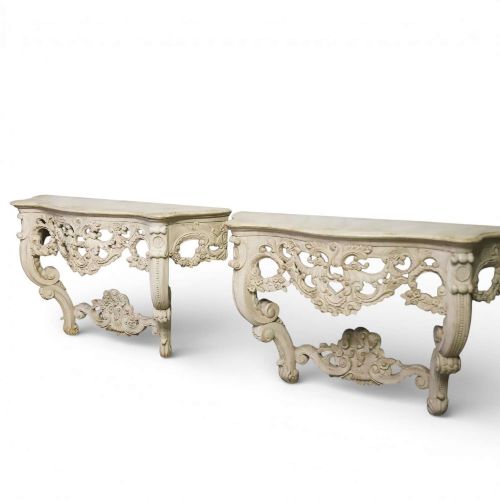
Hall Console Tables Pair
These hall console tables pair matching pieces bring balanced symmetry and architectural presence to an entrance.
Hall Console Tables Pair
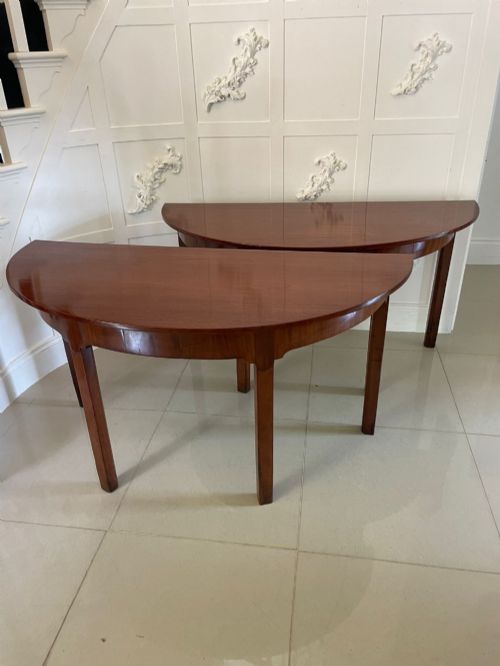
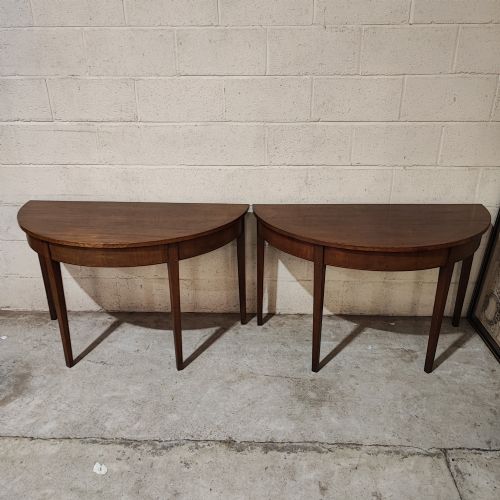
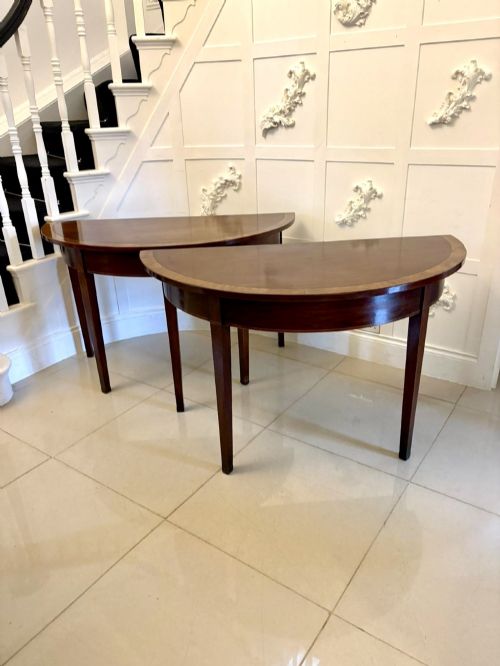
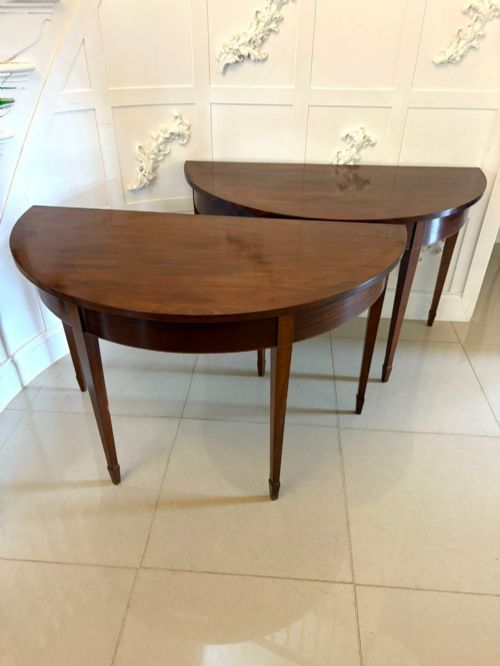
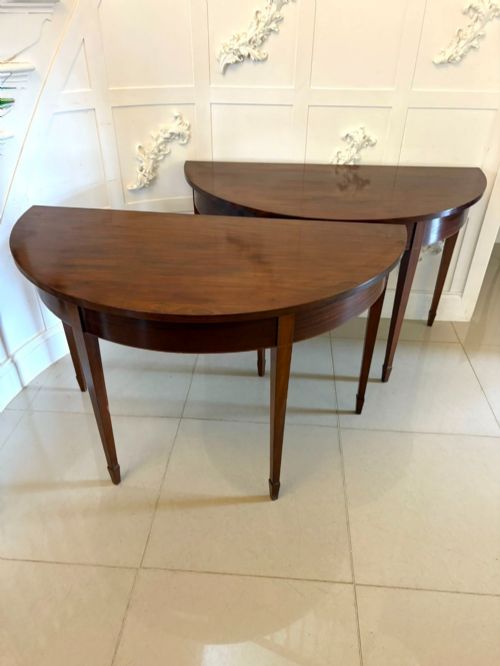
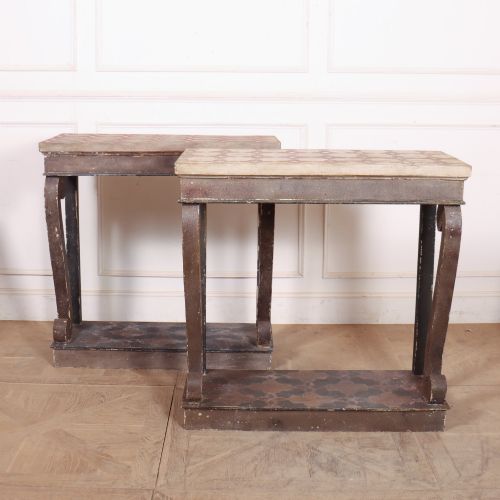
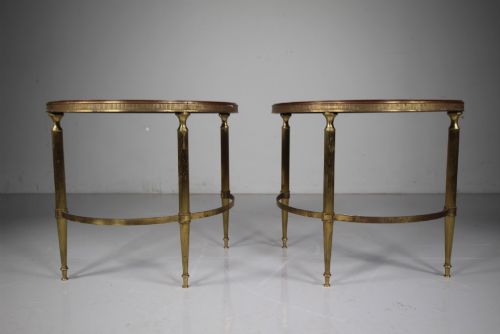
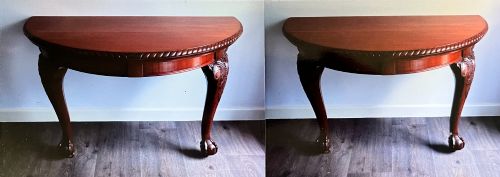
A hall console tables pair provides matched surface space and symmetry for an entranceway, hallway or reception room. These items often take semi-circular or D-shaped forms designed to stand flush against a wall.
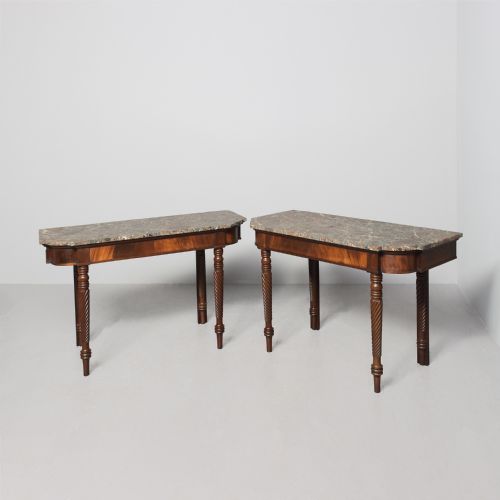
The selections recorded here span from the eighteenth century through the 1930s, encompassing Georgian, Regency and later revival movements. Mahogany and painted wood dominate the available forms, frequently accompanied by marble tops.
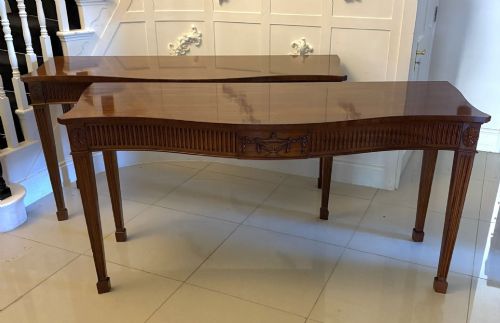
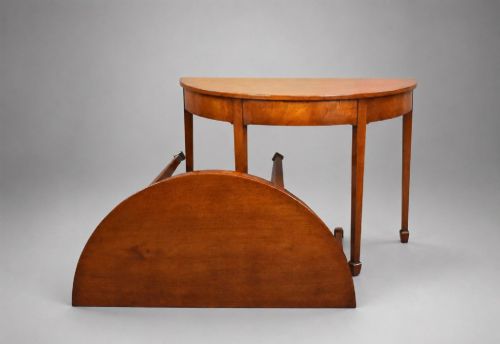
Many examples utilise the demi-lune format, allowing two matching tables to unite into a single circular dining or centre table when required. Others offer serpentine profiles or break-front arrangements intended strictly for wall placement.
Materials and Construction
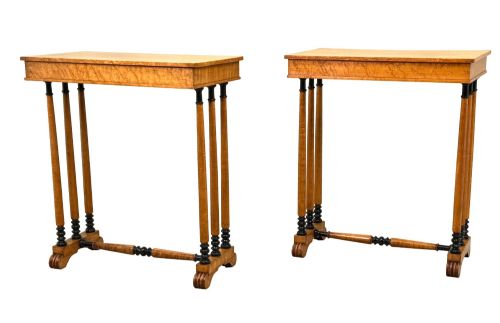
Cabinetmakers constructed these frames primarily in mahogany, walnut, oak and pine, often selecting figured timbers or burr veneers for prominent visual grain. Solid timbers provided structural stability for load-bearing legs and aprons.
Marble inserts appear frequently on tops, ranging from simple white slabs to decorative specimen varieties and breccia marble. Artisans also utilised painted and gilded finishes, particularly on continental pieces and later revival items.
Listings feature woods like mahogany, walnut, oak, pine and marble, spanning George III, Regency and Art Deco periods.
Assessing Quality and Execution
The refinement of carved detail and the choice of timber figure distinguish superior examples from standard production. Crisp neoclassical carving and book-matched veneers indicate dedicated craftsmanship.
Proportion and structural integrity define the architectural success of a pair. Matching grain patterns across both tables show careful material selection by the original maker.
Bettenfeld Paris·Jean Joseph Chapuis
The Hall Console Tables Pair Glossary
- Demi-lune
- A half-moon shape popular for console tables designed to sit flat against a wall. This format allows two matching tables to combine into a full circle.
- Serpentine
- A curved shape featuring a convex centre flanked by concave ends. It adds dynamic movement to the front apron of a table.
- Breccia marble
- A composite stone made of broken rock fragments embedded in a fine-grained matrix. It creates a rich, mottled pattern across the surface.
- D-end
- A rectangular table with one semicircular end, often used in pairs to form a longer dining surface.
- Ebonised
- Wood treated with a dark finish to imitate ebony. This technique gained particular favour during the nineteenth century.
Hall Console Tables Pair: Frequently Asked Questions
How do I style a hall console tables pair?
Place the two matching tables side by side against a wide wall or separate them symmetrically flanking a doorway.
Top them with balanced lamps, mirrors or decorative objects to anchor the entrance space.
Were these tables originally made as pairs?
Many eighteenth and nineteenth-century console tables were commissioned as matched sets to furnish large Georgian and Regency halls.
Others started as single pier tables where a matching partner was sought later to complete a symmetrical scheme.
Can these tables be used for dining?
D-end and demi-lune versions often feature folding leaves or configurations designed to pull away from the wall and join together.
This clever dual-purpose design allowed homeowners to transform hallway furniture into a dining table when entertaining.
How do I identify the period of these tables?
Examine the timber species, joinery methods and decorative vocabulary such as neoclassical carving or Regency reeding.
Georgian and Regency pieces typically show dense, heavy mahogany construction, while later 1920s and 1930s examples introduce painted finishes and lighter frames.