
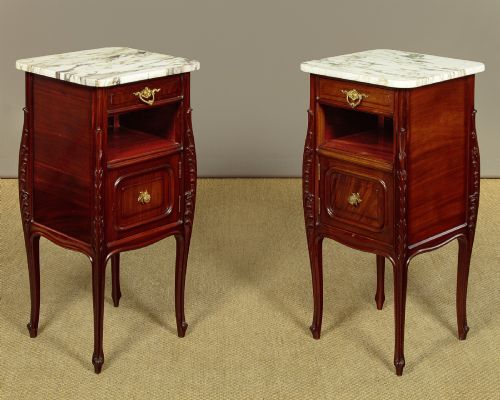
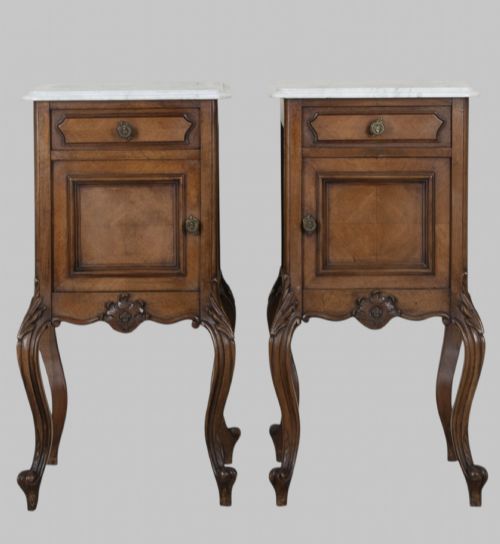
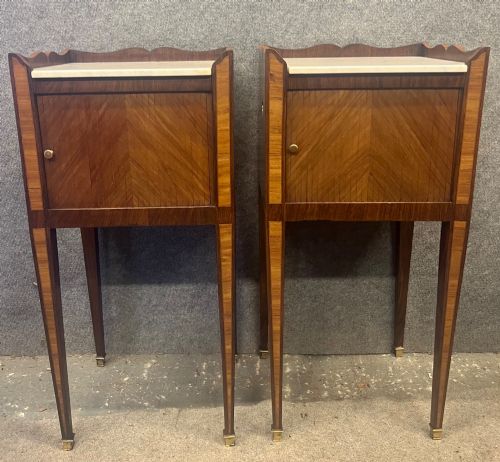
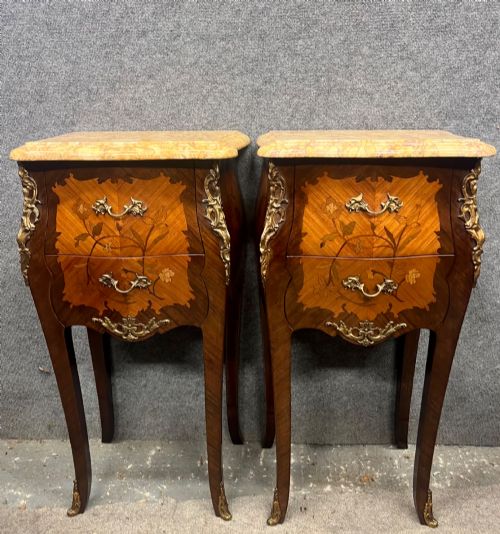
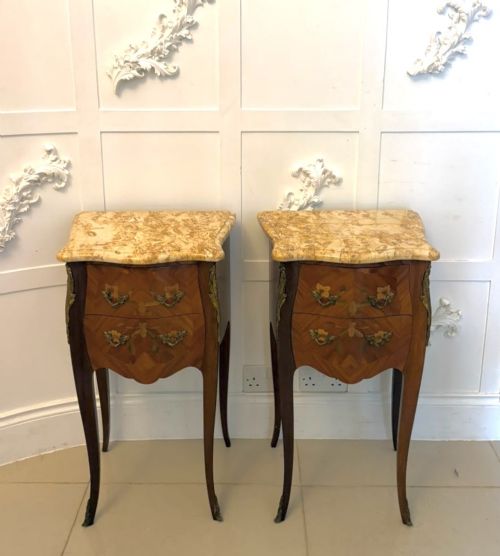
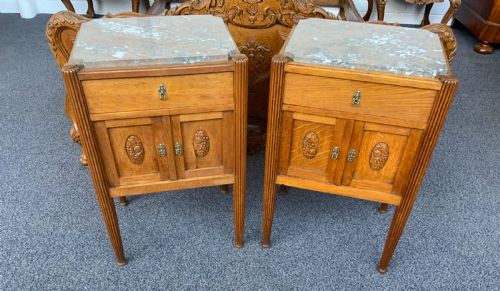

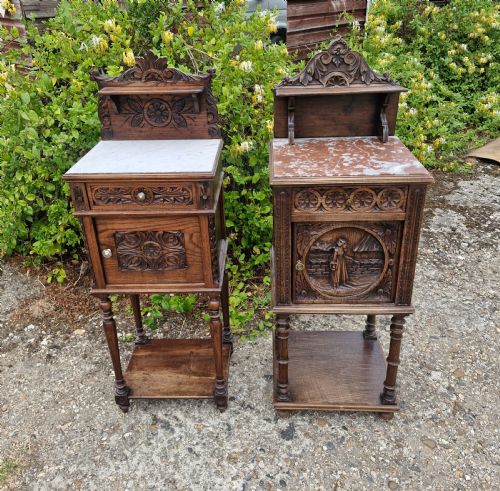
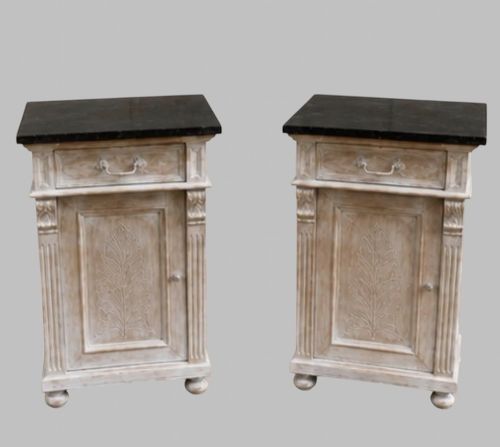
Pair Marble Nightstands
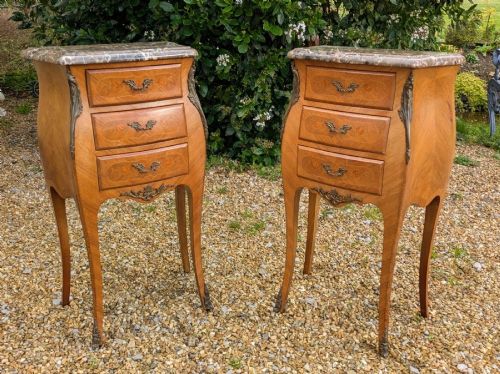
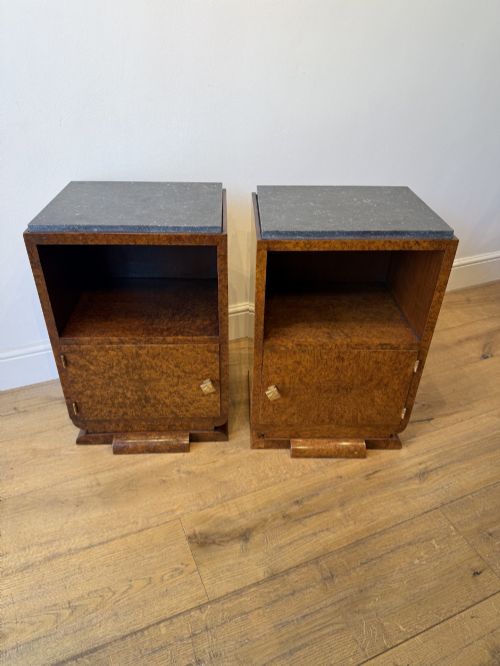
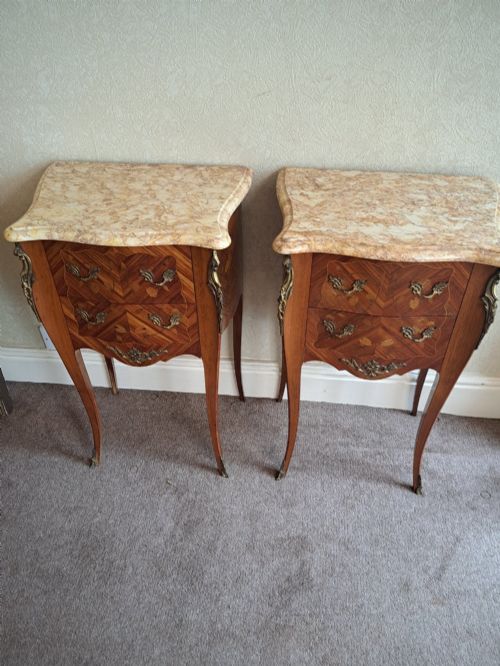
These pair marble nightstands bring practical symmetry to a bedroom while offering the enduring weight of stone and timber.
Pair Marble Nightstands
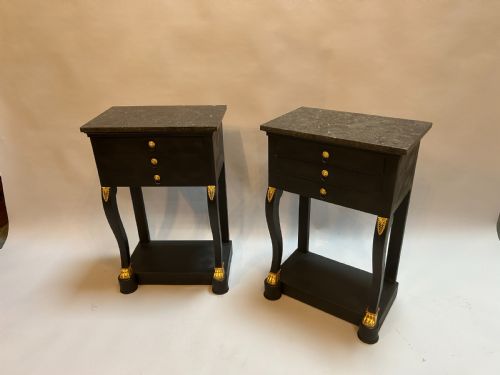
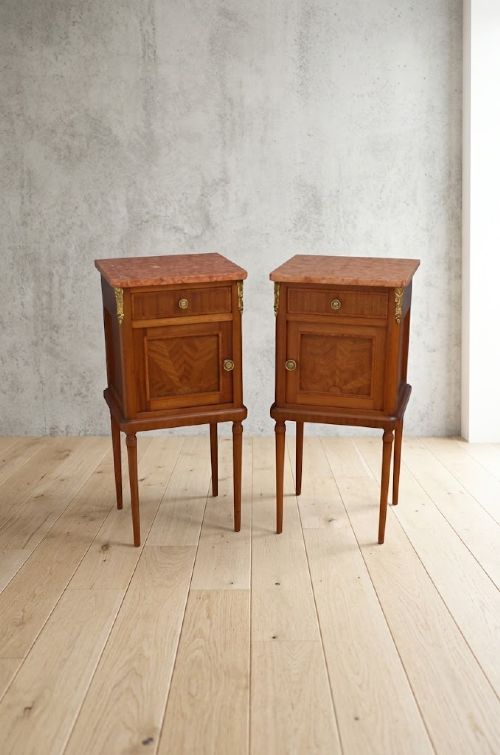
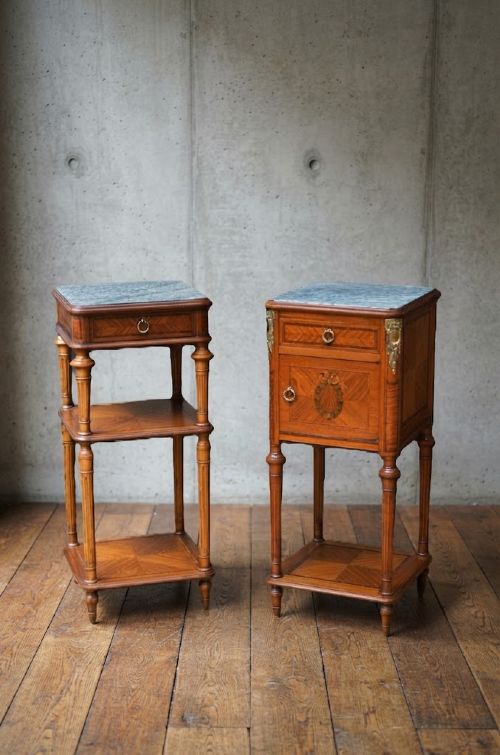
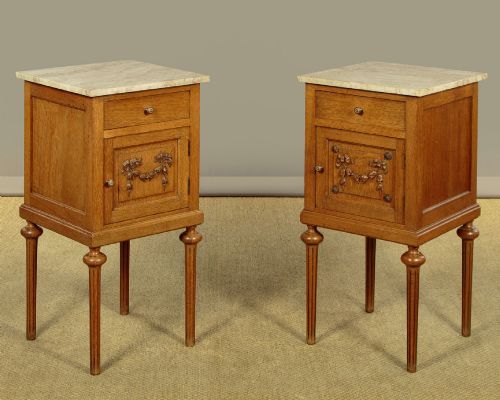
When searching for pair marble nightstands, a buyer is looking for matched sets of bedside storage topped with durable stone, predominantly taking the form of French bedside cabinets and commodes. These pieces span from the early nineteenth century through the Art Deco era, encompassing styles such as Louis XV Revival, Louis XVI, and French Chateau. Most examples met here are paired bedside cabinets featuring hinged doors or drawers beneath their polished stone surfaces.
The selection ranges from restrained oak and walnut pieces to elaborate kingwood and satinwood marquetry. Many incorporate specific marbles like Belgian Sainte-Anne, paired with timber carcases built to flank a bed symmetrically. Alongside standard cabinets, the selection includes open lamp tables and serpentine commodes designed to serve the same bedside function.
Materials and construction
Makers constructed these cabinets using a timber carcase of walnut, oak, mahogany, or fruitwood, frequently applied with decorative veneers including kingwood, rosewood, amboyna, and burr walnut. Inlaid designs utilise marquetry techniques to create floral or geometric patterns across the doors and drawer fronts. Carved detailing appears on solid oak and walnut frames, particularly within provincial French and revival pieces.
The defining stone tops sit loose or fixed to the timber base, shaped with bevelled or moulded edges to follow the contours of the cabinet. Ormolu and brass mounts embellish corners, handles, and feet on finer pieces, while bronze hardware provides structural accents. Secondary timbers such as pine support the internal shelving and drawer linings.
Listings feature marble paired with walnut, oak, mahogany, kingwood, rosewood, satinwood, and ormolu mounts across multiple decades.
Distinguishing quality
Quality separates in the precision of the timber matching and the complexity of the marquetry inlay. Superior examples show continuous grain alignment across drawer fronts and use dense, figured veneers like kingwood and satinwood rather than plain domestic hardwoods. The execution of hand-carved mounts and the weight of the cast ormolu hardware also signal higher production standards.
The selection of the marble top dictates a distinct tier of craftsmanship, with thick slabs featuring active veining and precise edge profiling marking out superior pieces. Structural integrity in the dovetail joinery of the internal drawers and the original fit of the cabinet doors further distinguish workshop execution.
E. Kahn
The Pair Marble Nightstands Glossary
- Chevet
- A French term for a small bedside table or cabinet. These domestic pieces often include a single drawer and a small cupboard space below.
- Ormolu
- Gilded bronze mounting applied to furniture for decorative effect. This technique was widely used on eighteenth-century and revival French cabinets.
- Marquetry
- The art of applying decorative veneer pieces to a structure to form geometric or pictorial designs. Cabinetmakers used various tinted woods to achieve contrast.
- Bombe
- A swelling, convex curved shape found on the front and sides of furniture carcases. This profile requires skilled woodworking to achieve the curved drawers and doors.
Pair Marble Nightstands: Frequently Asked Questions
What periods do these nightstands come from?
The pieces span the nineteenth and early twentieth centuries, with examples originating from the First Empire period through the Art Deco era. Revival styles referencing Louis XV and Louis XVI are also common among the dates recorded.
Craftsmen built these cabinets across decades of changing aesthetic preferences, leading to variety in timber choice and decorative carving.
Are the marble tops original to the cabinets?
Most marble slabs found on these bedside tables are contemporary to the wooden carcase, cut and shaped specifically to fit the moulded top edge. Stones vary from simple white variants to heavily veined Belgian Sainte-Anne marble.
Buyers should examine how the stone sits within the wooden gallery or rebate to understand its relation to the base.
How do I maintain the marble surfaces?
Natural stone requires regular wiping with a damp cloth and mild soap to prevent staining from liquids or cosmetics left overnight. Avoid acidic cleaners that can etch the polished surface of the marble.
Applying a specialist stone wax periodically helps protect the finish from moisture rings and daily wear.
What timber types are most common?
Walnut and oak appear frequently in both solid forms and as veneer foundations. Exotic woods like kingwood, rosewood, and satinwood are used for surface marquetry and decorative panels.
Pine and other softer timbers typically form the internal secondary framing of the drawers and carcase backs.