



Wooden Marble Top Cabinets
These wooden marble top cabinets combine stone and timber for practical rooms, bringing weight and utility where storage meets a durable surface.
Wooden Marble Top Cabinets
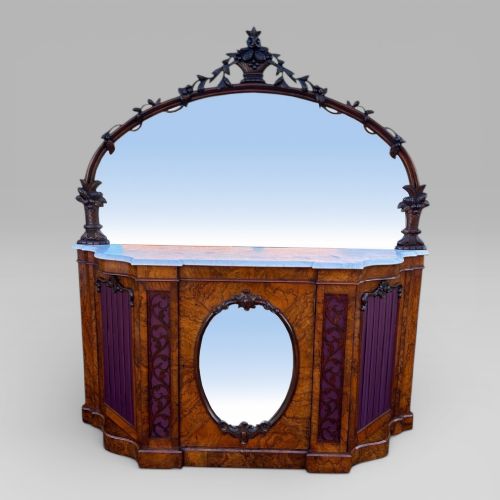
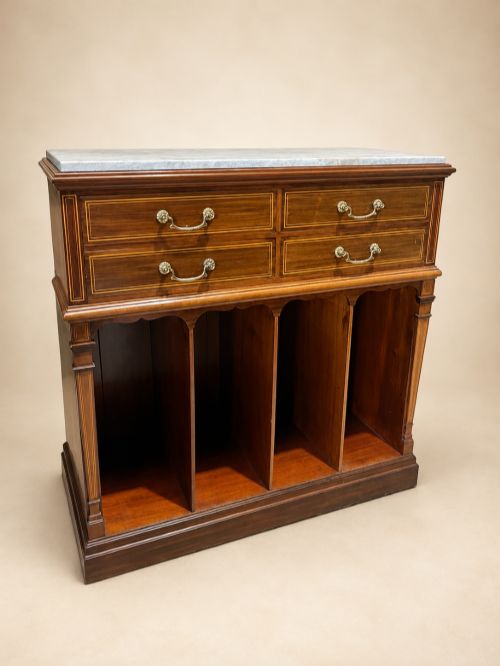
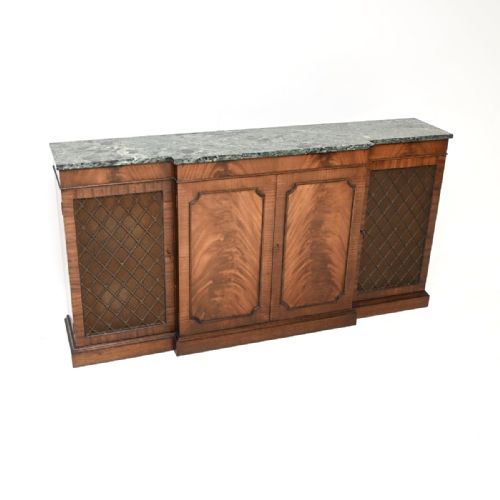
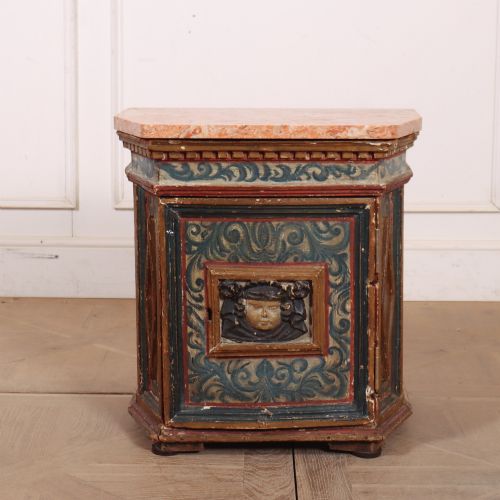
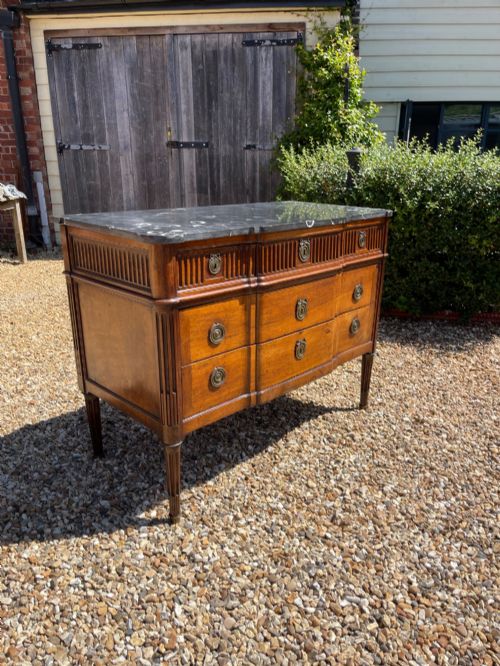
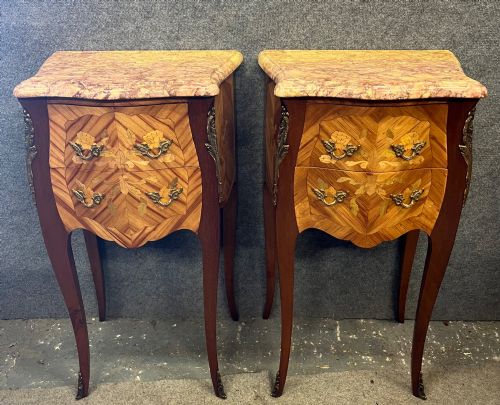
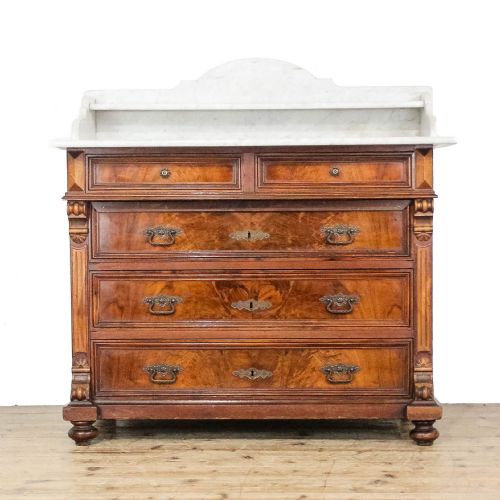
Wooden marble top cabinets appear primarily in forms designed for bedrooms and parlours, including bedside cabinets, commodes, and washstands spanning the eighteenth, nineteenth, and early twentieth centuries. The pieces on this page are most frequently French or Victorian in origin, often rendered in walnut, mahogany, or cherrywood.
Bedside cabinets and bedside tables form a large share of the examples, alongside commodes, side cabinets, and washstands fitted with heavy stone slabs. These furniture items serve both decorative and functional roles, using the stone top to resist water and wear.
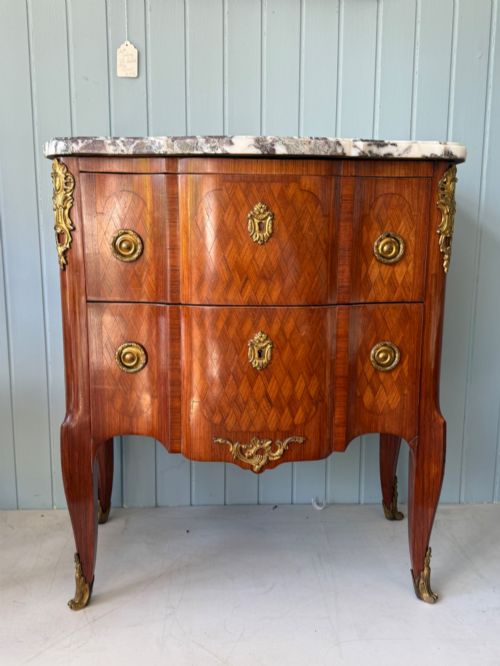
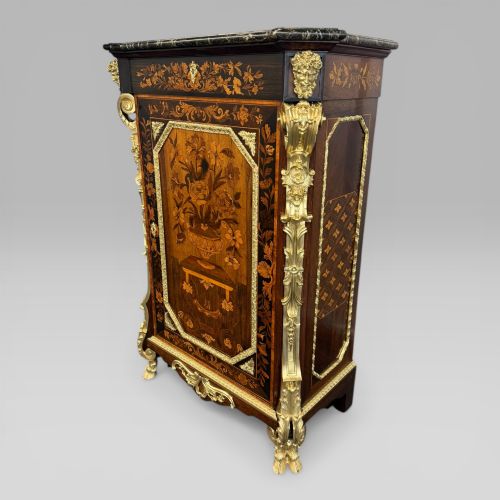
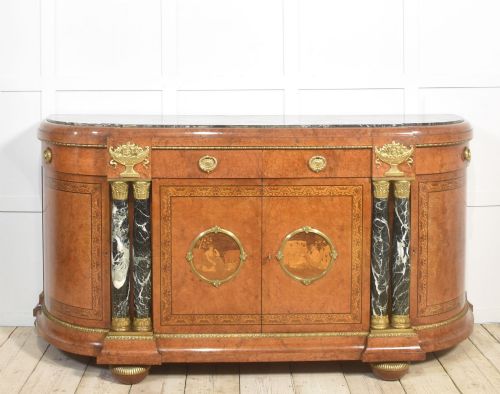
Stylistic influences range from plain nineteenth century utility to elaborate French Louis XV revival pieces decorated with marquetry and ormolu mounts. Buyers find everything from compact cylindrical bedside chests to larger sideboards and buffets sharing the defining stone and wood construction.
Materials and construction
Cabinet makers constructed the foundational bodies using hardwoods such as mahogany, walnut, cherrywood, and satinwood, often applying fine veneers like flame mahogany or tulipwood over pine or oak carcasses. Marquetry inlay and brass or ormolu mounts frequently adorn the exterior surfaces of continental and revival pieces.
The stone slabs rest directly upon the timber frames, selected for their thickness and natural veining to provide a stable, cool counter surface. Joinery techniques follow traditional cabinet making standards, utilising dovetails for drawers and solid framing to support the heavy weight of the marble.
Early nineteenth century cabinet makers occasionally added secret compartments behind false drawer fronts to hide small valuables.
Judging quality and craftsmanship
Quality rests upon the selection of timber veneers, the precision of inlaid marquetry, and the thickness and figuring of the marble slab itself. Superior items display tight, balanced wood grain and crisp carving rather than moulded substitutes.
The integrity of the internal carcass and original hardware, such as brass handles and working locks, separates standard production furniture from master workshops. Proper alignment between the stone top and the wooden base indicates careful assembly that survives decades of use.
Edward Holmes Baldock·Gillows
The Wooden Marble Top Cabinets Glossary
- Commode
- A low chest of drawers or cabinet, typically French in origin, featuring a flat top designed for display or service. These pieces often stand on cabriole or tapered legs.
- Marquetry
- Decorative patterns formed by inserting thin slices of different woods, veneers, and occasionally bone or metal into a wood veneer base. It creates intricate pictorial or geometric designs across drawer fronts and cabinet doors.
- Ormolu
- Gilded bronze mounts and decorative ornaments applied to furniture, popular in French eighteenth century and revival pieces. It adds metallic contrast to the timber and stone surfaces.
- Washstand
- A piece of furniture designed to hold a basin and jug, commonly fitted with a marble top to resist splashing and water damage. Many examples include enclosed cupboards or lower shelves.
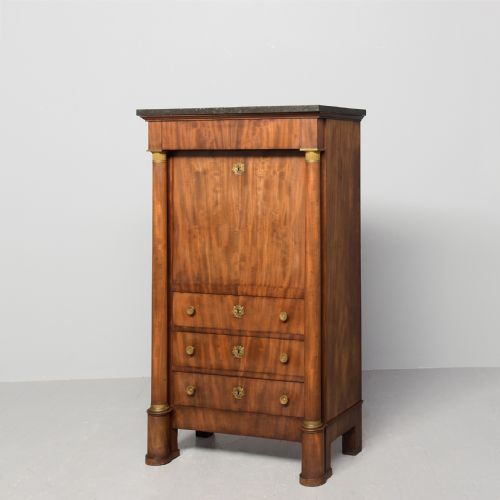
- Secretaire abattant
- A tall cabinet with a hinged writing flap that drops down to reveal a fitted desk interior with small drawers and pigeonholes. It combines vertical storage with a concealed workspace.
Wooden Marble Top Cabinets: Frequently Asked Questions
How do I clean a marble top cabinet?
Use a damp cloth with mild, pH-neutral soap to wipe the stone surface, avoiding acidic cleaners like vinegar or lemon juice that etch marble.
Dry the slab thoroughly with a soft cloth to prevent water spots and protect the polished finish.
Are the marble tops attached to the wood?
Most marble slabs on these cabinets rest entirely by their own weight within a rebated wooden frame rather than being permanently glued down.
This loose fit allows for safe removal during transport and prevents the stone from cracking as the underlying timber expands and contracts with humidity.
Can I use a washstand as a bedside table?
Washstands make striking bedside surfaces because their height and durable marble tops easily accommodate lamps, books, and glasses.
Consider the footprint of the specific piece, as washstands often feature wider proportions and taller splashbacks than standard bedside chests.
How do I distinguish French from Victorian cabinets?
French cabinets frequently exhibit lighter timbers like tulipwood, kingwood, or cherrywood, often accented with extensive marquetry and curved cabriole legs.
Victorian pieces tend to use heavier mahogany or walnut with darker finishes, straighter lines, and more substantial panel construction.