
Marble Topped Nightstands
Marble topped nightstands bring solid stone surfaces and timber storage to the bedside, combining practical utility with refined period character.
Marble Topped Nightstands
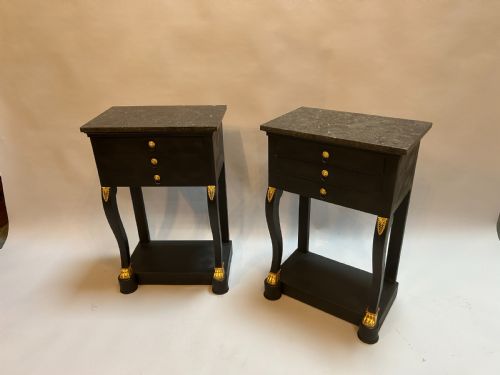
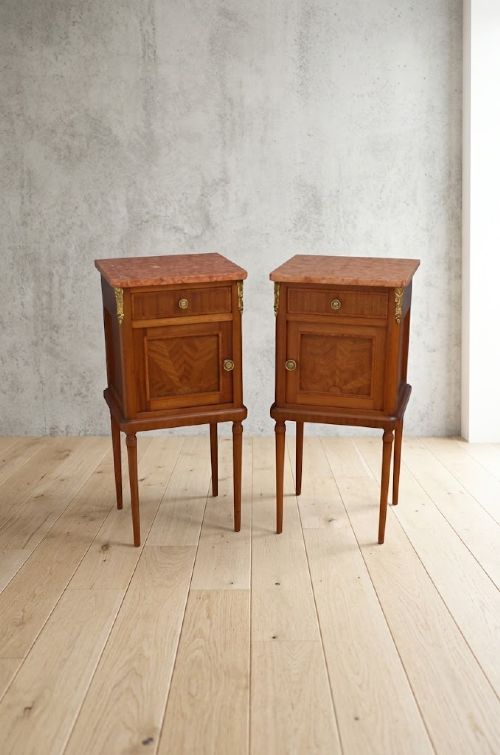
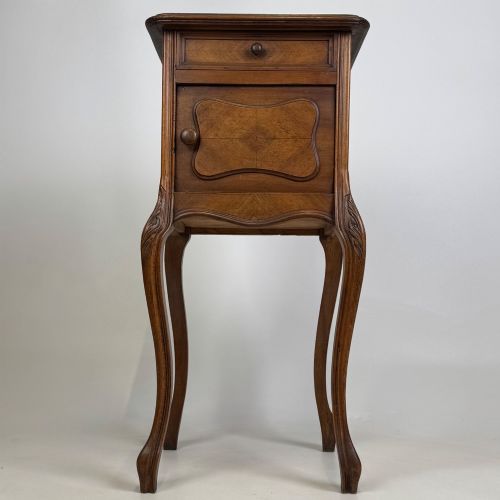
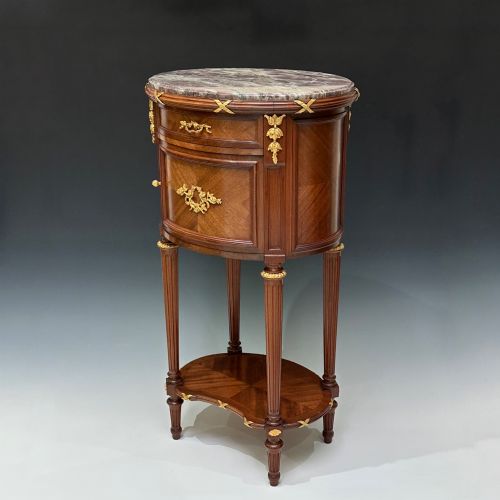
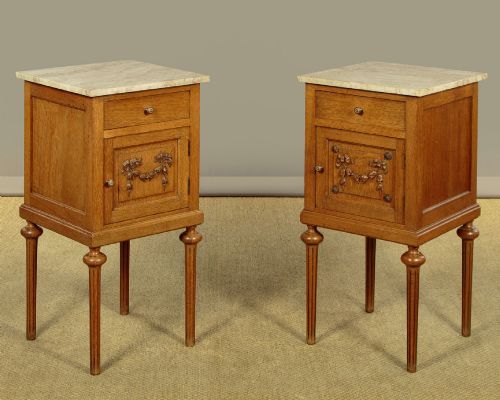
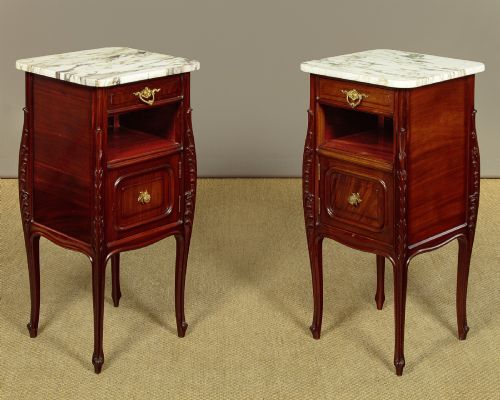
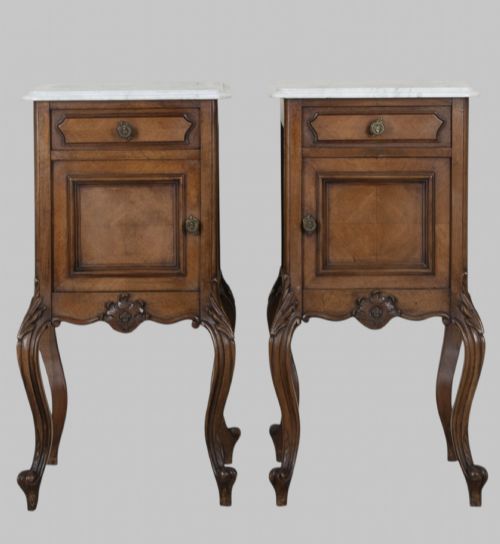
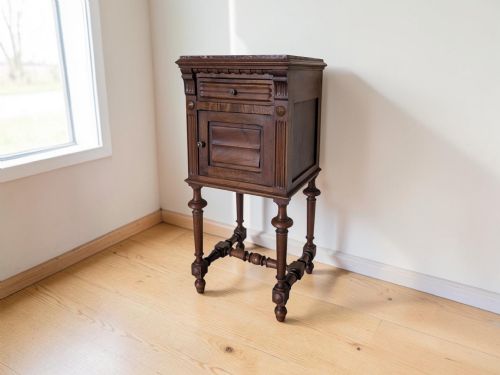
When searching for marble topped nightstands, buyers encounter bedside cabinets, commodes, and lamp tables originating primarily from the nineteenth and early twentieth centuries. French regional workshops and revival styles dominate the selection, offering compact cupboards and drawer pedestals designed for the bedroom.
How they were made
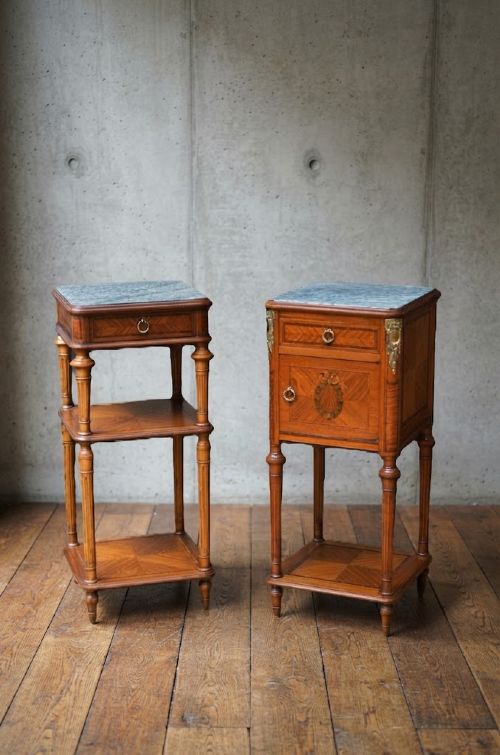
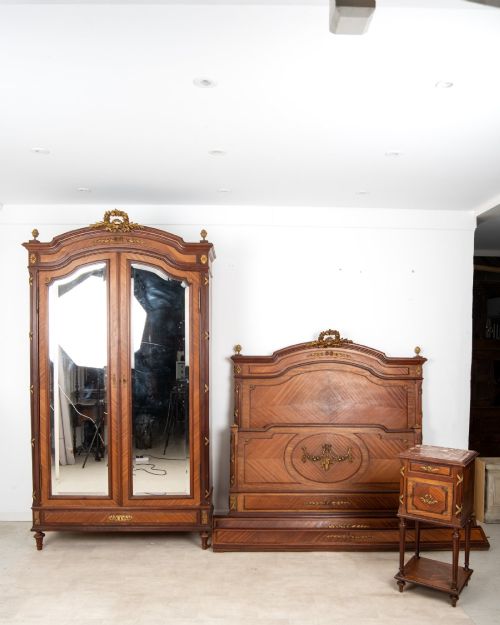
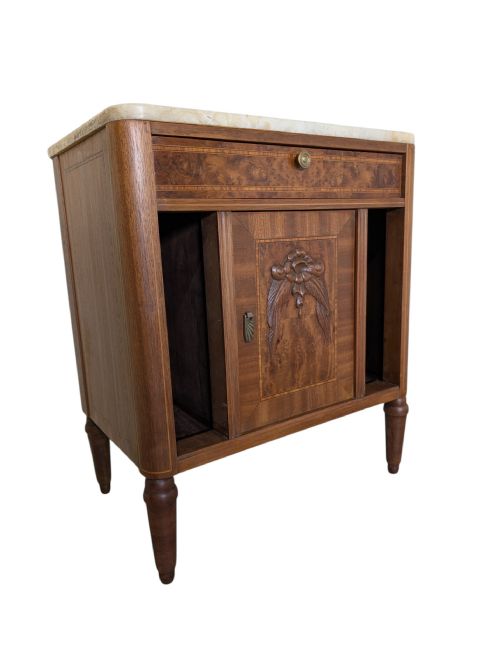
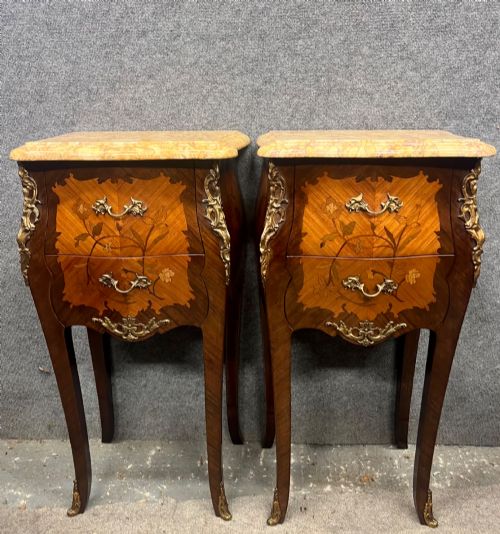
Cabinet makers utilised dense hardwoods such as mahogany, walnut, and rosewood, frequently applying decorative veneers like satinwood, kingwood, and burr fruitwood to the exterior surfaces. Marquetry inlay and brass or ormolu mounts punctuate the timber facades of French and Victorian examples.
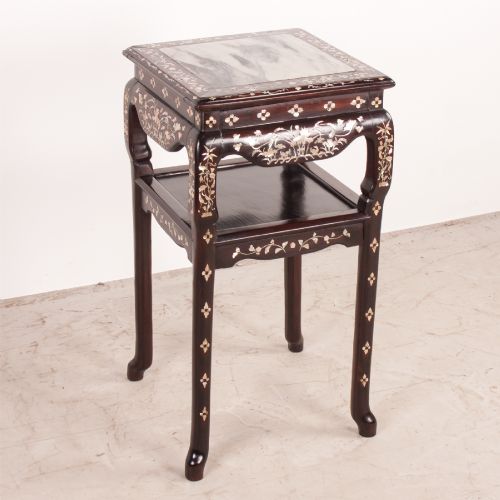
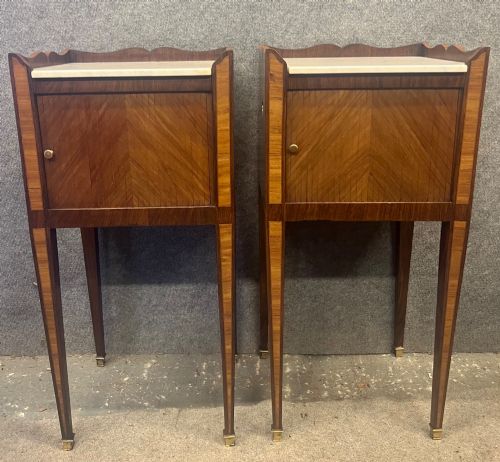
Heavy marble slabs sit atop the timber carcasses, shaped with straight edges, serpentine curves, or rounded corners to match the profile of the cabinet below. Brass hardware, mother of pearl inlay, and painted finishes complete the construction of these bedside pieces.
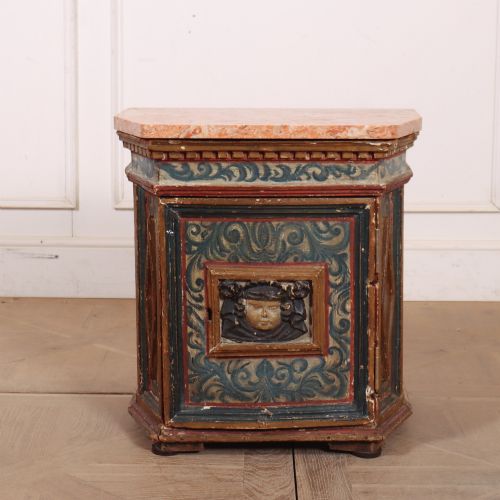
A painted apothecary cabinet dated to seventeen-fifty quietly observes the bedroom furniture around it.
What varies in quality
The finesse of the timber marquetry and the precision of the veneer matching dictate the visual hierarchy among these cabinets. Finer pieces display intricate floral or geometric inlay patterns executed in contrasting exotic woods across the doors and drawers.
The selection and thickness of the marble top significantly influence the overall standard of the piece, alongside the integration of cast ormolu mounts and brass fittings. Substantial stone slabs with clean bevelled edges paired with tightly jointed hardwood frames represent the upper tier of manufacture.
François Linke·E. Kahn
The Marble Topped Nightstands Glossary
- Bombe
- A swelling, convex curved shape typical of furniture fronts from the eighteenth century onwards. This contour requires skilled carpentry to shape the timber carcass and matching marble top.
- Marquetry
- Decorative patterns formed by fitting together thin veneers of wood and other materials onto a structural surface. Craftsmen utilise this technique to create elaborate floral or geometric designs on cabinet doors.
- Ormolu
- Gilt bronze mounts applied as decorative ornaments to furniture corners, feet, and key escutcheons. This metalwork adds metallic contrast to dark woods like mahogany and kingwood.
- Chevets
- The French term for bedside tables or small cabinets. These pieces often feature a combination of a small cupboard and a drawer beneath a stone top.
- Satinwood
- A pale, lustrous hardwood imported from the tropics, utilised for fine veneers and stringing lines. Its reflective grain catches the light effectively on late nineteenth century bedroom furniture.
Marble Topped Nightstands: Frequently Asked Questions
What periods do these cabinets come from?
The available selection spans the nineteenth century through to the early twentieth century, including Victorian, First Empire, and Art Deco periods.
Craftsmen produced these bedside pieces across various decades, reflecting changing stylistic revivals such as Louis XV and Louis XVI designs.
Are pairs common for bedside placement?
Many listings consist of matched pairs, which suit symmetrical bedside arrangements on either side of a bed frame.
Single cabinets also appear frequently, originating from smaller bedroom suites or individual commissions.
What woods were used in construction?
Carpenters built the carcasses using solid and veneered hardwoods including walnut, mahogany, oak, rosewood, and kingwood.
Exotic veneers and decorative inlays decorate the exterior surfaces, paired with contrasting marble tops.