
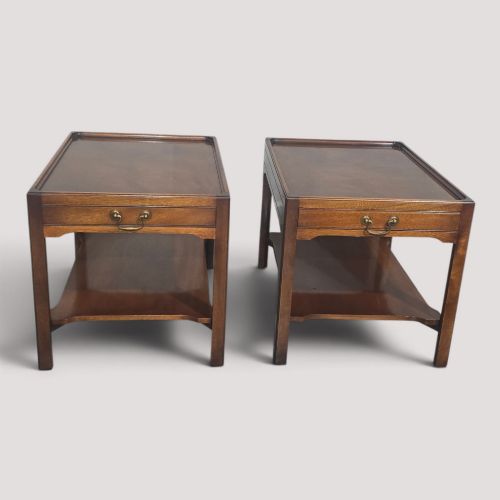
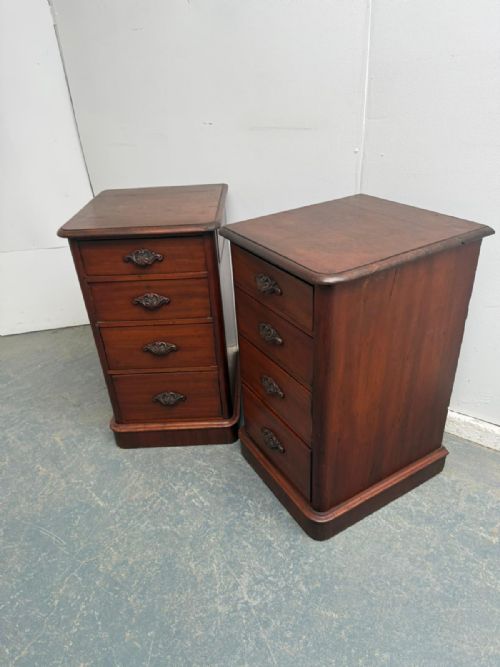
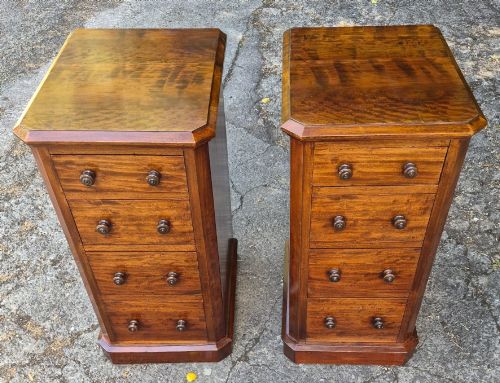
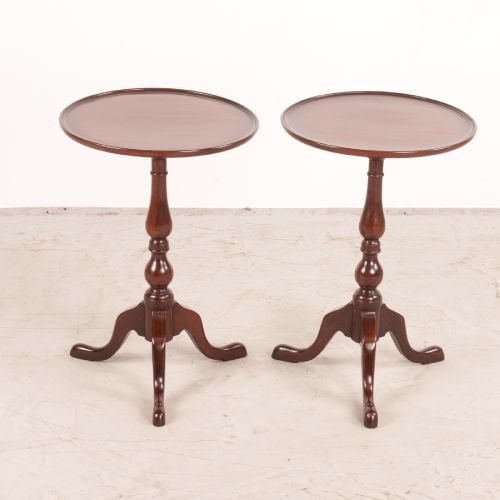
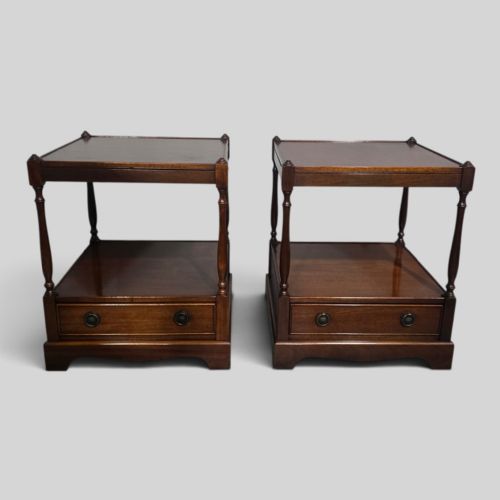
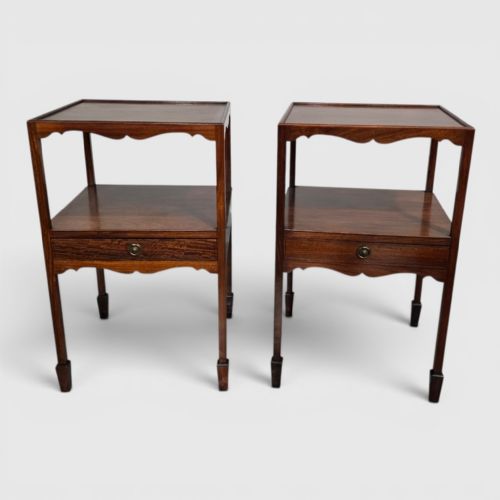
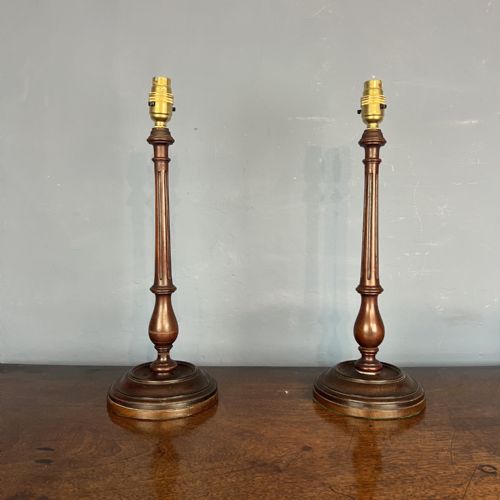
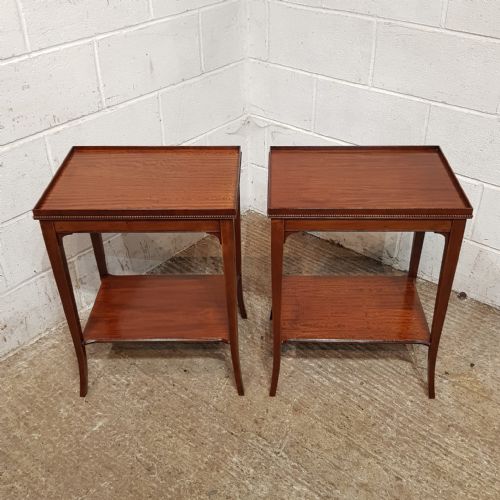
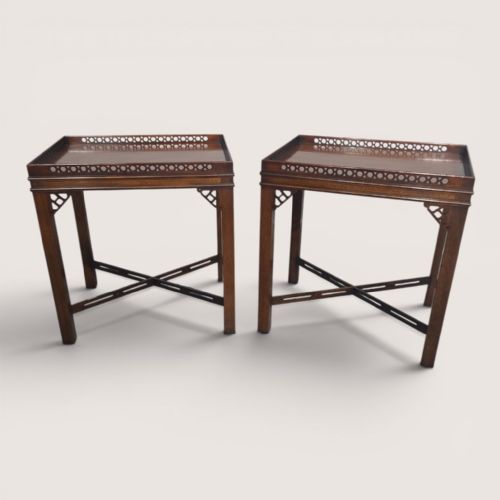
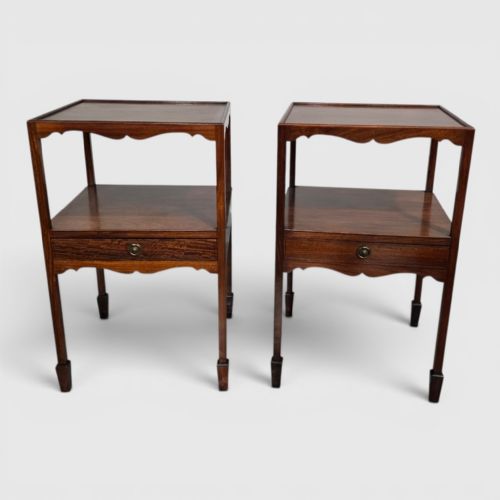


Pair Mahogany Lamp Tables
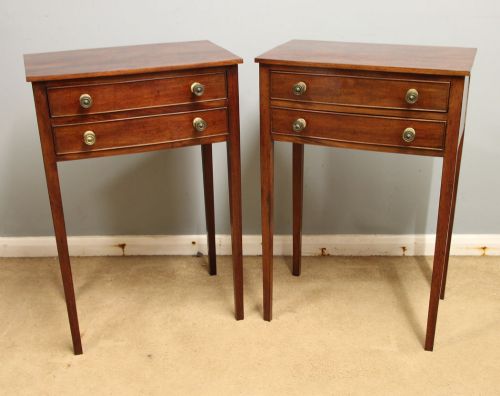
Pair mahogany lamp tables bring practical symmetry and warm timber grain to a room, serving bedside or seating areas with quiet utility.

Pair Mahogany Lamp Tables
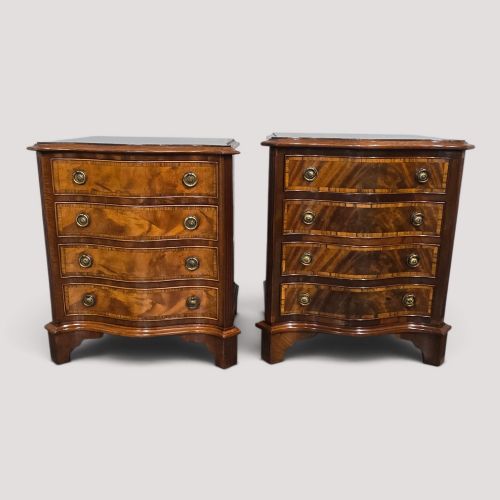
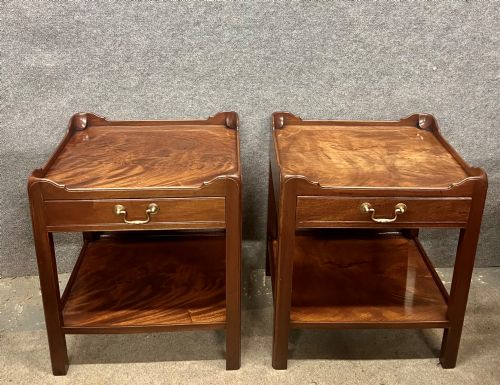
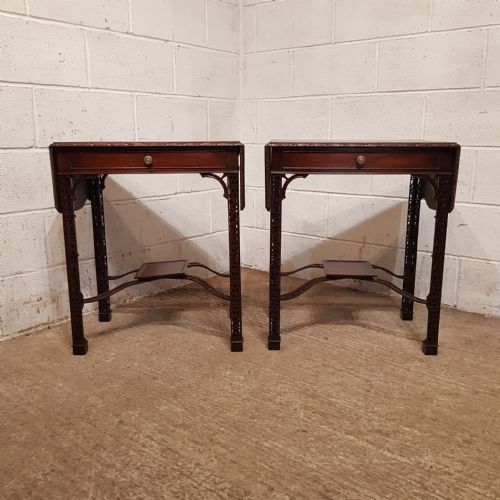
Pair mahogany lamp tables provide matched surfaces for lighting and bedside storage, appearing across forms such as small chests, wine tables, and tripod stands. When you search for pair mahogany lamp tables, you meet pieces ranging from Georgian and Regency originals to later Edwardian and 1920s revivals.
Makers adapted these forms over centuries to suit changing domestic habits, resulting in variations like drop leaves, serpentine fronts, and tray tops. The majority found here date from the late nineteenth century through to the interwar period, combining traditional silhouettes with utilitarian proportions.
How they were made
Joiners built these pieces primarily using solid mahogany and figured mahogany veneers applied to secondary timbers, frequently enhancing surfaces with satinwood inlay or brass mounts. Construction often involved traditional mortise and tenon joints, hand-cut dovetails for drawer boxes, and turned or carved pedestals.
Finishing techniques relied on wax or French polish to seal the timber and highlight the deep red-brown grain. Secondary materials like leather inserts, marble tops, and ceramic castors appear on specific iterations to add durability or decorative contrast.
Pair Mahogany Lamp Tables Retail Price Guide 2026
Typical asking prices for pair mahogany lamp tables among the pieces listed under this phrase on Sellingantiques today, from the lower quarter to the upper quarter. They describe what is for sale here now, not the wider market.
Listings feature mahogany, rosewood, walnut, satinwood, leather, marble, and brass across pieces dating from the Georgian period through the 1930s.
What varies in quality
The degree of distinction rests on the choice of timber and the precision of the cabinetwork, where finely figured flame mahogany veneers and crisp hand-carved details elevate a piece. Proportion and structural integrity also divide standard production from superior workshops, visible in balanced turning, tight joints, and original brass hardware.
Age and historical fidelity play a part, with authentic period pieces or careful revival work showing greater harmony in design. Consistency within the pair is essential, ensuring that matched pieces share uniform timber selection, colour, and wear patterns.
James Mein of Kelso
The Pair Mahogany Lamp Tables Glossary
- Mahogany
- A durable tropical hardwood known for its reddish-brown colour and stable grain, widely used in fine furniture. It takes a high polish and resists warping.
- Serpentine
- A furniture front or edge curved in a wave shape, presenting a convex centre flanked by concave sides. This technique requires expert carpentry.
- Inlay
- A decorative technique where contrasting woods or materials like satinwood are fitted into recessed spaces on the surface. It creates geometric or floral patterns.
- Pot cupboard
- A small bedside cabinet originally designed to house a chamber pot behind a single door. Many now function as lamp tables.
Pair Mahogany Lamp Tables: Frequently Asked Questions
How do I match mismatched tables?
Look for similar timber tones, heights, and leg styles rather than identical carvings, as many period pairs started life as near matches.
Positioning them on opposite sides of a bed or fireplace helps balance slight variations in proportion.
Can I use them as bedside cabinets?
Many pairs listed as lamp tables were built specifically as bedside chests or pot cupboards, offering enclosed storage alongside surface space.
Check the height relative to your mattress to ensure comfortable access at night.
How do I date a mahogany table?
Examine the construction methods, such as hand-cut dovetails, timber choice, and secondary woods like oak or pine inside the drawers.
Styles, hardware, and polish types also offer strong clues to whether a piece originates from the Georgian era or a later revival.
How do I care for mahogany surfaces?
Dust regularly with a soft, dry cloth and apply a quality beeswax periodically to nourish the grain and maintain the polish.
Keep tables away from direct heat sources and sunlight to prevent the timber from drying out or fading.