



Chippendale Style Coffee Table
These pieces take the carved frames and classic proportions of eighteenth-century London workshops and adapt them into low tables for modern rooms.
Chippendale Style Coffee Table
A chippendale style coffee table brings traditional woodwork and formal silhouettes into sitting rooms at a convenient height for daily use. The pieces found here span several decades of revival cabinet-making alongside older forms adapted for contemporary rooms.
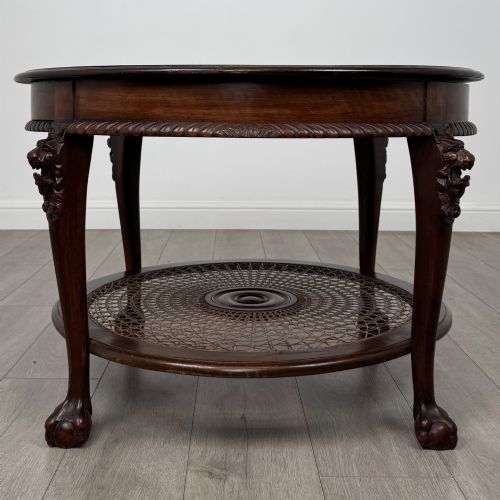
Mahogany remains the dominant wood across the selection, appearing in round, oval and rectangular formats with carved details. Many examples reflect the revival periods of the nineteenth and twentieth centuries, taking inspiration from Georgian design principles.
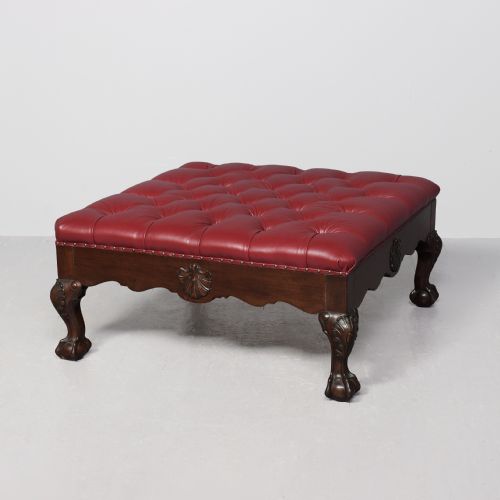
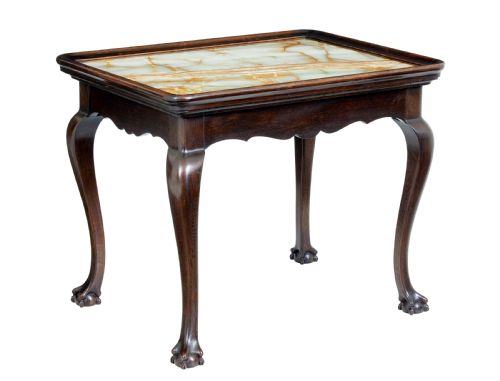
Alongside conventional wooden tables, the inventory includes upholstered stools and butler's trays that serve a similar low surface function. These variations offer alternative textures like leather and cane while maintaining the characteristic revival aesthetic.
What varies in quality
The depth and sharpness of the woodwork define the upper tier of these pieces, distinguishing hand-carved mouldings from softer, machine-pressed ornament. Timber choice also plays a role, with dense, well-figured mahogany commanding greater appreciation.
Structural integrity rests on the tightness of the joinery and the condition of the surface finish. Pieces that retain a mellow, undisturbed polish demonstrate superior longevity compared to those with heavily altered surfaces.
Chippendale Style Coffee Table Retail Price Guide 2026
Typical asking prices for chippendale style coffee table among the pieces listed under this phrase on Sellingantiques today, from the lower quarter to the upper quarter. They describe what is for sale here now, not the wider market.
Mahogany and oak dominate the material records, supported by brass accents and leather upholstery.
The Chippendale Style Coffee Table Glossary
- Chippendale Revival
- A period of furniture production, particularly strong in the late nineteenth and early twentieth centuries, copying eighteenth-century designs. Makers drew directly from Thomas Chippendale's published pattern books.
- Pie Crust Edge
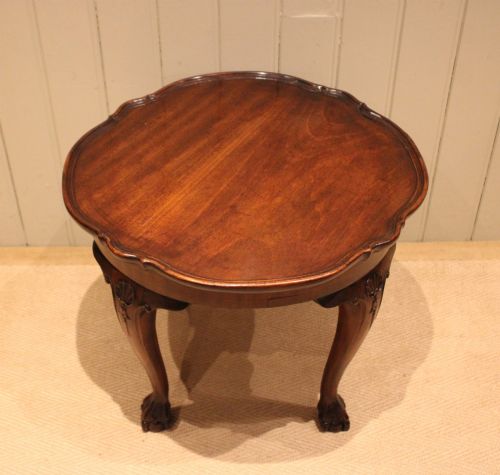
- A raised, scalloped border carved along the perimeter of a round table top. This technique required skilled hand-carving from a solid timber blank.
- Butler's Tray
- A removable wooden tray with hinged sides, designed to sit upon a folding or fixed low stand. It provides a portable surface originally used for serving.
- Centre Stool
- A large upholstered seat designed to sit in the middle of a room rather than against a wall. Many examples double as low tables when fitted with a tray.
Chippendale Style Coffee Table: Frequently Asked Questions
Are these tables genuinely eighteenth century?
Most pieces catalogued under this description date from later revival periods, specifically the nineteenth and early twentieth centuries, when makers reinterpreted earlier Georgian aesthetics.
While genuine eighteenth-century timber and design elements appear, the construction methods typically align with later workshop practices.
How do I clean a mahogany surface?
Dust regularly with a soft, dry cloth to prevent particle buildup on the polished wood.
Avoid modern chemical sprays and apply a traditional beeswax sparingly when the timber appears dry.
Can I use an upholstered stool as a table?
Upholstered stools make versatile low surfaces, especially when paired with a rigid tray placed across the top.
This approach protects the hide or fabric from spills while offering a stable place for drinks and books.
What defines the revival style?
Revival furniture borrows specific decorative motifs, such as carved pie crust edges and cabriole legs, from historic pattern books.
These pieces combine traditional aesthetics with the proportions required for later domestic interiors.