

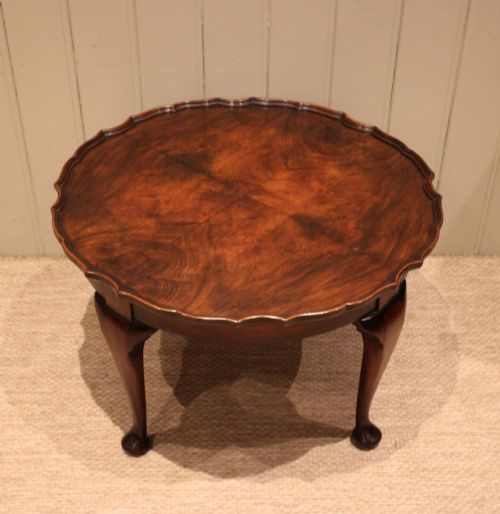
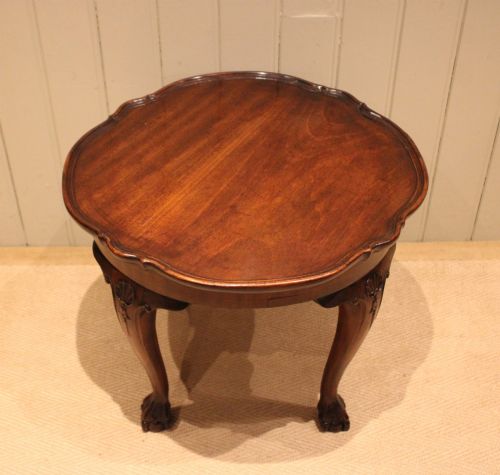
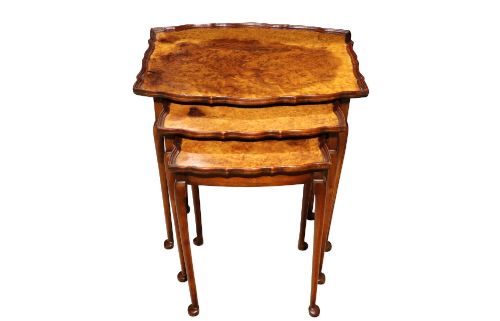


Piecrust Edge Coffee Table
A piecrust edge coffee table brings sculpted wooden curves and traditional British craftsmanship to a sitting room.
Piecrust Edge Coffee Table
A piecrust edge coffee table is a low surface defined by a raised, scalloped rim carved directly from the timber or applied to the top. Buyers seeking this form encounter circular or oval designs often standing on pillar supports or cabriole legs.
The pieces available span several eras, moving from the Georgian period through nineteenth-century revivals like Queen Anne and Chippendale up to twentieth-century productions from the nineteen-twenties and nineteen-thirties.
While traditional coffee tables appeared later in interior history, many items listed are period occasional tables, lamp tables, or nest sets adapted or selected for modern low seating arrangements.
Materials and construction methods
Cabinet makers utilised dense hardwoods including mahogany, oak, and yew wood, often applying burr walnut or oyster veneer to create patterned tabletops.
The characteristic rim required careful hand carving to shape the undulating border, matching the fine turning found on pedestals and the carved details on cabriole legs.
Piecrust Edge Coffee Table Retail Price Guide 2026
Typical asking prices for piecrust edge coffee table among the pieces listed under this phrase on Sellingantiques today, from the lower quarter to the upper quarter. They describe what is for sale here now, not the wider market.
Listings feature pieces spanning the Georgian era, the nineteen-twenties, and the nineteen-thirties, utilising mahogany, burr walnut, oak, and yew wood.
Assessing quality and craftsmanship
Quality rests in the crispness of the carved rim and the selection of timber figures, where matched veneers and solid hardwoods display superior depth and grain movement.
Proportion and stability separate standard revival pieces from finer interpretations, particularly in how gracefully the legs meet the central column or support the tabletop.
The Piecrust Edge Coffee Table Glossary
- Piecrust edge
- A raised, decoratively carved perimeter resembling the pastry crust of a pie. This detail is typical on round occasional and tea tables.
- Cabriole leg
- A furniture leg that curves outward at the knee and tapers inward toward the foot, frequently ending in a pad or claw shape. It originates from classical designs and revival periods.
- Veneer
- A thin layer of figured wood applied to a secondary timber base to create decorative surface patterns. Burr walnut and oyster cuts utilise this technique.
- Nest of tables
- A set of graduated tables designed to fit neatly beneath one another when not in use. They appear in walnut and oak variants.
Piecrust Edge Coffee Table: Frequently Asked Questions
What is a piecrust edge coffee table?
A piecrust edge coffee table is a low surface featuring a distinctively carved, raised, and scalloped wooden border. These tables draw inspiration from eighteenth-century tea table designs.
They serve as decorative centrepieces in traditional and eclectic sitting rooms, providing a stable surface for daily use.
How do I date a wooden table?
Dating a table involves examining the wood species, construction joints, and stylistic revival markers present in the piece. Pieces span from Georgian originals to nineteen-twenties and thirties revivals.
Secondary timbers and veneer application methods also offer clear clues regarding the exact era of manufacture.
Are these tables solid wood?
Construction varies between solid timbers like mahogany, oak, and yew, and pieces utilising decorative veneers over a secondary wood base. Burr walnut and oyster veneer tables rely on thin slices of figured wood laid over a stable core.
Both solid construction and veneered methods reflect the traditional practices of period cabinet makers.
How do I clean antique wood?
Maintaining wooden surfaces requires gentle dusting with a dry cloth and occasional application of appropriate wax polish to nourish the finish. Avoid harsh chemical cleaners and excessive moisture.
Proper care preserves the natural grain and patina developed over decades of use.