
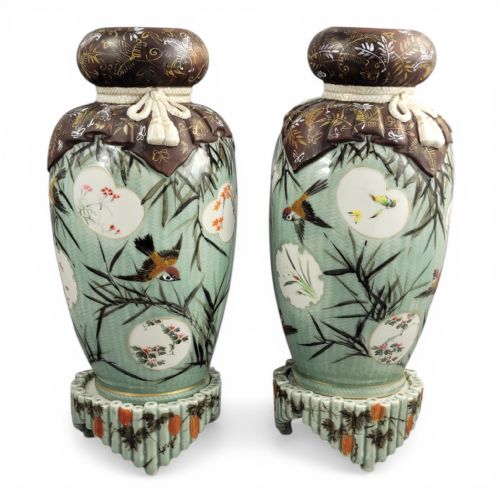


Pair Large Floor Vases
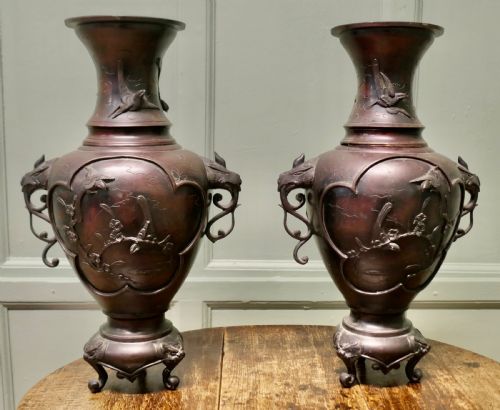
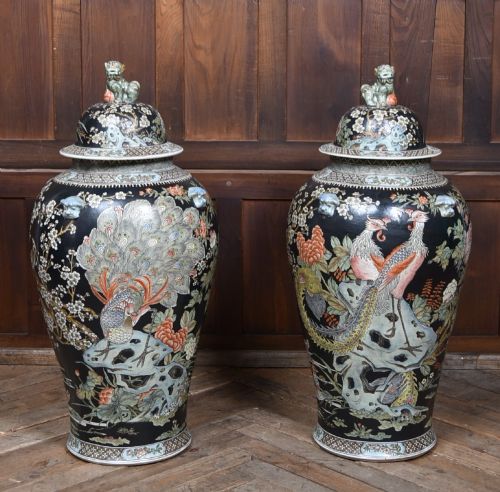
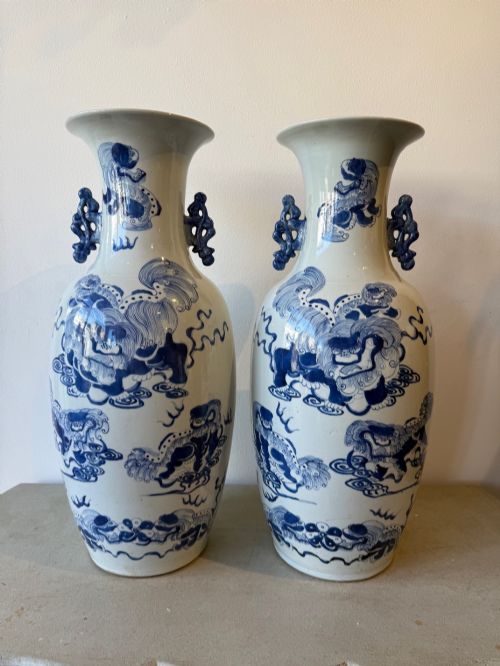
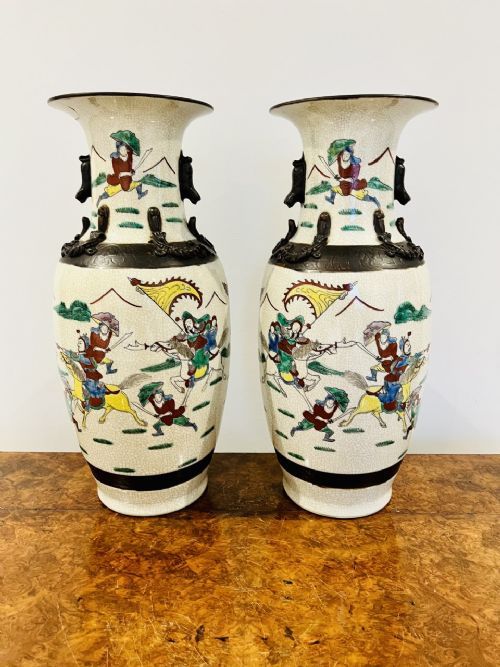
Pair large floor vases bring commanding scale and historic presence to empty corners, uniting intricate Meiji period bronze work with sweeping nineteenth-century Chinese export porcelain.
Pair Large Floor Vases
Pair large floor vases include monumental temple jars, palace vessels and trumpet forms designed to stand directly on the ground rather than rest on furniture. These decorative statement pieces span the nineteenth century, the Meiji period, and the early decades of the twentieth century.
Japanese Satsuma, Imari, Kutani and bronze vessels dominate the selection alongside Chinese porcelain, cloisonné enamel and lacquer floor jars. Many examples arrive complete with matching original stands or reach heights exceeding eighty inches.
Buyers encounter substantial vessels featuring blue and white decoration, cracked glazes, rose medallion palettes and detailed lacquer panels. The overarching aesthetic draws heavily upon Asian export traditions alongside Victorian British taste.
Materials and Construction
Makers utilised heavy cast bronze, porcelain, earthenware and glass, often applying elaborate surface treatments like cloisonné enamel, gold leaf and gilt. Lacquer panels and hand-painted pigments provide the rich colouration seen across the Japanese and Chinese inventories.
Large-scale ceramic pieces required immense kiln mastery to prevent warping during high-temperature firing, particularly for vessels standing well over a metre tall. Bronze counterparts involved intricate lost-wax casting and patination techniques perfected by period metalworkers.
Listings feature items spanning the Victorian era, the Meiji period, and the Qing dynasty.
Judging Quality and Execution
Quality rests upon the crispness of hand-painted detail, the stability of original stands and the proportional balance of oversized bodies against flared necks. Superior examples exhibit tightly controlled enamel work and deeply rich bronze patination.
Artisanal attribution elevates specific pieces, particularly signed Meiji period ceramics and documented bronze works. The inclusion of matching original stands and intact lacquer panels separates standard decorative items from superior collector pieces.
Kato Sanhei·Kinkozan
The Pair Large Floor Vases Glossary
- Meiji Period
- The era of Japanese history spanning from 1868 to 1912 noted for exceptional bronze casting and intricate ceramic decoration. Works from this time often display ambitious scale and precise detailing.
- Imari
- A traditional style of Japanese porcelain decorated in underglaze blue, iron red, gold and black. This distinct palette appears frequently on large floor vessels.
- Cloisonné
- A metalwork technique where enamel is applied within compartments created by soldered wire strips. Large palace vases often utilise this method for vibrant coloured motifs.
- Satsuma
- An earthenware type from Japan featuring a cracked ivory glaze and dense polychrome enamel painting. These vessels frequently depict figurative scenes and gilded birds.
- Rose Medallion
- A nineteenth-century Chinese export porcelain style distinguished by panels of figures, birds and flowers rendered in pink and green enamels.
Pair Large Floor Vases: Frequently Asked Questions
Where should I place a large floor vase?
These tall vessels suit spacious hallways, grand staircases or empty drawing room corners where their vertical presence commands the space.
Ensure they sit away from high-traffic walkways to protect delicate ceramic bodies and bronze surfaces from accidental knocks.
How do I clean antique bronze floor vases?
Dust the surface gently with a dry microfibre cloth to remove everyday particles without disturbing the historic patination.
Avoid commercial metal polishes, water and abrasive cleaners that can strip away centuries of accumulated finish.
Are original stands important?
Matching original stands provide historical context and structural elevation that complement the overall design of large floor vessels.
Pieces retaining their fitted wooden or porcelain bases often hold stronger appeal for collectors of nineteenth-century export works.
How do I identify Meiji period pieces?
Meiji period items typically date between 1868 and 1912, often displaying refined bronze casting or densely packed Satsuma enamels.
Look closely at the surface decoration and base markings for artisan signatures characteristic of this historic Japanese era.