

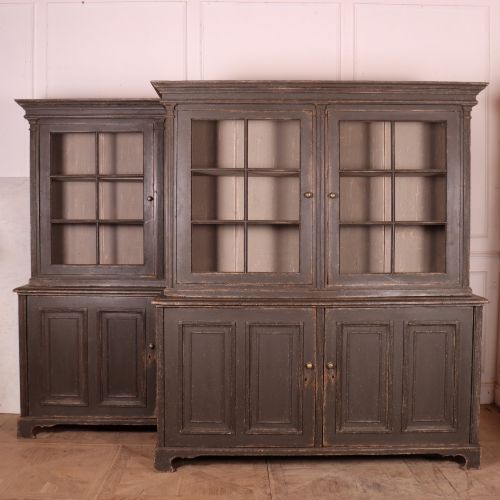
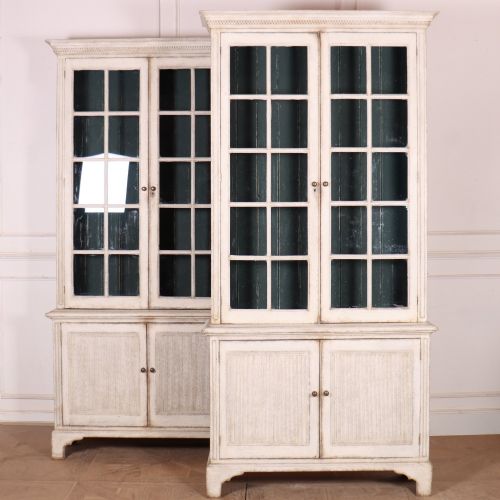
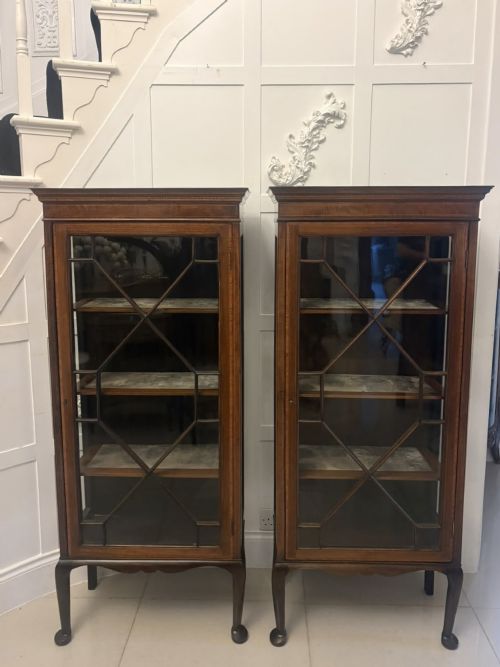
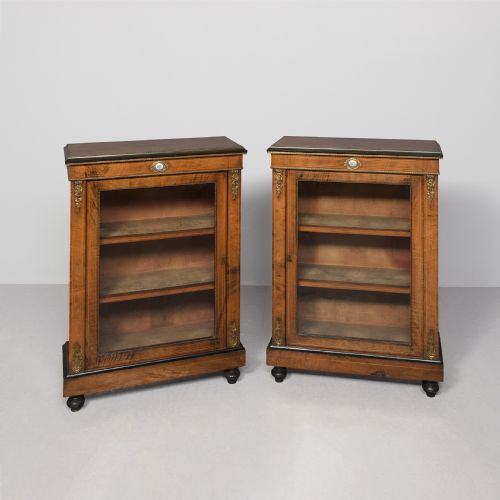
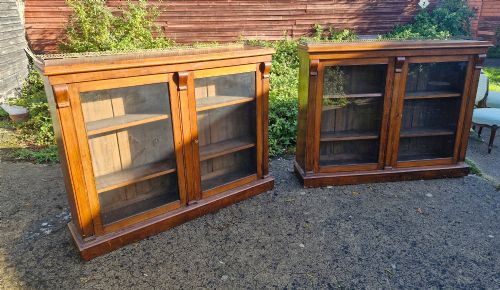
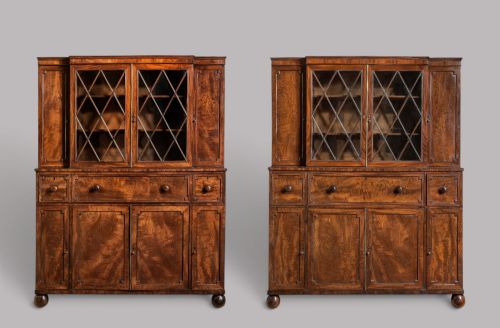
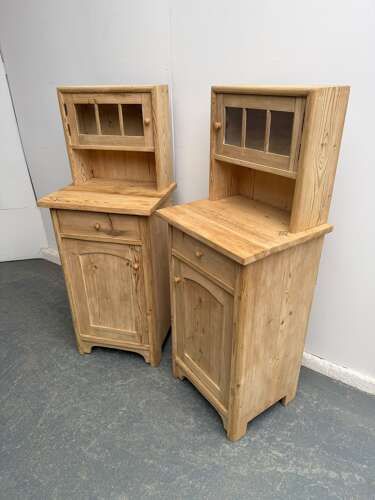


Pair Glazed Cupboards
Pair glazed cupboards offer matching symmetry and glass fronts to display collections, making them ideal focal points for balanced interior styling.
Pair Glazed Cupboards
Pair glazed cupboards are matching matching sets of cabinetry designed with glass-panelled doors, spanning forms such as display cabinets, bookcases, corner cabinets, dressers, and pier cabinets. These dual pieces originate from various eras including the Regency, Victorian, and Edwardian periods, as well as the Art Deco movement.
The selection on this page demonstrates remarkable variety in regional origins and timber choices, ranging from English mahogany and oak to Swedish painted finishes and Biedermeier elm. Buyers frequently encounter side cabinets, bedside units, and larger library bookcases configured as exact matching pairs.
Such double cabinets provide substantial storage alongside visibility, allowing owners to exhibit books, ceramics, or decorative objects symmetrically within a room. Their forms reflect domestic utility and formal parlour requirements across the nineteenth and early twentieth centuries.
How they were made
Cabinet makers constructed these pieces using dense hardwoods like mahogany, walnut, and oak, often applying burr walnut veneers or ebonised treatments to enrich the surfaces. Marquetry inlay, ormolu mounts, and brass detailing enhance the structural timber frames.
Glass panels are fitted into doors using astragal glazing bars or specialist techniques seen in Boulle work and Biedermeier designs. Carved wooden ornamentation and painted finishes complete the surface execution of these dual cabinets.
Pair Glazed Cupboards Retail Price Guide 2026
Typical asking prices for pair glazed cupboards among the pieces listed under this phrase on Sellingantiques today, from the lower quarter to the upper quarter. They describe what is for sale here now, not the wider market.
Listings feature items built from mahogany, walnut, oak, elm, and rosewood across Victorian, Edwardian, Regency, and Art Deco periods.
What varies in quality
The standard of execution depends heavily on the precision of the timber matching and the finesse of any marquetry inlay or brass ormolu mounts applied to the frame. Superior examples demonstrate seamless symmetry between both halves and meticulous attention to structural joinery.
The clarity and integrity of the original glass panes, alongside the sophistication of internal shelving and carving details, distinguish finer workshop output from more utilitarian regional items.
Gillows·Sigmund Jaray, Wien
The Pair Glazed Cupboards Glossary
- Astragal glazing
- Timber bars holding small panes of glass within a door. These intricate frameworks define traditional cabinet door construction.
- Boulle
- Marquetry technique using brass and tortoiseshell inlay. Developed in France, this ornate method adorns high-status nineteenth-century pier cabinets.
- Pier cabinet
- A low display cabinet designed to fit wall spaces between windows. These pieces often feature glass doors and elaborate decorative veneers.
- Marquetry
- Decorative patterns created by fitting thin pieces of wood veneer onto a structure. Skilled artisans utilise contrasting timbers to form pictorial or geometric designs.
- Ormolu
- Gilded bronze mounts applied to furniture for ornamentation. This French technique adds metallic highlights to nineteenth-century cabinet frames.
Pair Glazed Cupboards: Frequently Asked Questions
How do I style pair glazed cupboards?
Place them symmetrically on either side of a fireplace or focal wall to establish visual balance in a principal reception room.
Fill the glass-fronted shelves with unified collections of books, glassware, or ceramics to maintain a cohesive display.
Were these cabinets originally made together?
Many examples are created as true matching pairs from the workshop, sharing identical dimensions, timbers, and decorative details.
Other sets represent closely matched historical pieces selected over time for their shared aesthetic and proportions.
How do I clean the glass and timber?
Use a soft, dry cloth for dusting the wood surfaces and apply appropriate beeswax polish periodically to nourish the grain.
Clean the glass panes with a mild solution, taking care to prevent moisture from contacting antique timber or brass mounts.
What rooms suit these cabinets best?
Larger bookcases and display cabinets suit dining rooms, libraries, or drawing rooms where books and decorative objects require prominent placement.
Smaller side cabinets and bedside units function effectively in bedrooms or smaller sitting rooms for supplementary storage.